The Art of Aging Gracefully
Yesterday I was sorting through old photographs and found one of myself from twenty years ago.
The Art of Aging Gracefully

Yesterday I was sorting through old photographs and found one of myself from twenty years ago.
I looked in the mirror. Then back at the photo and at the mirror again.
Yes, time spares no one.
Wrinkles, gray hair, a different look in the eyes. The body remembers every year — and tells the truth about it.
But here’s what’s strange. There are people whom age doesn’t diminish. And there are those whom it adorns.
You’ve surely met them. She’s sixty, yet next to her, thirty-year-olds seem like unfinished sketches. Her gray hair isn’t hidden — it’s like a silver crown. Her wrinkles aren’t concealed — they draw a story. She doesn’t try to look younger. She simply is — fully, completely, with her age.
Such people don’t fight time. They’ve made peace with it.
It’s the same with architecture.
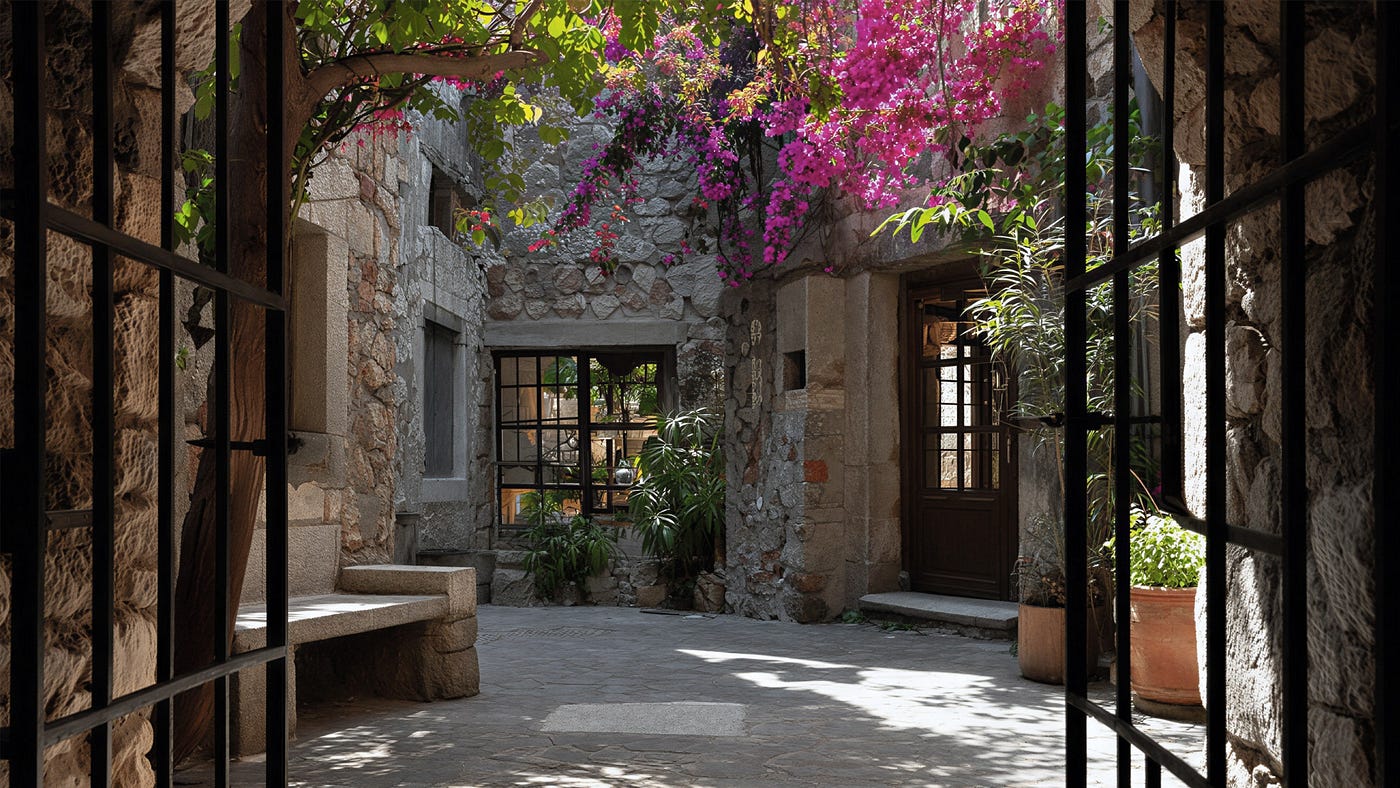
There are buildings that only get better with age. Stone darkens — but nobly. Wood turns gray — but doesn’t rot. Roof tiles grow moss — but it adds character, not decay.
The Japanese call this wabi-sabi — the beauty of imperfection, the beauty of time’s traces. Europeans say it more simply: patina.
Patina is not dirt. Not wear. Not a defect to be urgently painted over.
Patina is time’s handwriting on the surface of things.
Look at the bronze handle of an old door. Thousands of hands have touched it — and the metal has polished smooth in the center, darkened at the edges. Is this ugly? On the contrary. It’s authentic. In that handle — generations of people who entered and left.
Now look at the chrome handle of a new door after three years. Scratches, peeling coating, dull spots. That’s not patina. That’s degradation.
The difference isn’t age. The difference is the material and how it accepts time.
The old masters knew this.
They chose stone understanding how it would darken in fifty years, laid tiles imagining the moss in a hundred, painted with lime knowing it would fade in layers — and each layer would add depth.
What they designed was not a moment. It was a process.
But what happens when we forget this? When, for the sake of convenience, we strip away layer after layer — literally, with an excavator?
Next — about the memory hidden beneath our feet.
메타데이터
- post_id
- 1060af1bc92d
- slug
- the-art-of-aging-gracefully-1060af1bc92d
- url
- https://medium.com/@xtarkdesign/the-art-of-aging-gracefully-1060af1bc92d
- canonical_url
- https://medium.com/@xtarkdesign/the-art-of-aging-gracefully-1060af1bc92d
- author_url
- https://medium.com/@xtarkdesign
- status
- ok
- fetched_at
- 2026-07-14 04:23:26