A Missed Polyp Isn’t Always an AI Problem
88.3% mean Average Precision. 35 frames per second. Real-time polyp detection during colonoscopy. On GPU hardware.
A Missed Polyp Isn’t Always an AI Problem
88.3% mean Average Precision. 35 frames per second. Real-time polyp detection during colonoscopy. On GPU hardware.
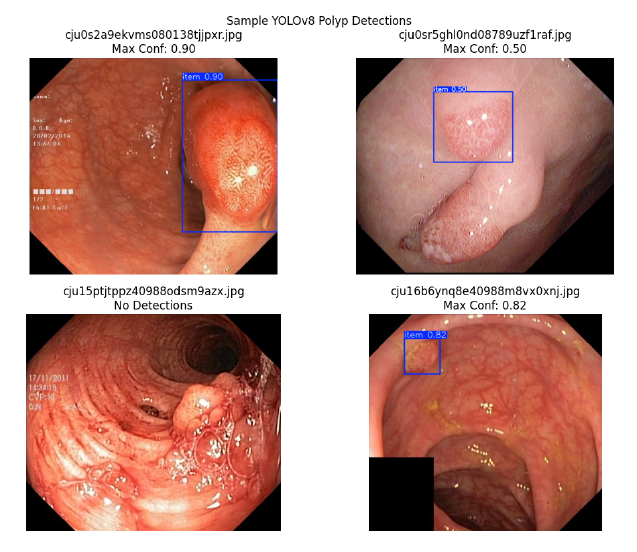
EndoSight AI, a submitted study at CVPR on deep learning systems for gastrointestinal polyp detection, hit these numbers on GPU hardware using the Hyper-Kvasir dataset, a widely used research dataset collected from routine clinical examinations at a Norwegian hospital for colonoscopy.
Colorectal cancer is the second leading cause of cancer death worldwide. The clinical evidence is unambiguous: catching polyps during colonoscopy saves lives. The problem is not the procedure, it is the miss rate. Studies consistently show that polyps are missed in a meaningful percentage of colonoscopies, and miss rate correlates directly with procedural factors including image quality.
AI models at 35 FPS help. But they are not the whole story.
A colonoscopy camera operates in one of the most challenging imaging environments that exists. Specular highlights off wet tissue. Motion blur. Debris on the lens. Narrow band imaging mode switches. Variable proximity to the tissue surface changes both focus and lighting in real time.
For the AI model, these are not just model-performance issues. They are upstream image-formation issues first
If the ISP produces inconsistent color rendering between frames, the model’s confidence scores fluctuate on the same lesion. If denoising is too aggressive, it performs what published endoscopy imaging research describes as ‘excessive smoothing’ destroying the texture and vascular detail that distinguish dysplastic tissue from healthy mucosa. Early dysplasia and early gastric cancer present primarily as subtle mucosal surface changes. Published clinical literature confirms these subtle changes are already easily missed under standard white light endoscopy, an aggressively denoised ISP removes them from the image entirely before the model ever sees the frame..
The published literature on AI-assisted colonoscopy consistently identifies image quality as a first-order variable in detection accuracy. The model is trained on images. If the images it sees in deployment differ from what it trained on because the ISP was not part of the training pipeline design performance degrades in exactly the cases where detection matters most.
A software-defined CUDA-ISP that can be tuned, versioned, and co-developed with the model closes this gap.
At 10xEngineers, this is the pipeline we built CUDA ISP for.
(Source: https://arxiv.org/abs/2511.12962 )
#ColonoscopyAI #MedicalImaging #Polyp Detection #CUDAISP #10xEngineers
메타데이터
- post_id
- 10836852ed0f
- slug
- a-missed-polyp-isnt-always-an-ai-problem-10836852ed0f
- url
- https://medium.com/@10xengineers/a-missed-polyp-isnt-always-an-ai-problem-10836852ed0f
- canonical_url
- https://medium.com/@10xengineers/a-missed-polyp-isnt-always-an-ai-problem-10836852ed0f
- author_url
- https://medium.com/@10xengineers
- status
- ok
- fetched_at
- 2026-06-09 15:37:30