What Pachinko Teaches Us About the Secrets Families Pass Down
Families rarely inherit only stories.
What Pachinko Teaches Us About the Secrets Families Pass Down
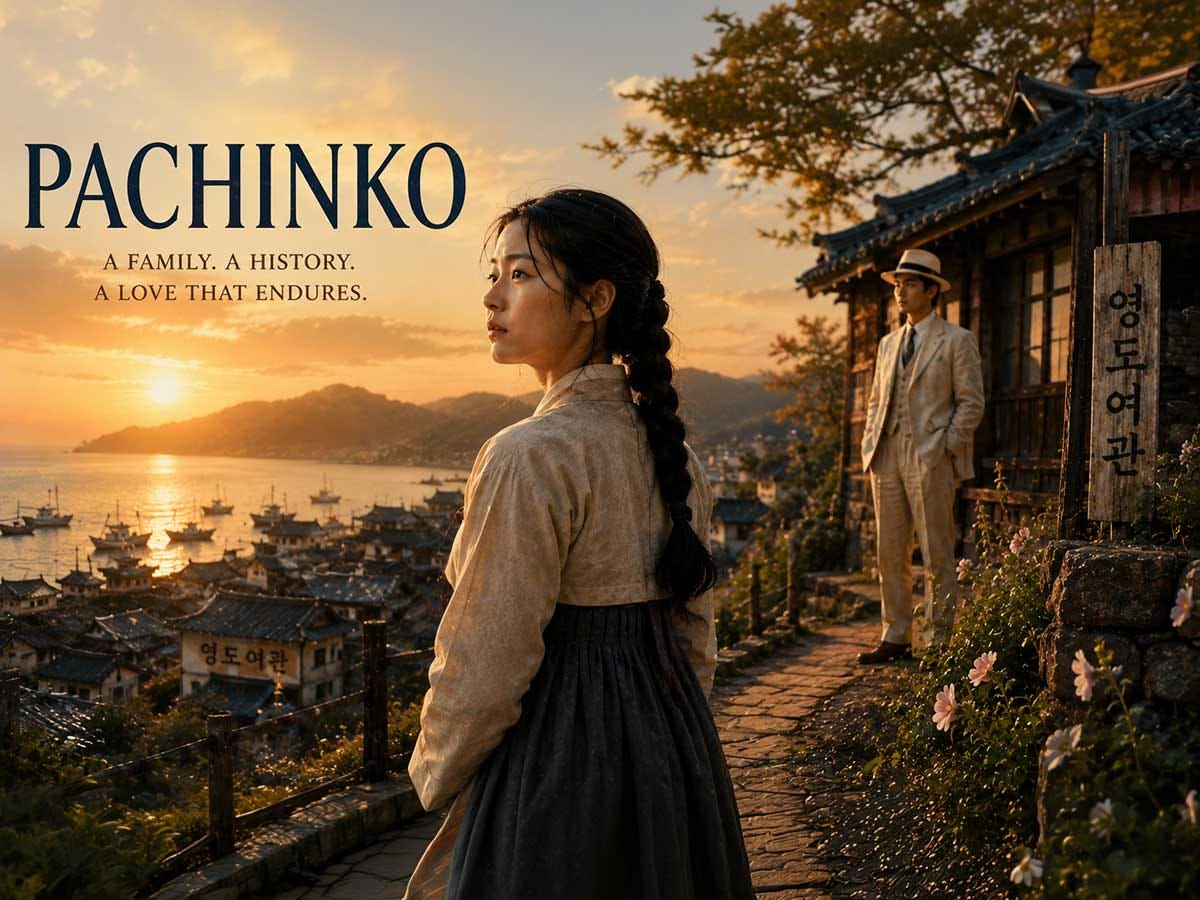
Families rarely inherit only stories.
They inherit silences.
A truth withheld to protect a child. A sacrifice no one fully explains. A shame carried by one generation and quietly handed to the next. A choice made decades earlier that still shapes people who were not yet born.
That is one of the deepest emotional forces in Min Jin Lee’s Pachinko.
The novel follows four generations of one Korean family living through colonial rule, migration, discrimination, poverty, ambition, and loss. Yet beneath the historical sweep is something more intimate: a family trying to survive the consequences of what it cannot say aloud.
Sunja carries a secret.
Hansu carries control disguised as protection.
Noa carries an identity he does not fully know.
Mozasu carries anger.
Solomon carries the expectation that his generation must finally prove the family’s suffering was worthwhile.
Each person believes he or she is protecting someone.
Each act of protection creates another burden.
The Secret That Begins Everything
Sunja’s pregnancy becomes the first great turning point.
She discovers that Koh Hansu, the man she loves, is already married. He offers security, money, and protection, but not an honorable life on her terms.
Sunja refuses.
Her decision becomes an act of dignity, yet it sets the family on a path filled with hardship.
Isak marries her and accepts her unborn child as his own. His compassion gives Sunja a future she could not have created alone. Still, the truth about Noa’s parentage remains hidden.
At first, the silence appears merciful.
Why burden a child with a truth that might bring shame?
Why reveal something that could destroy his sense of belonging?
Why reopen a wound when survival already demands so much?
This is how family secrets usually begin.
Not with cruelty.
With fear.
When Protection Becomes Control
Hansu believes he is protecting Sunja and Noa.
He watches from a distance. He uses money and influence. He arranges opportunities. He intervenes without fully revealing himself.
From his point of view, this is love.
From another point of view, it is control.
Love asks what another person needs.
Control decides what another person should need.
Hansu repeatedly crosses that line.
He wants to protect Sunja without surrendering his hold over her life. He wants to help Noa without allowing Noa to know the truth. He acts from fear, pride, affection, and possession at the same time.
That mixture is what makes him such a compelling character.
He is not simply heartless.
He is a man who confuses protection with ownership.
Many families repeat this pattern in quieter ways.
A parent hides financial trouble so the children will not worry.
A mother conceals a painful history so her son will feel free.
A father directs a child’s education, career, or marriage while calling it guidance.
The intention may be love.
The result may still be harm.
Noa and the Cost of a Hidden Identity
Noa spends much of his life trying to become acceptable.
He studies.
He works.
He distances himself from the parts of his identity that society despises.
He believes achievement can create safety.
Then he learns the truth about his father.
The discovery does more than change one fact about his life. It alters the meaning of everything that came before it.
He learns that the people closest to him knew something central about him and decided he could not bear it.
That is the deepest wound of many family secrets.
The secret itself matters.
The concealment often matters more.
A hidden truth says:
We did not trust you with your own life.
We decided who you were allowed to be.
We believed the truth would destroy you.
In trying to protect Noa from shame, the family makes shame more powerful.
It becomes the unseen force shaping his identity.
Mozasu Chooses a Different Response
Mozasu does not try to disappear.
He does not seek approval from the same society that rejects him.
He enters the pachinko business and builds success on his own terms.
His response to shame is the opposite of Noa’s.
Noa tries to become invisible.
Mozasu makes himself impossible to ignore.
Yet Mozasu carries his own burden.
His anger becomes fuel.
His rejection becomes ambition.
His success gives him money, choices, and influence, but it does not free him from the past.
He later passes his hopes to Solomon.
Like many parents, he wants his son to enter rooms that were closed to him. He pays for better schools, better opportunities, and a more respected path.
He believes he is giving Solomon freedom.
Solomon experiences part of it as a script.
This is another way family burdens travel.
One generation survives.
The next generation must succeed.
The generation after that must justify the sacrifice.
Soon, a child’s life is no longer only his own.
It becomes evidence that the family’s suffering had meaning.
The Debt Children Never Agreed to Owe
Parents often say they want their children to be happy.
Many secretly need their children to prove something.
That the immigration was worth it.
That the poverty was worth it.
That the long hours were worth it.
That the humiliation was worth it.
That the family moved forward.
This creates a debt no child can fully repay.
Solomon inherits more opportunities than the generations before him, yet he carries pressure they did not name.
He must be more educated than Mozasu.
More accepted than Noa.
More secure than Sunja.
More respectable than Hansu.
He must become the answer to the family’s history.
That is too much weight for any one life.
Children can be grateful without becoming repayment.
They can honor sacrifice without surrendering their own identity.
They can love their parents without completing every unfinished dream.
One of the most meaningful ideas in this family story is that the greatest gift a parent can give may not be sacrifice itself.
It may be freedom from the debt of sacrifice.
Silence Does Not End Pain
Families often believe that time will bury what they do not discuss.
It rarely does.
Pain changes form.
A secret becomes anxiety.
Shame becomes perfectionism.
Fear becomes control.
Loss becomes anger.
A child may never know the original event, yet still live inside its consequences.
This is why generational pain can feel mysterious.
A person reacts strongly without knowing why.
A parent becomes controlling without seeing the fear beneath it.
A family avoids certain subjects for so long that no one remembers how the silence began.
The past does not disappear.
It becomes behavior.
What Should Be Passed Down?
The characters in Pachinko inherit more than wounds.
They inherit endurance.
They inherit work ethic.
They inherit loyalty.
They inherit faith.
They inherit the instinct to protect one another.
That is what makes the story more than a tragedy.
Families pass down pain, but they can pass down courage too.
The question is not whether one generation can completely escape the past.
The better question is this:
What deserves to continue?
A parent may pass down strength without passing down fear.
A family may preserve memory without preserving shame.
A child may honor the past without repeating it.
Healing does not require forgetting history.
It requires telling the truth about what history did.
The Conversation Families Rarely Have
What would happen if Sunja, Hansu, Isak, Mozasu, and Solomon could sit at one table?
What would Sunja admit about the truth she hid?
Would Hansu recognize the difference between love and possession?
Would Mozasu acknowledge that success did not free him from anger?
Would Solomon finally say that he never wanted to become proof that every sacrifice was justified?
These are the questions explored in the full imaginary conversation inspired by Pachinko.
The conversation does not try to rewrite the novel.
It gives the characters a space to confront the emotional truths that remained unfinished.
Continue the full conversation:
https://imaginarytalks.com/pachinko-min-jin-lee-imaginary-conversation/
The conversation is imaginary and inspired by fictional characters and themes from Min Jin Lee’s Pachinko. It does not represent real statements, interviews, or events.
Family secrets often begin as protection.
They survive as fear.
They end only when someone decides that the next generation deserves truth more than silence.
메타데이터
- post_id
- 1093271ca7cb
- slug
- what-pachinko-teaches-us-about-the-secrets-families-pass-down-1093271ca7cb
- url
- https://medium.com/@nicksasaki/what-pachinko-teaches-us-about-the-secrets-families-pass-down-1093271ca7cb
- canonical_url
- https://medium.com/@nicksasaki/what-pachinko-teaches-us-about-the-secrets-families-pass-down-1093271ca7cb
- author_url
- https://medium.com/@nicksasaki
- status
- ok
- fetched_at
- 2026-08-07 14:50:00




