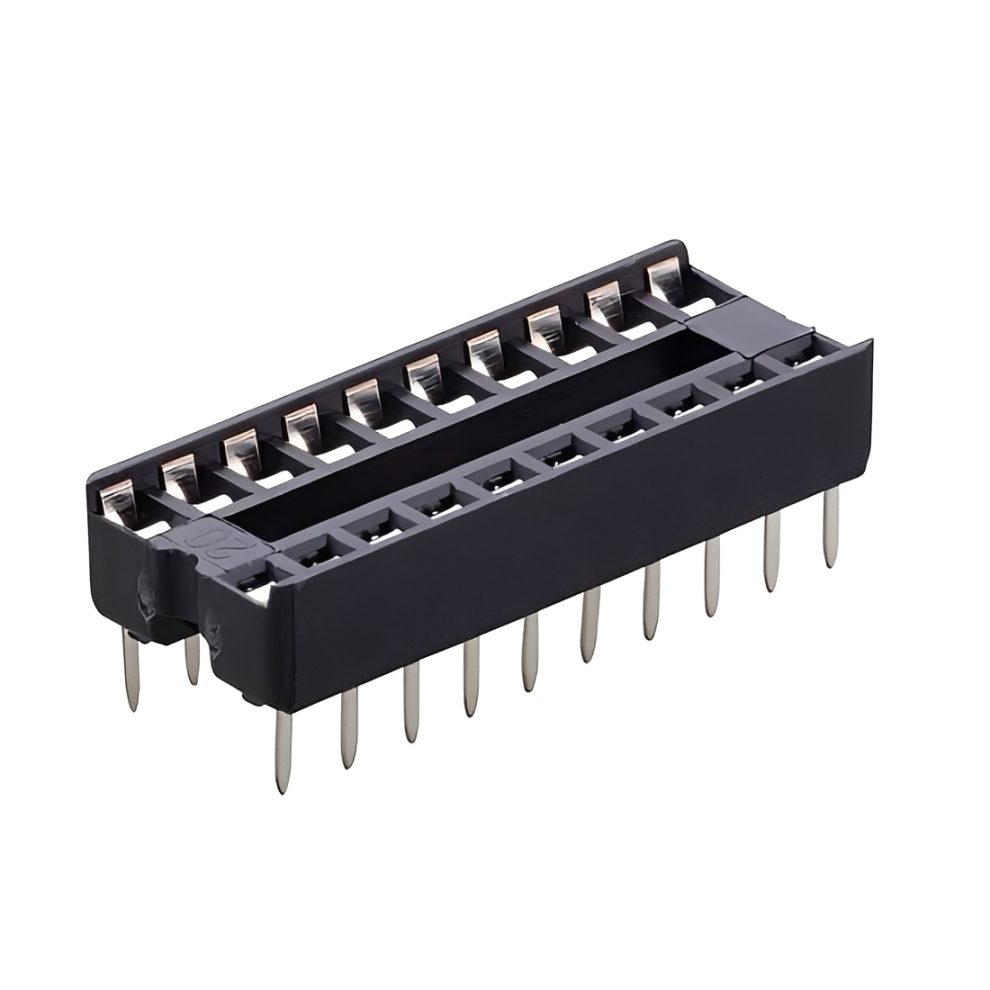
What Are Transistor Arrays (BJTs) and Why Are They Essential in Modern Electronics?
Introduction to Transistor Arrays (BJTs)
What Are Transistor Arrays (BJTs) and Why Are They Essential in Modern Electronics?
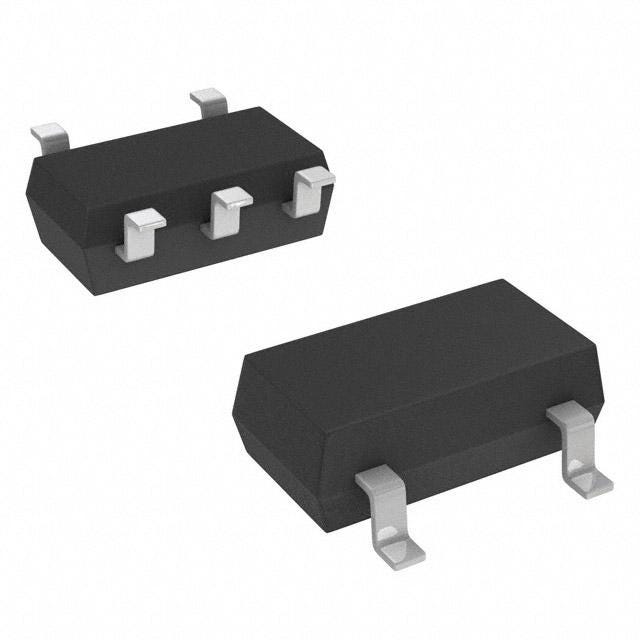
Transistor Arrays (BJTs)
Introduction to Transistor Arrays (BJTs)
Transistors are the building blocks of modern electronics, with Bipolar Junction Transistors (BJTs) being one of the most widely used types. Among their variations, BJT transistor arrays have gained significant attention for their ability to integrate multiple BJTs into a single compact package. These arrays are designed to simplify circuit design, save board space, and improve reliability in electronic applications. Typically used in switching and amplification tasks, BJT arrays are ideal for applications that require multiple transistors to operate in tandem. Their availability in different configurations, such as matched pairs or Darlington pairs, further enhances their flexibility.
Why Choose Bipolar (BJT) Transistor Arrays?
Opting for **BJT transistor arrays** means choosing performance, space efficiency, and reliability. Designers often face challenges when managing numerous discrete transistors on a single PCB. Transistor arrays eliminate the complexity of layout and wiring by integrating multiple BJTs into one encapsulated form. Moreover, these arrays are commonly pre-matched for gain, making them ideal for analogue circuits where balance is critical. Whether you’re building a complex amplifier, a digital driver circuit, or a signal switching system, transistor arrays offer simplicity without compromising performance.
Types of Bipolar Transistor Arrays
Understanding the various types of transistor arrays enables engineers to select the most suitable solution for their specific use cases. Here are the most common forms:
- Matched Pairs These contain two or more **transistors** with closely matched parameters, ideal for differential amplifier designs or circuits that require symmetry in gain characteristics.
- Darlington Pairs These are two BJTs connected to achieve a higher current gain. They are ideal for applications requiring high input impedance and high amplification.
- High-Voltage Arrays Designed for power applications, these arrays can handle higher voltages and are suitable for use with motor drivers and power regulators.
- Low-Noise Transistor Arrays Used in audio or RF circuits, these arrays minimise unwanted noise and improve signal clarity.
Key Features of BJT Transistor Arrays
Transistor arrays are engineered with performance and integration in mind. Here are the standard features that make them popular in modern circuit design:
- Compact Packaging — Multiple transistors housed in a single IC reduce PCB space and enhance board density.
- Thermal Consistency — Integrated design ensures all transistors operate within the same **thermal** conditions, improving performance reliability.
- Pre-Matched Gain — Ensures consistent performance across transistors, essential for analogue and signal processing applications.
- Increased Reliability — Fewer solder points and interconnections reduce the risk of failure.
- Simplified Circuit Design — Ideal for designers aiming to reduce component count and assembly complexity.
Benefits of Using Transistor Arrays
Integrating transistor arrays into your projects offers numerous advantages, especially in terms of design efficiency and performance scalability.
- Minimised Component Footprint — Ideal for space-constrained designs like portable or wearable electronics.
- Improved Circuit Performance — Matching within the array ensures balanced **electrical** behaviour.
- Faster Assembly and Reduced Costs — Fewer discrete components mean simpler PCB layouts and lower manufacturing time.
- Scalability for Mass Production — Easily replicated across multiple boards, making them ideal for high-volume production runs.
- Versatile Application Support — Suitable for analogue, digital, and mixed-signal circuit designs.
Common Applications of Bipolar Transistor Arrays
Transistor arrays are versatile and can be found across a wide variety of sectors, from consumer electronics to industrial control systems.
- Signal Switching Used in relay replacement circuits, audio switching, and multiplexing applications.
- Amplification Circuits Essential in preamplifiers, operational amplifier stages, and analogue signal processing.
- Motor Drivers Ideal for small DC motor control systems, this device offers reliable switching capabilities with integrated protection features.
- LED Display Drivers Frequently used in multiplexed **LED displays** or bar graph driver circuits due to their uniform current capabilities.
- Comparator and Sensor Interfaces Found in industrial sensors and logic-level converters, ensuring accurate signal conditioning and processing.
- Analogue Audio Systems Enable consistent signal amplification in audio mixers, equalisers, and radio frequency tuners.
Popular BJT Transistor Array Models
Here are some well-known transistor array models used across industries:
- ULN2003A A high-voltage, high-current Darlington transistor array with seven open-collector outputs — ideal for driving **LEDs**, motors, and relays.
- CA3086 A general-purpose array containing five independent NPN transistors used in analogue applications and switching.
- MPQ3904 A quad NPN transistor array suited for digital logic-level control and signal switching tasks.
- MC1413 Offers multiple Darlington pairs and includes internal clamp diodes for inductive load protection, often used in stepper motor driving.
Design Considerations When Using BJT Arrays
While BJT transistor arrays are incredibly useful, several design factors must be considered to ensure optimal performance.
- Thermal Dissipation Always consider the total power dissipation of the package and use heat sinks or proper PCB design to dissipate heat efficiently.
- Load Matching Ensure each transistor in the array is suited for its respective load in terms of current and voltage handling.
- Pin Configuration Awareness Review datasheets carefully to ensure the correct pins are aligned with your circuit design, avoiding damage to the IC.
- EMI Considerations Proper grounding and bypass **capacitors** may be needed to reduce electromagnetic interference in sensitive designs.
Final Thoughts on Transistor Arrays (BJTs)
Transistor arrays, particularly those based on Bipolar Junction Transistors (BJTs), are powerful tools in the hands of designers looking to optimise circuit complexity, board space, and cost. Their integration into a single, thermally consistent package makes them ideal for both analogue and digital applications. Whether you’re working on a small embedded system or a high-end industrial automation board, BJT arrays can provide the performance and convenience needed for streamlined development. As demand for compact, energy-efficient electronics grows, so does the relevance and necessity of these valuable components in the electronics ecosystem.
메타데이터
- post_id
- 10a0b60f0a85
- slug
- what-are-transistor-arrays-bjts-and-why-are-they-essential-in-modern-electronics-10a0b60f0a85
- url
- https://medium.com/@joddiemarshall6/what-are-transistor-arrays-bjts-and-why-are-they-essential-in-modern-electronics-10a0b60f0a85
- canonical_url
- https://medium.com/@joddiemarshall6/what-are-transistor-arrays-bjts-and-why-are-they-essential-in-modern-electronics-10a0b60f0a85
- author_url
- https://medium.com/@joddiemarshall6
- status
- ok
- fetched_at
- 2026-08-22 12:38:08