AI For Cybersecurity
By: Karim Hassan — Mohammed Farghaly—Sara MohyElden — Si-Vision
AI For Cybersecurity
By: Karim Hassan — Mohammed Farghaly—Sara MohyElden — Si-Vision
In today’s hyperconnected world, cyber threats are evolving at an unprecedented pace. Traditional cybersecurity methods, while still vital, often struggle to keep up with the scale, speed, and complexity of modern cyberattacks. The rapid advancements in the field of Artificial Intelligence (AI) offer a powerful opportunity to close the gap between emerging cybersecurity threats and the defense mechanisms designed to counter them.
Some of the key applications of AI in cybersecurity include:
- User Authentication
- Threat Detection
- Predictive Security
- Automated Incident Response
- Phishing Detection and Prevention
In the following sections, each of these applications will be explained in detail.
User Authentication User authentication is the process of verifying a user’s identity to ensure only authorized individuals gain access to a system, device, or network.
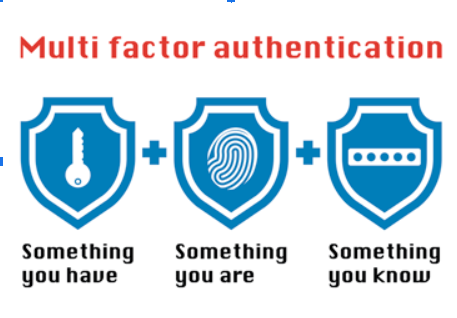
There are 3 major authentication factors:
- Something you know
- Something you have
- Something you are
Let’s explore how each one of them can be more effective using AI by example .
Something you know
The most used example of “Something you know” factors is passwords, if an attacker could know the password of one of the users he can easily have access to the system and pretend to be the user. A few ways to improve this is using keystroke dynamics to verify that the person with the password is the authenticated user. It has been proved that the writing pace on the keyboard for humans is something unique that can not be mimicked like your fingerprint. So having an AI model which can identify the user using both the passwords and the writing pace of the user typing the password can provide an extra layer of security that is very hard to exploit.
Something you have
The most used example of “Something you have” factors is using a mobile device as a security token. The user receives a one-time password (OTP) or push notification on their smartphone to confirm identity.
For this example, context can be crucial, and a risk score can be assigned to each authentication attempt based on its context. AI can analyze context like location, time, network type, and device health. If a login attempt comes from an unusual country or on a rooted/jailbroken phone, AI assigns a high risk score and can trigger additional verification steps.
Something you are
The “what you are” factor refers to biometric authentication, which relies on unique physical or behavioral characteristics to verify identity. Examples include fingerprints, facial recognition, iris or retina scans, voice patterns, and even behavioral traits like typing rhythm or gait.
AI-driven computer vision and deep learning algorithms can process biometric data with exceptional precision. For example, modern facial recognition systems analyze thousands of facial points and adapt to changes like aging, lighting conditions, or the presence of glasses or facial hair, minimizing false positives and false negatives.
It is also hard to mimic as AI-powered liveness detection can distinguish between a real user and fraudulent attempts like using photos, masks, or deepfakes. Techniques such as 3D facial mapping and micro-expression analysis ensure that only live, legitimate users are authenticated.
Threat Detection
AI models can identify patterns and anomalies in vast volumes of data which makes it very effective in malware and anomaly detection. As it can detect and handle threats that traditional security systems can’t handle. One example of such threats is Polymorphic malware.
A Polymorphic malware is a type of malware designed to change its code structure each time it executes, while preserving its original functionality. The primary goal of polymorphism is to avoid detection, especially by Traditional malware detection systems, Even if one instance is detected, subsequent variants may appear completely different to signature-based tools.
So, in most cases AI driven security systems excel in comparison to traditional security systems especially with these kinds of sophisticated attacks.
Malware Detection: Traditional malware detection relies on known signatures and hash-based matching, which is ineffective against polymorphic, and zero-day malware that continues to appear every day. Having an AI-driven security system is crucial to handle such complex malwares.
AI-based malware detection addresses these limitations by analyzing both static and dynamic characteristics of malicious software.
Static malware analysis using AI examines features such as file structure, opcode sequences, imported libraries, and metadata without executing the file. Machine learning models classify suspicious binaries by identifying patterns commonly associated with malicious code, even when the malware has been packed or lightly obfuscated.
Dynamic malware analysis using AI observes runtime behavior in sandboxed or live environments. Models analyze system calls, memory access patterns, network connections, and file operations to identify malicious intent rather than specific signatures.
Representative use cases include:
- Detecting polymorphic malware by recognizing malicious behavioral patterns despite frequent code changes
- Identifying fileless malware through anomalous scripting, memory injection, and registry manipulation
- Classifying ransomware based on abnormal file access rates, entropy changes, and encryption behavior
- Detecting malicious macros and embedded payloads in documents using behavioral and content-based analysis
Anomaly Detection: AI learns what “normal” network behavior looks like. When an unusual pattern arises such as an unexpected spike in data transfers or unauthorized access attempts the system flags it for immediate attention which can stop attacks like the Distributed Denial Of Service (DDOS) attacks.
Unlike signature-based detection, anomaly detection does not rely on prior knowledge of specific attacks, making it highly effective against zero-day threats, insider misuse, and advanced persistent threats (APTs).
Reinforcement learning (RL) enhances anomaly detection by allowing detection systems to improve their accuracy through feedback. Instead of relying only on historical data, RL-based systems learn from outcomes such as whether an alert was confirmed as malicious or dismissed as benign and adjust future responses accordingly.
One of the main goals of reinforcement learning is to ensure that once a vulnerability has been exploited and identified, it is addressed in a way that prevents it from being exploited again. For example, if certain anomalous behaviors repeatedly result in confirmed incidents, the system increases their risk weighting. On the other hand, behaviors repeatedly marked as false positives will have lower priority on future predictions. This continuous learning process makes the system more powerful over time and decreases the likelihood of future security incidents .
A real life example can be that if a user logs in from a new country. Alone, this may be benign. However, when followed by abnormal access to sensitive systems and large data downloads, anomaly detection flags a high-risk incident. Reinforcement learning refines the system’s response based on past outcomes of similar events.
Predictive Security
Predictive security means using AI to predict the occurrences of cyber attacks before they actually happen. Predictive security focuses on identifying early indicators of malicious intent and potential attacks patterns, enabling proactive risk mitigation. These models use historical data of successful attacks to learn to detect patterns that usually preceded attacks such as reconnaissance activity, gradual privilege escalation, or repeated probing of specific assets and use this information to predict where and how future attacks are most likely to occur.
Predictive security and penetration testing are tightly connected to each other. Predictive security tells the penetration tester what to test, what to focus on, which findings should be given higher priority. Predictive models analyze attack trends, asset exposure, and historical exploit data to identify vulnerabilities most likely to be targeted next, allowing penetration testers to focus on high risk and most likely to happen attack scenarios rather than systematic periodic testing.
On the other hand, penetration testing also provides valuable data such as exploited vulnerabilities and successful attack data discovered during testing which can be used for retraining predictive models and validating assumptions, which makes a continuous improvement loop where predictive security guides penetration testing, and penetration testing outcomes improves the prediction accuracy of the predictive security models.
The following diagram shows the relationship between penetration testing and predictive security:

An example of the usage of predictive security will be as follows:
A predictive security system detects that a server is being repeatedly scanned for open ports and configuration details over several days. Although no exploitation has occurred yet, the pattern matches behavior seen before in past attacks. The system flags the server as high risk and increases monitoring to try to detect and prevent exploitation before an attack happens.
Automated Incident Response
Automated incident response uses security tools to take action as soon as a threat is detected, without waiting for manual intervention. Instead of relying on security teams to respond to every alert, the system automatically performs predefined response actions.
These actions may include isolating an infected device, locking a compromised account, blocking a malicious domain, or stopping suspicious network traffic. Automation helps contain threats quickly, reducing the time attackers have to cause damage.
An example of automated incident response using AI can be: A workstation suddenly begins communicating with an unknown external server and executing unusual processes. The AI system classifies the behavior as high risk, isolates the device from the network, blocks the destination domain, and alerts the security team. The threat is contained automatically before it spreads to other systems.
Key capabilities of these AI-driven Automated Incident Response systems include:
- Smart Alert Management
- Targeted Threat Containment
- Automated Recovery and Cleanup
Smart Alert Management
In the recent few years , AI handles most of the work in any SOC (Security Operations Center) and having a lot of alerts can be very misleading for the security team. Using to filter and group the alert is always a valuable help to the team in order to focus only on what really matters as follows:
- Intelligent Grouping: If a hacker tries to log in to 50 different accounts (Credential Stuffing), a human would see 50 alerts. AI sees one Incident and automatically groups all related telemetry.
- Automatic Forensics: As soon as an alert occurs, AI gathers all relevant information automatically such as : user login history, device memory activity, and the IP address reputation. so a complete report is ready for the security team to review it.
- False Positive Filtering: Using Behavioral Baselines, the AI knows that “John from Accounting” accessing a server at 2 AM is normal for him because he’s on a business trip in Tokyo. It suppresses the alert, saving hundreds of hours of manual review.
Targeted Threat Containment
Old automation used to just shut down the server , which caused massive business downtime. AI-based security tools use surgical containment.
Surgical Containment is a modern cybersecurity strategy where only the malicious parts of a system are stopped or isolated, instead of shutting down the entire devices or networks. Below are some examples of surgical containment techniques:
- Process Suspending: Instead of shutting down a server, the AI tools identify the specific malicious “hidden” process (like a ransomware encryptor) and freeze only that process while letting the employee continue working.
- Identity-Based Isolation: If a user’s credentials are stolen, the AI doesn’t just block their account; it triggers a step-up authentication request. It forces a biometric check or hardware key (MFA) for every single click the user makes until the threat is cleared.
- Micro-Segmentation: The AI can automatically reconfigure the company’s “Software-Defined Network” to put the infected device in a “digital cage” (VLAN) where it can’t see any other servers.
Automated Recovery and Cleanup
Modern AI-based incident response goes beyond detection and containment. These systems can restore affected data, block exploit attempts, and remove hidden backdoors automatically, performing key actions such as:
- Automated Rollbacks: If ransomware manages to encrypt 100 files before being stopped, the AI integrates with cloud backups to automatically restore those specific files to their version from before the incident.
- Vulnerability Shadow-Patching: If an attacker gets in through a software bug (Zero-Day), the AI writes a temporary filter rule for the firewall that blocks that specific type of traffic, effectively “patching” the hole without needing a reboot.
- Persistence Removal: AI tools scan for backdoors the hacker might have left behind such as new admin accounts or scheduled tasks and delete them automatically.
Phishing Detection and Prevention
Phishing remains one of the most common cyber threats, with increasingly sophisticated social engineering tactics.
AI-driven systems go beyond blacklists of “bad” websites and words. They use multiple layers of analysis to spot a scam such as:
- Natural Language Processing
- Computer Vision (Image Recognition)
- URL and Domain Analysis
Natural Language Processing
Traditional filters look for specific keywords. On the other hand, AI uses Nature language Processing (NLP) to analyze the text and understand intentions and emotions to classify it as a phishing attempt or not.
- Urgency Detection: It flags phrases like “Act now or your account will be deleted” as high-pressure tactics.
- Style Analysis: AI can learn a specific executive’s writing style. If an email claiming to be from the CEO uses different sentence structures or vocabulary, it flags a potential Spear Phishing or Business Email Compromise (BEC) attack.
Computer Vision (Image Recognition)
Phishers often use images or logos to bypass text-based filters. AI “looks” at the webpage or email to see if it’s mimicking a brand and hides malicious intent in images or QR codes (Quishing) to bypass text scanners.
- Fake Login Pages: If a page looks 100% like a Microsoft login but is hosted on a suspicious domain, AI computer vision will flag the visual impersonation.
- Logo Detection: AI scans the pixels of a website. If it sees a perfect Microsoft or Google logo but the URL doesn’t match the official domain, it immediately blocks the page.
- OCR (Optical Character Recognition): AI reads text inside images. If an attacker sends a screenshot of an “account suspended” notice instead of typing it, the AI extracts the text to analyze the threat.
URL and Domain Analysis
AI model evaluates web links and domain names to identify malicious or high-risk resources. AI models analyze factors such as domain age, structure, DNS behavior, and historical reputation to detect phishing and malware delivery Blocking malicious URLs before a user clicks it.
- Typosquatting: Detecting rnicrosoft.com instead of microsoft.com.
- Entropy & Age: It checks how “random” a URL looks and how recently the domain was registered. A domain that is only 2 hours old and asking for a password is an immediate red flag.
Conclusion
As we have explored throughout this study, the integration of Artificial Intelligence into cybersecurity is no longer a luxury but a fundamental necessity for digital resilience. In an era where cybercriminals utilize AI Predator Swarms to launch attacks at machine speed, the traditional reliance on human-led, reactive security measures is no longer sufficient. Organizations must adopt proactive, AI-driven strategies that can anticipate, detect, and respond to threats in real time, ensuring robust protection of critical systems, sensitive data, and business continuity.
메타데이터
- post_id
- 10ca100e9d5f
- slug
- ai-for-cybersecurity-10ca100e9d5f
- url
- https://medium.com/si-vision-tech-blog/ai-for-cybersecurity-10ca100e9d5f
- canonical_url
- https://medium.com/si-vision-tech-blog/ai-for-cybersecurity-10ca100e9d5f
- author_url
- https://medium.com/@kareemhassan695
- status
- ok
- fetched_at
- 2026-06-14 11:28:49