You Read What You Are: Why Misinterpretation Is the Human Default
Why People Don’t Really Respond to What You Write
You Read What You Are: Why Misinterpretation Is the Human Default

Why People Don’t Really Respond to What You Write
One of the strange frustrations of writing — especially in online spaces — is discovering how often people respond to things you never actually said. A post you wrote with care and precision somehow becomes distorted, projected upon, or turned into something entirely unrecognizable. Readers accuse you of positions you do not hold or react defensively to arguments you never made.
It took me years to understand that this is not unusual. It is how the human mind works.
The old saying “you read what you are” may sound poetic, but it turns out to be psychologically exact and neuroscientifically accurate. People aren’t responding to your words. They’re responding to their interpretation of your words, an interpretation shaped far more by their inner world than by your intention.
Perception Is Not Raw Data — It Is a Construction
We imagine that perception is simple: the world sends us information, and we receive it objectively. But modern neuroscience has dismantled this comforting illusion.
The brain is not a camera. It is a predictive engine.
What we see, hear, and understand arises from a blend of:
- bottom-up sensory input, and
- top-down expectations, memories, emotions, biases, and predictions.
In fact, cognitive scientists now believe that the majority of what we “perceive” originates in these top-down processes, not in the senses themselves.
This has profound implications for reading. The text on a screen consists only of shapes — minimal visual data. Everything else that gives the text meaning comes from the reader’s mind:
- their personal history
- their beliefs and ideology
- their attachment to certain identities
- their fears and hopes
- their emotional state
- their trauma
- their cognitive habits
- their unexamined assumptions
Two readers encountering the same sentence are not receiving the same meaning. They are constructing two entirely different realities.
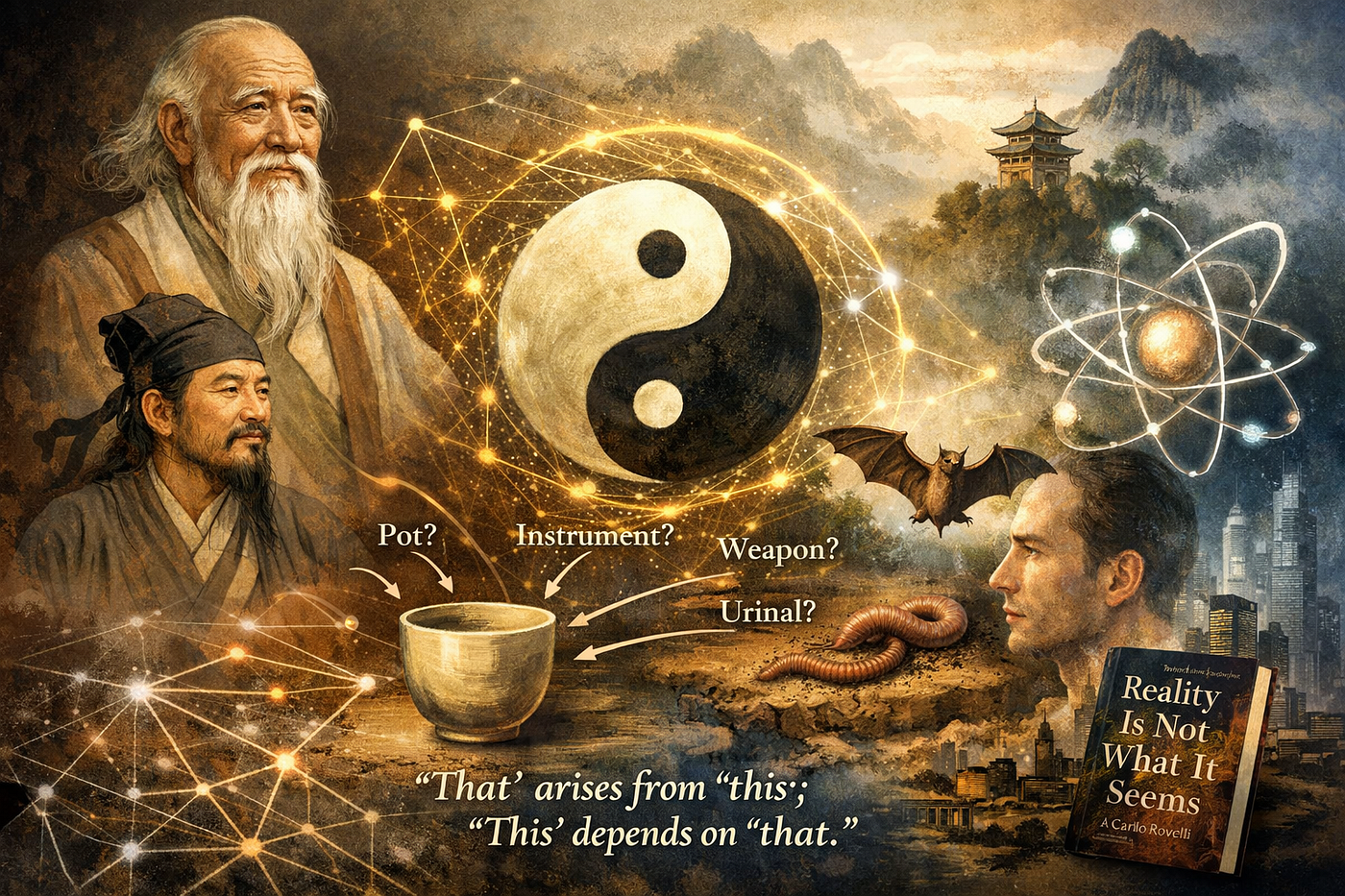
Meaning isn’t in the words. Meaning is manufactured by the reader.
Why People React to Their Own Minds Instead of to the Text
This is why a piece of writing so often becomes a springboard for readers to express something personal. They cannot help but insert themselves into the text. If the topic touches something emotionally fraught — politics, religion, identity, moral values — the amygdala quickly overrides the prefrontal cortex.
Neuroscience calls this an amygdala hijack.
Once triggered, people lose the ability to read accurately. They misinterpret because they are no longer engaging with the text. They are engaging with their reaction to the text.
This is why someone can become angry at a sentence that never existed. Their response is real — but its source lies entirely within their own conditioned mind. Your writing functioned not as a message but as a mirror. They saw their own reflection and mistook it for yours.
Ancient Wisdom Meets Modern Brain Science
Long before neuroscience, depth psychology and Buddhism understood this phenomenon.
Jung
Jung argued that projection is the primary mechanism through which we misread others. The traits we suppress or deny in ourselves appear exaggerated in the people around us. When someone reacts intensely to your writing, you may be witnessing their unconscious speaking through the veneer of critique.
Buddhism
Early Buddhist teachings describe perception as conditioned by saṅkhāra — the mental formations that shape how we experience the world. We never see “things as they are.” We see what our minds add to them.
Neuroscience now affirms what the Buddha taught 2,500 years ago: Perception is not objective. It is constructed. And the construction happens automatically.
Why Clarity Does Not Guarantee Understanding
Writers often assume that if they are clear, readers will understand. But comprehension depends far more on the reader’s capacities than on the writer’s precision:
- emotional stability
- cognitive flexibility
- openness to nuance
- willingness to question assumptions
- ability to tolerate ambiguity
If these skills are weak, even the clearest writing will be misread.
Every great teacher in history — Buddha, Confucius, Jesus, Einstein — was misunderstood by their contemporaries. Misinterpretation is not a literary failure. It is a human one.
The Paradox of Depth: The Deeper You Go, the More People Project
When a writer explores nuanced or challenging ideas, many readers feel destabilized. A deep argument threatens simple narratives. A subtle distinction undermines ideological certainty.
Insecurity then masquerades as criticism.
The more thoughtful the writing, the more personal the projections become. The reader overlays their:
- fears
- beliefs
- insecurities
- wounds
- identity structures
onto the text. They mistake this projection for interpretation and then attribute it to you.
Depth invites distortion because depth requires capacities that not all readers possess.
A Mirror More Than a Message
After years of writing and engaging with readers, I have come to accept the following insight as both liberating and sobering:
Most people do not respond to what you actually say. They respond to what they think you said, and what they think you said is shaped by who they are.
Neuroscience confirms it. Psychology explains it. Buddhism anticipated it.
Perception is not raw data. It is a construction. And to write is to hold up a mirror.
What people see reflected in it often has little to do with the writer at all.
메타데이터
- post_id
- 10dc8d0fa434
- slug
- you-read-what-you-are-why-misinterpretation-is-the-human-default-10dc8d0fa434
- url
- https://medium.com/@kleong54/you-read-what-you-are-why-misinterpretation-is-the-human-default-10dc8d0fa434
- canonical_url
- https://medium.com/@kleong54/you-read-what-you-are-why-misinterpretation-is-the-human-default-10dc8d0fa434
- author_url
- https://medium.com/@kleong54
- status
- ok
- fetched_at
- 2026-06-24 11:06:28