Why AI Ops is the Future of Scalable Business Operations
An effective AIOps strategy integrates machine learning and big data to automate IT operations, allowing businesses to identify…
Why AI Ops is the Future of Scalable Business Operations
An effective AIOps strategy integrates machine learning and big data to automate IT operations, allowing businesses to identify, troubleshoot, and resolve infrastructure issues before they impact the end user.
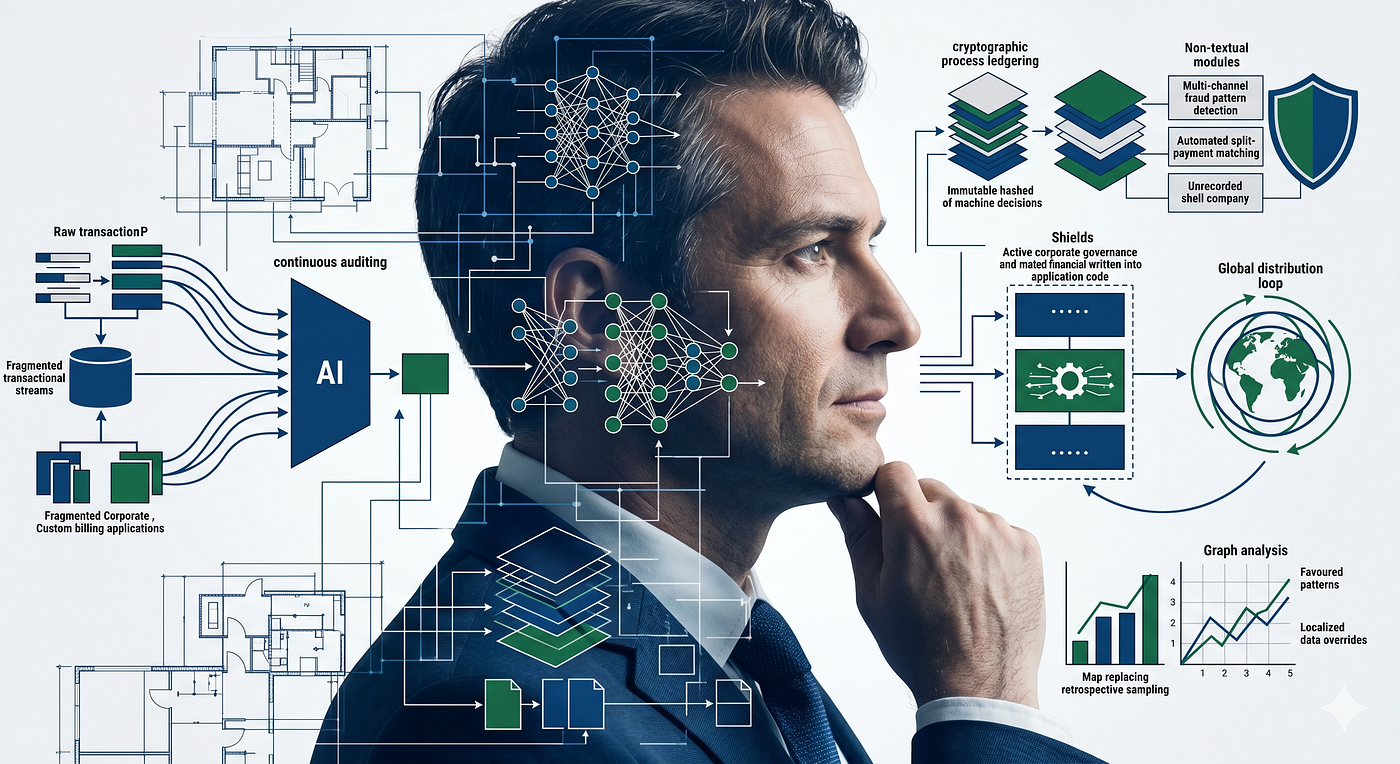
By shifting from reactive monitoring to a predictive model, organizations can handle the massive telemetry data generated by modern cloud environments that exceed human cognitive limits. This approach uses algorithmic analysis to correlate alerts, suppress noise, and initiate self-healing workflows, ensuring that digital services remain available and performant without a proportional increase in manual oversight.
I remember a specific Tuesday three years ago when a global logistics firm lost four hours of ship-time because of a “flap” in a secondary server. Their legacy monitoring system did exactly what it was supposed to do: it screamed. It sent four thousand notifications to sixty different people in twelve minutes. By the time the right engineer found the actual root cause hidden in a sea of red text, the financial damage was done. That is the cost of operating at scale with human speed. It is a losing game. The transition to intelligent operations is not about replacing people; it is about giving them a chance to actually solve problems instead of just sifting through logs.

The Breakdown of Traditional Monitoring
Legacy systems are built on static thresholds. You set a rule that says if a CPU hit 90 percent, send an email. This worked when you had twenty servers in a basement. It fails miserably when you have ten thousand ephemeral containers in a hybrid cloud environment. In a distributed architecture, everything is connected. A latency spike in a database in Frankfurt might cause a checkout failure in New York. Traditional tools will tell you that Frankfurt is slow and New York is broken, but they won’t tell you they are the same problem.
This fragmentation leads to what we call the “War Room” culture. You get twenty smart people on a call, everyone looks at their own dashboard, and everyone says, “My part looks green.” Meanwhile, the customer is staring at a spinning wheel. The goal of a modern AIOps strategy is to provide a single, unified view that understands the topology of the system. It recognizes that the relationship between components is more important than the components themselves.
From Static Rules to Predictive Analytics
The core of this shift lies in predictive analytics. Instead of waiting for a system to break, we use algorithms to look for patterns that precede a failure. Maybe every time a specific memory leak starts, there is a tiny, three-millisecond bump in disk I/O. A human will never notice that. A machine will see it every time. By catching these precursors, the system can trigger an automated fix, like clearing a cache or spinning up a fresh instance, before the user even notices a slowdown.
Building this capability requires a massive investment in data quality. You cannot run high-end machine learning on junk data. I often see teams try to skip the “data engineering” phase and go straight to the “cool AI” phase. It never works. You have to clean the pipes before you can filter the water. This means normalizing logs from different vendors, ensuring timestamps are synced across global regions, and removing the redundant noise that clogs the engine.
The Technical Pillars of Intelligent Automation
To move beyond the hype, you have to look at the specific technical functions that make a platform work. This is where the heavy lifting happens. It is about reducing the burden on the human operator through specific, high-frequency tasks that machines simply do better.
- Noise Suppression and Event Correlation: Grouping thousands of related events into a single “incident” based on time, location, and service dependency.
- Topological Analysis: Mapping how services interact in real-time so the system understands that a failure in “Service A” is the cause of the delay in “Service B.”
- Automated Root Cause Analysis (RCA): Sifting through millions of data points to point exactly to the line of code or the configuration change that started the fire.
- Probabilistic Remediation: Suggesting the most likely fix based on how similar problems were solved in the past, or executing the fix automatically if confidence is high enough.
Managing the Cultural Shift toward Autonomy
The biggest hurdle isn’t the code; it is the trust. Engineers are naturally protective of their systems. The idea of letting an algorithm “act on its own” to restart a production database is terrifying to someone who has spent fifteen years being on-call. I have found that the best way to handle this is a “Crawl, Walk, Run” approach. Start by letting the AI suggest fixes that a human then approves with one click. Once the team sees that the machine is right 99 percent of the time, they naturally start to let go of the wheel.
This shift changes the role of the operations professional. They move from being “firefighters” to being “reliability engineers.” Instead of fixing the same disk space issue five times a day, they spend their time writing the policy that allows the AI to fix it forever. It is a move from manual labor to architectural thinking. This is how you scale. You don’t scale by hiring more people; you scale by making your people more powerful.
The Impact of IT Automation on Business Velocity
When you stop spending 80 percent of your time keeping the lights on, something interesting happens to your roadmap. You start shipping features faster. I’ve seen organizations cut their Mean Time to Repair (MTTR) by 60 percent within the first year of a serious implementation. That is not just a technical metric; it is a business metric. It means your developers are focused on the product, your customers are happy, and your brand is seen as reliable.
In a global market, “uptime” is the baseline. If your site is down for ten minutes during a peak window, your customers are already on a competitor’s app. They don’t care about your complex microservices or your legacy debt. They care that the button didn’t work. Intelligent IT automation is the only way to guarantee that the button works every time, regardless of how much traffic you are seeing or how many backend services are fluttering.
Strategy over Point Solutions
One mistake I see constantly is buying a “magic” tool that claims to do everything out of the box. AIOps is a strategy, not a software license. It requires a fundamental rethink of how you collect, store, and analyze data. If you buy a tool but don’t change your processes, you just have a very expensive way to see the same problems. You need to align your automation goals with your specific business pain points.
For some, the priority is reducing the cost of cloud waste. For others, it is preventing outages in high-frequency trading environments. The tech is flexible, but the strategy must be rigid. You have to know what success looks like before you start training the models. This requires a feedback loop between the people running the systems and the people running the business. If the AI is optimizing for “uptime” but the business needs to optimize for “cost,” you will end up with a very stable system that bankrupts the company.
Bridging the Gap to Autonomous Operations
We are heading toward a future where “NoOps” is a reality for certain types of infrastructure. We aren’t there yet, but the trajectory is clear. The systems are getting too fast and too complex for humans to manage with a keyboard and a mouse. The companies that will dominate the next decade are the ones that are building the “algorithmic muscle” today. They are the ones treating their operations data as a strategic asset.
It isn’t about the latest buzzword. It is about survival. As we push more logic to the edge and integrate more third-party APIs, the “spiderweb” of dependencies will only get thicker. You can either be trapped in that web, or you can build a system that manages it for you. The choice to invest in an AIOps strategy is the choice to be a modern, scalable enterprise rather than a legacy company waiting for its next major outage.
메타데이터
- post_id
- 10fa0a027bef
- slug
- why-ai-ops-is-the-future-of-scalable-business-operations-10fa0a027bef
- url
- https://medium.com/@sneha.patil2703/why-ai-ops-is-the-future-of-scalable-business-operations-10fa0a027bef
- canonical_url
- https://medium.com/@sneha.patil2703/why-ai-ops-is-the-future-of-scalable-business-operations-10fa0a027bef
- author_url
- https://medium.com/@sneha.patil2703
- status
- ok
- fetched_at
- 2026-06-09 15:37:30