Introduction to UX testing and prototype
Methods, goals, and importance in user-centered design
Introduction to UX testing and prototype
Methods, goals, and importance in user-centered design
In UX design, it’s easy to say we’ve made good wireframes and that they meet user needs. UX testing and prototyping help teams move beyond guesswork by putting real users at the center of the design process early and often. Prototypes make wireframes testable, while UX testing examines how these prototypes perform. Together, they form an efficient feedback loop that reduces risk, uncovers usability issues, and drives better design decisions before significant time and resources are invested.
Prototype
What does prototype mean ?
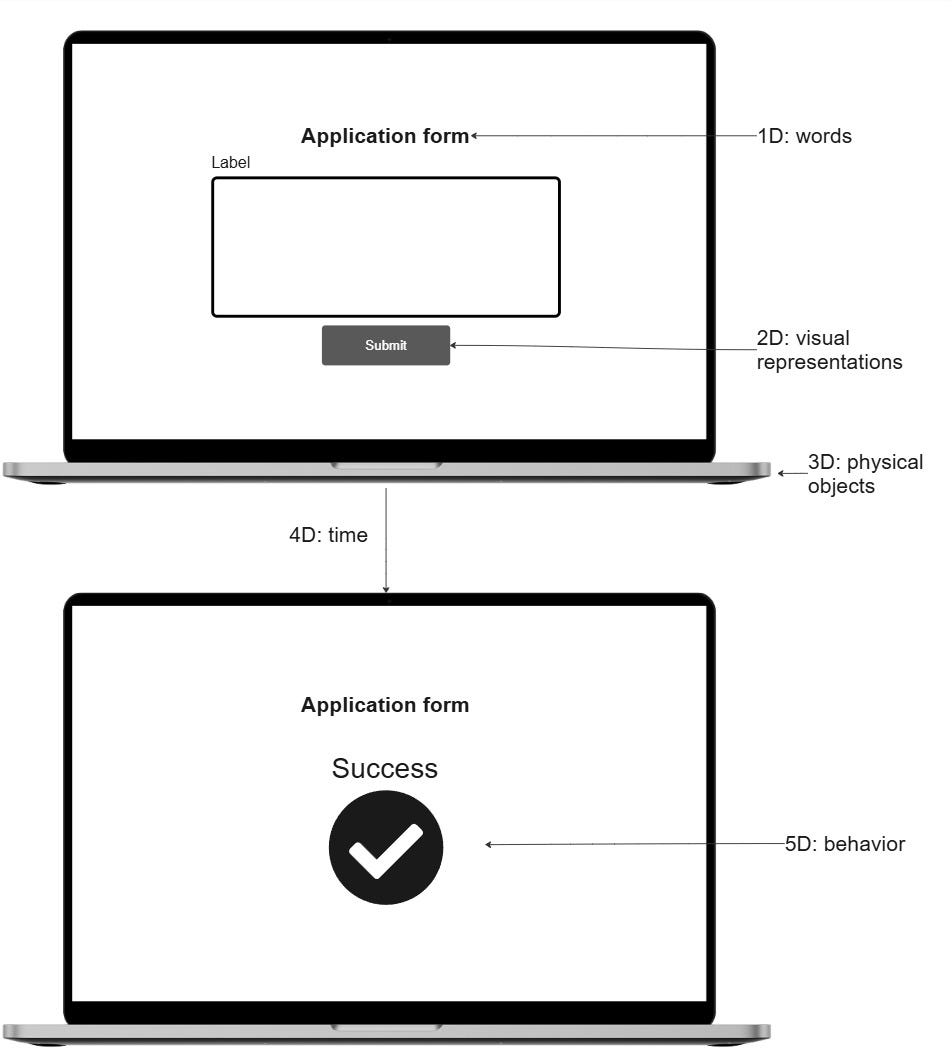
A prototype is an early sample, mock-up, or version of a product or service, created to test and validate a process or concept, and the test should be repeatable and suitable for study. It can be used in a variety of contexts in industrial, physical, and digital product design.
What does it help with?
It helps test and validate hypotheses before the product is built. A prototype is more cost-effective than developing a fully functional product without first testing the core ideas.
What types of prototypes are there?
We can make our first prototype on paper. This has the lowest cost because it only requires a piece of paper and a pen. After that, we can make a digital prototype.
We can also test different levels of prototypes. This can increase the maturity and accuracy of the prototype. We usually use three levels: low-fidelity, mid-fidelity and high-fidelity.
What types of tests can we perform?
We can do many types of testing. The main tests include: 5 sec test, usability tests, A/B test, tree test, analytics, heatmap and click analysis.
Testing
What is the main process ?
- The stakeholder or client tells the business goal.
- You review the site or the ideas. You plan the testing flow.
- You prepare the test script.
- You conduct three rounds of testing.
- You make suggestions.
5 sec test
The 5-second UX test is a quick usability method that measures what information users can glean about a design in the first few seconds after seeing it. Participants look at a screenshot or wireframe for just five seconds and then answer questions about what they remember — like the purpose of the page, the main action they can do, or what is the brand message. Because first impressions are formed quickly, the test helps designers understand whether the page communicates clearly and whether key elements stand out in the desired way.
Photo by Lee Peterson on Unsplash
Tree Test
We can test navigation and naming of IA groupings if we do tree testing. We can do this with both finished products and products under design. You can read more in my previous article.

Tree testing
Analytics
We can find out where our users come from, what they do, where they leave the site. It is recommended to view analytics before and after major changes. By continuously monitoring analytics, we can find problems earlier. We can only view analytics on existing products, such as Google Analytics.
Photo by Justin Morgan on Unsplash
Heatmap
A heatmap in UX is a visual analytics tool that uses gradients to highlight where users are focusing on an existing website or interface. It summarizes user interactions (such as mouse movement, clicks, taps, or scrolling behavior ) and displays them from “red” areas (high engagement) to “blue” areas (low engagement). By interpreting these patterns, we can quickly understand which elements are attracting attention and which are being ignored by users.. This insight can help us optimize our layout and content placement.

Website heatmap
A/B test
When we have two versions, we can use this test to test which version performs better with real users and in real contexts. We can test which color, text, link are clicked on more often. If we want a statistically significant result, we need a lot of visitors or the test takes a long time. We can only change a few things at a time. It is recommended to change only one or two things between the two versions.

A/B testing
Usability test
Usability testing is a user-centered evaluation method that focuses on observing real users as they interact with a product, system, or interface to identify usability issues and opportunities for improvement. In usability testing, participants are asked to perform representative tasks while researchers analyze their behavior, errors, and feedback to understand how intuitive and effective the user experience is. The goal is to uncover issues that may not be obvious to designers or developers, ensuring that the product is easy to use, meets user expectations, and effectively supports users in achieving their goals.

Usability test
The ability to quickly validate ideas and learn from real-world feedback is what separates good design from great user experience.
In my next article, I will write a comprehensive guide to usability testing. Thank you for reading my article.
메타데이터
- post_id
- 10ff3222ecfa
- slug
- introduction-to-ux-testing-and-prototype-10ff3222ecfa
- url
- https://medium.com/design-bootcamp/introduction-to-ux-testing-and-prototype-10ff3222ecfa
- canonical_url
- https://medium.com/design-bootcamp/introduction-to-ux-testing-and-prototype-10ff3222ecfa
- author_url
- https://medium.com/@petraarki
- status
- ok
- fetched_at
- 2026-07-09 08:27:28