The 2006–2008 Porsche IMS Bearing Panic Is Overblown.
For anyone shopping for a 2006–2008 Porsche Boxster, Cayman, or 911, the same question comes up again and again: “What about the…
The 2006–2008 Porsche IMS Bearing Panic Is Overblown.
For anyone shopping for a 2006–2008 Porsche Boxster, Cayman, or 911, the same question comes up again and again: “What about the non-serviceable IMS bearing?”
It is understandable why buyers worry. The IMS bearing has become one of the most discussed failure points in modern Porsche ownership, especially for 1997–2005 Boxster and 911 models. But when it comes to the 2006–2008 cars, the conversation often gets distorted. The larger non-serviceable IMS bearing used in these later M96 and M97 engines is not the same high-risk bearing that gave the earlier engines their reputation.
In fact, for 2006–2008 models, the IMS bearing is usually not the problem buyers should be losing sleep over. Bore scoring is.
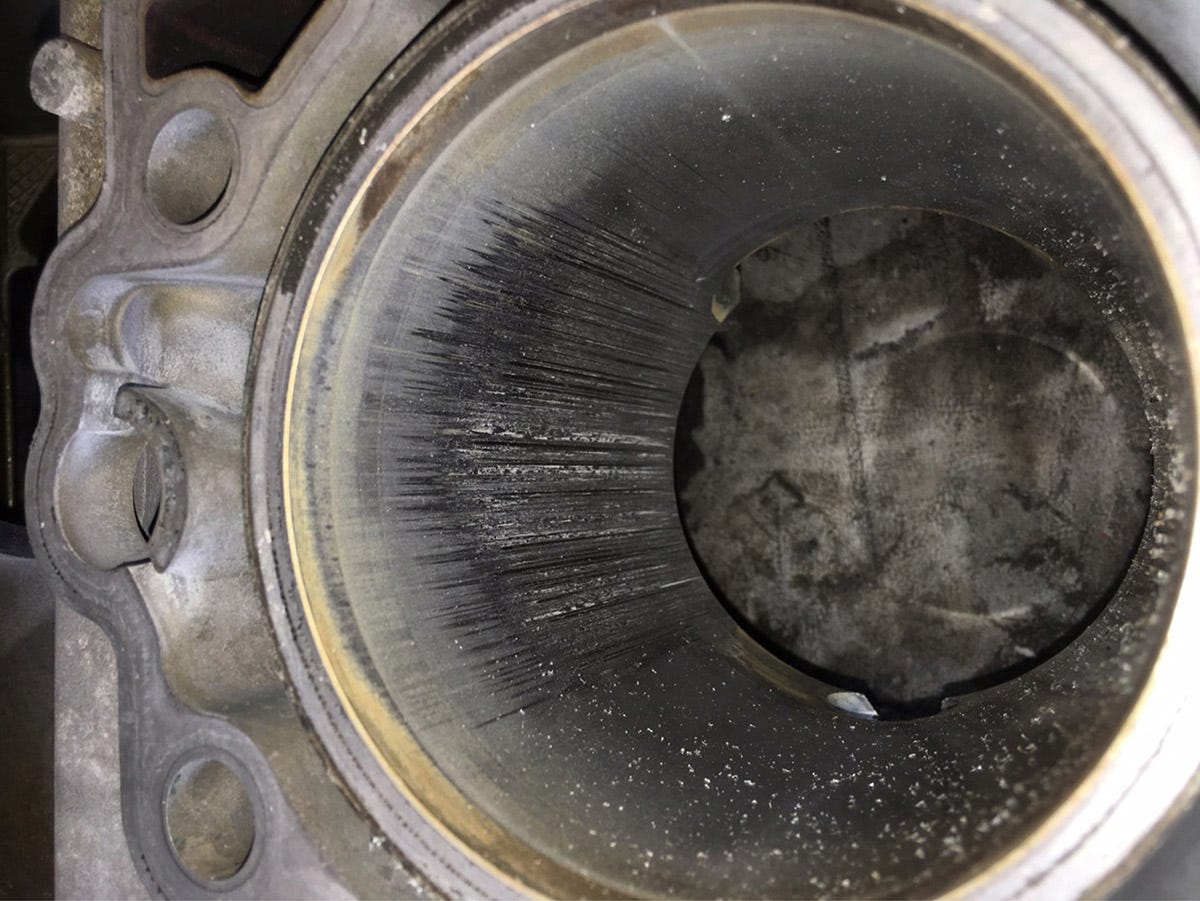
Bore scoring occurs most often in 99–08 Porsche Boxster, Cayman, and 911 3.4, 3.6, and 3.8 liter engines.
What Changed in 2006?
For the 2006 model year, Porsche revised the intermediate shaft assembly and used a larger 6305 IMS bearing. This bearing is commonly called “non-serviceable” because it is larger than the opening in the IMS flange housing. In normal circumstances, it cannot be removed through the back of the engine without complete engine disassembly.
That sounds alarming until the risk is put into context. LN Engineering estimates the failure rate of the 2006–2008 non-serviceable IMS bearing at about 1 percent, based on what little published data there is on the later intermediate shaft bearing. LN also notes that, because the bearing is larger and has load capacity comparable to the early dual-row IMS bearing, there is little reason to panic over it when proper preventative steps are taken.
That is why the 2006–2008 IMS bearing issue should not be treated the same way as the earlier single-row IMS bearing concern.
The Non-Serviceable IMS Bearing Is Not a Reason to Tear Apart a Healthy Engine
The mistake many owners make is assuming that “non-serviceable” means “urgent failure waiting to happen.” It does not.
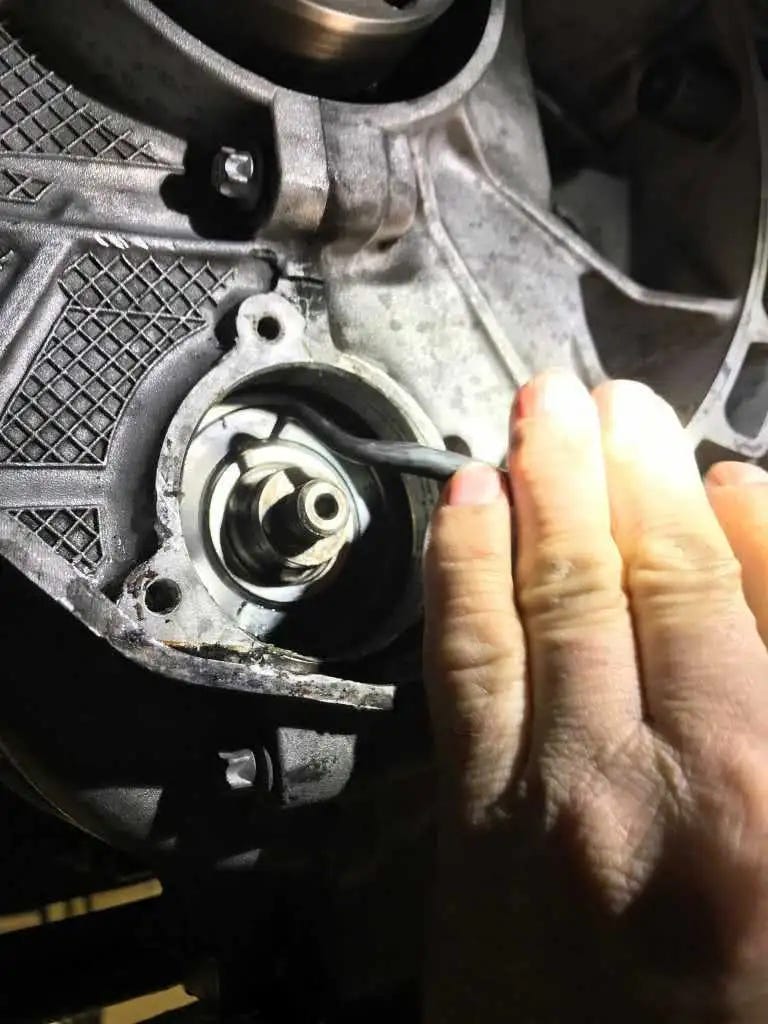
Removing the grease seal is all you have to do to extend the life of the original IMS bearing.
For 2006–2008 Boxster, Cayman, and 997 models, LN Engineering specifically states that owners do not need to rush out and disassemble the engine just to replace the IMS bearing. If the clutch or flywheel is being replaced, the outer grease seal can be removed from the bearing to allow engine oil to lubricate it more effectively. The IMS bearing sits in an oil-rich environment, literally partially submerged during normal operation, so removing the seal is a practical preventative measure when access is already available.
What should be avoided are extreme or invasive procedures that attempt to extract the bearing by modifying the IMS flange housing. LN warns that boring the housing is irreversible and can spread debris through the engine, potentially causing major damage.
In other words, the correct message is simple: do not ignore the IMS bearing, but do not let the 2006–2008 non-serviceable IMS bearing dominate the buying decision.
The Real Risk: Bore Scoring
For buyers looking at 2006–2008 cars, bore scoring deserves far more attention than the IMS bearing.
The models that should be inspected carefully include 997 Carrera models with the 3.6-liter engine, 997 Carrera S models with the 3.8-liter engine, and Boxster S and Cayman S models with the 3.4-liter engine. These are the cars where cylinder bore scoring can become a very expensive ownership problem. That’s why it’s so important to do a proper PPI to scope the cylinder bores for scoring. Even better, if you can have your used oil tested, that will tell you if there are elevated aluminum, iron, and silicon particle counts, measured in PPM- these should all be single digit in a healthy engine.
Bore scoring is not a small nuisance. It can lead to piston slap, ticking noises, increased oil consumption, smoking, metal debris in the oil filter, and eventually the need for an engine rebuild. Unlike the 2006–2008 IMS bearing, which has a low estimated failure rate, bore scoring is a much more common and costly concern in the larger-displacement M96 and M97 engines.
That is why any serious Porsche pre-purchase inspection on these models should include a proper bore scope inspection, ideally performed by someone familiar with Porsche M96 and M97 engine failure patterns. Listening for noise is not enough. A clean over-rev report is not enough. A car can look excellent cosmetically and still have early cylinder damage.
The 2.7-Liter Base Boxster and Cayman Deserve More Respect
This is where many buyers overlook one of the smartest choices in the 987 market: the base 2006–2008 Boxster and Cayman with the 2.7-liter engine.

987.1 Boxster and Cayman — Base models are where it’s at.
These cars still use the larger non-serviceable IMS bearing, but IMS failures are rare in this generation, and the 2.7-liter engine is not known for the same bore scoring problems that affect the larger 3.4, 3.6, and 3.8 engines. For someone buying their first Porsche, that matters.
The base 987.1 Boxster and Cayman may not have the headline horsepower of an S model, but they deliver the core Porsche experience: mid-engine balance, excellent steering, predictable handling, strong brakes, and enough power to enjoy on real roads without constantly driving at illegal speeds. They are lighter, simpler, and often less expensive to buy and maintain.
For a first Porsche or a daily driver, that combination is hard to beat.
Why the 2009–2012 2.9-Liter Cars Are Even More Appealing
For buyers who want to avoid both IMS anxiety and bore scoring concerns, the 2009–2012 base Boxster and Cayman with the 2.9-liter 9A1 engine are especially attractive.

987.2 Base Boxster — my top pick. Cayman comes in second place (or first if you never will drop the top).
The 2009-on 9A1 engine eliminated the intermediate shaft entirely, removing IMS bearing concerns from the equation.
The base 2.9-liter 987.2 cars also deliver performance close to the earlier 987.1 S models. The 2009 Boxster 2.9 was rated at 255 hp, while the 2009 Cayman 2.9 was rated at 265 hp. By comparison, the 2006–2008 Cayman S 3.4 was rated at 295 hp.
Just as important, the 2.9-liter base models used port fuel injection rather than direct fuel injection. That means buyers avoid not only IMS concerns, but also the added complexity and cost of high-pressure fuel pumps and DFI-related issues found on some direct-injected Porsche engines.
For many owners, the 2009–2012 2.9-liter Boxster and Cayman hit a sweet spot: modern 9A1 architecture, no IMS bearing, no S-model bore scoring reputation, port injection, strong reliability, and enough power to feel genuinely quick.
Don’t take our word for it. Rob Sass of PCA tell us “Why a base Boxster is the Porsche we should all be shopping for.”
The Better Buying Advice
The used Porsche market often rewards fear more than facts. The IMS bearing has become so infamous that buyers sometimes focus on it to the exclusion of everything else. That can lead to poor decision-making.
For 2006–2008 cars, the larger non-serviceable IMS bearing is not the biggest concern. It should be understood, inspected when appropriate, and addressed correctly if the engine is ever rebuilt. But it is not a reason by itself to reject a good car.
The bigger concern is choosing the right engine.
A 2006–2008 997 Carrera, Carrera S, Boxster S, or Cayman S should be inspected carefully for bore scoring. A pre-purchase inspection should include a bore scope, oil filter inspection when possible, review of oil consumption history, and careful evaluation of any cold-start ticking or knocking noises.
On the other hand, a 2006–2008 base Boxster or Cayman with the 2.7-liter engine can be one of the best entry points into Porsche ownership. These cars are engaging, balanced, relatively simple, and not plagued by the same bore scoring concerns as the larger-displacement S and Carrera models.
And for buyers who want to avoid the IMS discussion entirely, the 2009–2012 base Boxster and Cayman with the 2.9-liter engine are arguably among the best modern used Porsche values available.
Bottom Line
The 2006–2008 non-serviceable IMS bearing is not the disaster many people make it out to be. In most cases, it is a manageable, low-probability concern. Bore scoring in the larger M96 and M97 engines is the issue buyers should take far more seriously.
That is why the smartest advice is not simply “avoid IMS cars.” The smarter advice is to understand which engine is in the car, inspect it properly, and match the model to the buyer’s risk tolerance.
For many enthusiasts, the best answer may not be a 997 Carrera S or a Cayman S. It may be a clean 2.7-liter 987.1 base car, or better yet, a 2.9-liter 987.2.
Those cars may not win the spec-sheet argument, but they make excellent first Porsches, excellent drivers, and excellent long-term ownership choices.
메타데이터
- post_id
- 1118fdfbce14
- slug
- the-2006-2008-porsche-ims-bearing-panic-is-overblown-1118fdfbce14
- url
- https://medium.com/@lnengineering/the-2006-2008-porsche-ims-bearing-panic-is-overblown-1118fdfbce14
- canonical_url
- https://medium.com/@lnengineering/the-2006-2008-porsche-ims-bearing-panic-is-overblown-1118fdfbce14
- author_url
- https://medium.com/@lnengineering
- status
- ok
- fetched_at
- 2026-07-11 18:50:18