Tanssi vs Traditional RaaS: Why Sovereignty and Connectivity Matter More Than Ever
Launching a blockchain used to mean one of two painful choices.
Tanssi vs Traditional RaaS: Why Sovereignty and Connectivity Matter More Than Ever
Launching a blockchain used to mean one of two painful choices.
You either:
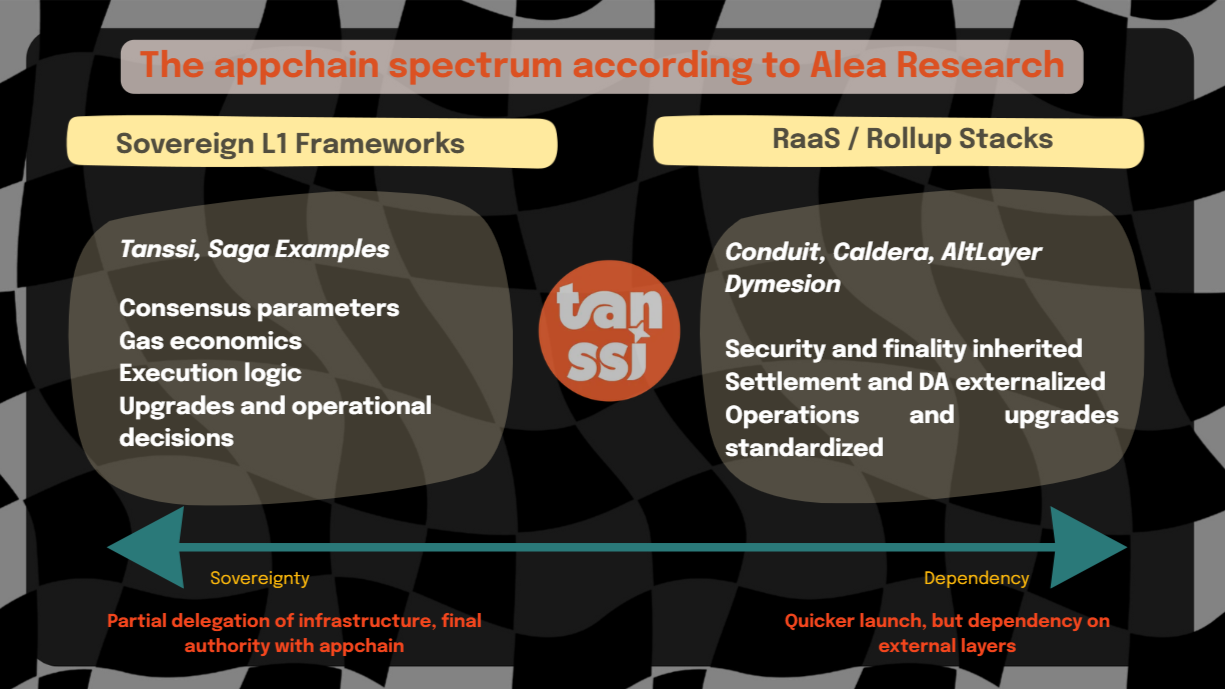
- built your own Layer-1 — full control, but months of work, validators, DevOps, and high costs
- or used Rollup-as-a-Service (RaaS) — quick launch, but with serious compromises
Today, projects like Gotas and Rivool show there is a third option. And that option is Tanssi.
This article explains — in simple terms — why Tanssi is fundamentally different from traditional RaaS, and why that difference matters in the real world.
What Traditional RaaS Gets Wrong
RaaS platforms promise speed. And they deliver — but at a price.
Most RaaS solutions share the same structural problems:
1. Centralized sequencers
Many rollups rely on one sequencer to order transactions. If it goes down — the chain stops.
This isn’t theoretical:
- Several popular rollups have experienced hours-long outages
- Users couldn’t transact, even though the “blockchain” was live
2. Limited control
With RaaS, you don’t really own your chain:
- fees are influenced by the parent chain
- upgrades depend on external roadmaps
- customization is limited to a standard EVM setup
You’re renting blockchain space — not owning it.
3. Fragile connectivity
Most RaaS chains depend on:
- external bridges
- third-party messaging layers
These are the #1 source of hacks in Web3.
Tanssi’s Different Philosophy: “Chains Should Own Themselves”
Tanssi starts from a simple idea:
Every serious application should have its own chain — but no team should have to run infrastructure.
So instead of “rollups as products”, Tanssi acts like an operating system for sovereign blockchains.
Here’s how that plays out in practice.
Key Difference #1: Real Sovereignty (Not Marketing Sovereignty)

Every Tanssi-powered chain is a full Layer-1.
That means:
- its own runtime logic
- its own fees
- its own governance
- its own upgrade path
No shared mempool. No competition for blockspace. No inherited congestion.
This is not possible on traditional RaaS.
Key Difference #2: Decentralized Block Production from Day One
Instead of one sequencer, Tanssi uses multiple rotating sequencers per chain.
What this changes:
- no single point of failure
- censorship becomes much harder
- uptime stays above 99.99%
For users, this feels simple: the chain just doesn’t go down.
Key Difference #3: Shared Security Without Shared Control
Security is usually expensive.
Tanssi solves this with restaked security:
- operators stake ETH or TANSSI
- security is shared across all chains
- each appchain inherits strong economic protection
So a small team gets Ethereum-grade security without building a validator ecosystem.
You get security without giving up control.
Key Difference #4: Connectivity Is Built In, Not Bolted On
Instead of relying on third-party bridges, Tanssi chains come with:
- native connectivity to Ethereum
- native interoperability between Tanssi chains
Assets move without fragile wrappers or external trust assumptions.
This matters more than people realize — especially for real businesses.
Case Study 1: Gotas — SocialFi at Real Scale

Gotas is a Web3 loyalty and engagement platform focused on LATAM.
Before launching its own chain, Gotas already had:
- 170,000+ wallets
- 70,000+ transactions
- live campaigns with brands and communities
On shared networks, this created problems:
- unpredictable fees
- congestion during campaigns
- poor UX for non-crypto users
Why Tanssi Worked for Gotas
After launching a sovereign L1 on Tanssi:
- transactions became predictable
- campaigns no longer competed with DeFi traffic
- fees were tuned for social engagement, not speculation
Most importantly:
Gotas launched its L1 in minutes — without running validators or infra.
That combination (scale + simplicity) is extremely hard to achieve with RaaS.
Case Study 2: Rivool — Real Money, Real Assets, No Downtime

Rivool Finance tokenizes agricultural credit in Brazil.
This is not DeFi for traders — it’s real loans:
- 100+ farmers onboarded
- millions in tokenized credit
- strict requirements for uptime and auditability
Rivool’s chain on Tanssi delivers:
- ~6 second block times
- ~12–18 second finality
- stable fees even under load
For finance, this matters:
- no stuck transactions
- no “bridge paused” messages
- no surprises during settlement
Rivool proves Tanssi works not just for Web3 natives — but for real economic systems.
A Different Way to Think About Tanssi
Here’s the unique insight:
Tanssi is not competing with RaaS — it’s replacing the need to choose between speed and sovereignty.
RaaS asks:
- “How fast can we launch?”
Tanssi asks:
- “How long will this chain live?”
For experiments, RaaS is fine. For ecosystems, economies, and real users — sovereignty wins.
Why This Matters Long Term
As Web3 matures:
- apps become businesses
- chains become infrastructure
- downtime becomes unacceptable
Projects don’t want:
- to migrate later
- to re-architect governance
- to explain outages to users
Tanssi lets teams start where they want to end.
Final Takeaway
Traditional RaaS optimizes for speed to launch. Tanssi optimizes for ownership, resilience, and longevity.
Gotas and Rivool show this isn’t theory:
- one powers mass-market engagement
- the other handles real financial value
Both run sovereign chains — without infrastructure pain.
In a crowded infrastructure market, that’s not a small difference.
It’s a structural one.
메타데이터
- post_id
- 112751ef3a63
- slug
- tanssi-vs-traditional-raas-why-sovereignty-and-connectivity-matter-more-than-ever-112751ef3a63
- url
- https://medium.com/@maprosto12/tanssi-vs-traditional-raas-why-sovereignty-and-connectivity-matter-more-than-ever-112751ef3a63
- canonical_url
- https://medium.com/@maprosto12/tanssi-vs-traditional-raas-why-sovereignty-and-connectivity-matter-more-than-ever-112751ef3a63
- author_url
- https://medium.com/@maprosto12
- status
- ok
- fetched_at
- 2026-07-14 16:56:33