Pyramids, Tombs & Temples of the Nile
A photo essay of art & architecture inspired by the afterlife
Pyramids, Tombs & Temples of the Nile
A photo essay of art & architecture inspired by the afterlife
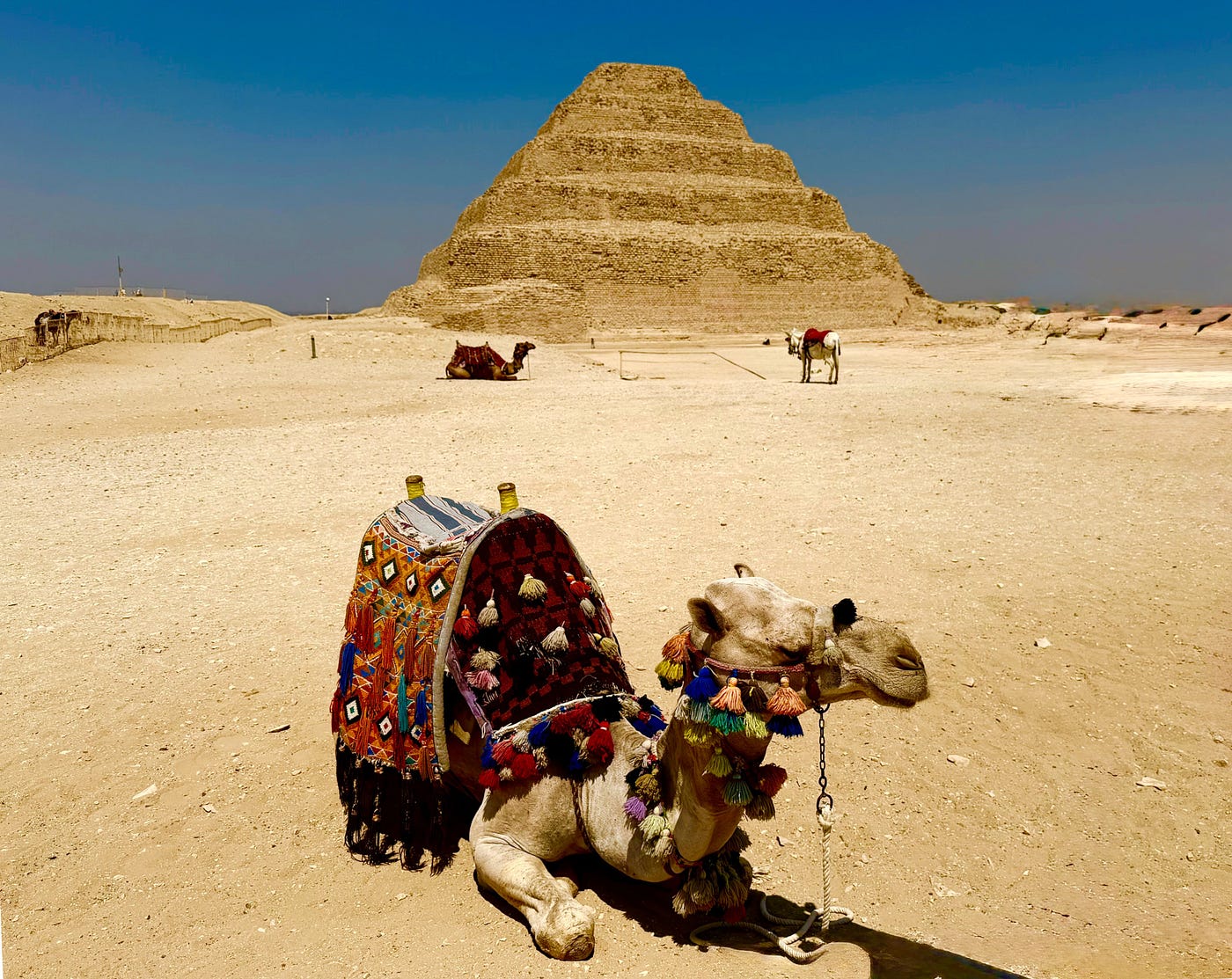
The step pyramid of Djoser at Saqqara. All photos © David A. Laws
A recent journey up the Nile from Cairo to Abu Simbel revealed extraordinary feats of engineering — temples aligned with the sun and stars, tombs carved into solid rock, and pyramids whose scale still defies simple explanation — all inspired by the pharaohs of ancient Egypt.
Whether dwarfed by the towering columns of Karnak Temple or viewing finely crafted murals in the tombs of the Valley of the Kings, I was awed by the precision and beauty of these works, as well as by the power of ambition and devotion that transformed the belief in an afterlife into enduring works of art and architecture.
The Nile Valley contains more than 80 major temples built over the 3,000-year pharaonic era. While some visitors may say, “See one temple, you’ve seen ’em all,” once you look beyond similarities in materials, towering columns, and elaborate tombs, each temple has a unique character shaped by its age, location, builder, and the deities it honors. My photo essay attempts to capture the essence of just a dozen of these remarkable places and the details that differentiated them for me.
Grand Egyptian Museum
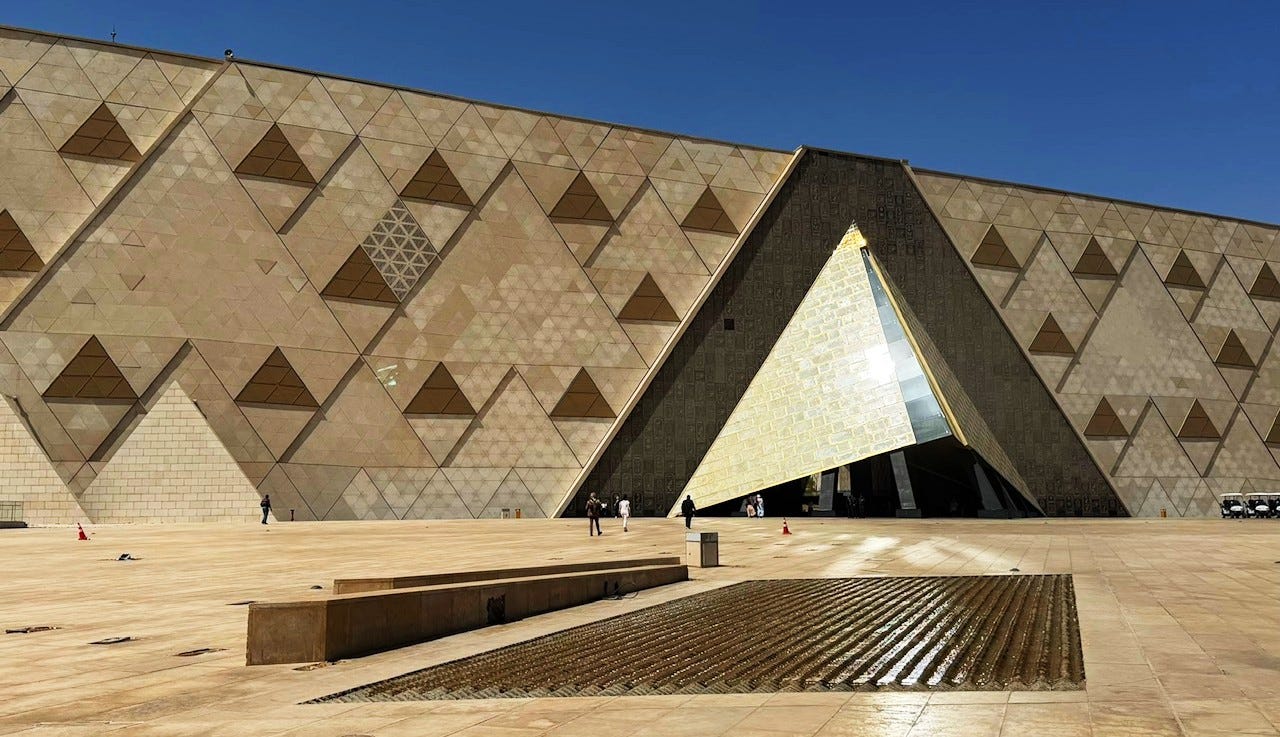
Enrance to the Grand Egyptian Museum. Photo: David A. Laws
Dedicated to Ancient Egypt and its artifacts and culture, the Grand Egyptian Museum (GEM) is the largest in the world for a single civilization. Set on the Giza Plateau with panoramic views of the pyramids, the museum combines monumental modern architecture with twelve main galleries displaying over 50,000 artifacts, including the complete contents of Tutankhamun’s tomb.
We visited the museum on two days, exploring galleries that span the themes of Beliefs, Kinship, and Society, organized into four time periods, from prehistory to the end of the Greco-Roman era. It was a valuable investment in understanding the hopes and fears of those ancient people before setting out to see what they created.

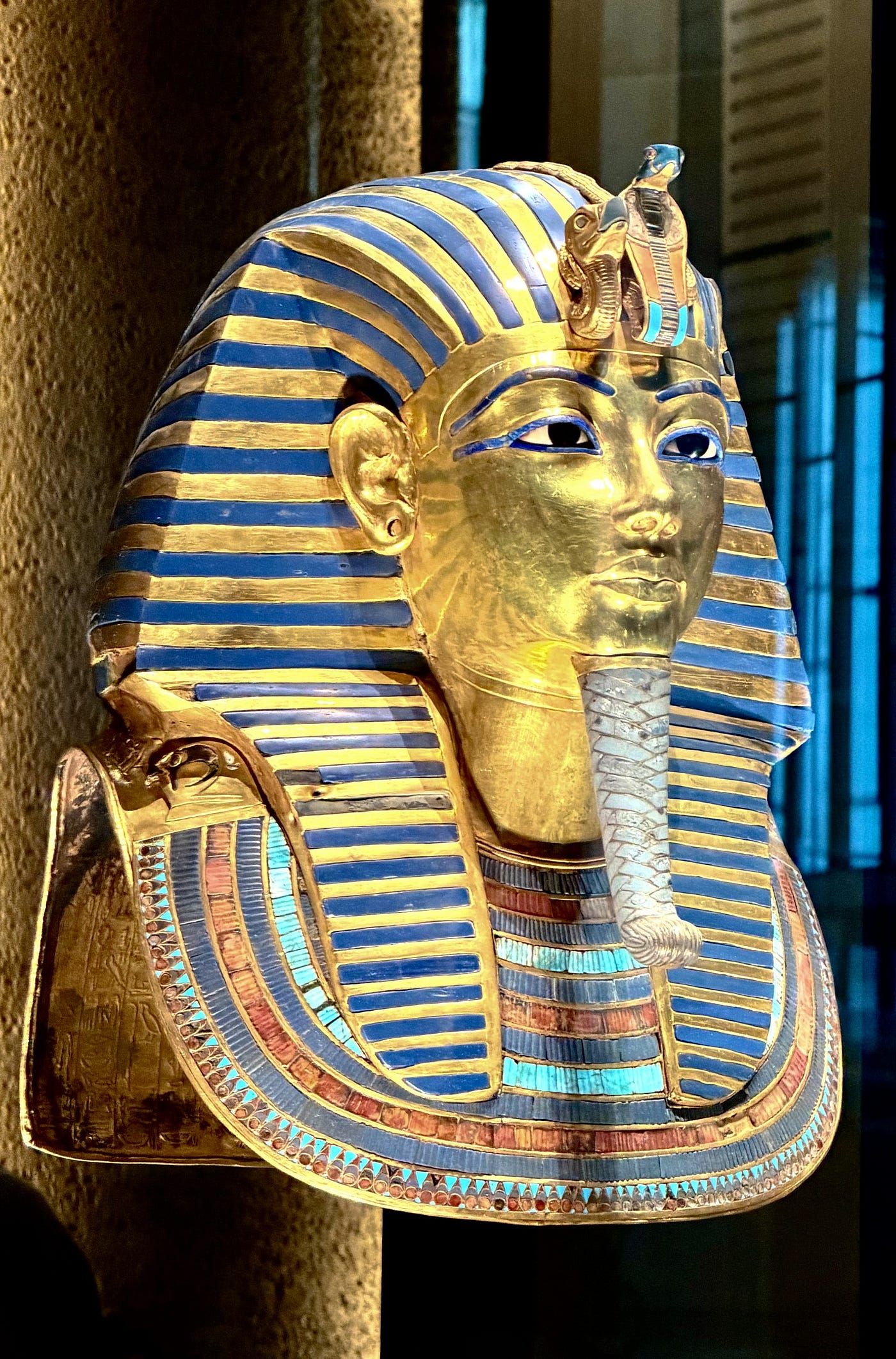
Left: The 36-foot-high statue of Rameses II stands in the atrium entrance hall. Right : The golden mask of Tutankhamen. Photos: David A. Laws
Memphis — Temple of Ptah
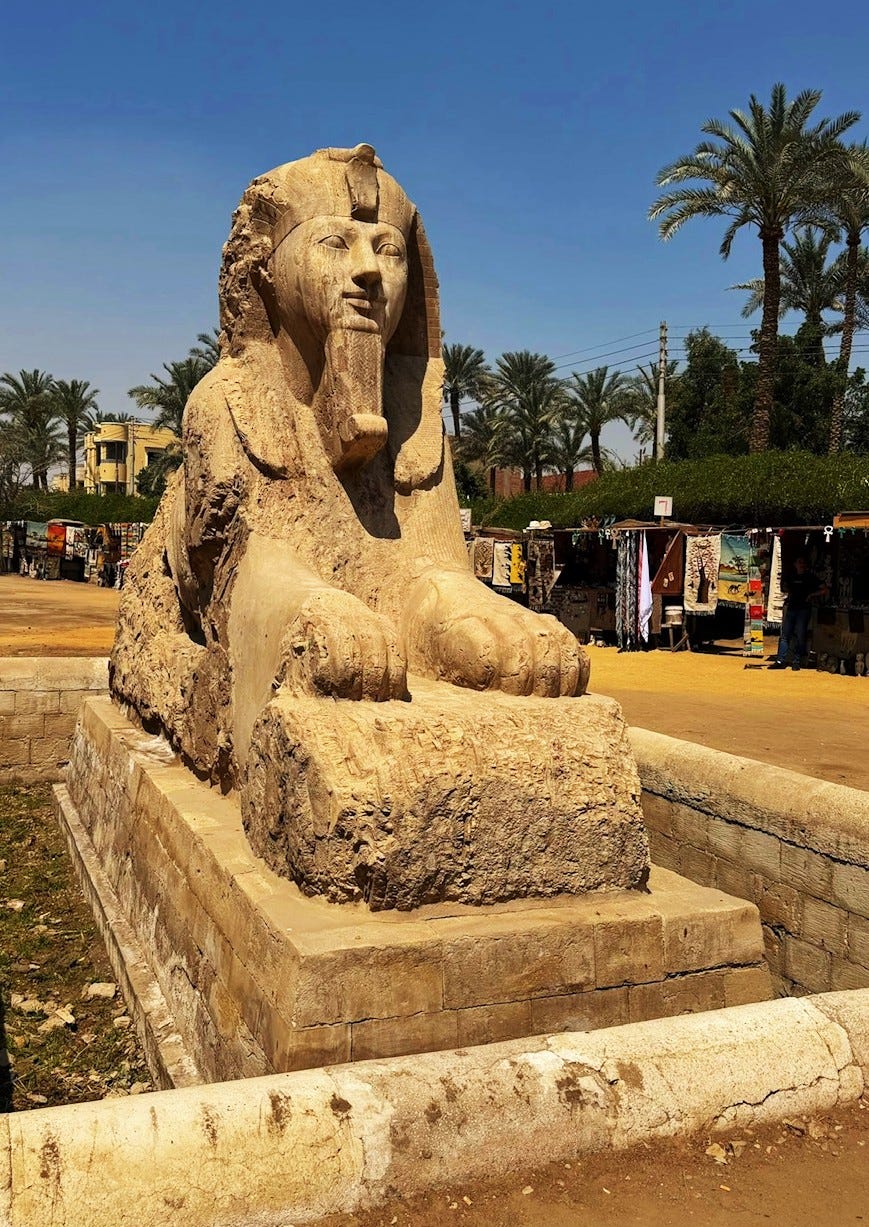

Left: An alabaster sphinx. Right: The Colossus of Rameses II from the lost temple of Ptah. Photos: David A. Laws
Founded around 3000 BCE, Memphis served as the political and religious capital of the unified kingdoms of Upper and Lower Egypt for over three millennia. While nothing remains of the great temple of Ptah, the god of art and architecture and one of Egypt's primary creator deities, an open-air museum displays statues and hieroglyph-inscribed stelae from that era.
Two significant artifacts —an 80-ton sphinx carved from a single block of alabaster and the footless remains of a huge statue of Rameses II — located close to their original setting gave me my first real sense of connection to those ancient times as well as my introduction to the Rameses who ruled Egypt for more than 60 years (1279–1213 BCE). We were to meet him and his works many times over the next couple of weeks.
Saqqara — Necropolis of Memphis

Pepi Pyramid Complex built circa 2332–2283 BCE for Pharaoh Pepi I, Photo: David A. Laws
Saqqara served as the burial ground (necropolis) for the city of Memphis for over 3,000 years. It contains the remnants of more than 30 pyramids built as tombs for the pharaohs. The step pyramid of Djoser (see header photo), designed with six traditional flat-roofed rectangular tombs on top of each other by his chancellor and chief architect, Imhotep (c. 2667–2600 BCE), is celebrated as Egypt’s first monumental stone building.
I stepped nervously backward down a ladder to reach a tomb deep beneath the Teti Pyramid. Emerging into a dimly lit chamber, I was surrounded by walls of inscribed pyramid texts — the world’s oldest surviving religious writings. First appearing at Saqqara around 2400 BCE, these texts were written to protect the pharaohs’ remains and guide their souls into the afterlife. The finely inscribed hieroglyphic characters must have taken craftsmen, working deep underground by the light of flickering torches, years to complete.
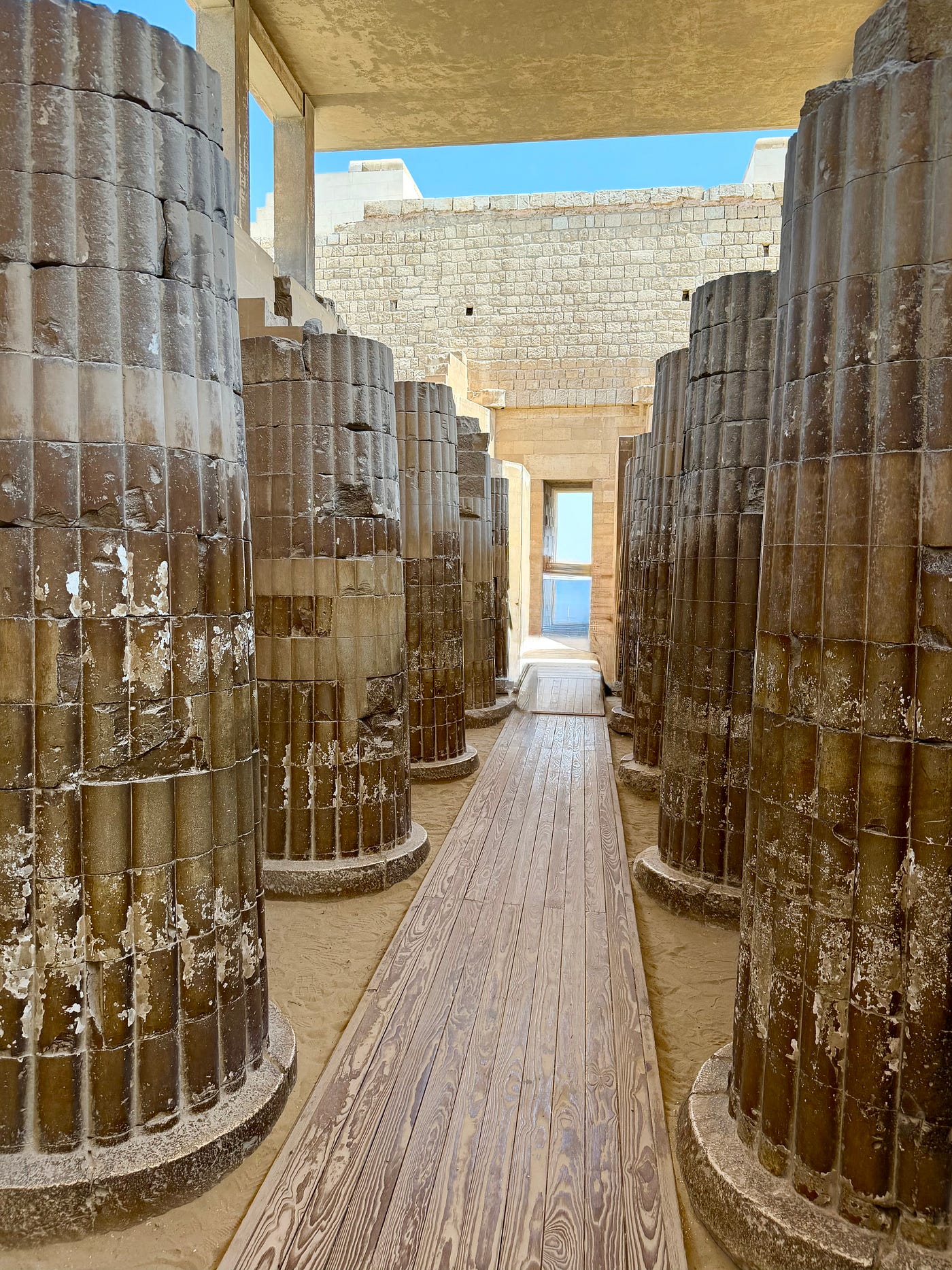
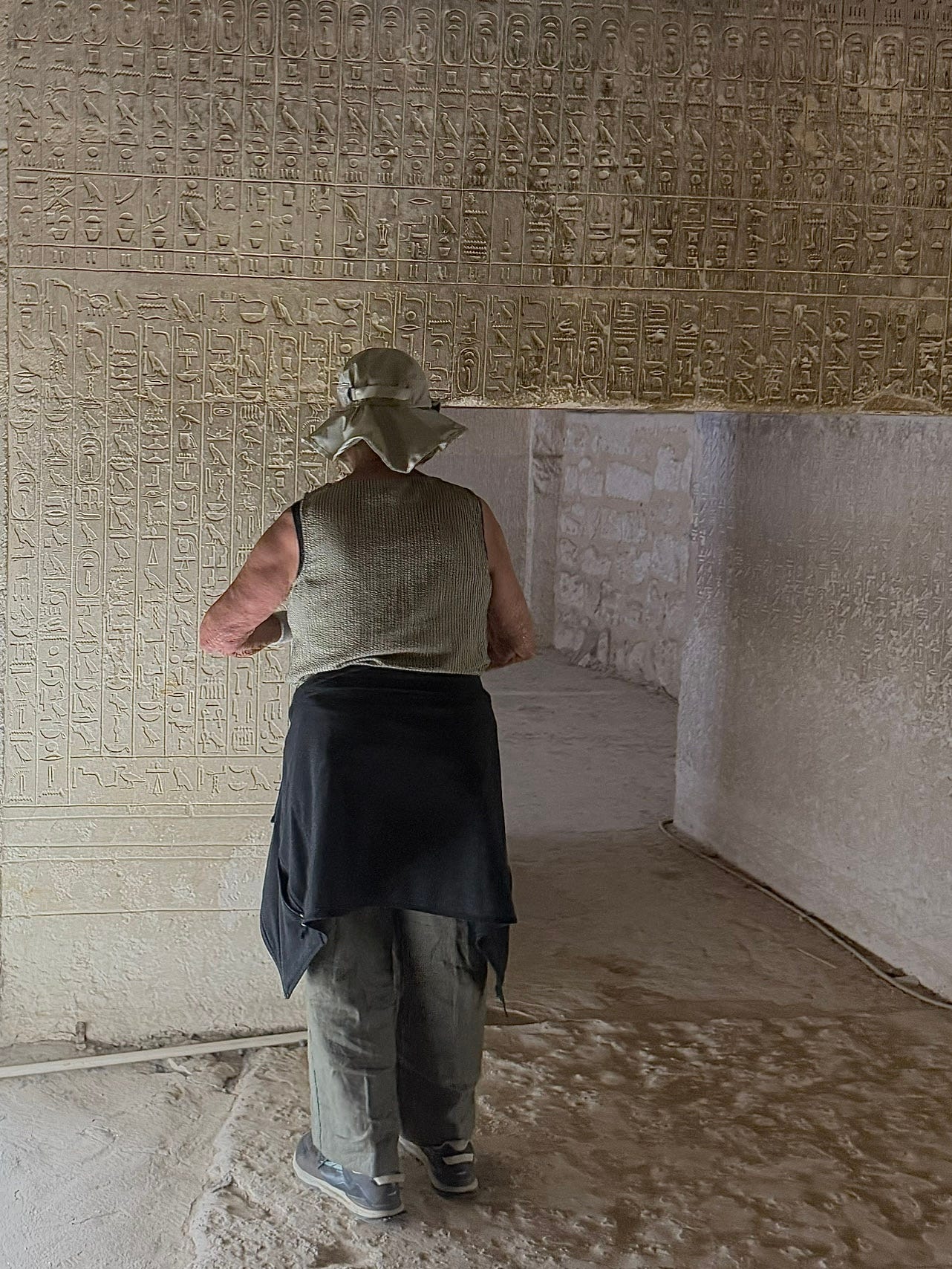
Left: Collonade entrance to the Djoser step pyramid complex. Right: Reading hieroglyphic text in the Teti Pyramid undeground tomb. Photo: David A. Laws
The Pyramids of Giza
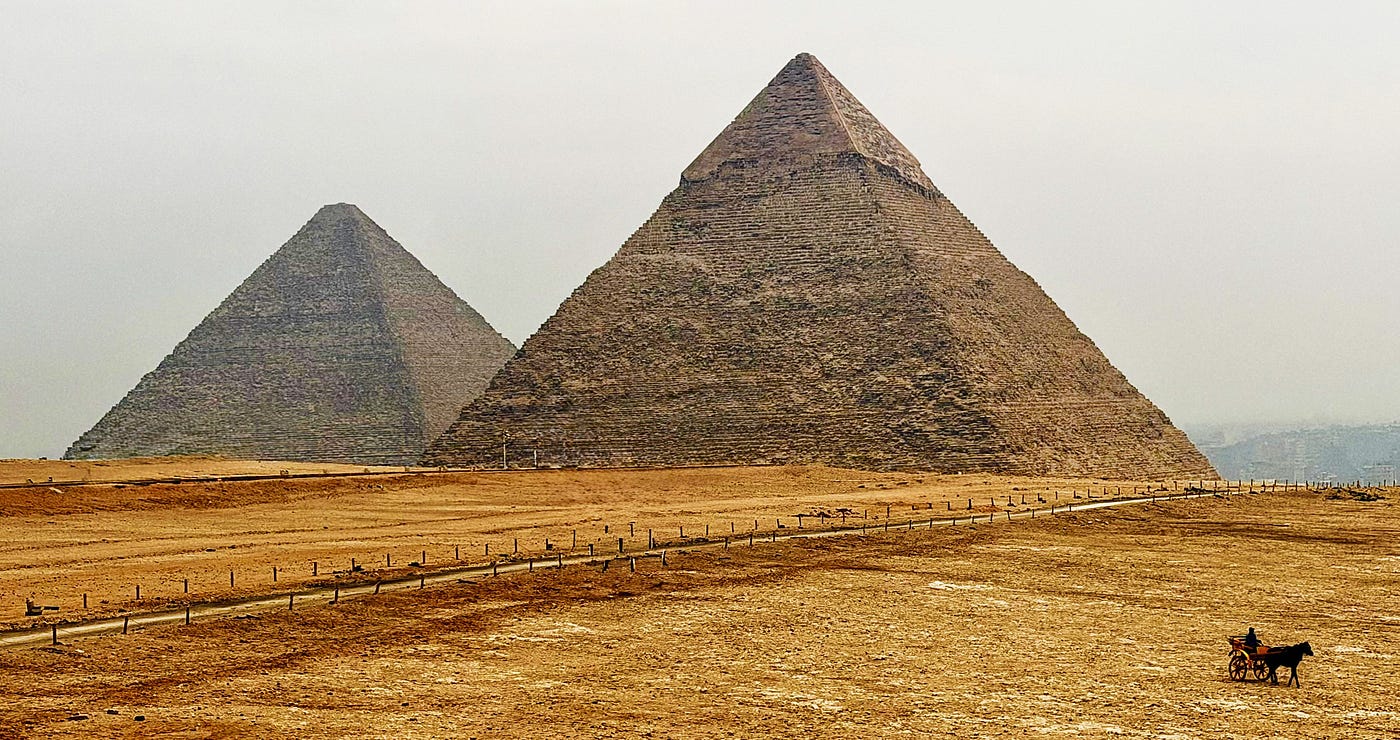
The Great Pyramid of Khufu on the left was the first and largest. The Pyramid of Khafre retains some of its original outer casing near the peak. Photo: David A. Laws
The Giza Pyramid Complex on the west bank of the Nile, ten miles from Cairo, comprises three massive tombs and the Great Sphinx. It was built during the Old Kingdom (c. 2600–2500 BCE).
Using hardened copper tools, skilled craftsmen carved over 2 million blocks of limestone from local quarries to build the bulk of the structures. Some interior details employed granite shipped down the Nile from Aswan, more than 500 miles to the south.
Standing amid fallen blocks, many taller than me and averaging more than 5,000 pounds each, I pondered the mystery, still unresolved by Egyptologists, of how they were maneuvered into place.


Left: The Great Sphinx guards the Pyramid of Khafre. Right: Blocks fallen from the Pyramid of Khufu. Photos: David A. Laws
Luxor Temple
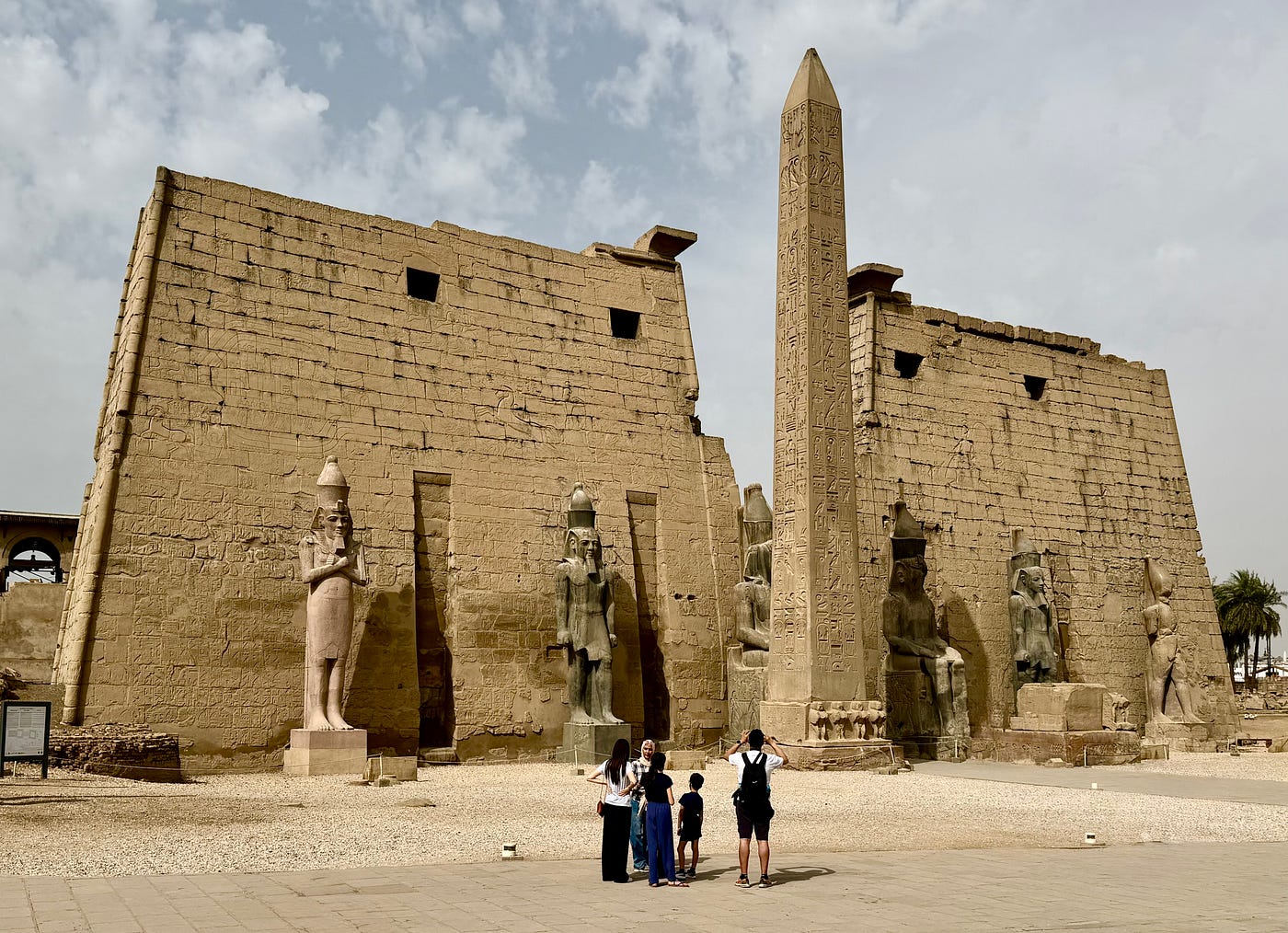
The pylon entrance towers of Luxor Temple are flanked by statues of Rameses II and one of a pair of obelisks. The other is in Paris. Photo: David A. Laws
Located 400 miles south of Cairo, Thebes was the world’s largest city and Egypt’s capital around 1500 BCE. Thebes’ wealth, as extolled by Homer in the Iliad, stemmed from abundant grain harvests in the fertile river floodplain, funded the construction of some of Egypt’s most significant temples and tombs in the area now known as Luxor.
With sandstone from the quarries at Gebel Silsila, Amenhotep III began construction of Luxor Temple around 1400 BCE. Rameses II and Tutankhamen later added to the temple, and the Romans built a shrine to Alexander the Great. Dedicated to the Theban Triad of the Sun god Amun-Ra, his consort Mut, and their son Khonsu, the temple served as a sacred site for the coronation of the pharaohs and an annual rejuvenation of kingship.
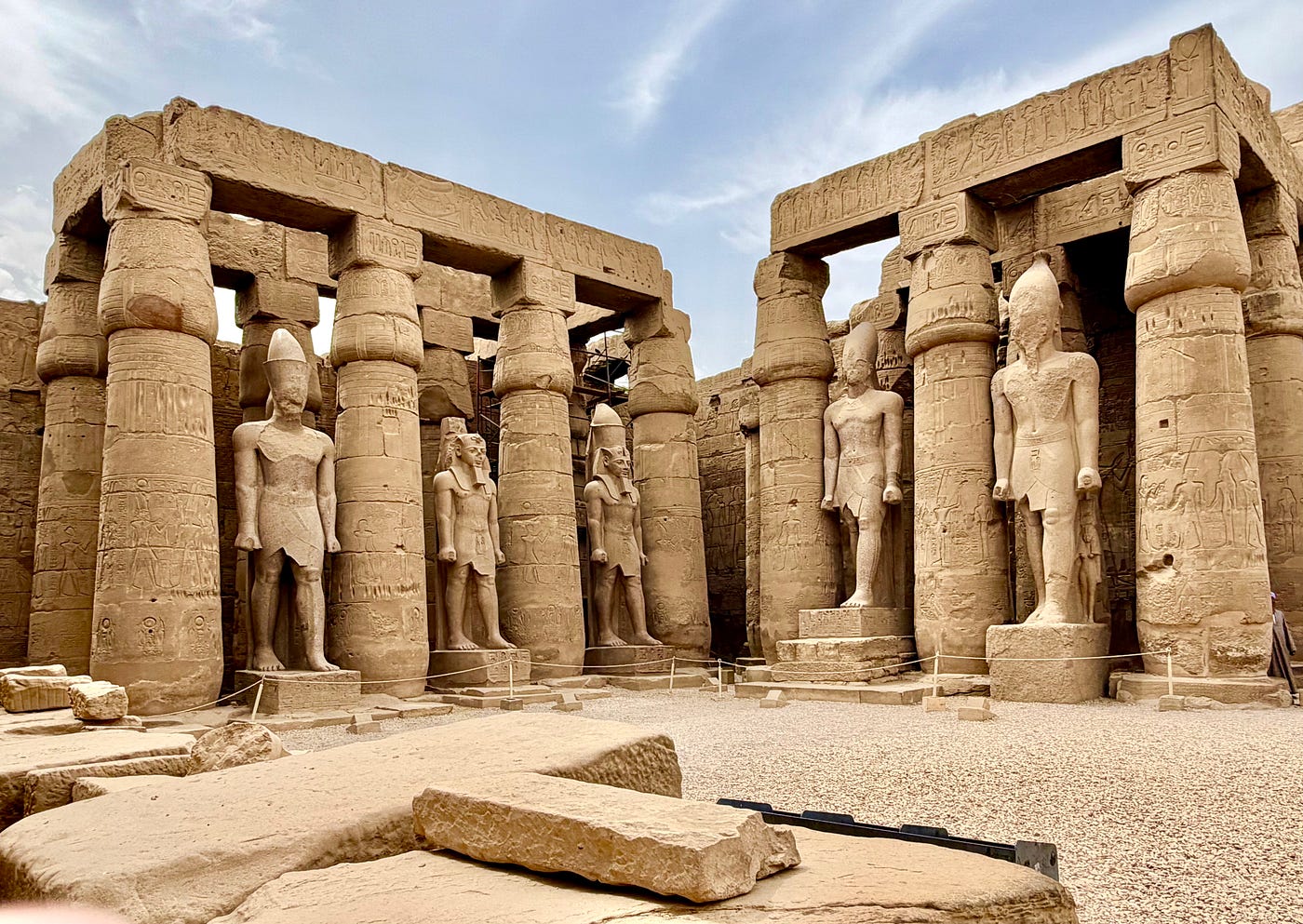
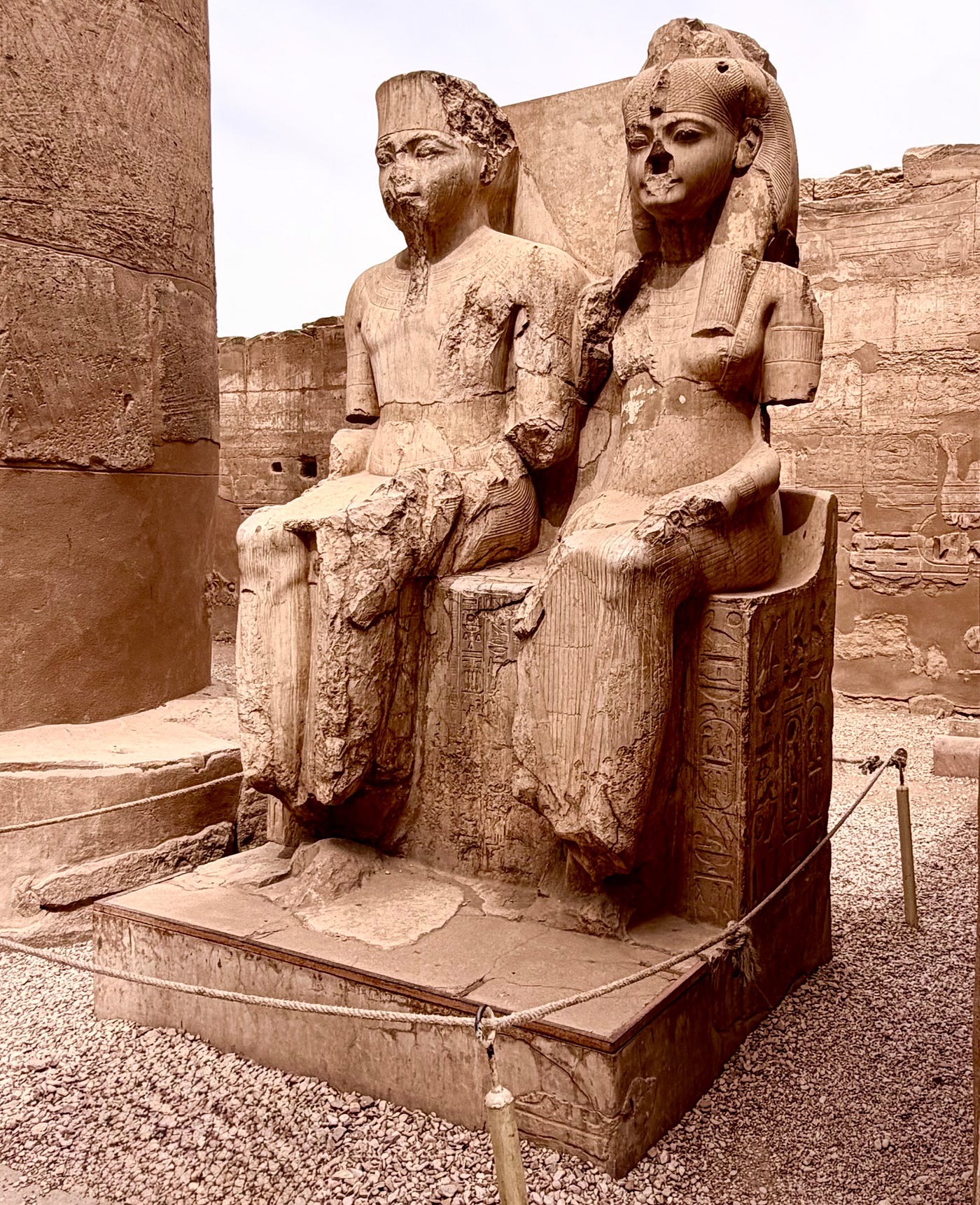
Left: Rameses II Courtyard of papyrus bud columns. Right: Amun and Mut with the facial features of Tutankhamun and Ankhesenamun. Photos: David A. Laws
During the annual Opet Festival, statues of Amun and Mut were paraded along a nearly 2-mile-long avenue of 1,350 sphinxes connecting Luxor to the temple at Karnak, symbolically reenacting their marriage. I stood in the center of the avenue and tried to imagine the pageantry that would have accompanied Cleopatra’s fabled journey with Mark Anthony to Karnak.
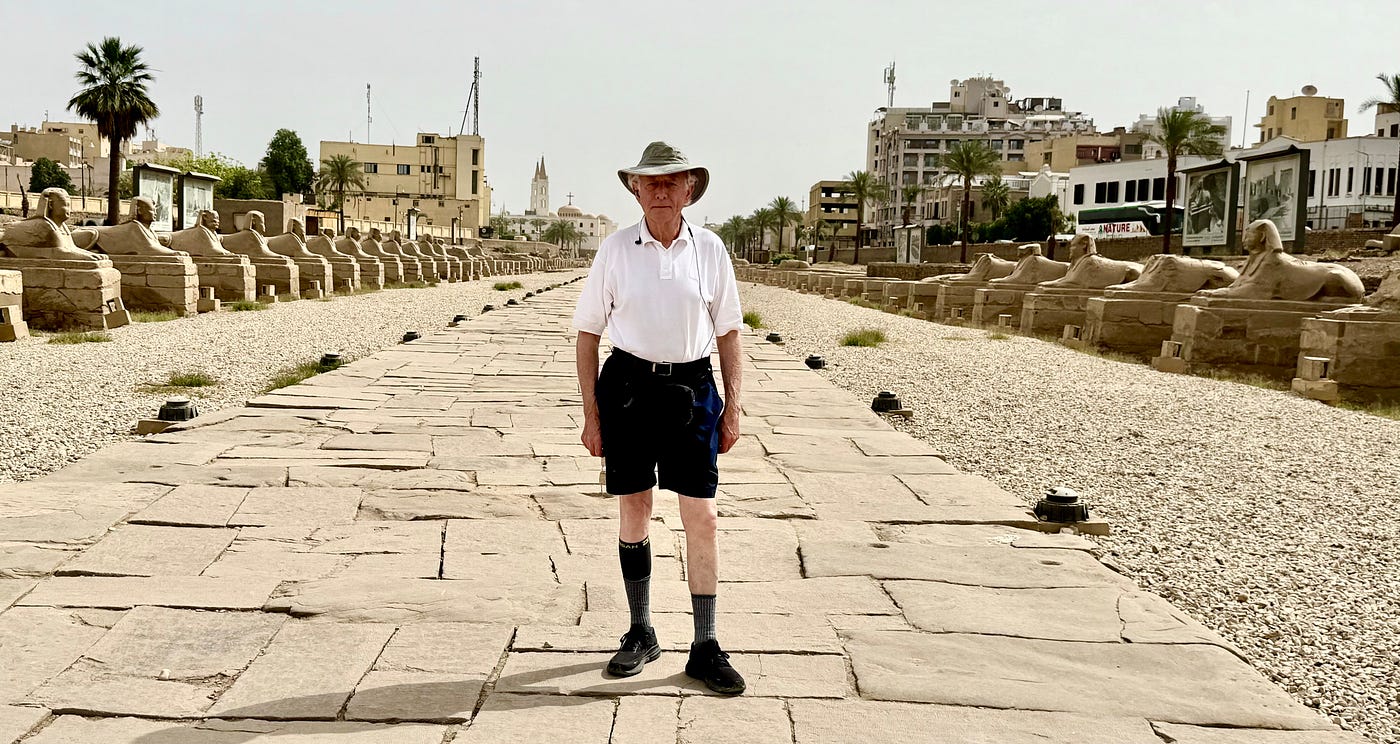
The author on the Avenue of Sphinxes. Photo: David A. Laws
The Temple of Karnak, Luxor
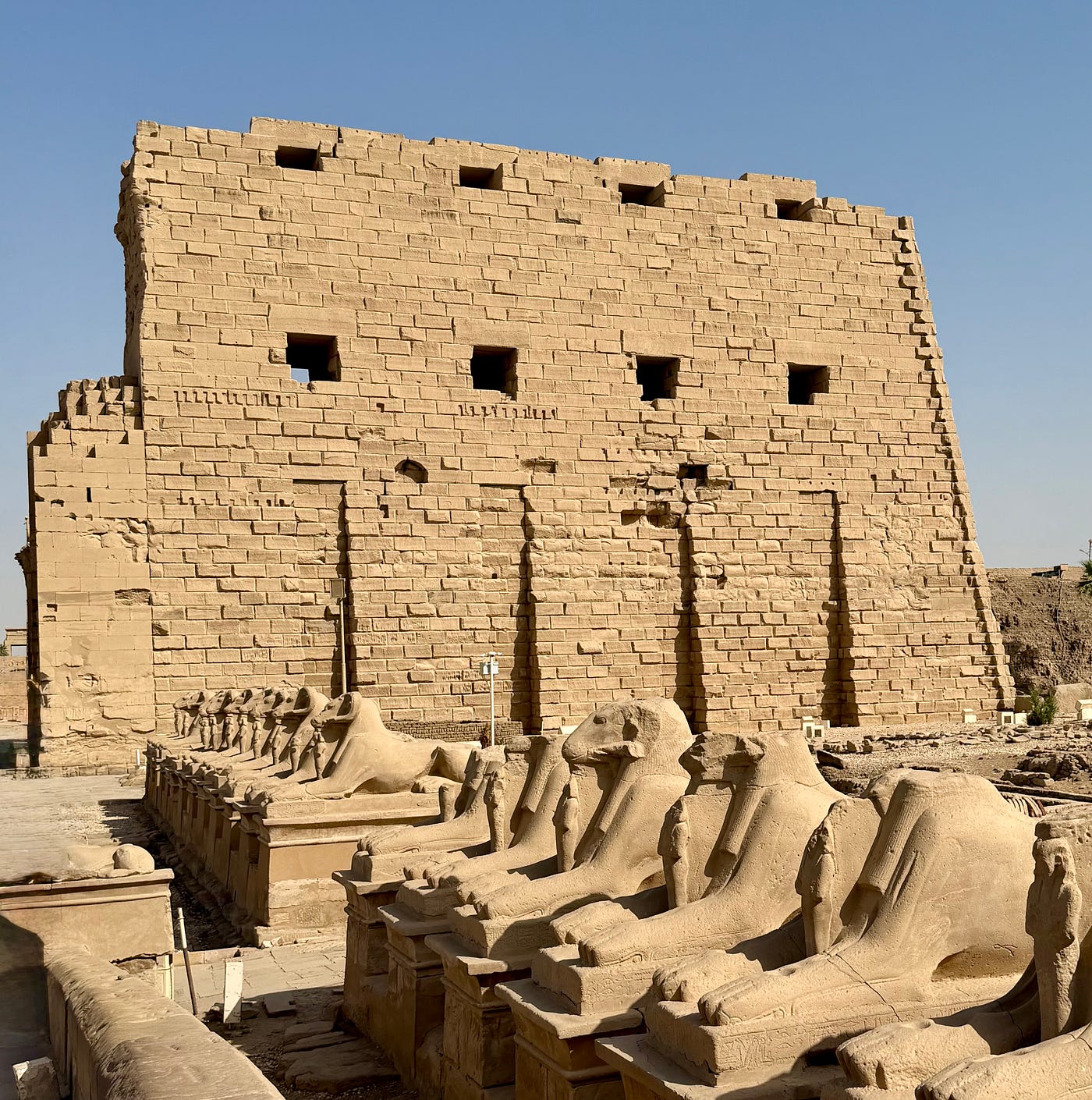
Rams head sphinxes line the approach to the twin pylon towers of Karnak. Photo: David A. Laws
Karnak is a temple of superlatives. Over more than 1,500 years, dozens of pharaohs left their mark on the 200-acre site, which claims to be the world's largest religious complex. The Great Hypostyle Hall, attributed to Seti I and Rameses II, alone covers 54,000 square feet and contains 134 columns that tower more than 65 feet high.
Rams-head sphinxes at Karnak honor Amun, who was associated with rams and fertility. I was surprised that, despite a culture that celebrated virility in its leaders, there were few overtly sexual images in its temples. Our guide explained that only gods such as Min (the god of reproduction) are carved with an erect penis to symbolize their life-giving power. Mortals are never so depicted.


Left: Sculpted relief of Min in the Red Chapel of Hapshetsut. Right: Clossal columns in the Hypostyle Hall. Photos: David A. Laws
Valleys of the Kings and Queens
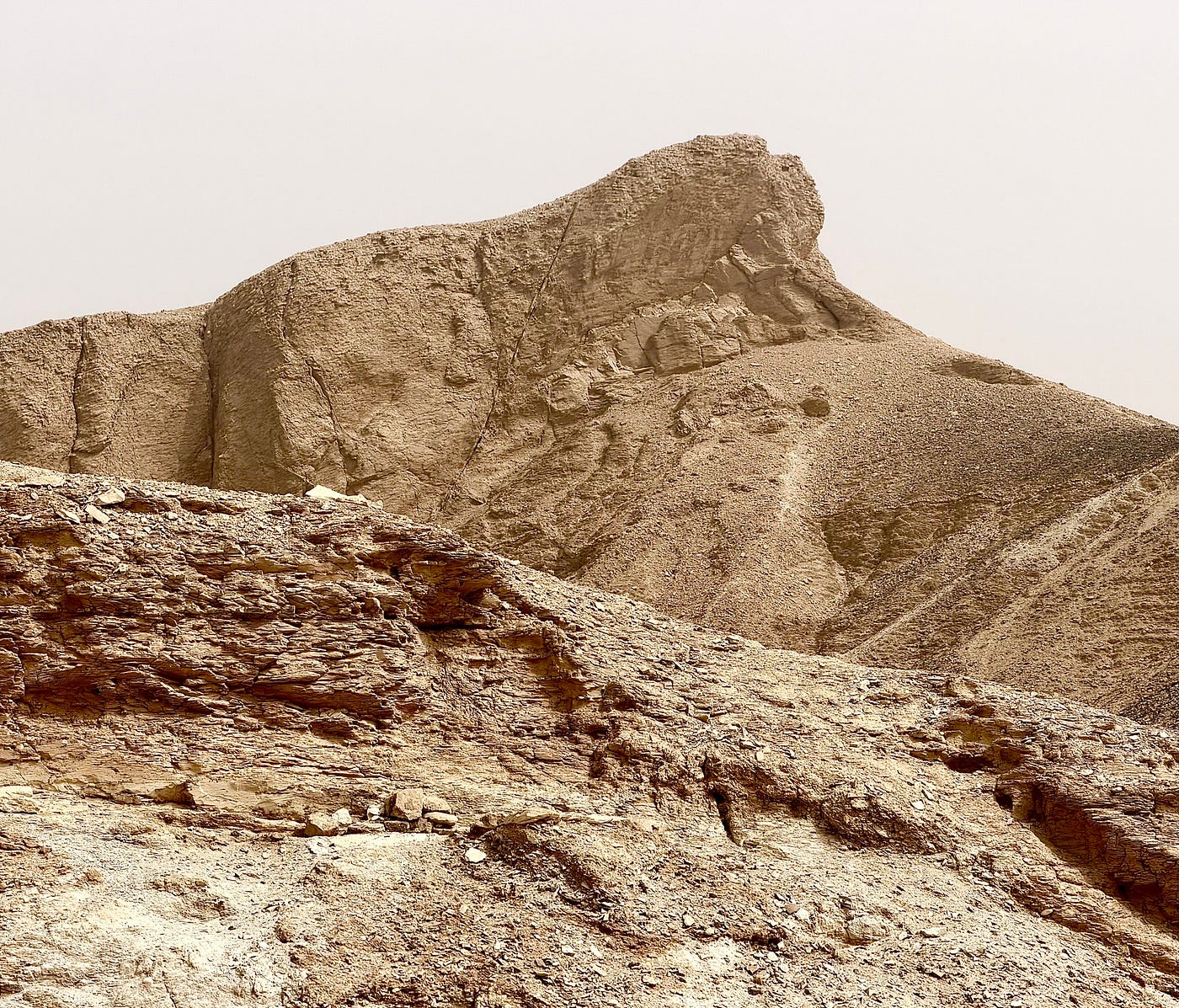
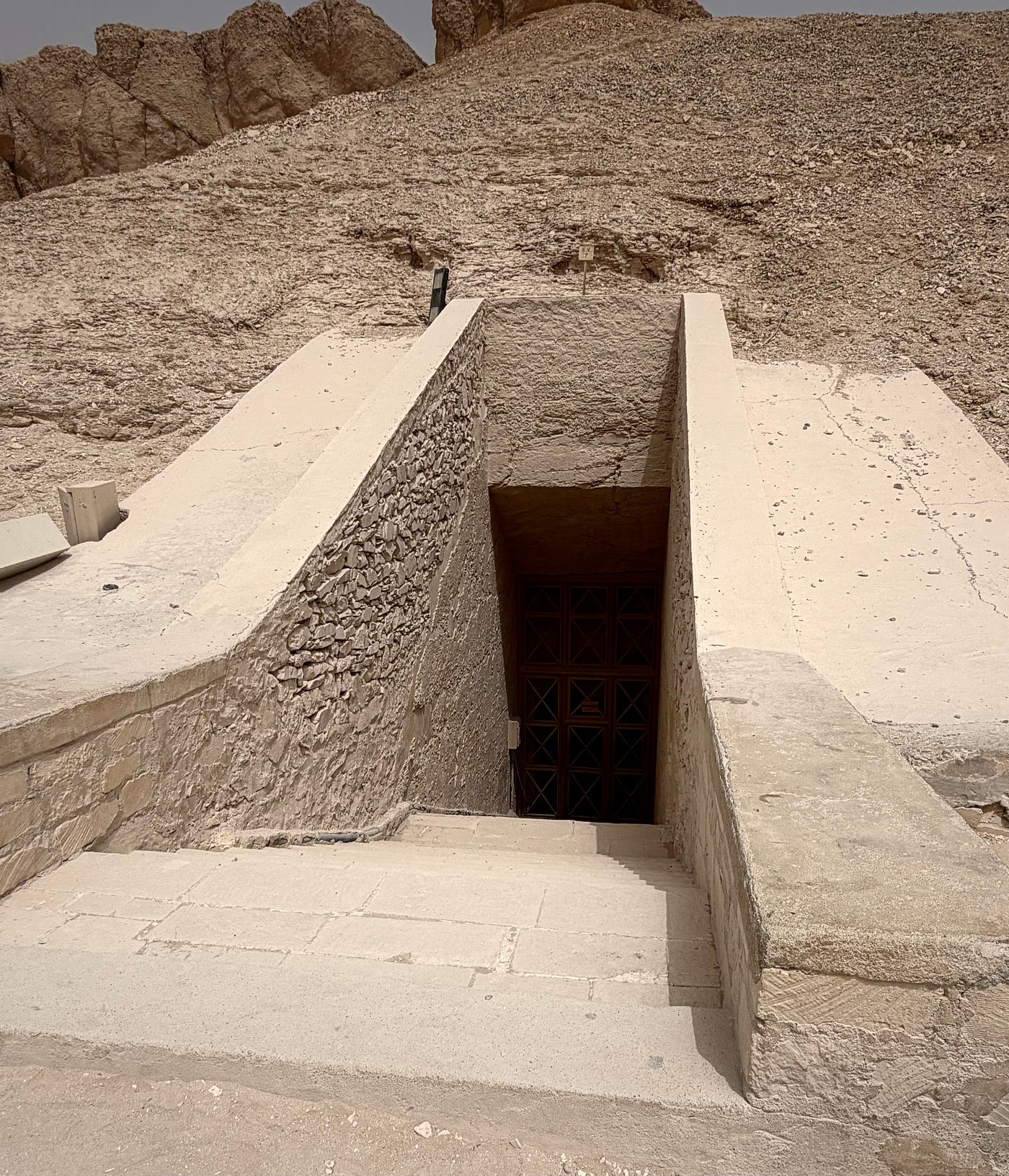
Left: The pyramid-shaped peak of Al-Qurn overlooks the valley. Right: A typical (modern) tomb entry. Photo: David A. Laws
The pharaohs of Egypt's New Kingdom (1539–1075 BCE) built their tombs in a remote, isolated valley to conceal them from grave robbers who plundered the highly visible pyramids of their predecessors. Located opposite Luxor on the west bank of the Nile, the site is known today as the Valley of the Kings. Ultimately, this strategy failed. Of the 63 known tombs, only one, Tutankhamen’s, remained untouched until it was discovered by Howard Carter in 1922.
The tombs were packed with elaborate preparations for the afterlife. Art, clothing, food, furniture, and jewelry accompanied the mummified corpses preserved for reanimation in the next world. I knew that the contents of his survival kit were now in the GEM, but I was surprised to encounter King Tut himself, sealed in a protective enclosure and still awaiting admission to eternity.
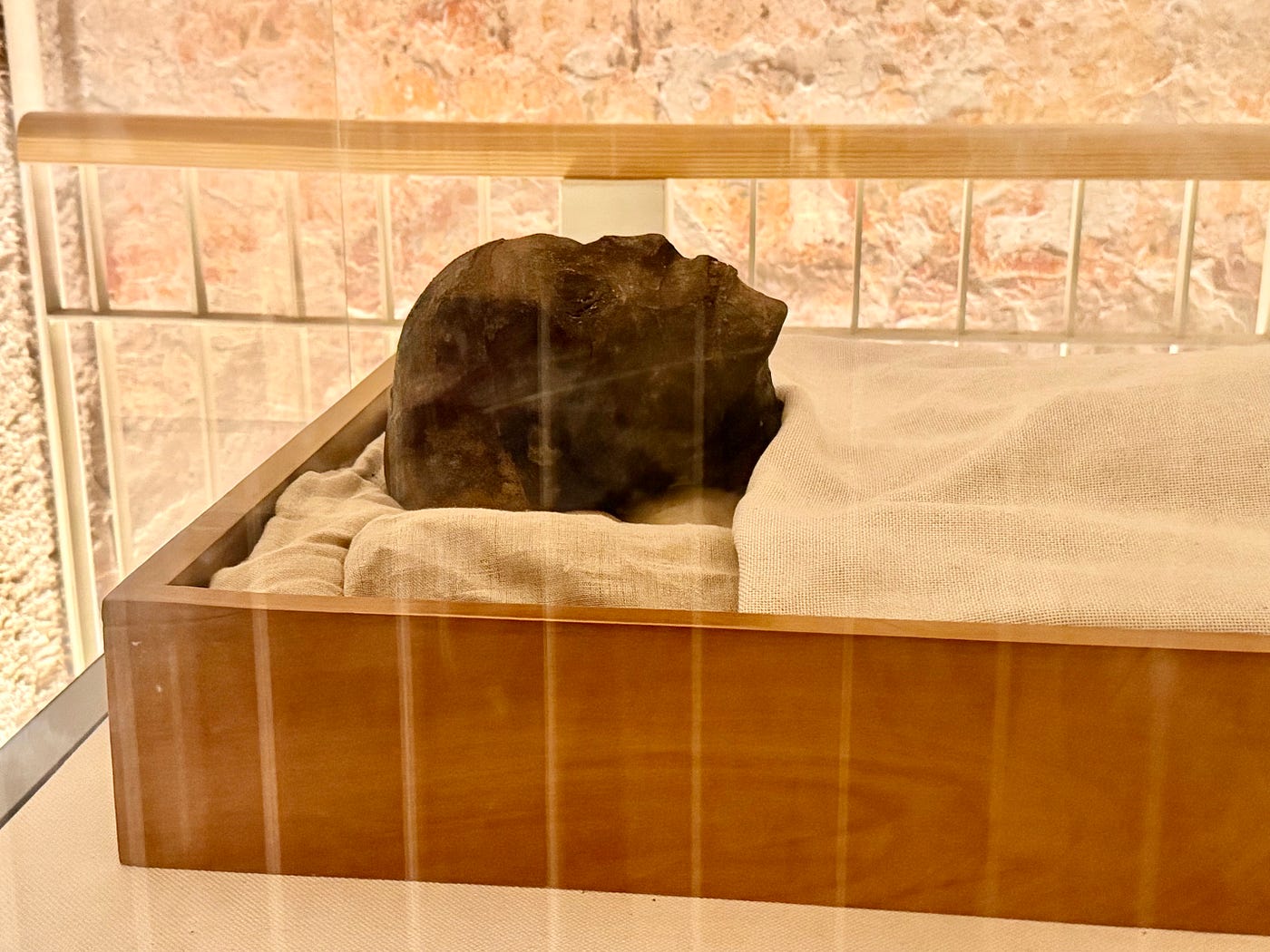
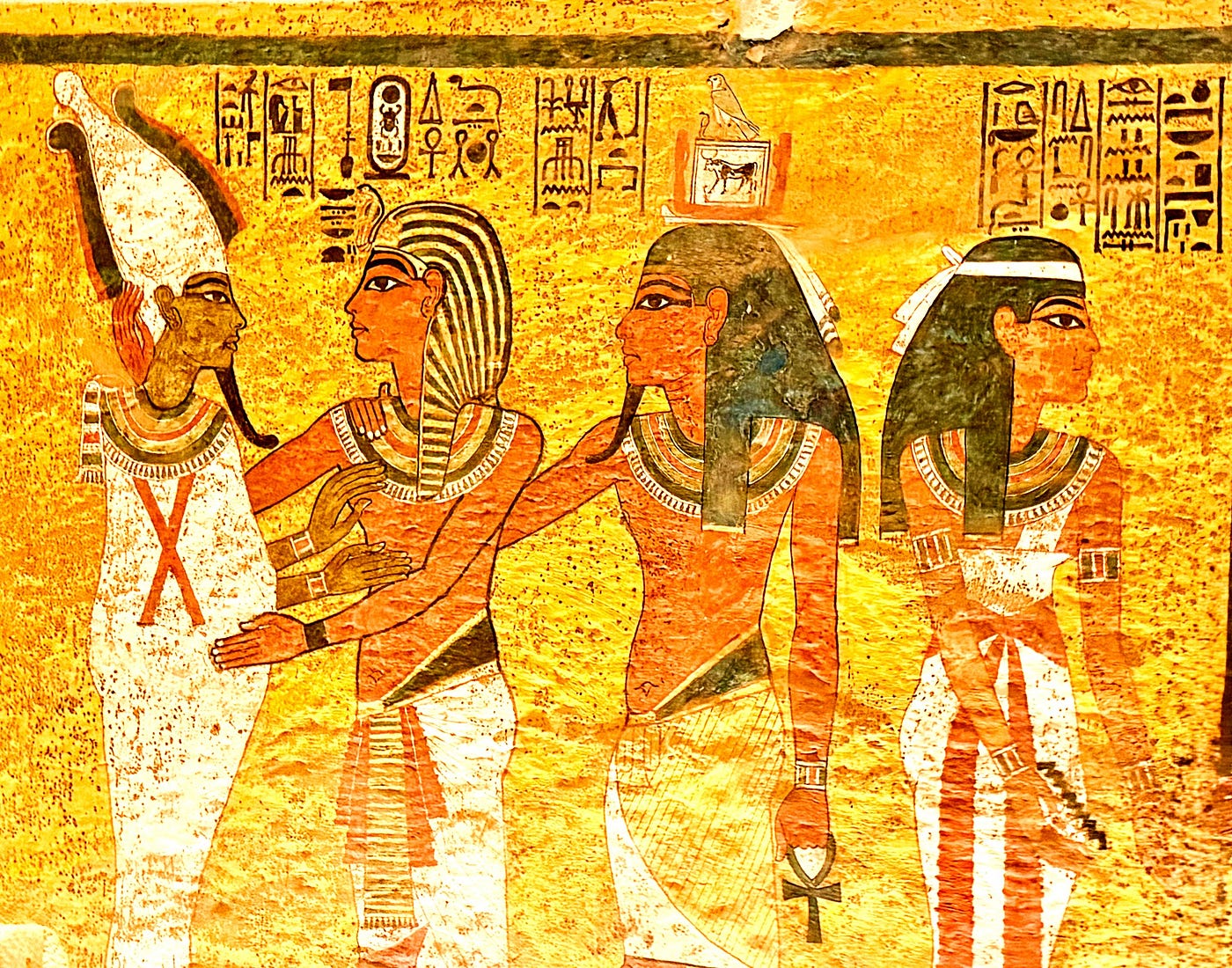
Left: Tutankhamen’s mummy in tomb # KV 62 . Right: Mural of Tutankhamen being embraced by Osiris. Photos: David A. Laws
Rendered in brightly colored pigments on the walls of the tombs, mural paintings and relief sculptures were designed to guide pharaohs through the underworld and safely into eternity. I was amazed by how vivid the colors remained after thousands of years.
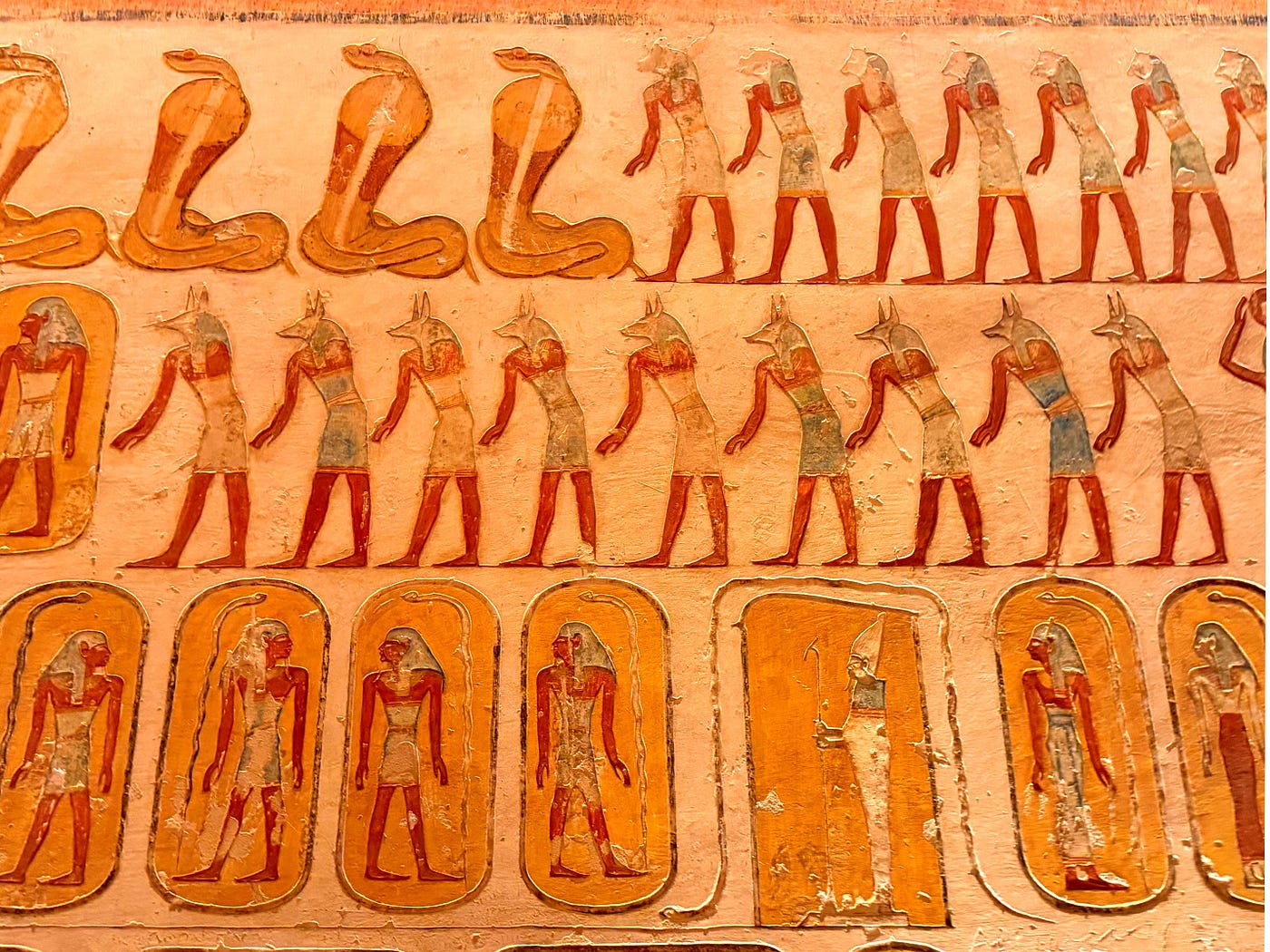
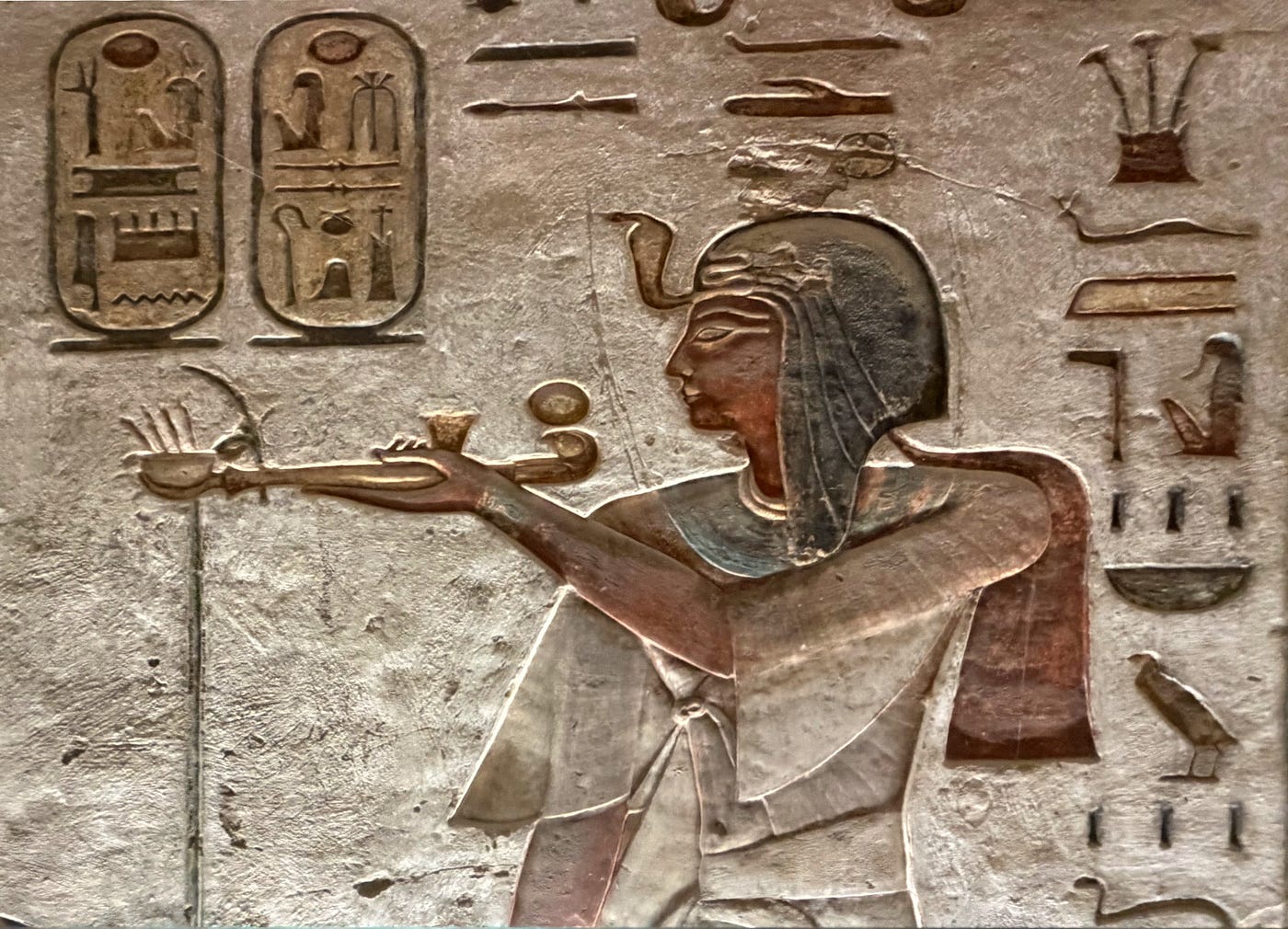
Left: Jackal head figures of Anubis in KV2 (Tomb of Rameses IV) Right: Pharaoh Seti I holding a censer in KV 11 (Tomb of Rameses III) Photos: David A. Laws
About 10 miles from the Valley of the Kings, the Valley of the Queens was reserved for the queens, princes, and royal children of the New Kingdom. The mortuary temple of the female pharaoh Hatshepsut (c. 1505–1458 BCE) comprises three massive terraces carved into a steep cliff face.

Terraces of the Mortuary Temple of Hatshepsut. Photo: David A. Laws
Temple of Khnum, Esna

The temple of Khnum being restored after removal of soil deposited by Nile flooding. Photo: David A. Laws
Located on the west bank of the Nile, 34 miles south of Luxor, the Esna temple was dedicated to Khunm (god of the flooding of the Nile) during the Ptolemaic period — the last 300 years BCE. Seeing the modern city street 30 feet above the temple’s entrance reinforced my understanding of how much the annual inundation had transformed the landscape over the centuries.
Built of red sandstone, the entrance portico, the only restored section of the temple since the deposited soil was removed, consists of six rows of elaborately carved columns with lotus and palm leaf capitals. Brilliant restored ceiling frescoes depict the signs of the Zodiac and mythological constellations.


Interior column and Zodiac ceiling details. Photos: David A. Laws
Temple of Horus, Edfu

Entrance pylon towers of the Temple of Horus. Photo: David A. Laws
Thirty miles south of Esna, the Temple of Horus, one of the best preserved in Egypt, was built during the Ptolemaic period between 237 and 57 BCE. The twin pylon towers are decorated with mirror-image reliefs depicting Pharaoh Ptolemy XII smiting his enemies, symbolizing the might of his dynasty.
I noted the many representations of the falcon-headed sky god, from massive carved black granite statues that flank the entry to a fine bas-relief depicting a miniature Ark of Horus on a ceremonial boat with falcon heads at the prow and stern.
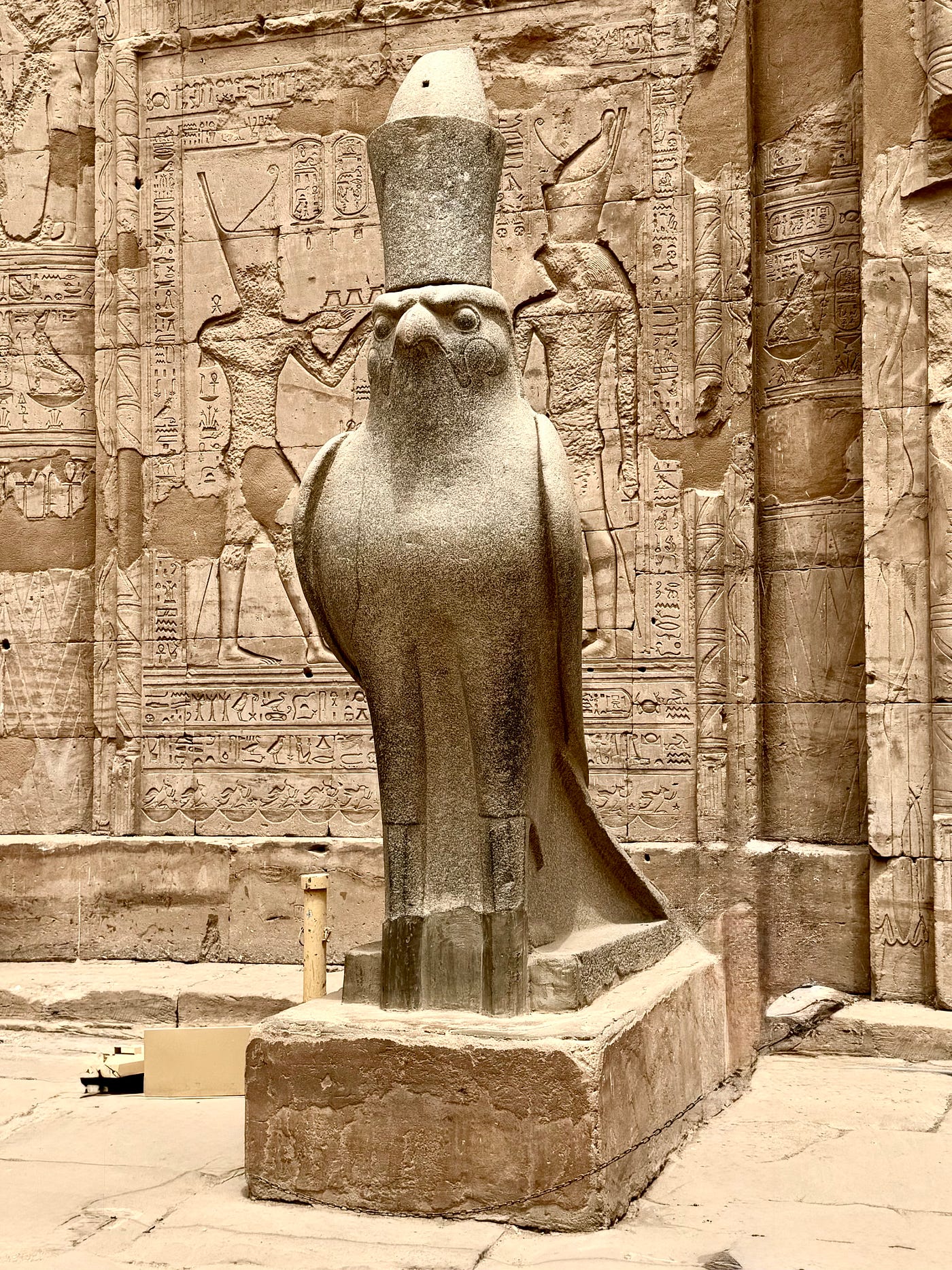
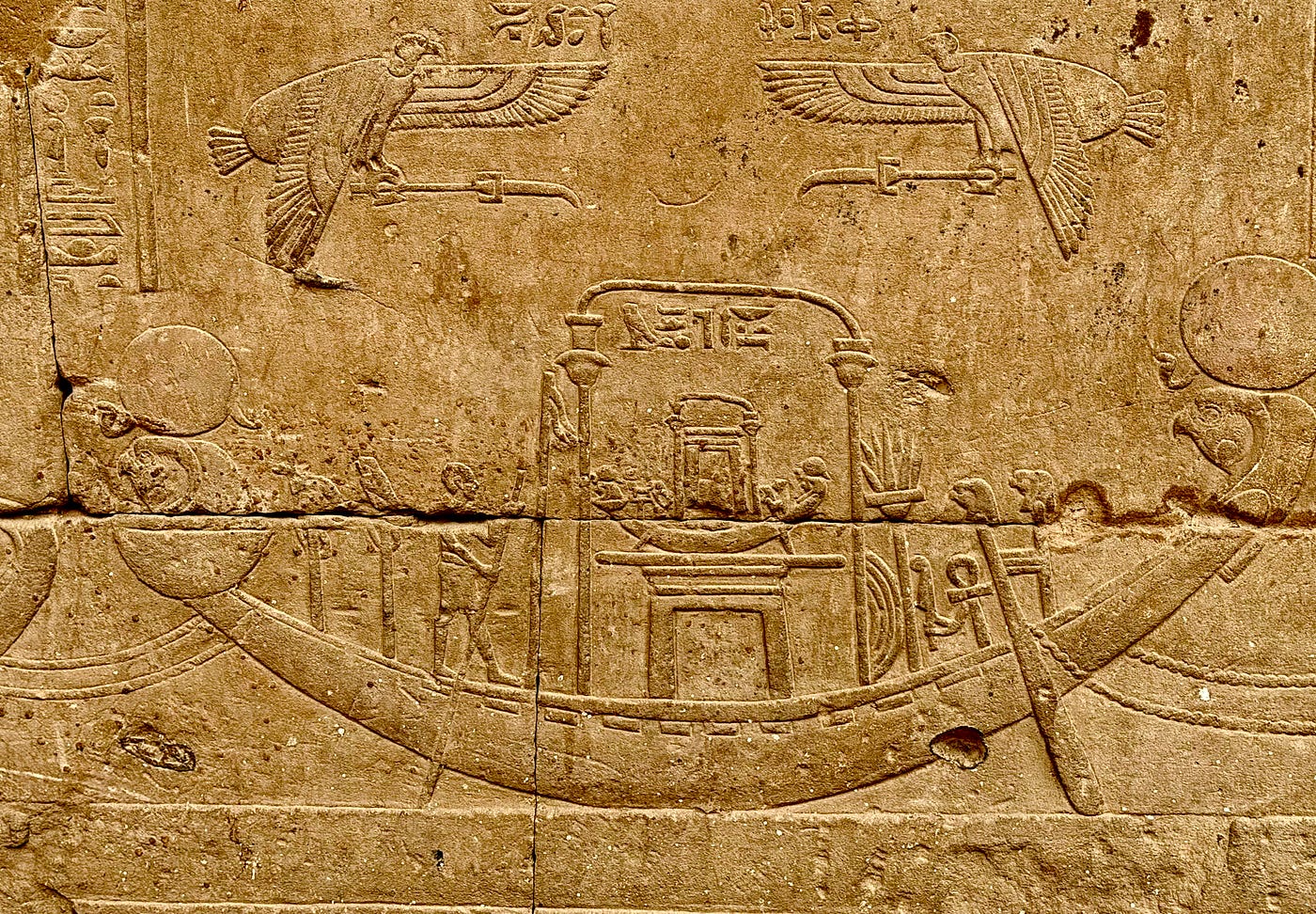
Left: One of the pair of Horus statues that guard the entrance. Right: Bas-relief of a barque carying the Ark of Horus. Photos: David A. Laws
Temple of Kom Ombo
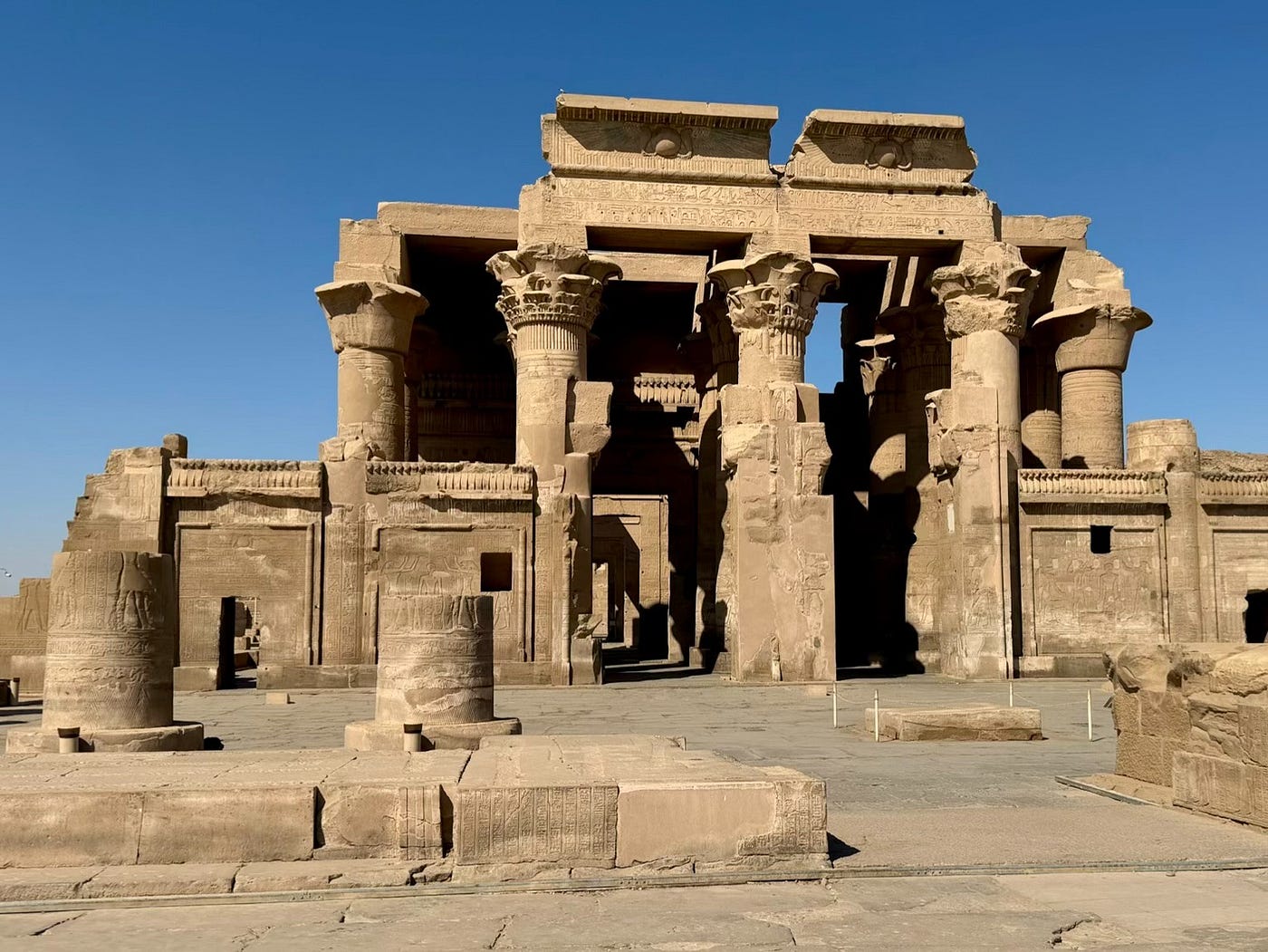
The symmetrical double entrance facade of the Temple of Kom Ombo. Photo: David A. Laws
The Temple of Kom Ombo is dedicated to two sets of gods in a symmetrical design with duplicated entrances, courts, and sanctuaries. Constructed during the Ptolemaic dynasty, 180–47 BCE, the north side favors Horus, while the south is dedicated to the crocodile god, Sobek. An adjacent museum displays some of the 300 crocodile mummies discovered in the area.
Much of the temple has been destroyed by earthquakes and floods, but many important bas-reliefs remain. I was intrigued by two of the earliest representations of artifacts that remain important today: a calendar with hieroglyphs for the inundation season and numbers for the days of the month, and, on the rear wall, a collection of images representing surgical instruments.


Left: A calendar. Right: Surgical Instruments. Photos: David A. Laws
Temples of Philae, Aglika Island
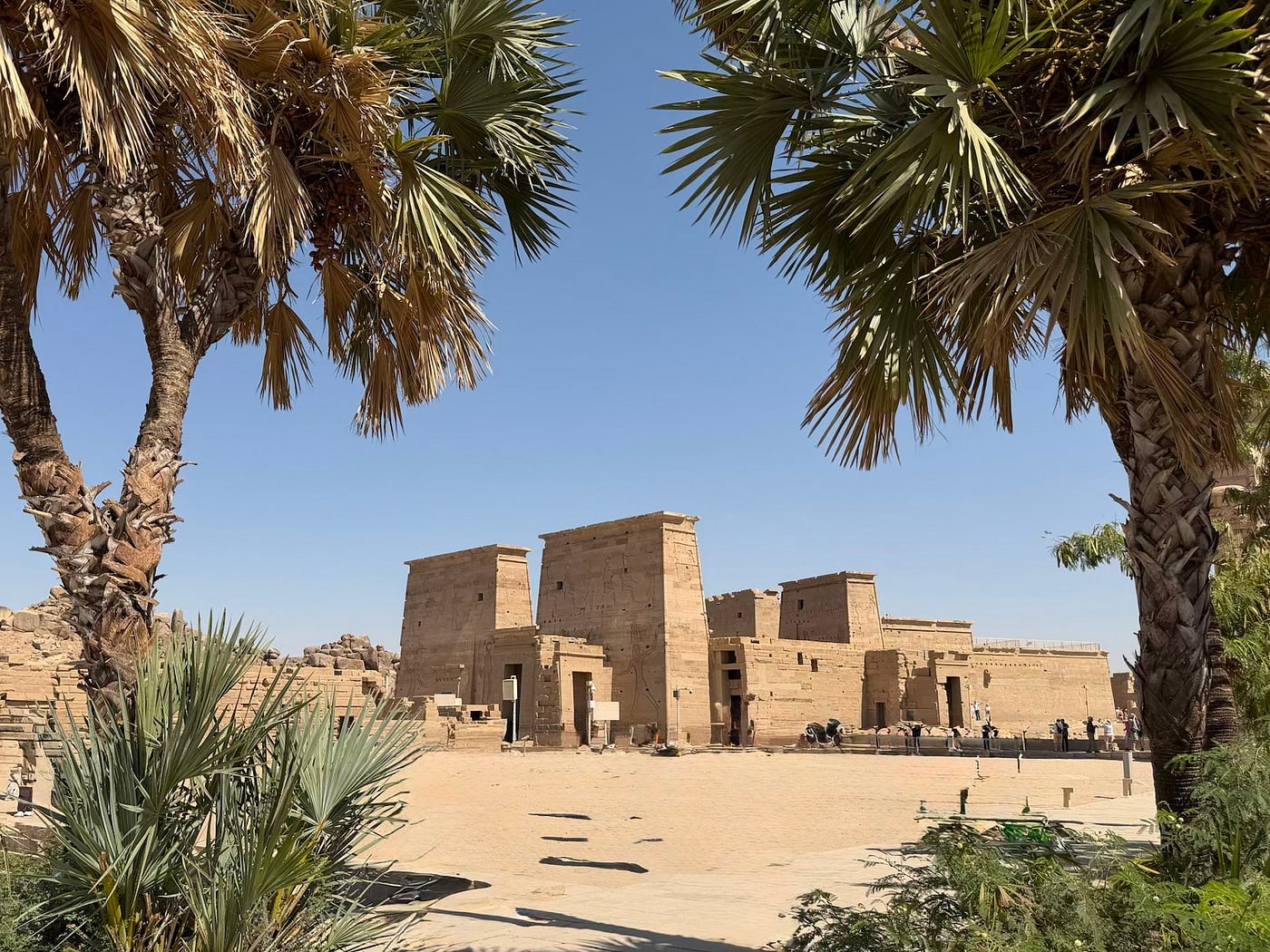
Philae Temple of Isis. Photo: David A. Laws
Built on the island of Philae during the reign of Ptolemy II (285–246 BCE), the Temple of Isis is dedicated to Isis, Osiris, and Horus. To avoid flooding, 50,000 stones were dismantled and reassembled on the nearby island of Agilka in the 1970s. Other structures moved to Agilka include the Hall of Nectanebo I and an unfinished Roman-era pavilion, the Kiosk of Trajan.
During the Byzantine era, Coptic Christians used the temple as a church, deliberately defacing the pagan reliefs and carving crosses into the stones. In 1799, troops from Napoleon’s Egyptian campaign inscribed a commemorative notice on the entrance wall. Initially, I felt disappointed by this historical graffiti. On reflection, I realized how it highlighted the different roles the temple has played throughout the years.
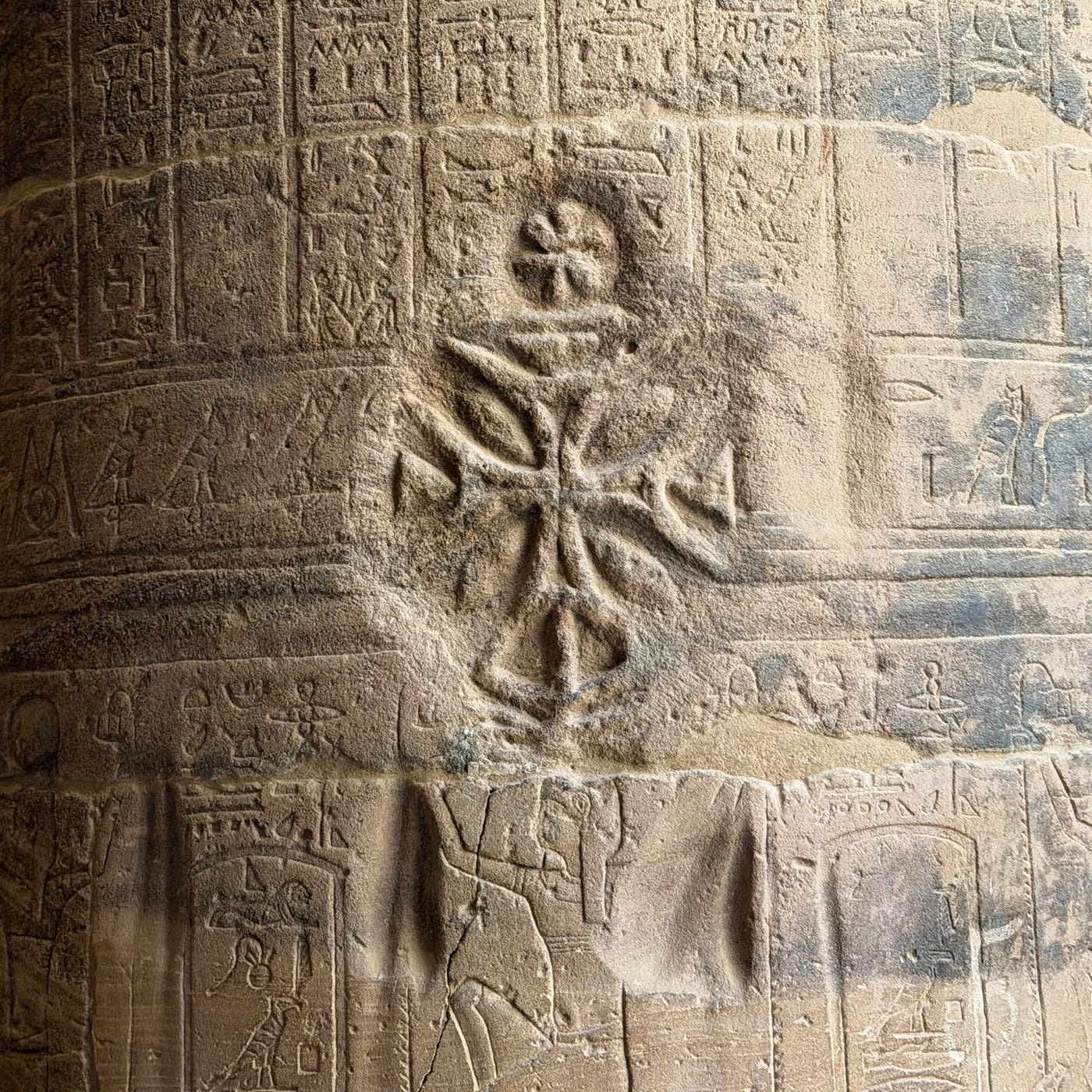
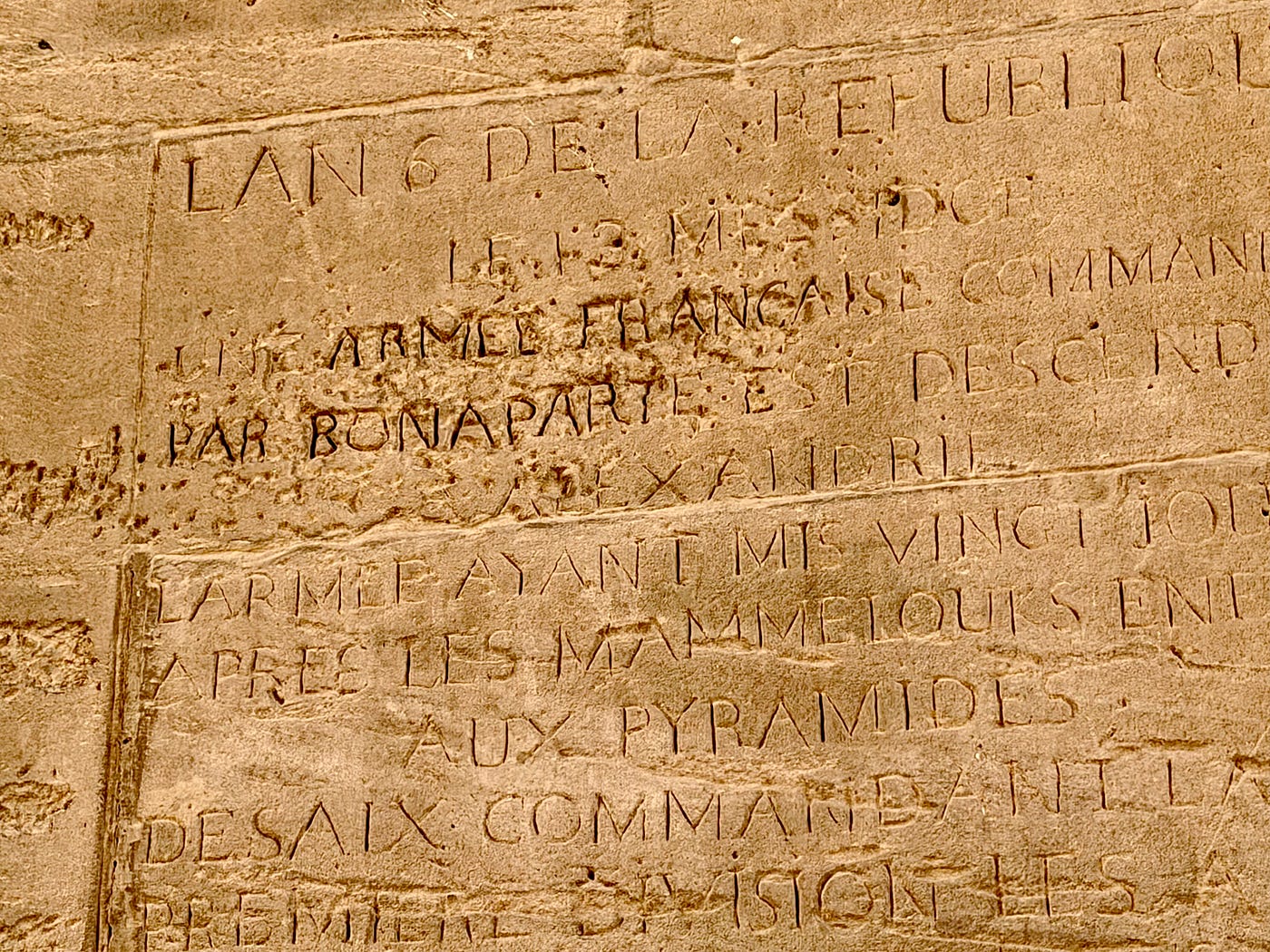
Historical graffiti: A Coptic Christian cross and Napolionic inscription. Photos: David A. Laws
The Temples of Abu Simbel
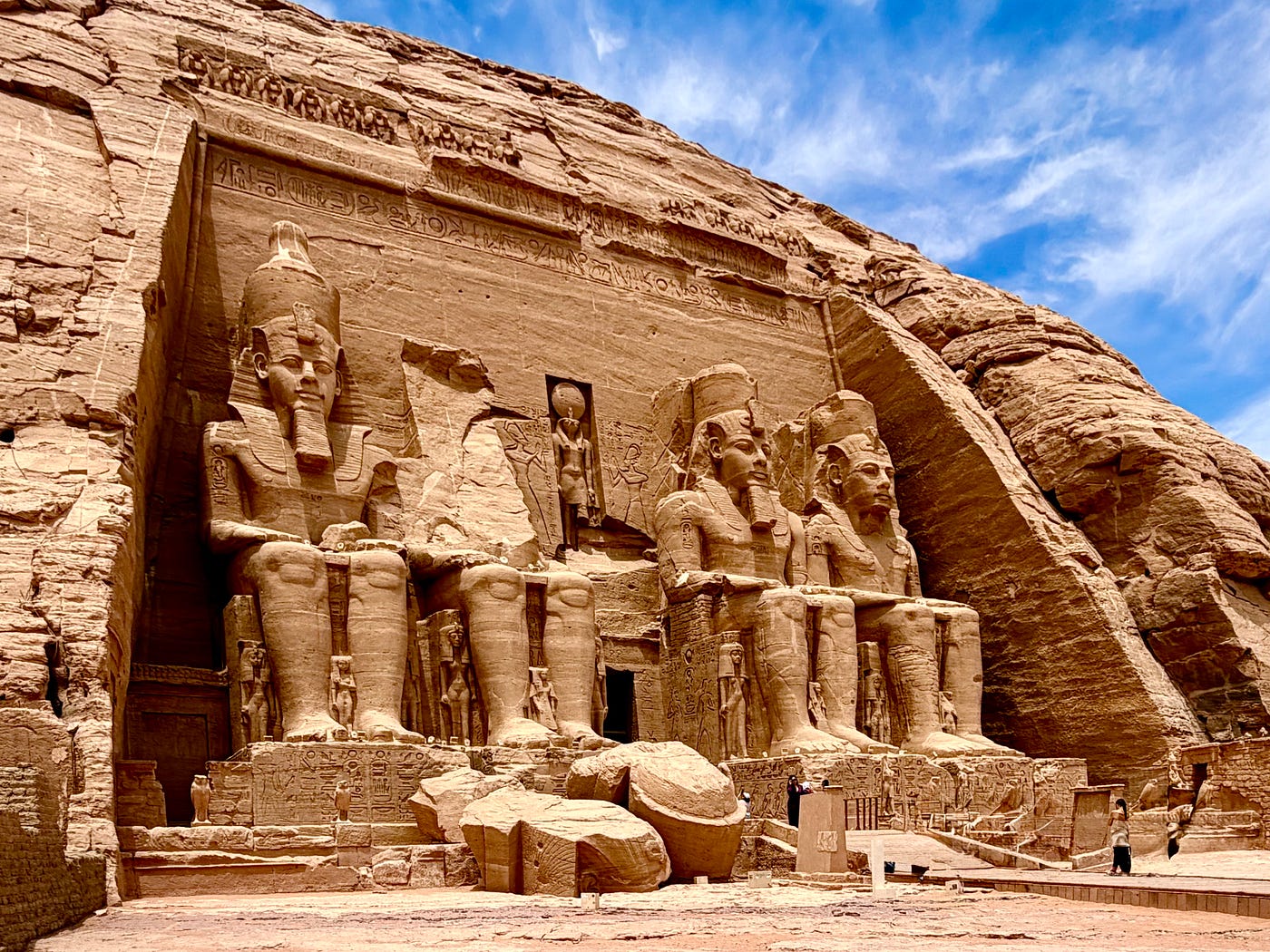
The Great Temple is dedicated to the sun gods Amun-Re and Re-Horakhte, as well as to Rameses. Photo: David A. Laws
As a display of his divine power, Rameses II commissioned the carving of the two famous temples at Abu Simbel directly into a sandstone cliff between 1264 and 1244 BCE. When construction of the Aswan High Dam threatened to submerge the temples in the 1960s, UNESCO led an international campaign to save them. They were cut into 1042 blocks, with the larger ones weighing 20 to 30 tons, and moved one by one to higher ground.
After our three-hour bus ride across the featureless desert from Aswan, the first view of Abu Simbel was uninspiring. But the anticipation that built as we walked around the man-made mountain was rewarded with amazement at my first view of the temples and my realization of the engineering effort required to relocate them. Perhaps not on par with some of the ancient works we had visited over the past couple of weeks, but remarkable nevertheless.
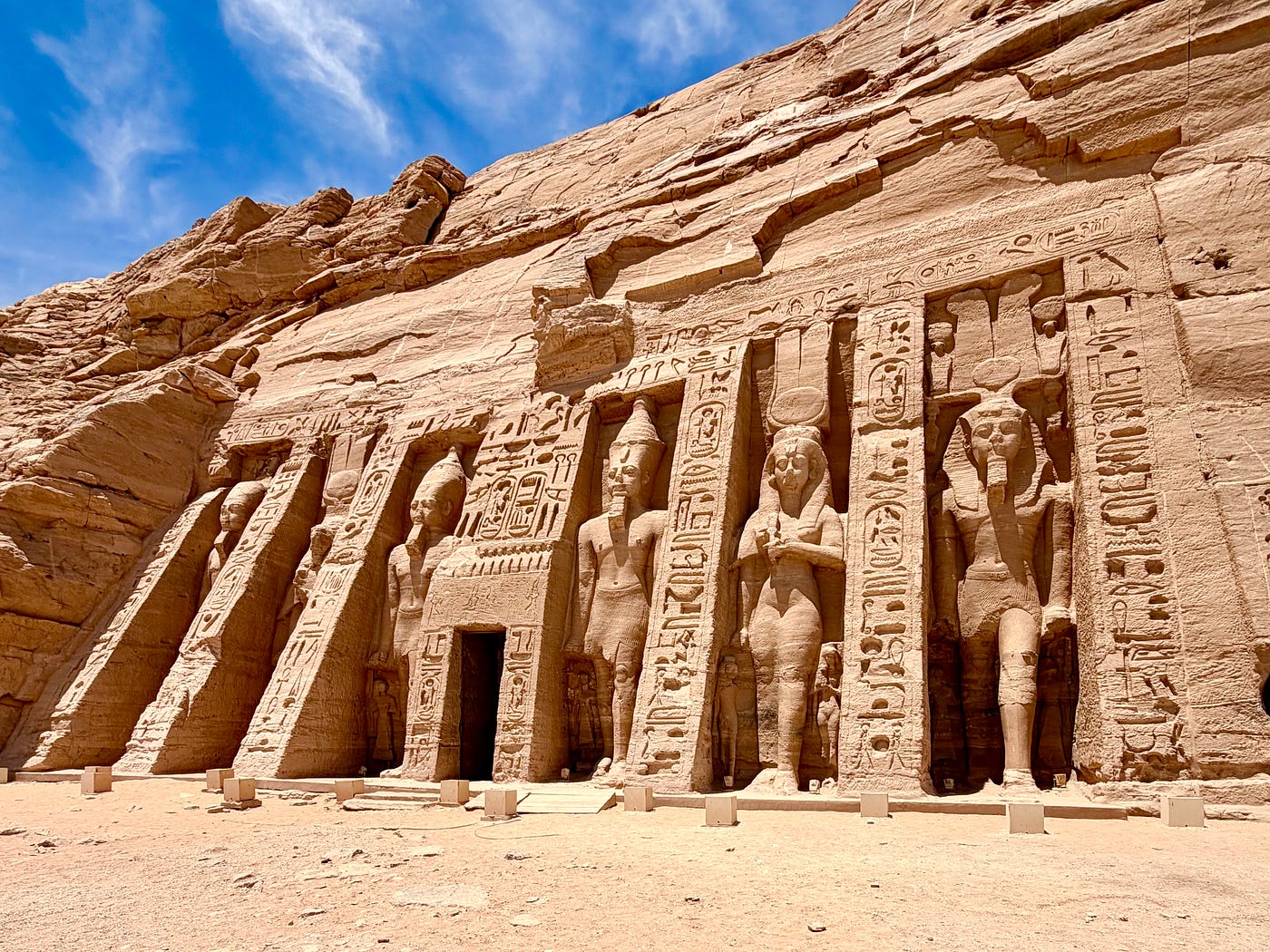
The Small Temple is dedicated to Rameses’ Il favorite queen, Nefertari, and the goddess Hathor. Photo: David A. Laws
About our trip
Our journey to “Egypt & the Eternal Nile” was managed by employees and associates of Overseas Adventure Travel (OAT) for 18 days in April 2026. Guided by the dedicated and knowledgeable egyptologist Walid (Wally) Aly, eight travelers from across the USA met in Cairo and set out to explore the tombs, temples, and pyramids of one of the world's oldest civilizations. We especially appreciated the friendly people who opened their homes and hearts to us at a time when American visitors were not universally welcome across the world.
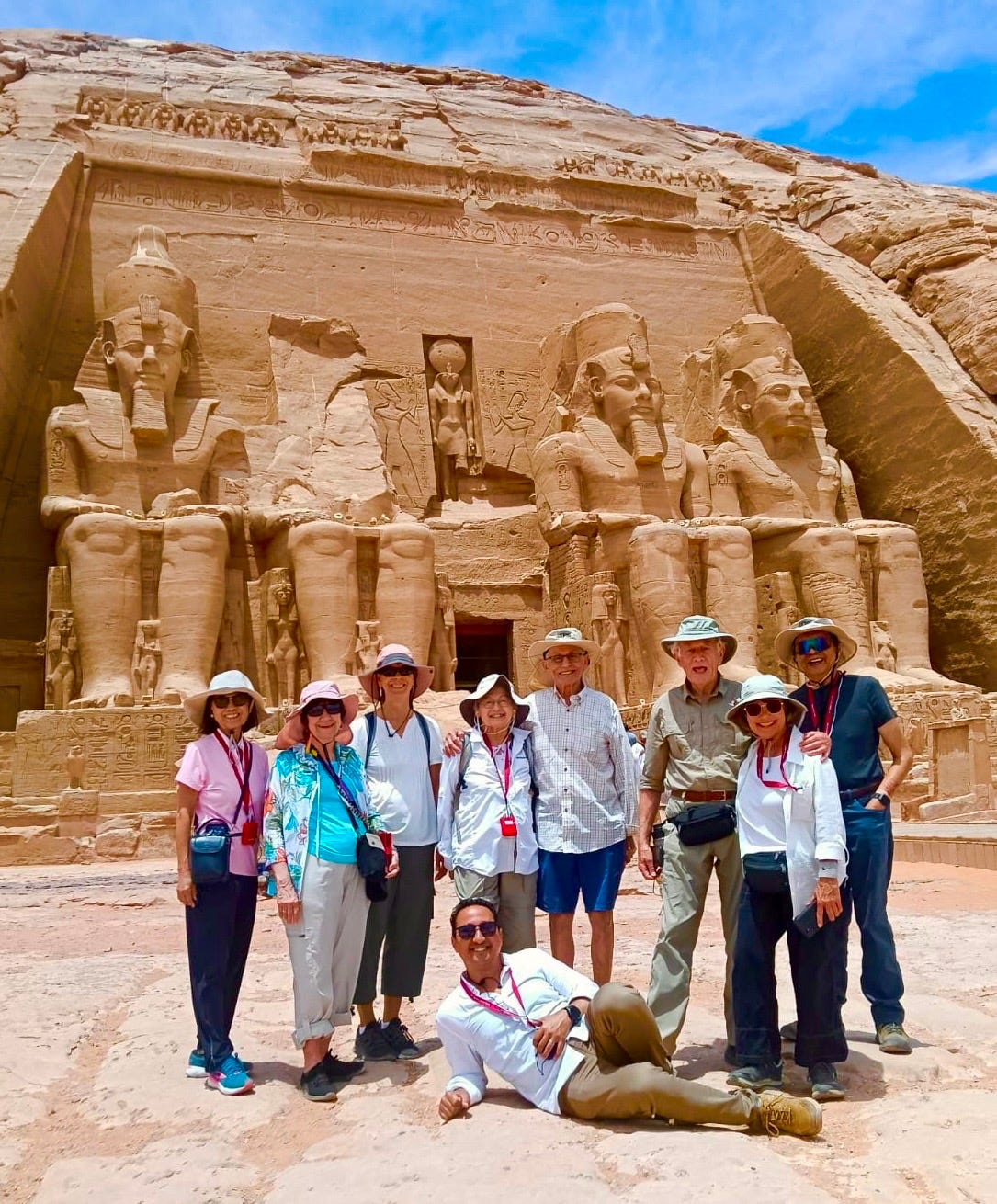
Wally and his charges. Photo: David A. Laws
Five days of our trip were spent aboard a 16-passenger dahabeya, a two-masted sailing vessel whose lineage goes back to Pharaonic times. Its small size and shallow draft allowed us to visit islands and villages that are usually inaccessible to larger craft. Truly a gentler, more gracious way to see the Nile.

Our home for 5 days from Esra to Aswan. Photo: David A. Laws
From the frenetic streets of Cairo to the vast deserts of Upper Egypt, your guiding hand, deep knowledge, and love of your country and its history made this the trip of a lifetime. Thank you, Wally.
After Thought
New revelations in quantum research suggest that time could fold back on itself, creating loops in which the past, present, and future constantly interact. [1] After two intense weeks of learning about the pharaohs’ preparations for the hereafter and how well their works have survived over the centuries, I began to think they might have been more prescient than we give them credit for.
[1] “Time may not move forward, it may be folding around you right now,” Astronomy Vibes, June 27, 2026
메타데이터
- post_id
- 118653c29b8f
- slug
- pyramids-tombs-temples-of-the-nile-118653c29b8f
- url
- https://medium.com/globetrotters/pyramids-tombs-temples-of-the-nile-118653c29b8f
- canonical_url
- https://medium.com/globetrotters/pyramids-tombs-temples-of-the-nile-118653c29b8f
- author_url
- https://medium.com/@davidlaws
- status
- ok
- fetched_at
- 2026-07-13 14:44:14