Running Qwen3–4B On-Device: Deploying a 4B LLM on Snapdragon NPUs
From Model Architecture to Community Contribution on Qualcomm AI Hub Org at HuggingFace
Running Qwen3–4B On-Device: Deploying a 4B LLM on Snapdragon NPUs
From Model Architecture to Community Contribution on Qualcomm AI Hub Org at HuggingFace
The era of on-device AI is here.
With modern smartphone NPUs reaching tens of TOPS of compute, running large language models locally is no longer theoretical — it’s becoming practical.
One of the newest models enabling this shift is Qwen3–4B (often referred to as Qwen3.5 in community discussions). Despite its relatively small size compared to cloud LLMs, the model delivers strong reasoning and conversational ability while remaining deployable on edge hardware.
In this blog we’ll explore:
- How Qwen3–4B works internally
- How it runs efficiently on Snapdragon NPUs
- The workflow used to contribute the model to the Qualcomm AI Hub Community
This article connects model architecture, hardware optimization, and open developer ecosystem contributions.
The Rise of On-Device LLMs
Traditionally, LLMs have been deployed in the cloud because of their massive compute requirements.
But running models locally offers several advantages:
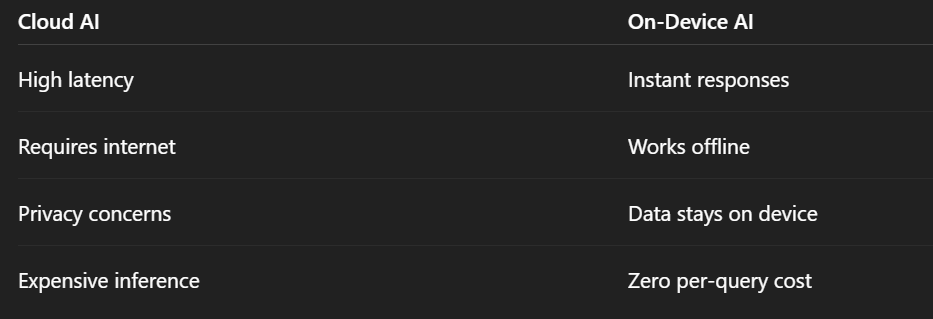
Thanks to mobile NPUs and efficient quantization, models like Qwen3–4B can now run directly on phones and laptops.
Qwen3–4B Architecture: Under the Hood
Before deployment, let’s understand how the model is structured.

The model contains 36 transformer blocks, each optimized to balance performance with efficiency.
Core Architectural Components
Grouped Query Attention (GQA)
Traditional multi-head attention requires significant memory bandwidth.
GQA reduces this overhead by sharing key/value projections across groups of attention heads.
Benefits:
- Lower memory usage
- Faster inference
- Better hardware efficiency
This design is especially important for mobile NPUs with limited memory bandwidth.
RoPE Positional Embeddings
Qwen uses Rotary Positional Embeddings (RoPE) to encode token positions.
Advantages:
- Efficient implementation
- Strong long-context reasoning
- Stable training dynamics
The model supports ~4096 tokens context length optimized for edge deployment.
SwiGLU Feed Forward Networks
Instead of simple ReLU activations, Qwen uses SwiGLU, which improves expressiveness while remaining computationally efficient.
This results in better language understanding and generation quality.
Thinking vs Non-Thinking Modes
A unique design pattern emerging in Qwen models is Thinking vs Non-Thinking inference modes.
Thinking Mode
Used for complex tasks such as:
- multi-step reasoning
- mathematics
- code generation
The model effectively allocates more internal computation before generating output.
Non-Thinking Mode
Optimized for:
- conversation
- creative writing
- quick responses
This mode prioritizes low latency and efficiency.
Quantization: Making a 4B Model Mobile-Friendly
Running a 4 billion parameter model on a smartphone requires aggressive optimization.
Qwen3–4B uses W4A16 quantization.

W4A16 Explained
ComponentPrecisionWeights4-bitActivations16-bit
Benefits:
- ~4× smaller model size
- Lower memory bandwidth
- Faster NPU inference
This makes the model feasible to run on mobile hardware.
Snapdragon AI Engine Architecture
Qualcomm’s AI stack enables efficient on-device inference.

Instead of running on the CPU, inference is delegated to the Hexagon NPU, which offers:
- specialized matrix acceleration
- low power consumption
- high throughput for AI workloads
Snapdragon 8 Elite Performance

These numbers demonstrate how modern mobile chips are capable of real-time LLM inference.
Developer Workflow: From Model to Community Contribution
Contributing models to the Qualcomm AI Hub Community involves a structured workflow.

Step 1: Exporting the Model
The qai-hub-models toolkit compiles the model for Snapdragon hardware.
python -m qai_hub_models.models.qwen3_4b.export \
  --target-runtime genie \
  --chipset qcs9075 \
  --zip-assets \
  --output-dir ./output
This generates optimized inference assets compatible with Genie runtime.
Step 2: Asset Packaging
The export produces several key artifacts:
model.onnx
model.data
model.encodings
tool_versions.yaml
The tool_versions.yaml file records:
- QAIRT version
- AI Hub tooling version
This ensures reproducible builds across devices.
Packaging Structure
Community submissions follow this naming format:
<model-name>-<runtime>-<precision>-<chipset>.zipExample:
qwen3-4b-onnx-w4a16-qcs9075.zipPackaging Pipeline

Handling Large Model Files
The model archive exceeds 15GB, so Git LFS must be used.
Track large assets:
*.zip
*.onnx
*.data
Important tips:
- Use write-permission Hugging Face tokens
- Upload using hf CLI
- CLI supports resumable uploads
Final Upload
Once prepared, the model is uploaded to the community space.
hf upload qualcomm-ai-hub-community/Qwen3-4B-Instruct-APLUX . \
  --include "README.md" "Qwen3-4B-onnx-w4a16.zip"
After the upload, the model becomes accessible to developers worldwide.
Applications of On-Device LLMs
With models like Qwen3–4B running locally, new applications become possible:
- Offline coding assistants
- Private AI chatbots
- Mobile research assistants
- Edge AI agents
- Smart productivity tools
This marks a shift toward privacy-first AI systems.
Looking Ahead
The Qwen3–4B model is now available on the Qualcomm AI Hub Community, enabling developers to experiment with powerful language models directly on mobile devices.
As mobile NPUs continue to improve, the boundary between cloud AI and edge AI will continue to blur.
The future of AI isn’t just in the cloud.
It’s in your pocket.
Resources
Qualcomm AI Hub Community https://huggingface.co/qualcomm-ai-hub-community/Qwen3-4B-Instruct-carrycooldude
메타데이터
- post_id
- 11a7fa17ffca
- slug
- running-qwen3-4b-on-device-deploying-a-4b-llm-on-snapdragon-npus-11a7fa17ffca
- url
- https://medium.com/@carrycooldude/running-qwen3-4b-on-device-deploying-a-4b-llm-on-snapdragon-npus-11a7fa17ffca
- canonical_url
- https://medium.com/@carrycooldude/running-qwen3-4b-on-device-deploying-a-4b-llm-on-snapdragon-npus-11a7fa17ffca
- author_url
- https://medium.com/@carrycooldude
- status
- ok
- fetched_at
- 2026-08-09 12:38:57






