I Thought I Knew Vanilla. Then I Learned Where It Actually Comes From.
A vanilla origin story from the volcanic slopes of Bali to the rainforests of Borneo — and why knowing the source changes how you cook.
I Thought I Knew Vanilla. Then I Learned Where It Actually Comes From.
A vanilla origin story from the volcanic slopes of Bali to the rainforests of Borneo — and why knowing the source changes how you cook.
I used to think vanilla was vanilla. You bought the bottle, you baked the cake, and whatever was inside was probably from Madagascar and probably fine.
Then someone handed me a split Bali Grade A pod and told me to smell it before I did anything else. I stood in that kitchen for longer than I care to admit, because what I was smelling wasn’t what I expected. There was vanilla, yes — sweet and warm and everything vanilla is supposed to be. But there was also something floral and almost spiced underneath it, something that reminded me faintly of dried tropical fruit. It was the same species I’d been using my whole life. It tasted like a completely different ingredient.
The Island That Changes Everything
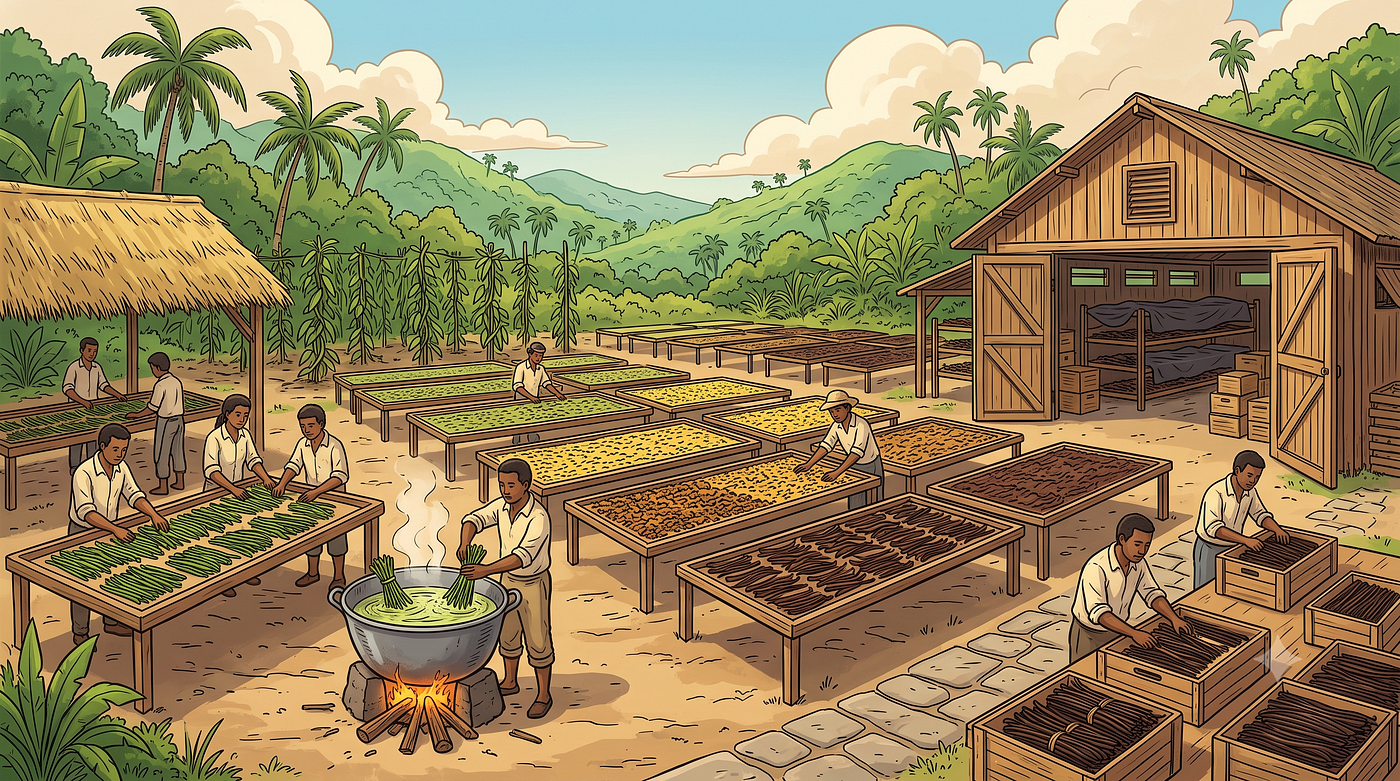
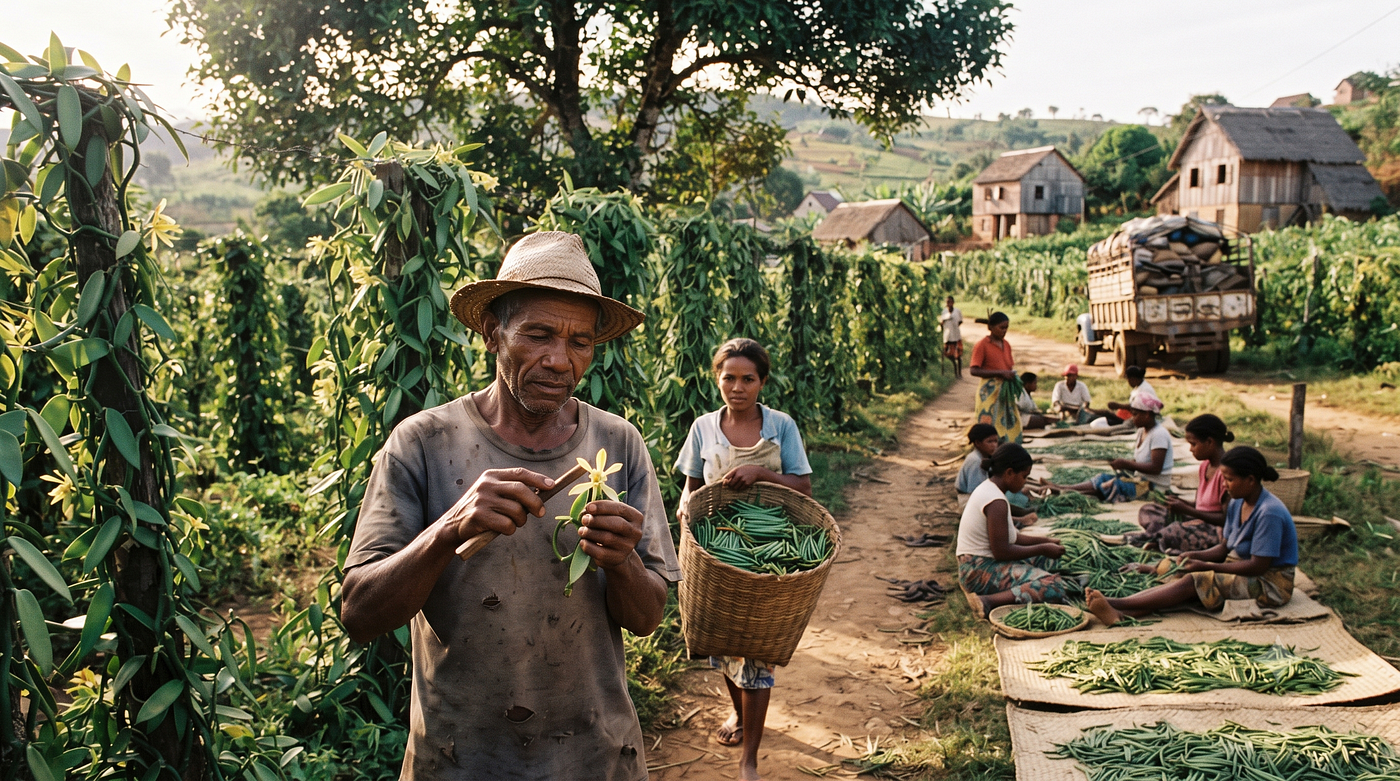
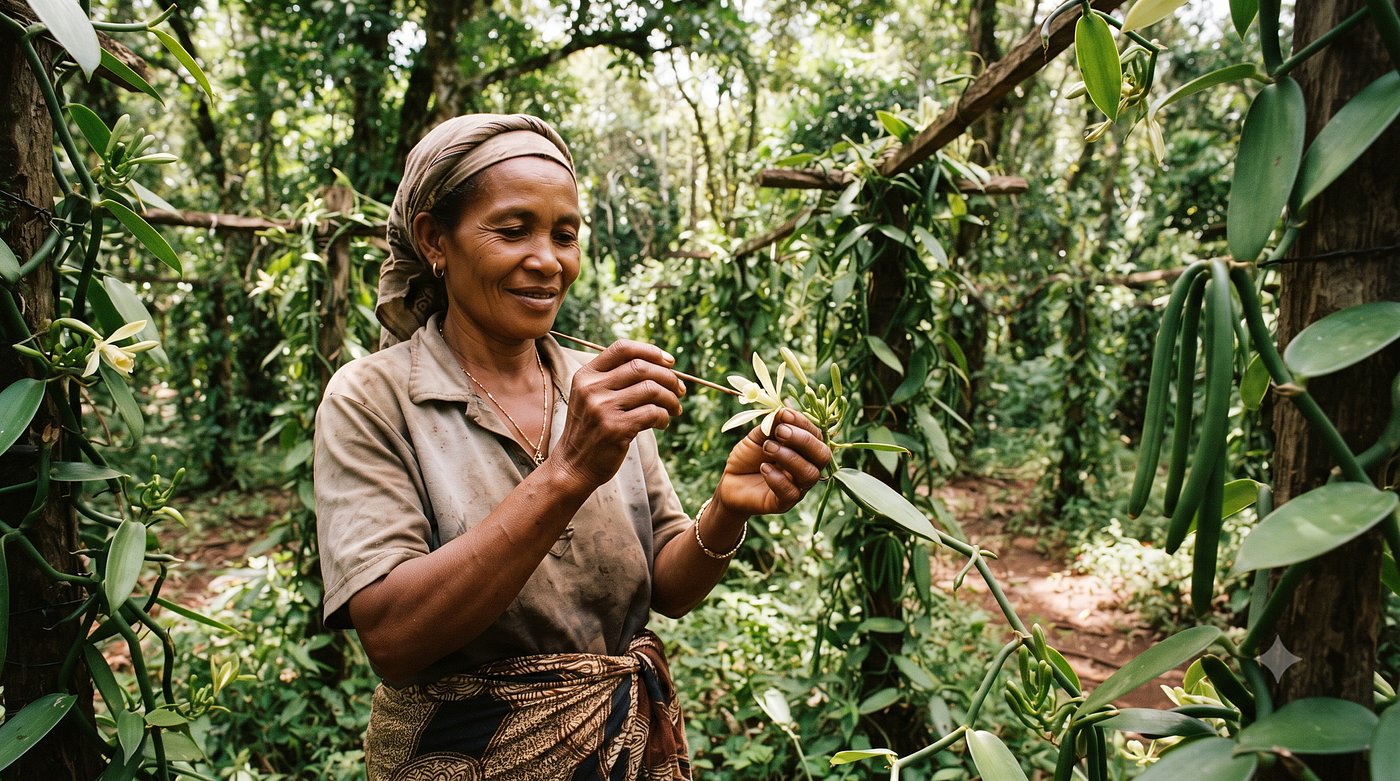
Bali vanilla grows in Tabanan Regency, on the cooler volcanic slopes around the Batukaru and Agung ranges. The altitude slows the bean’s maturation and gives it time to develop the secondary flavor compounds that make it taste the way it does — layered and complex in a way that flat commodity vanilla simply isn’t. Farmers here hand-pollinate each flower (vanilla orchids don’t self-pollinate in cultivation), wait nine months for the pods to mature, and then cure the beans through a sun-drying process that takes weeks.
None of that is exotic. It’s how vanilla has always been made. But most of us never knew we were tasting the shortcut version.
Three Origins, Three Completely Different Beans
Indonesia isn’t one vanilla-growing region — it’s three distinct ones, each producing beans with different flavor personalities.
Bali (Tabanan Regency) is the gourmet origin — floral, complex, warm-spiced. The one to reach for when the bean is going to be visible in the dish.
East Java (Blitar and the Malang Highlands) runs bolder and earthier — the kind of vanilla that holds up in a dark chocolate ganache or a spiced baked good. High vanillin content, consistent quality, and the volume that makes it the workhorse of professional extract production.
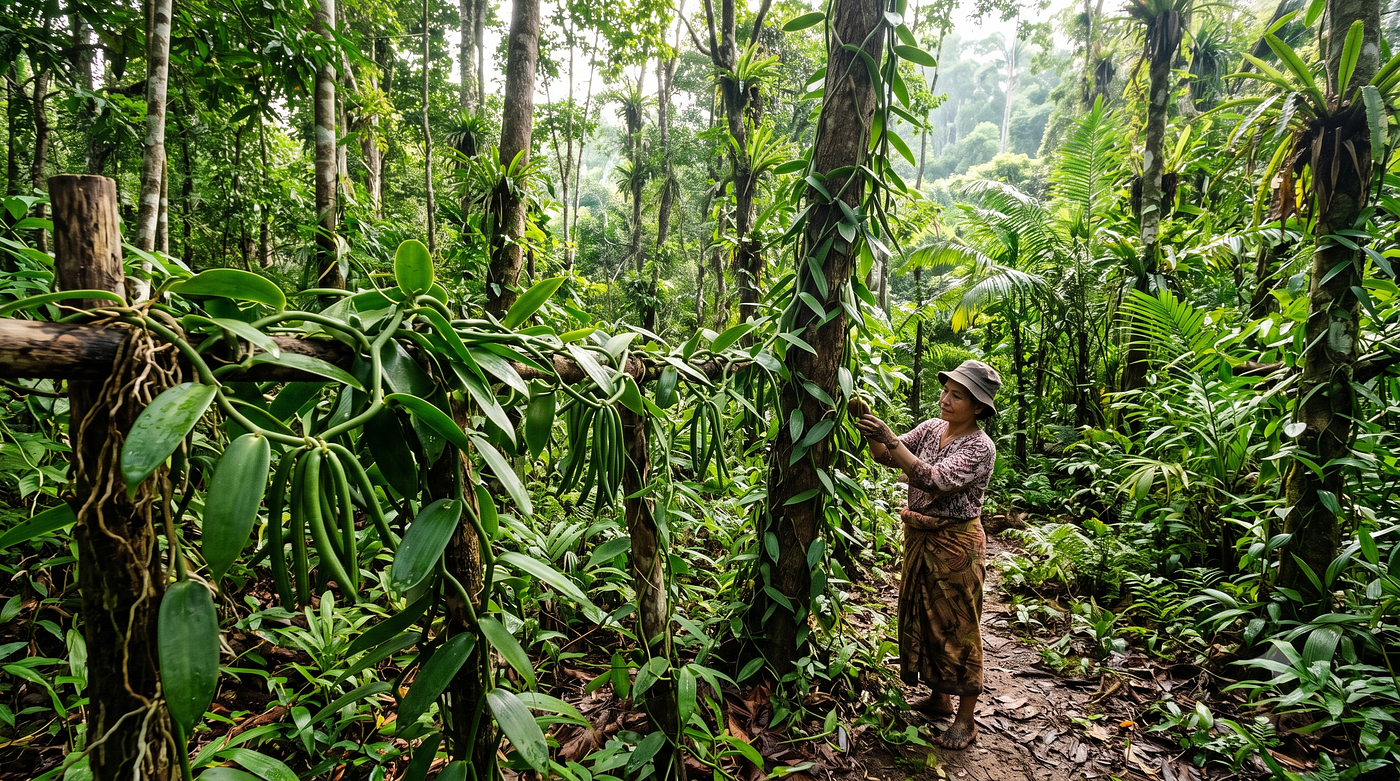
West Kalimantan (Borneo interior) is the one that surprised me most. This vanilla grows in the interior of Borneo, climbing up shade trees in rainforest agroforestry systems that have existed for generations. The flavor is deep and resinous and almost medicinal — nothing like Bali’s sweetness. If you’ve ever made vanilla extract and wanted the kind that actually tastes like something, this is the bean.
Why This Matters Beyond Flavor
Here’s the thing about vanilla that I didn’t fully understand until I started paying attention: most of the world’s natural vanilla grows in one 200-mile strip of Madagascar. One bad cyclone season — and they’ve happened — sends global prices spiraling for years. When prices spike, fraud follows: green-harvested pods, synthetic vanillin blended into natural lots, documentation that says “Madagascar” but tells you nothing else.
The alternative isn’t to stop using vanilla. It’s to know more about where it comes from.
Indonesia’s three growing regions are geographically separated across an archipelago of islands. A weather event in Bali doesn’t affect East Java. Neither affects Borneo. That geographic spread is supply resilience in practice, not just in theory.
Where to Actually Find This
The challenge with named-origin Indonesian vanilla is that most of what’s labeled “Indonesian vanilla” in commodity channels is blended, undifferentiated stock with no regional specificity. What you want is a direct-source trader who can tell you the origin down to the regency, the grade, and the vanillin content of the specific lot you’re buying.
Vanilla Roots is a direct-source Indonesian vanilla trader doing exactly this — sourcing from cooperatives in Bali, East Java, and West Kalimantan with lot-specific documentation. Even if you’re not buying commercial quantities, their origin guides are the best free resource I’ve found for understanding what actually makes these beans different from each other.
I haven’t bought grocery-store vanilla since that afternoon in the kitchen with the Bali pod. Not because it’s snobbery — because once you know what the difference tastes like, it’s hard to go back to not knowing.
메타데이터
- post_id
- 11da3e83f54c
- slug
- i-thought-i-knew-vanilla-then-i-learned-where-it-actually-comes-from-11da3e83f54c
- url
- https://medium.com/@hereradiaries/i-thought-i-knew-vanilla-then-i-learned-where-it-actually-comes-from-11da3e83f54c
- canonical_url
- https://medium.com/@hereradiaries/i-thought-i-knew-vanilla-then-i-learned-where-it-actually-comes-from-11da3e83f54c
- author_url
- https://medium.com/@hereradiaries
- status
- ok
- fetched_at
- 2026-07-28 20:00:24