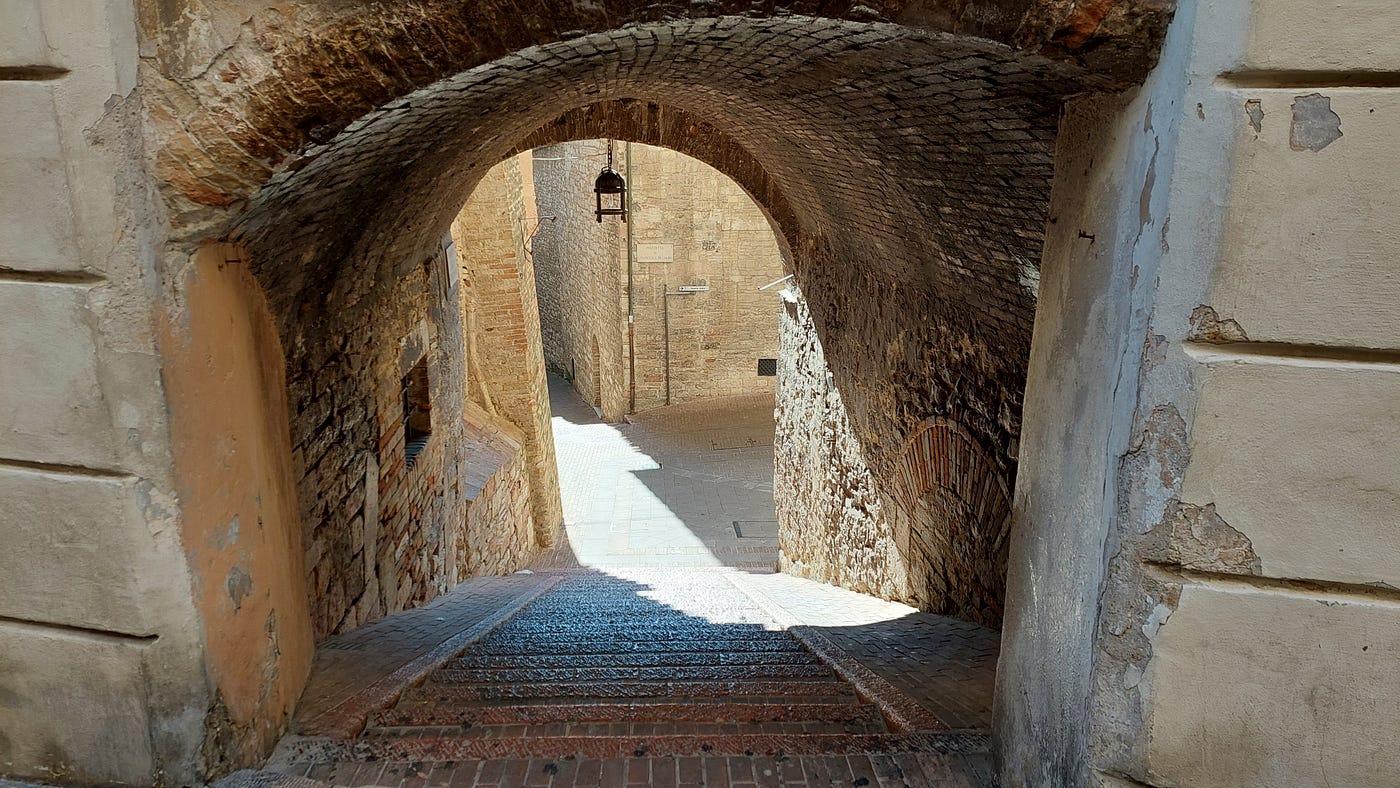
The Baltic Way. Part 2: Latvia
March 18
The Baltic Way. Part 2: Latvia
March 18
Sue and I had looked into travelling between the three Baltic capitals by train, but concluded that bus would be the better option. So, after checking out of Hotel Schlössle, we headed back to the Tallinn bus station, and caught the LUX Express to Riga. It’s a good way to travel: comfy seats, lots of legroom, seatback video screens, free water. The journey takes about three and a half hours.
Our first impressions of Riga were not positive. We came into the city along streets lined with apartment buildings: some utilitarian structures from the Soviet era, others with elaborate facades, but most had rusted balconies and were covered in dirt.
The Grand Palace Hotel, our home for the following five nights, is in Old Riga. It’s suitably grand and palatial, but, when we went to the bar for dinner, there was a guy smoking! The waitress seated us in the adjoined restaurant, but we could still smell tobacco smoke. I wouldn’t have thought that any European hotel would still allow smoking in public areas.
March 19
Breakfast at the Grand Palace was served in a light-filled atrium, presided over by Misha the green parrot. We were told that, after breakfast service is over, Misha is released from his cage and allowed to roam free.
Our first order of business was a walking tour, conducted by a woman named Kristine. She led us through Old Riga, which is a roughly rectangular area: on one long side is the Daugava River; on the other is the City Canal, formerly a moat. Among the stops along the tour were the oldest house in the city (dating from 1646); a plaque commemorating Riga’s status as a UNESCO World Heritage site; the former stock-exchange building; various Soviet-era eyesores; and a monument commemorating the invention of the Christmas tree.

Town Hall Square, in Old Riga
Kristine also took us into a souvenir shop. The main floor mainly displayed Baltic amber. Sue likes jewelry (and scarves), and had set her heart on buying an amber necklace. But most of the amber in the Baltic states is mined in Lithuania, so she decided to restrain herself until we got to Vilnius. The basement of the souvenir shop, reached by rough-hewn stone steps, was a dimly illuminated cavern devoted to Latvia’s national drink, Black Balsam. It was invented in 1752 by a local apothecary, who naturally claimed that it had healing properties. Classic Black Balsam (there are also coffee, blackcurrant and cherry varieties) contains 45% alcohol, but the other contents are a state secret.
In 1939, German foreign minister Joachim von Ribbentrop and his Soviet counterpart, Vyacheslav Molotov, signed a secret agreement that divided Eastern Europe between the two countries. Estonia, Latvia and (eventually) Lithuania were assigned to the Soviets. During World War Two, the Baltic states were fought over by the Wehrmacht and the Red Army (hence the destruction of the opera house in Tallinn). By the time the war was over, they were part of the U.S.S.R.
On the fiftieth anniversary of the Molotov-Ribbentrop Pact, two million or so Estonians, Latvians and Lithuanians, including Kristine, formed a human chain reaching from Tallinn to Vilnius. The “Baltic Way” was an eloquent protest against Soviet rule, which finally ended in 1991. When Kristine told us about the Baltic Way, we could only imagine how emotional it must have been for her and her fellow Balts, many waving their national flags and wearing traditional clothing, to stand hand-in-hand across the width of three countries.
After lunch, Sue and I wandered through Bastejkalna Park, a small but pleasant green space on the banks of the City Canal. It contains the remains of a bastion than once formed part of Old Riga’s fortifications. The park also contains the Freedom Monument, which honours soldiers killed in the Latvian War of Independence (1918–20). Its base includes relief sculptures of various figures from Latvian history. Above that is a travertine column, topped by a statue of the Goddess of Liberty holding up three gold stars (and, the day we were there, two pigeons).
Friday, March 20
Our main mission for the day was to visit New Riga’s “Alberta” district, famous for its Art Nouveau apartment buildings. On route there my eye was caught by a plaque with a man’s head superimposed on a chess board. It marked the former home of Mikhail Tal, a Riga-born grandmaster who was world chess champion from 1960 to 1961, and was widely admired for his buccaneering style of play.
The Alberta apartment blocks are six- or seven-storey buildings with colourful facades that often incorporate whimsical decorative elements. The main entrance to one was flanked by sphinxes; the balcony of another featured a grey cat proposing marriage to a black cat. The buildings were constructed in the early years of the twentieth century, when Latvia was part of the Russian Empire, and obviously thriving.

Facade in the Alberta district (photo by Susan Hunter)
Sue thought the Art Café looked interesting, so we popped in for elevenses. It contained sofas and armchairs, a screen executed in Pre-Raphaelite style and a very bad (student?) copy of Vermeer’s ‘Young Woman with a Water Pitcher’. “Elevenses” turned out to be a glass of crémant, because why not?
From there we walked to the Cathedral of the Nativity, a vast onion-domed Orthodox church. Female visitors were requested to cover their heads, male ones to take off their hats. Fortunately, Sue was wearing a jaunty scarf that she could use as a head-covering. Inside the church, we found that some women had put up the hoods of their parkas; a few shameless hussies went bare-headed. The cathedral was filled with icons executed in Byzantine style: dark-skinned Jesuses, and tiny-mouthed Madonnas with elongated fingers.
We re-entered Old Riga via the Swedish Gate, and had lunch at a Nepalese restaurant. Above our table was an imaginary Himalayan landscape containing a stupa, a yak train, a rope bridge, prayer flags and towering peaks. It brought back memories of 2013, when Sue and I trekked from Lukla to Everest Base Camp.
That evening we went to the Latvian National Opera and Ballet for a performance of ‘The Tales of Hoffmann’, by Jacques Offenbach (“Zaks Ofenbahs”, in Latvian). The opera house, which is in Bastejkalna Park, was built in 1863 in a Neoclassical style (that is to say, it looks like a Greek temple). Before 1863, opera was performed at the Riga City Theatre. Richard Wagner, whose ‘Lohengrin’ we had seen in Tallinn six days earlier, was Kapellmeister there from 1837 until 1839, when he fled from his creditors. His ship to London encountered bad weather in the North Sea; that experience inspired him to write his breakthrough opera, ‘The Flying Dutchman’, which begins with a storm at sea.
The opera house was undergoing renovations, so we entered through what I think was an emergency exit. Inside, a tall young man in a vampire cape directed us to another tall young man in a vampire cape, who directed us to the stairs. Our seats (chairs) were on the lowest of three balconies. Work on the auditorium seemed to have been completed, but other parts of the house had bare walls and missing fixtures.

In ‘The Tales of Hoffmann’, the title character describes the three great loves of his life to his friend Nicklausse: Olympia, a mechanical doll; Antonia, an opera singer; and Giulietta, a Venetian courtesan. Olympia performs a celebrated coloratura aria; Giulietta sings the lead part of the opera’s famous barcarolle.
It was a very clever production. Nicklausse (a “trouser role”) was dressed in a cat costume, and his/her physical comedy generated a lot of laughs. Hoffmann looked like a stoner dude from a Coen Brothers movie, with shoulder-length curly hair, a hipster beard and chunky glasses. The choristers (male and female) all were Hoffmann look-alikes, with Hoffmann wigs, Hoffmann glasses and (in the case of the women) fake Hoffmann facial hair!
The audience loved it: at the end, there was sustained rhythmic applause and numerous curtain calls. Sue and I loved it, too. I wrote in my journal: “I think I enjoyed ‘Les Contes d’Hoffmann’ even more than ‘Lohengrin’, and I enjoyed the latter very much.”
Saturday, March 21
We were keen to see a bit more of Latvia, so we’d arranged for Kristine to take us to Rundāle Palace, which is about an hour south of Riga. The palace was built in the eighteenth century at the behest of the Duke of Courland. It’s a baroque confection consisting of a central building and two wings, with formal gardens behind. The rooms are richly decorated with mirrors, gilded plaster, and Italianate ceiling paintings in a style I would describe as tutti putti. It reminded me of Versailles, except that we were practically the only people there.

The Gold Room, Rundale Palace
After lunch at the palace café, Kristine drove us back to Riga. The day was still young, so Sue and I walked over to St. Peter’s Church and rode a rickety elevator to the observation platform on the tower.
For dinner, we went to an excellent Indian restaurant beside St. Peter’s. Old Riga was quite boisterous on a Saturday evening, with groups of drunken young men on pedal buses. We finished our evening with glasses of sparkling wine at Parunāsim, the soi-disant “most romantic café in Old Riga”. I wouldn’t argue with that description — Parunāsim (“let’s talk”) is located in an old brick-and-wood-beam building; it consists of a small bar and two comfy sitting rooms, with additional tables in the alleyway outside.
Sunday, March 22
Another sunny day. We decided it was time to see Trans-Daugava Riga, so we crossed the river on one bridge with the idea of recrossing it on another. But what we thought was the opposite bank of the Daugava was in fact an island, which didn’t extend as far as the next bridge, so we had to backtrack.
Next we visited the Art Museum RIGA BOURSE, which is located in the former stock exchange. It’s a beautiful building, but I had to ask myself — why did stock-traders need a minstrel gallery? Particularly when the exchange was built in the mid-nineteenth century.
Having visited the great art galleries of the world — the Rijksmuseum, Louvre, Kunsthistorisches Museum, London’s National Gallery, etc. — I find it hard to get excited by third-rate paintings. Unfortunately, that’s what’s in RIGA BOURSE: “school of”, “copy of” and obscure local artists. My favourite work there was one of the fantastic (in both senses of the word) avian tableaux by Dutch Golden Age painter Melchior d’Hondecoeter; most people would probably prefer Monet’s ‘Sandvika Village in the Snow’. As a Wagnerite, though, I was also intrigued by a series of paintings by 19th-century Austrian artist Hans Makart (“art-maker”?), depicting scenes from ‘The Ring of the Nibelung’ (or possibly the Nibelunglied, the epic poem that inspired Wagner’s four-opera cycle).
Afterwards we went looking for a store where Sue had seen a T-shirt she liked — it bore an image of the (black) cat from the 2024 Latvian animated movie ‘Flow’. But the store was closed on Sundays, so we decided to visit the Central Market. It’s a sprawling series of buildings and outdoor stalls selling all kinds of food and clothing. We were fascinated by the unfamiliar fish (or maybe they were familiar fish with unfamiliar names) and giant strawberries from Greece. At one of the clothing stalls, I bought a ball cap to replace the one I’d accidentally left in Tallinn. Further along, we encountered a delightful performance of traditional music and dance: men in long dark coats and hats playing fiddle, cello, drum and accordion; a woman wearing a peasant dress and head-scarf dancing with an Indian guy from the crowd of spectators.
That afternoon, we went to an organ concert in Riga Cathedral, which is just across Dome Square from the stock-exchange building. The cathedral, which dates from 1211, is the largest medieval church in the Baltic states. We sat on pews in front of a video screen livestreaming from the organ loft. There were three pieces on the program, the first of which was J.S. Bach’s titanic ‘Toccata and Fugue in D minor’. It’s quite something to hear a work like that played on a gigantic church organ — particularly when you get to see the incredible hand- and foot-work required to produce the music.
‘Casa della Pasta’ is a lame name for an Italian restaurant, but Sue and I had a very nice dinner there: pappardelle with chicken and broccoli for her, grilled chicken with fried potatoes and green beans for me. After the meal we returned to Parunāsim (“the most romantic café…”) for prosecco and traditional Latvian honey cake.

Parunasim Cafe
Old Riga may lack the fairytale quality of Tallinn’s Old Town, but, in the end, we’d had a wonderful time there.
(To be continued)
메타데이터
- post_id
- 11e312067d99
- slug
- the-baltic-way-part-2-latvia-11e312067d99
- url
- https://medium.com/@cowardlyplatypus/the-baltic-way-part-2-latvia-11e312067d99
- canonical_url
- https://medium.com/@cowardlyplatypus/the-baltic-way-part-2-latvia-11e312067d99
- author_url
- https://medium.com/@cowardlyplatypus
- status
- ok
- fetched_at
- 2026-06-21 15:33:18