SAP Event Mesh Architecture Patterns
Discover 9 essential architecture patterns for SAP Event Mesh, complete with use cases, diagrams, and configuration tips.
SAP Event Mesh Architecture Patterns
This blog post explores common architectural patterns using SAP Event Mesh in a cloud-native integration landscape.
Audience & Prerequisites
Audience: Integration architects and developers familiar with AMQP principles and SAP Cloud Integration. Prerequisites: Basic understanding of event-driven design.
Key Components
- Producer System: Source of events (e.g., e-commerce platform).
- SAP Cloud Integration Suite: Acts as an AMQP broker or event router.
- Consumer System(s): Subscribers processing events (e.g., warehouse, analytics).
1. Single Publisher → Single Event Type → Single Subscriber
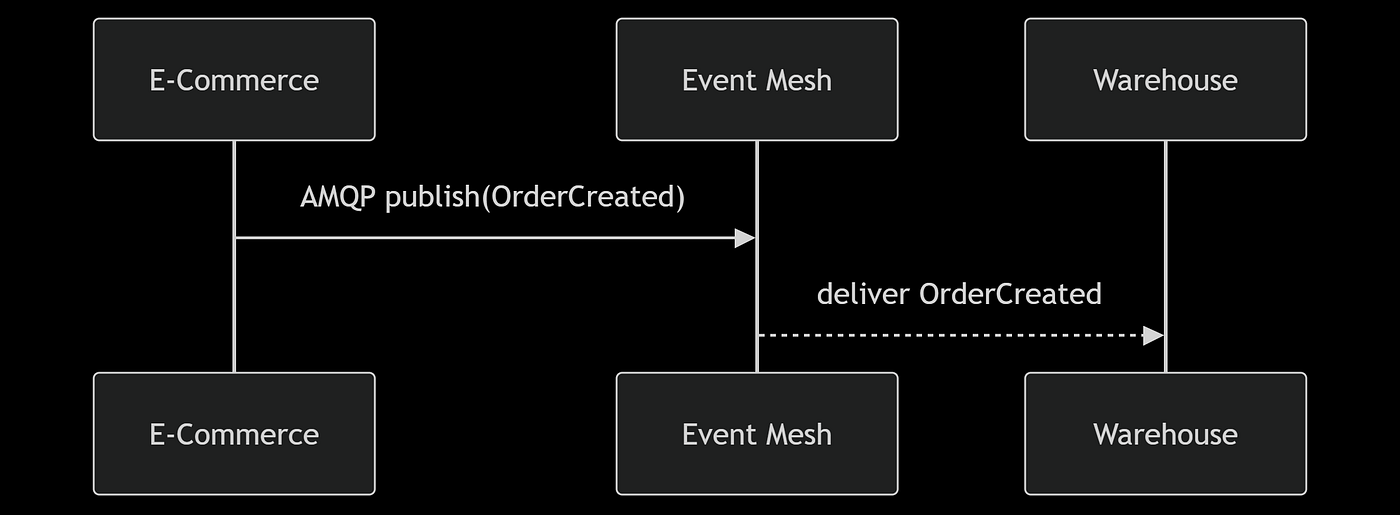
Use Case
A customer places an online order. The e-commerce app publishes an OrderCreated event, and a warehouse service processes it to trigger shipping.
Motivation Simplest guaranteed-delivery scenario for point-to-point integration.
Description
- Producer sends events to a dedicated queue.
- Consumer subscribes to the queue for ordered processing.
Pros & Cons
- ✅ Pros: Guaranteed delivery, simple error handling.
- ❌ Cons: Tight coupling, no scalability.
When to Use Legacy system integrations or one-to-one workflows.
Configuration
- Queue:
Queue_OrderCreated - Protocol: AMQP (pull-based).
2. Single Publisher → Single Event Type → Multiple Subscribers (Fan-out)
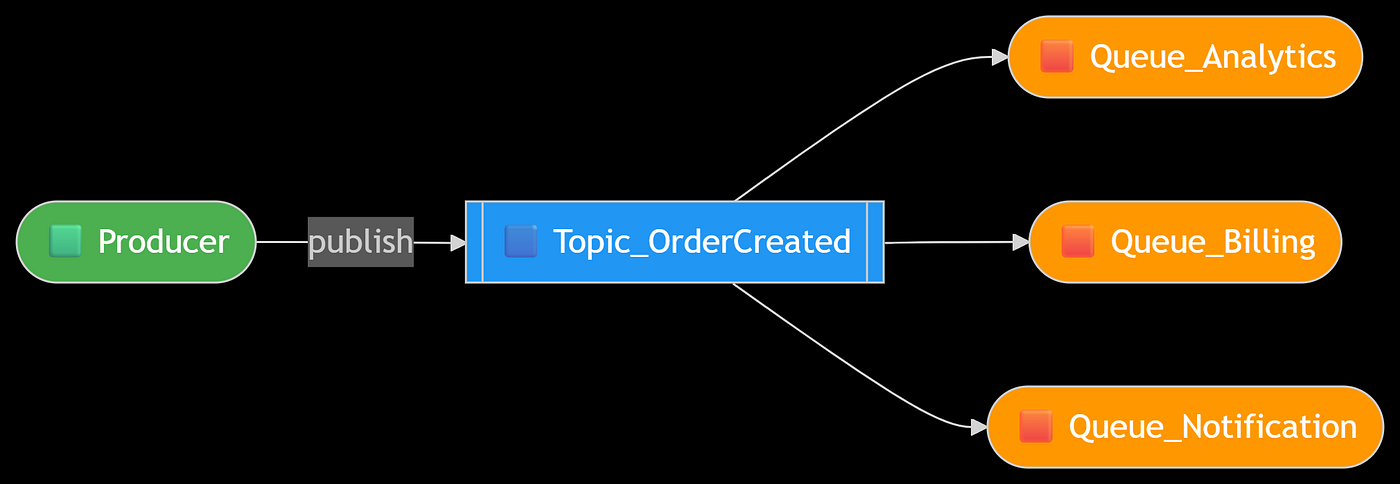
Use Case
A retail platform publishes OrderCreated events to notify analytics, billing, and notification services in parallel.
Motivation Broadcast events to multiple consumers for independent processing.
Description
- Producer publishes to a topic.
- Event Mesh replicates the event to subscriber queues.
Pros & Cons
- ✅ Pros: Decoupled subscribers, scalable.
- ❌ Cons: Resource overhead, management complexity.
When to Use Multiple downstream systems need the same event.
Configuration
- Topic:
Topic_OrderCreated - Subscriber Queues:
Queue_Analytics,Queue_Billing,Queue_Notification.
3. Multiple Event Types → Single Subscriber
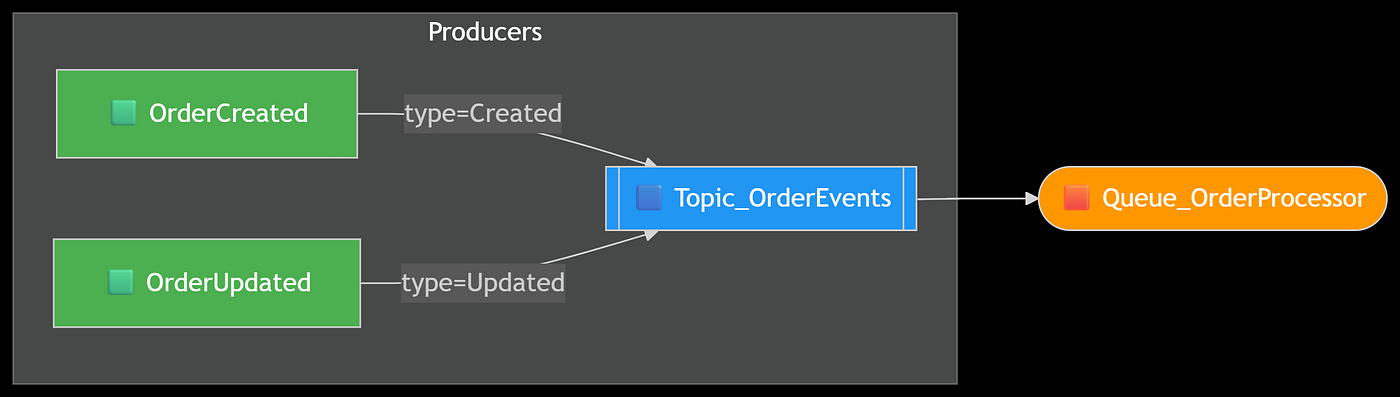
Use Case
A fulfillment engine handles OrderCreated and OrderUpdated events from a single subscription.
Motivation Centralize logic for related event types.
Description
- Producers emit events to a shared topic.
- Subscriber filters events by headers (e.g.,
type=Created).
Pros & Cons
- ✅ Pros: Fewer endpoints, unified logic.
- ❌ Cons: Filtering overhead, load concentration.
When to Use A service needs multiple event types.
Configuration
- Topic:
Topic_OrderEvents - Queue:
Queue_OrderProcessorwith header-based bindings.
4. Multi-Topic Selective Subscription
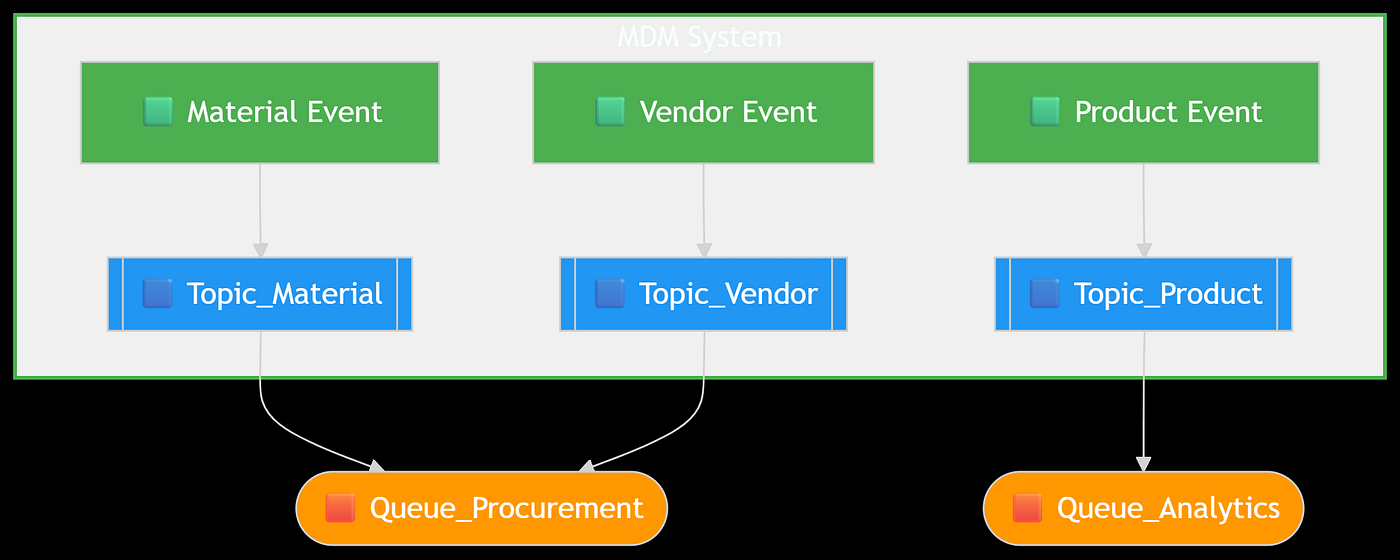
Use Case A procurement system subscribes to material/vendor events, while analytics uses product events.
Motivation Domain-driven subscriptions for segregated data.
Description
- Producers publish to domain-specific topics.
- Consumers bind to relevant topics.
Pros & Cons
- ✅ Pros: Fine-grained control, domain isolation.
- ❌ Cons: Binding management.
When to Use Segregated event types per domain.
Configuration
- Topics:
Topic_MaterialEvents,Topic_ProductEvents,Topic_VendorEvents. - Queues:
Queue_Procurement(material/vendor),Queue_Analytics(product).
5. Aggregator Pattern
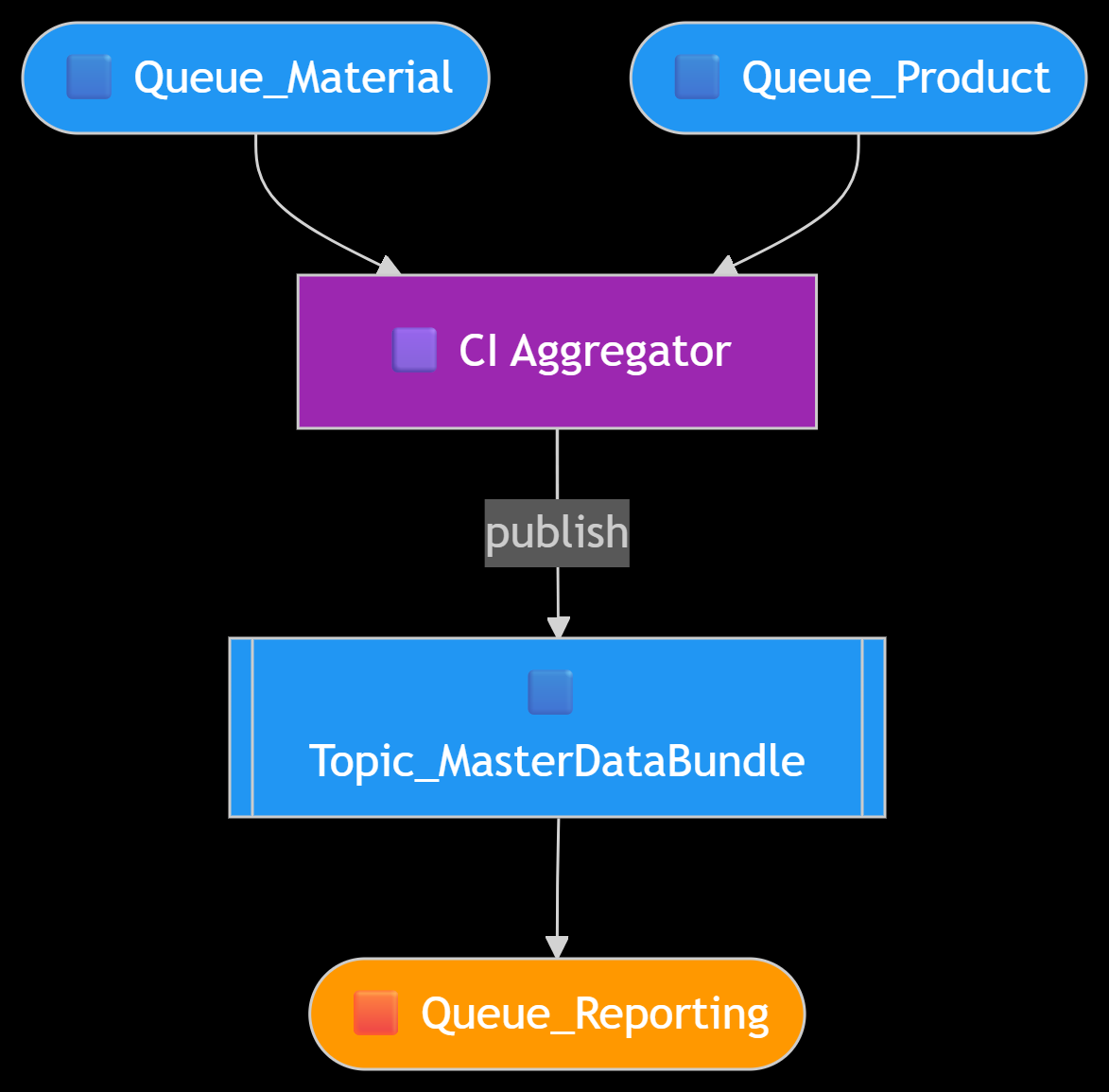
Use Case
An integration flow aggregates daily material/product updates into a MasterDataBundle for reporting.
Motivation Batch processing of related events.
Description
- SAP Cloud Integration (CI) consumes source queues, aggregates data, and publishes a bundled event.
Pros & Cons
- ✅ Pros: Simplified downstream consumption.
- ❌ Cons: Latency, complex logic.
When to Use Batch reporting or composite events.
Configuration
- Source Queues:
Queue_MaterialEvents,Queue_ProductEvents. - Output Topic:
Topic_MasterDataBundle.
6. Event Enrichment Pipeline

Use Case Enrich raw order events with customer credit scores and product availability.
Motivation Decouple enrichment steps from producers/consumers.
Description
- CI flows progressively enrich events across stages.
Pros & Cons
- ✅ Pros: Modular design, separation of concerns.
- ❌ Cons: Increased latency.
When to Use Progressive event enhancement.
Configuration
- Topics:
Topic_RawOrderEvents→Topic_EnrichedEvents. - Queues:
Queue_Enrich1,Queue_Billing,Queue_Shipping.
7. Scatter–Gather Pattern
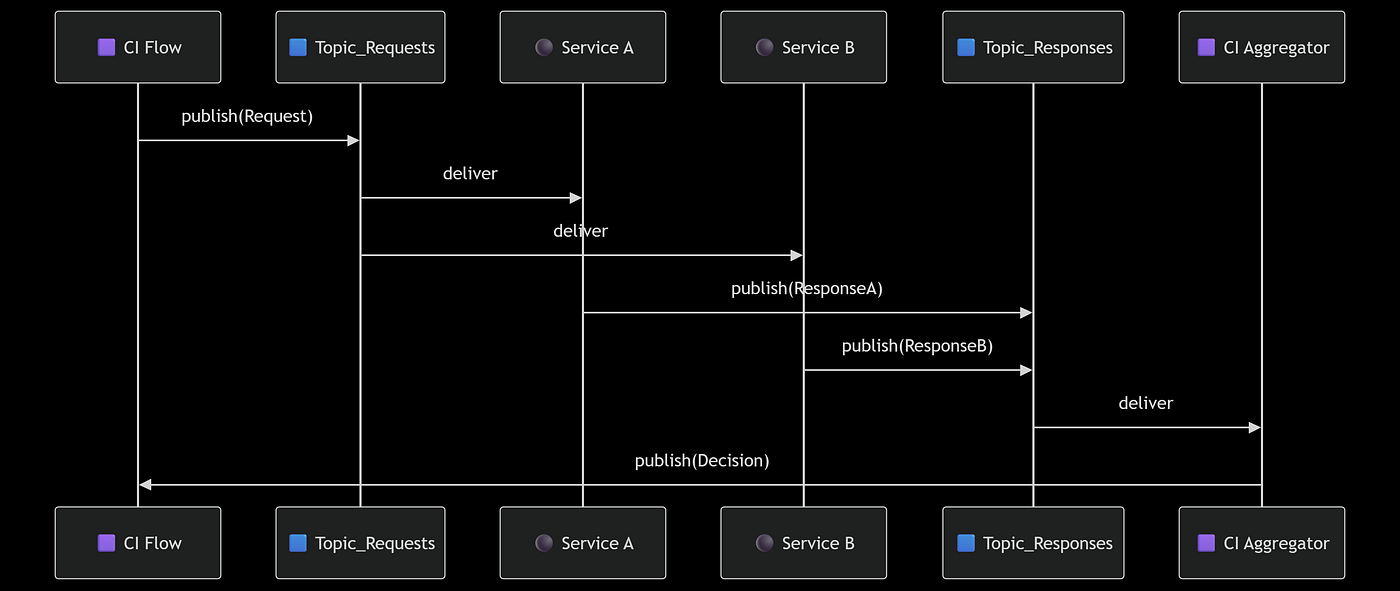
Use Case A credit-check flow queries two agencies in parallel and aggregates responses.
Motivation Parallel execution and result collation.
Description
- CI publishes requests to a topic.
- Subscribers process requests and publish responses.
- Aggregator CI flow correlates responses.
Pros & Cons
- ✅ Pros: Parallelism, resilience.
- ❌ Cons: Correlation complexity.
When to Use Multi-service orchestration.
Configuration
- Topics:
Topic_Requests,Topic_Responses. - Queues:
Queue_ServiceA,Queue_ServiceB,Queue_Aggregator.
8. Error Handling & Dead-Letter Queue
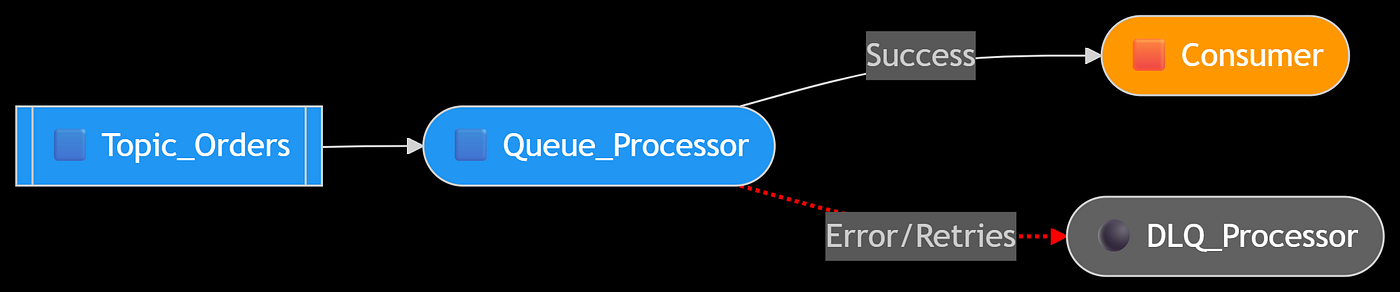
Use Case
Malformed events are moved to DLQ_OrderProcessor after retries.
Motivation Isolate poison messages for analysis.
Description
- Configure queues to route failed messages to a DLQ.
Pros & Cons
- ✅ Pros: Prevents message loss.
- ❌ Cons: Requires monitoring.
When to Use Critical pipelines needing reliability.
Configuration
- Primary Queue:
Queue_OrderProcessor. - DLQ:
DLQ_OrderProcessor(bound via dead-letter exchange).
9. Webhook Integration Pattern

Use Case
Event Mesh invokes a third-party SMS gateway’s webhook on OrderShipped events.
Motivation Real-time integration with HTTP endpoints.
Description
- Event Mesh pushes events to HTTP endpoints via POST.
Pros & Cons
- ✅ Pros: No persistent consumer needed.
- ❌ Cons: HTTP reliability challenges.
When to Use Lightweight integrations with REST APIs.
Configuration
- Topic:
Topic_OrderNotifications. - Webhook:
https://api.sms-gateway.com/notify(TLS + OAuth).
Conclusion
Choose patterns based on coupling, scalability, and latency needs. SAP Event Mesh’s flexibility with queues, topics, and webhooks supports diverse integration scenarios.
메타데이터
- post_id
- 11e8deae45dc
- slug
- sap-event-mesh-architecture-patterns-11e8deae45dc
- url
- https://medium.com/@vbalko/sap-event-mesh-architecture-patterns-11e8deae45dc
- canonical_url
- https://medium.com/@vbalko/sap-event-mesh-architecture-patterns-11e8deae45dc
- author_url
- https://medium.com/@vbalko
- status
- ok
- fetched_at
- 2026-06-12 07:40:50






