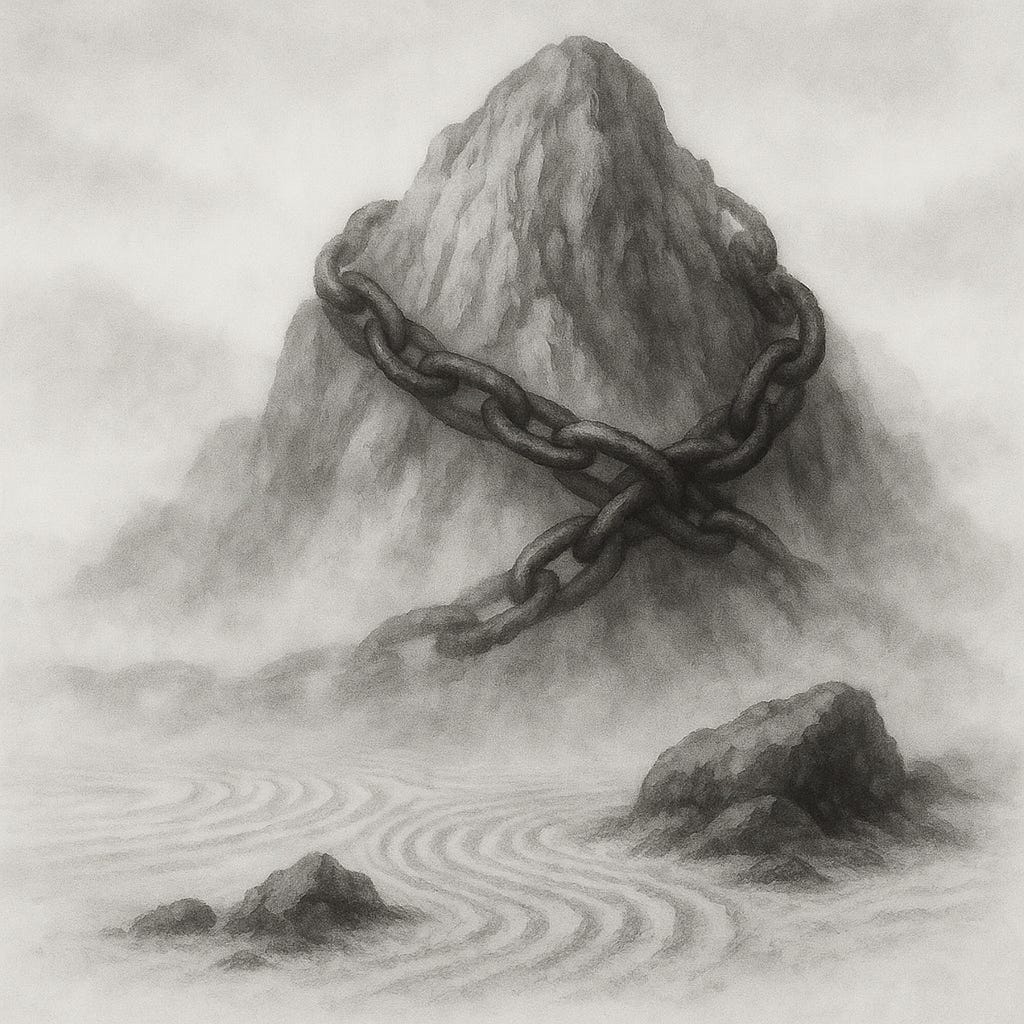
The Crisis of Collective Memory in an Age of Information Overload
How Political Information Appears, Dominates Attention, and Disappears Without Becoming a Lesson
The Crisis of Collective Memory in an Age of Information Overload
How Political Information Appears, Dominates Attention, and Disappears Without Becoming a Lesson

Chapter 1: When Information Comes in Droves, Then Leaves Without a Trace
Indonesia lives in the midst of a flow of information that never really sleeps. Every day, even every hour, the little screens in our hands spew news, opinions, video clips, screenshots, and statements colliding with each other. Social media, online news portals, video channels, and family conversation groups form an ecosystem that is crowded, noisy, and almost uninterrupted. Information is no longer present as something to be expected, but as something that is constantly invading.
In such a situation, information loses its sacred impression. It no longer stands as knowledge that needs to be pondered, but as a current that must be passed immediately so as not to be left behind. What is the main topic today, tomorrow can be drowned out by new issues that are more sensational, more emotional, or simply more digestible. This phenomenon is not just about the speed of technology, but about the way people interpret information itself.
In Indonesia, the massive circulation of information is often accompanied by momentary euphoria. When a political issue comes up, the timeline seems to unite in the same tumult. Heated discussions, opinions circulated, anger and defense appeared at the same time. However, the heat rarely lasts long. As time went by, the intensity decreased, the voices began to be rarely heard, until finally the issue disappeared without being completely resolved in the space of public consciousness.
What remains is not a mature understanding, but exhaustion. The public moves on to the next issue, bringing little or no lessons from what just happened. Information that should be a material for collective reflection just evaporates, as if it never existed. Of course, not everyone responds in the same way. Some choose to remain mindful and critical, but their voices are often drowned in the currents of attention that move too fast.
The phenomenon of this easing of information does not happen by chance. There are factors at work, both from the outside and from within the information itself. Externally, we are dealing with a media logic that demands speed and attention. Information competes to be viewed, shared, and commented on. In such competitions, depth is often outweighed by sensations. Issues that are complex and take time to understand tend to be marginalized by simpler and more emotional narratives.
In addition, there is a framing mechanism that subtly softens the meaning. Language is used to reduce the weight of the problem. Serious violations can be narrowed down to mere “procedural errors.” Ethical issues are rigidly separated from legal issues, as if ethics do not have any consequences in coexistence. In this process, the information is not deleted, but tamed, until it no longer feels intrusive.
Internally, information is often present without adequate context. The pieces of events are presented separately from their history, as if standing alone. The public accepts the fragments without being invited to see their relationship to the larger pattern. When information is not understood as part of a cause-and-effect series, it is easy to forget because it does not feel relevant to the future.
There are also psychological factors that cannot be ignored. Too much information creates cognitive fatigue. In a state of exhaustion, humans tend to choose shortcuts: simplify, ignore, or leave judgment to the loudest voice. Conclusions are drawn too quickly, then abandoned just as quickly as attention shifts.
The impact of all this does not stop at the disappearance of one or two issues from the public memory. It seeped into social life more broadly. When people get used to forgetting, ethical standards slowly decline. What was once considered unacceptable, is now seen as commonplace. The line between the appropriate and the problematic becomes blurred, not because there is a ripe, new deal, but because the collective memory is no longer preserved.
In this context, Indonesia’s political history provides striking examples. A TNI general was once tried and fired after being found guilty of serious human rights violations. In his time, the event was a sign that the state, at least formally, admitted a major mistake. However, as time went by, information about the violation slowly faded from the public sphere. He is rarely talked about again, rarely studied in depth, until finally he is almost detached from the political identity of the character. Today, the general is known for a completely different role: as president.
The change in position certainly involves many political factors. However, what is worth paying attention to is how the public adapts to these changes. Instead of continuing to carry the memory of past transgressions as evaluation material, most people choose to consider them as part of a finished history. Memories are replaced by new, more comfortable narratives.
Another example appears in a case that is often referred to as the issue of “illegitimate children of the constitution”. A political process full of controversy, in which rules are changed, reinterpreted, and passed through the channels of power in order for a candidate to run as a vice presidential candidate. At first, criticism poured in. Conflicts of interest are discussed, the integrity of institutions is questioned. However, like a recurring pattern, the uproar didn’t last long. The public slowly lost interest, the discussion subsided, and in the end the candidate was elected vice president.
What disappeared were not only the anger, but also the fundamental questions about the constitution, the ethics of power, and the future of democracy. Information about that problematic process is not really disputed or resolved, but rather left out.
A similar pattern can be seen in the discussion about the free meal program initiated by the government. When reports about the program’s poor implementation emerged, criticism came from various quarters. The issues of distribution, food quality, and the effectiveness of the program are debated. However, before long, the criticism was countered, even drowned, by videos showing the program’s success in several locations. Positive visuals work faster than complicated reports. Slowly, information about the program’s problematic nature disappeared from the public conversation, replaced by a narrative that everything was going well.
In all three examples, one common pattern can be seen: problematic information appears, is discussed, and then forgotten without ever being actually processed into learning. This kind of pattern is not born from one particular period of power or one particular political figure, but is repeated in Indonesian political history, crossing different regimes and generations of power. The criticism in this reading is not directed at one particular actor or policy, but at the social mechanisms that make problematic information readily present and equally easily forgotten.
The public does not completely reject that information, but neither does it retain it as a living memory. It was allowed to pass, like a noise that was finally drowned out by the next noise.
In the midst of such noise, what often goes unnoticed is the absence of information, but the loss of the habitability of the information itself. He came, was argued, and then left without having time to really settle down as a memory. When problematic events are allowed to pass without any effort to be understood more deeply, social life runs on fragile provisions: experience without lessons, history without echoes. In conditions like this, the community continues to move forward, but with steps that often return to the same footsteps.
Chapter 2: Caring for Memories, Fighting Forgetting
If in the end information is so easily evaporated from the collective memory, the question no longer stops at what happens outside of us. He reversed course, demanding a quieter examination: how man treats his own memory. Because forgetting, in many cases, is not only the result of the rapid flow of information, but the result of repeated choices not to stay longer with uncomfortable events.
In the midst of this tendency, taking care of memory becomes a seemingly simple act, but it is actually hard. Memory demands fidelity to details, to context, to history that is not always pleasant. It doesn’t offer the same comfort as a simplified narrative. Taking care of memory means resisting the temptation to jump to conclusions and quickly forget.
Taking care of memory also means learning. Not just knowing that something has happened, but trying to understand how and why it happened. At this point, learning is no longer neutral. It became an attitude. By studying information seriously, one opens up the possibility of seeing from more than one angle, hearing more than one story, and delaying conclusions until an understanding is fully formed. Without this process, information will always be fragile, easily collapsed by new, harsher or more popular narratives.
In Indonesia, efforts to preserve memory often come from those who do not have any power. Figures whose presence is hardly reported, but whose steadfastness unfolds the meaning of memory in real terms. One of them is Mrs. Sumarsih. For years, he stood in front of the State Palace every Thursday, carrying his own body as a memento. Not with shouting, not with explosive anger, but with a consistent presence. He refuses to forget, and in that refusal, he refuses to allow the state to completely erase the traces of violence that have occurred.
What Mrs. Sumarsih did was not nostalgic for suffering. It is a memory practice. Every step forward for the Palace is an acknowledgment that justice that is pending is never truly completed. In a fast-paced and distracted world, this kind of constancy feels strange, even distracting. But that’s exactly where the value lies. He points out that memory does not always live in history books or official reports, but in the human body that chooses to remain present.
Similar things were seen in the late Mr. Asih Widodo, the parents of the late Sigit Prasetyo, a victim of the 1998 Semanggi I Incident. During his life, he was known to always carry a motorcycle with a banner that read “Semanggi 98 Victim, My Son Was Killed by the TNI”. The banner is not just a protest tool. It is a walking archive. In the midst of city traffic and daily routines, the message forces people to look back at events that many want to forget.
What Mr. Asih Widodo has done shows that taking care of memories does not always require a big stage. It is quite consistently present, even in a repetitive and seemingly simple way. In that repetition, the memory is kept so that it is not completely erased. He refuses to submit to the logic of time which assumes that the gap of years can remove responsibility.
From these two examples, it can be seen that memory does not survive because it is stored, but because it continues to be practiced. Memory lives when it is brought into the public space, when it is repeated, when it is re-studied from various angles. Without it, memory will always be lost by the faster and shallower flow of information.
This is where it is important to understand that every piece of information has value, but that value can only survive if it is accompanied by a serious effort at understanding. Information received without effort to learn will cease to be momentary knowledge. It does not shape attitudes, does not influence judgment, and leaves no traces in action. Under such conditions, information becomes useless, not because it is not important, but because it has never been actually processed.
This belief departs from a simple awareness: The unrest that arises today actually departs from the fact that so many serious problems occur in Indonesia, but few really remain in the attention of the public. Information about the problem comes one after another, then disappears, either swallowed up by time, piled up by new issues, or eliminated by deliberate or unintentional distractions. As a result, many events stop as momentary news, never talked about long enough, let alone studied, until they finally disappear from the public conversation without ever leaving a mark as a shared learning.
In political life, this attitude is becoming increasingly relevant. Without a nurtured memory, democracy easily turns into a procedural routine without ethical depth. Election after election takes place, but past violations are no longer the subject of evaluation. Power changed hands, while history was left by the wayside.
Taking care of memory, at the end of the day, is not about living in the past. It is precisely about keeping the future from being built on the repetition of the same mistakes. It is an attempt to ensure that every event, every victim, and every violation does not simply dissolve in the noise of information. In a world that is quick to forget, choosing to remember, learn, and understand is a quiet, but fundamental act. It is from there, the possibility to learn really begins.
메타데이터
- post_id
- 11ff726b2f50
- slug
- the-crisis-of-collective-memory-in-an-age-of-information-overload-11ff726b2f50
- url
- https://medium.com/@RuangMozz/the-crisis-of-collective-memory-in-an-age-of-information-overload-11ff726b2f50
- canonical_url
- https://medium.com/@RuangMozz/the-crisis-of-collective-memory-in-an-age-of-information-overload-11ff726b2f50
- author_url
- https://medium.com/@RuangMozz
- status
- ok
- fetched_at
- 2026-07-13 06:23:13