It’s Time to Defund the SPN to Dismantle Indonesia’s Factory of Uniformed Incompetence
SPN is a tax-wasting factory of incompetence. Dissolve it, downgrade to Satpam training, and mandate university degrees for all police!
It’s Time to Defund the SPN to Dismantle Indonesia’s Factory of Uniformed Incompetence
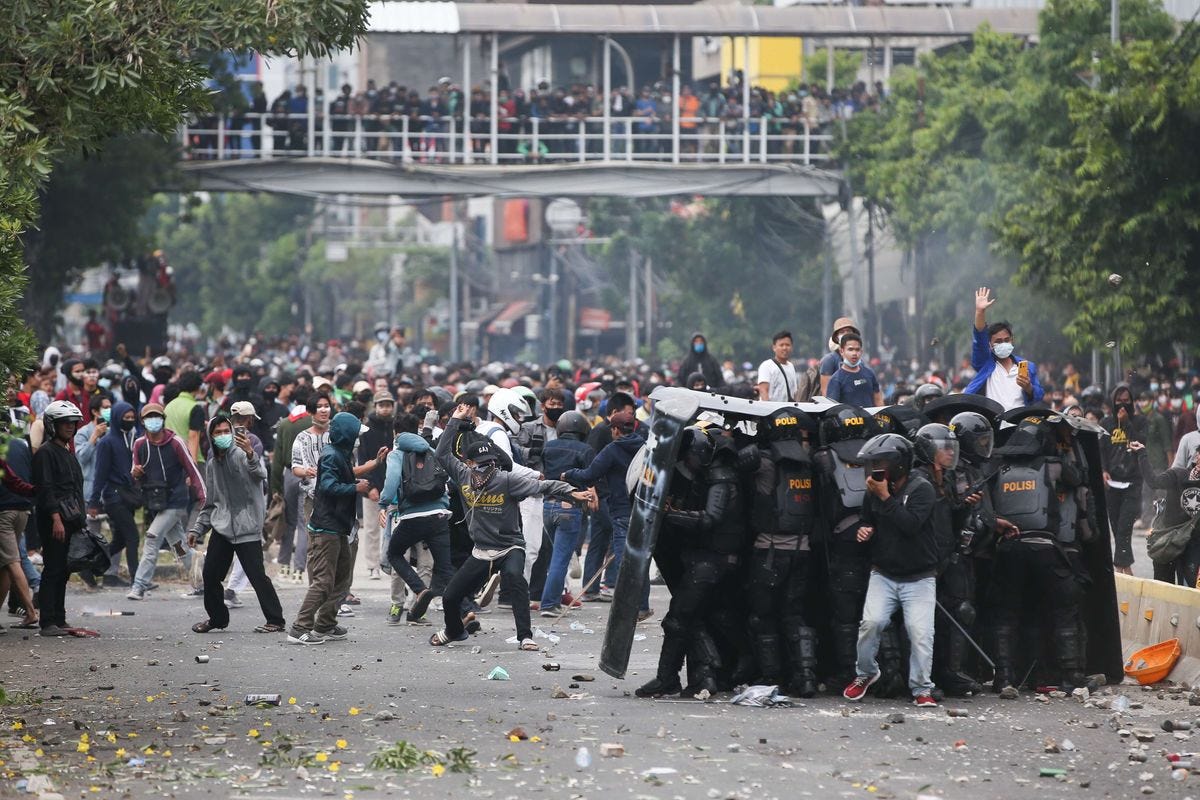
The existence of the State Police School (SPN) under the command of every Regional Police (Polda) in Indonesia has metastasized from a mere symbol of bureaucratic inefficiency into a “disaster zone” of education that systematically produces officers with competencies far below minimum global standards. With a confirmed Bintara Formation Education (Diktukba) duration of just 5 months of basic education plus 1–2 months of field training — totaling a laughable 7 months — the SPN forces an impossible transformation from high school graduates into law enforcers wielding lethal discretion. The data from the Ombudsman RI, which consistently ranks the National Police (Polri) as the number one reported institution for maladministration and abuse of power, serves as empirical evidence that the SPN’s output completely fails to grasp the essence of fair public service. We are witnessing the squandering of trillions of Rupiah in government budget annually to mass-produce personnels whose technical qualifications are barely superior to basic security guards (Satpam), yet who are endowed with deadly authority. Is it logically defensible to entrust 19-year-olds with firearms and the power of arrest based on an education equivalent to a single, shallow college semester? How long will the government continue to facilitate this policy malpractice that directly endangers civil liberty and human life?
Intellectual Bankruptcy and Statistical Failure
Quantitatively, the SPN curriculum is a tangible manifestation of fatal human resource planning, where the psychological phenomenon of cognitive overload occurs massively as students are forced to ingest heavy legal materials in the shortest possible time. In an effective training duration of less than 25 weeks, SPN students must memorize hundreds of articles in the Criminal Code (KUHP), Criminal Procedure Code (KUHAP), and other relevant regulations regarding the Use of Force. This results in a dangerous, superficial understanding that contrasts sharply with law students who require 144 credits over 4 years to master similar material. Consequently, SPN graduates suffer from a severe procedural justice deficit, where they memorize the technical mechanics of handcuffing but remain blind to the principles of legality and proportionality that are the lifeblood of law enforcement.
This condition is exacerbated by a grossly unbalanced curriculum allocation, where physical training and marching drills dominate the schedule, leaving minimal time for simulations of cybercrime handling, basic forensics, or crucial mass psychology. From the perspective of the Militarization of Police theory proposed by Peter Kraska, the SPN functions more as a paramilitary training camp than a police academy, cultivating officers with a “warrior mindset” when facing civilians, rather than a “guardian mindset.” With the police education budget reaching trillions in the APBN, the public receives officers who are technologically illiterate and emotionally volatile — a ROI anomaly that is detrimental to the taxpayers’ money.
Furthermore, the competency standards of SPN graduates currently overlap significantly with the Gada Pratama (basic security guard) standards detailed in Perpol №4 of 2020 regarding Private Security. Subjects such as Turjawali (Regulation, Guarding, Escorting, and Patrol) taught at SPN are generic materials also mastered by private security with far cheaper training costs and without burdening government’s finances. Allowing the SPN to continue operating with this mediocre curriculum is tantamount to legitimizing the degradation of the police profession to the level of mere physical security labor, yet ironically granting them judicial authority that is too lethal for their capacity.
The Global Quality Chasm and the Urgency of Degradation
If we benchmark Indonesia’s police education against other nations, we see a shameful and undeniable statistical chasm. In Norway, police candidates must complete a full three-year Bachelor’s degree (180 ECTS) at the Norwegian Police University College before becoming sworn officers, with substantial academic grounding in law, policing in society, and criminology. In the United Kingdom, the College of Policing’s Police Education Qualifications Framework (PEQF) requires all new officers to qualify at degree level — whether through a degree apprenticeship, a conversion programme for existing graduates, or a pre-join policing degree — effectively embedding higher education into frontline policing. In Finland and Sweden, basic police education has likewise shifted into higher education: Finland requires a three-year bachelor’s programme, while Sweden’s professional police degree runs roughly 2½–3 years with substantial workplace practice. In the Netherlands and Germany, police training is commonly delivered as multi-year, state-level programmes that blend academic study and practical internships, with specialist investigator and leadership tracks extending to bachelor or master level. Iceland has recently moved toward a two-year police science diploma (around 120 ECTS) combined with practical training. In France and Spain, entry tracks are tiered by rank and typically involve many months of intensive academy training (and additional national/senior programmes for leadership).
Therefore, the only rational strategic step is to dissolve the SPN’s function as an entry point for active National Police members and officially downgrade it to a National Security Guard Training Center or a technical academy for the Municipal Police (Satpol PP). The vast SPN infrastructure in every province would be more appropriately used to train private security personnel focused on physical asset protection, aligning with its curriculum capacity which is limited to physical ability and basic discipline. In doing so, the government can save trillions in taxpayers’ money from the salaries and allowances of incompetent police personnels and redirect it toward the urgent modernization of police technology and bureaucracy.
In its place, police recruitment must be totally reformed by mandating an accredited academic degree or 3–4 year vocational education as an absolute prerequisite, to break the chain of institutional isomorphism — where an institution mimics the form of a school but lacks substance. Only by requiring a bachelor/diploma background can we ensure police candidates possess the intellectual maturity and emotional stability tested academically in a democratic civilian environment, not the instant products of an archaic and closed “boot camp.” Modern public management theory proves that without this radical structural change in recruitment, the SPN will only continue to churn out the same “uniformed robots” every year, perpetuating a cycle of violence and unprofessionalism that harms the populace.
메타데이터
- post_id
- 121f6dd94acc
- slug
- its-time-to-defund-the-spn-to-dismantle-indonesia-s-factory-of-uniformed-incompetence-121f6dd94acc
- url
- https://medium.com/@aldomrb/its-time-to-defund-the-spn-to-dismantle-indonesia-s-factory-of-uniformed-incompetence-121f6dd94acc
- canonical_url
- https://medium.com/@aldomrb/its-time-to-defund-the-spn-to-dismantle-indonesia-s-factory-of-uniformed-incompetence-121f6dd94acc
- author_url
- https://medium.com/@aldomrb
- status
- ok
- fetched_at
- 2026-06-17 08:20:12





