Hospital-at-Home: between home care and hospitalization
Data from Massachusetts and the latest Medicare analyses
Hospital-at-Home: between home care and hospitalization
Data from Massachusetts and the latest Medicare analyses
The Hospital-at-Home (HaH) model emerged in the 1990s, when a team at Johns Hopkins began developing a model of hospital-level care delivered at home for older patients with acute medical conditions, for whom traditional hospitalization was associated with a high risk of functional decline, infections and falls.
The earliest studies did not define hospital-at-home as a digital innovation. Rather, they described an attempt to deliver hospital medicine outside the hospital ward, with home visits, medication, monitoring and the possibility of escalating care to traditional hospitalization if the patient’s condition deteriorated. A pilot study published in the late 1990s suggested that such a model could be safe and, most importantly, feasible and well received by patients. It also appeared to be potentially less costly.
Subsequent work by Johns Hopkins and collaborating centers further supported this model of care, helping the testing and pilot phase gradually become recognized as a new, acceptable model for organizing healthcare services. For many years, however, hospital-at-home remained a niche solution. It required funding, field teams, logistics, clear clinical responsibility and payer readiness to recognize that hospital-level care could take place outside the hospital building.
It was only the COVID-19 pandemic that gave this model a completely different momentum. In November 2020, the Centers for Medicare & Medicaid Services launched the Acute Hospital Care at Home initiative in the United States, allowing approved hospitals to treat Medicare patients at home as part of inpatient-level care. At that point, hospital-at-home moved from the sphere of pioneering implementations into the broader system-level debate.
HaH in practice
Hospital-at-home begins with a practical recognition- some patients need monitoring, regular medication administration and education, but not always a continuous stay inside a hospital building. However, shifting the place of care requires far more resources and procedures than a video consultation or a few remote monitoring devices.
In this model, the patient’s home becomes part of the acute care infrastructure. By definition, HaH concerns acute care, not simple monitoring. Medication, equipment, staff and, when needed, diagnostics must all reach the patient’s home. The hospital team remains responsible for patient safety, but works in a more dispersed environment.
Every element of the process must be planned- patient eligibility, assessment of home conditions, monitoring, communication with the family, completion of the care episode and transfer to a lower level of care or another specialist.
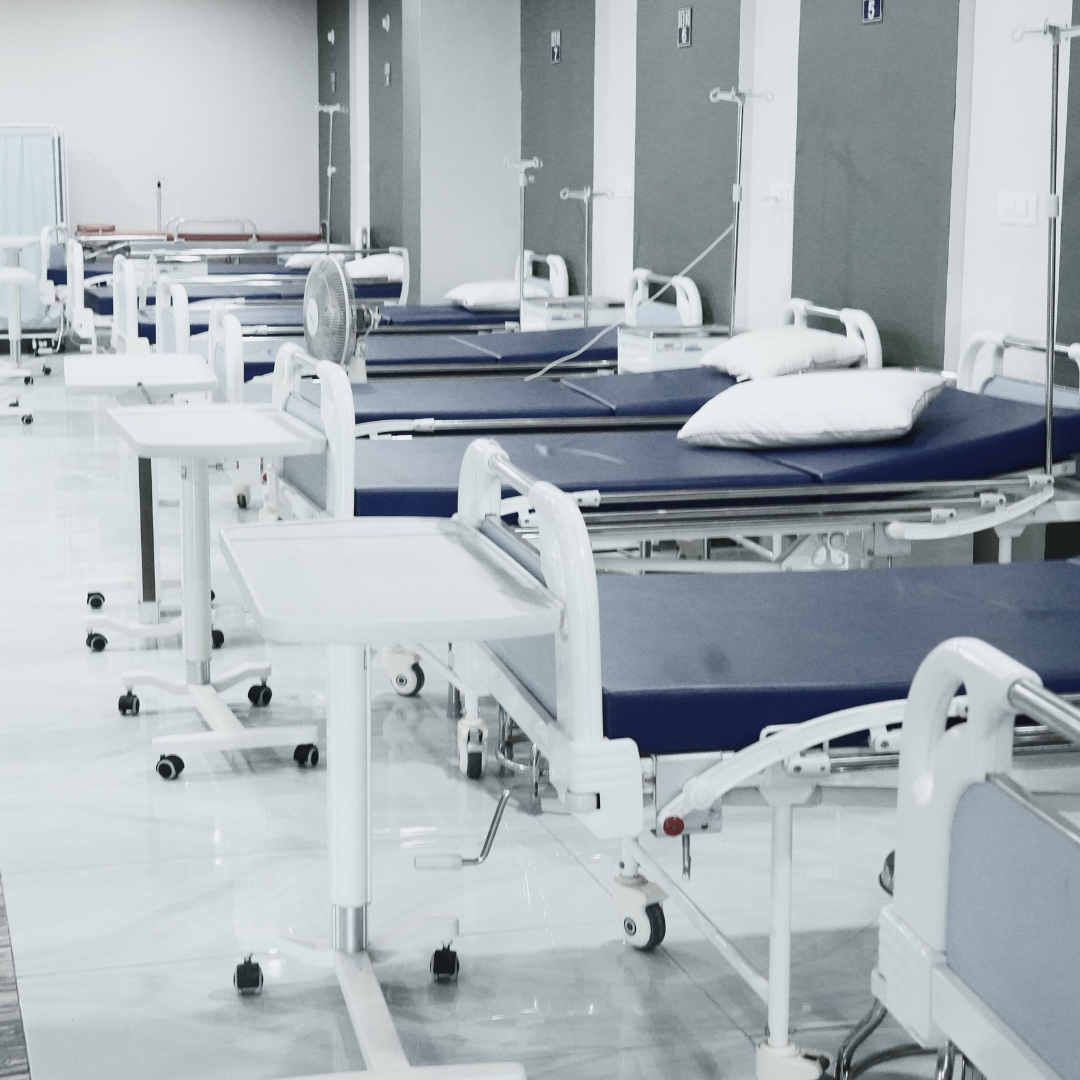
This is precisely why hospital-at-home is such an interesting, although difficult, organizational model. It shows that modern healthcare will increasingly depend on the ability to combine medicine, logistics, data and clinical responsibility beyond the traditional space of the hospital ward.
Recent data from Massachusetts brought my attention back to this topic. A study published in the Journal of the American Geriatrics Society included 906 episodes of acute hospital care at home among Medicaid patients in four Massachusetts hospitals between 2020 and 2023. This is important for interpreting the results because Medicaid covers people with lower incomes and often higher social risk. In practice, this means a population in which implementing home-based hospital care may be more challenging than among groups with more stable housing, financial and social conditions.
The results are promising. According to the data, only 8% of patients were readmitted to hospital within 30 days after completing home hospitalization, fewer than 1.2% returned to hospital within three days and 9% required escalation from home care to a traditional hospital. Mortality during the program was approximately 1.2%, while 30-day post-discharge mortality was around 1%. Only 4% of patients were discharged to a post-acute care facility or skilled nursing facility. The median total episode cost for Medicaid and Medicare was USD 11 622.
Although direct comparisons between studies require caution due to differences in populations and care organization, the results observed in the Medicaid population can be considered favorable. The 30-day readmission rate was 8% and transfer to a traditional hospital was required in 9% of patients, suggesting that the hospital-at-home model was safely delivered for most eligible patients.
The home as a place of hospital care. What do the data show?
Newer data from JAMA Network Open expand this discussion. In a study involving 15 871 Medicare beneficiaries, researchers compared hospital-at-home with traditional inpatient hospitalization. The hospital-at-home group included 4 174 admissions, while the traditional hospitalization group included 11 697 admissions.
Hospital-at-home was associated with lower in-hospital mortality 0.4% compared with 3.6% in the traditional care group. Lower emergency department use was also observed within 30 days after discharge 8.8% compared with 10.0%. However, there was no significant difference in 30-day readmissions 11.7% in the hospital-at-home group and 11.0% in the traditional hospitalization group.
This suggests that the hospital-at-home model may bring benefits in selected areas, but it is not a universal answer to all problems of post-acute care. The mere fact that treatment takes place at home does not eliminate the risk of clinical deterioration. Good eligibility criteria, access to a specialist or primary care physician, appropriate medication management and patient monitoring are still necessary.
Technology is only one element
Hospital-at-home is often associated with a model of care based on digitalization and innovative medical devices. Remote monitoring, medical devices and video consultations are important here, but they do not create the model of care by themselves.
The most difficult part happens at the organizational level. The hospital must know who is responsible for the patient at every time of day, how quickly the team can reach the patient’s home, how tests are performed, who delivers medication, how documentation is managed, when the patient should be escalated to the hospital and how care is handed over after the episode ends.
In practice, hospital-at-home is a highly complex operational model. It requires strong coordination, high-quality data, interdisciplinary teams and excellent logistics. Implementing this model without solid infrastructure can quickly turn it into a fragmented service that looks innovative but does not improve safety or access to care.
The American data are inspiring, but they require careful interpretation in the European context. Financing systems, the role of insurers, the structure of home care, the availability of community nursing and reimbursement models differ significantly between countries.
In Europe, hospital-at-home may be particularly relevant in the context of population ageing, chronic diseases, overloaded internal medicine wards and the need for better integration of hospital, primary and home-based care. However, in my opinion, hospital-at-home should not be copied as a ready-made product.
We are still at the stage of defining which elements of hospital care truly need to take place in a hospital and which can be safely transferred to the patient’s home. The answer will differ for a patient with an acute infection requiring intravenous antibiotic therapy, for a patient with heart failure and for an older person with multimorbidity.
Hospital-at-home shows that the future of the hospital does not have to be limited to a building. It may include a network of services, teams and technologies that make it possible to deliver hospital-level care where the patient actually is.
The condition, however, is very precise risk management, without lowering safety standards and without deepening inequalities in the system. Today, I see hospital-at-home as one of the most interesting tests of maturity for healthcare systems around the world.
References
-
1Bruce Leff, Lynda Burton, Scott L. Mader, et al. Hospital at Home: Feasibility and Outcomes of a Program To Provide Hospital-Level Care at Home for Acutely Ill Older Patients. Ann Intern Med. 2005;143:798–808. [Epub 6 December 2005]. doi:10.7326/0003–4819–143–11–200512060–00008
-
Vakkalanka JP, Young TL, Bianchi G, et al. Outcomes Associated With Hospital at Home vs Traditional Inpatient Stay.JAMA Netw Open. 2026;9(5):e2610810. doi:10.1001/jamanetworkopen.2026.10810
3. https://www.aha.org/fact-sheets/2024-08-06-fact-sheet-extending-hospital-home-program
- Zikry HE, Schriger DL, Kilaru AS. Hospital Participation in the Acute Hospital Care at Home Waiver Program. JAMA. 2025;333(8):718–720. doi:10.1001/jama.2024.26368
- https://www.beckerspayer.com/research-analysis/hospital-at-home-shows-positive-results-for-medicaid-patients-8-notes/
- https://www.cms.gov/newsroom/fact-sheets/fact-sheet-report-study-acute-hospital-care-home-initiative
메타데이터
- post_id
- 123edf0845e6
- slug
- hospital-at-home-between-home-care-and-hospitalization-123edf0845e6
- url
- https://medium.com/digital-health-brief/hospital-at-home-between-home-care-and-hospitalization-123edf0845e6
- canonical_url
- https://medium.com/digital-health-brief/hospital-at-home-between-home-care-and-hospitalization-123edf0845e6
- author_url
- https://medium.com/@karolinatadel
- status
- ok
- fetched_at
- 2026-07-13 06:23:13