I Missed the April 15 Deadline and Here’s What It Cost Me
A client called me last week. Calm voice. Almost casual.
I Missed the April 15 Deadline and Here’s What It Cost Me

The real cost didn’t start when he noticed… it started the day after the deadline.
A client called me last week. Calm voice. Almost casual.
“I missed the April 15 deadline. But I don’t think I owe anything. So it should be fine, right?”
Working as a tax expert for the past 10 years, I’ve heard this many times.
That specific sentence, said in that exact tone is usually where I prefer to dig deep into the filer’s financial and tax status.
“I missed the April 15 tax deadline… is it really a big deal?”
Anand had filed on time every year before this.
One miss, no IRS notice yet, no balance due that he knew of.
He felt safe. He assumed silence meant no consequence.
That assumption is where most Indians in USA get caught off guard.
No notice doesn’t mean no problem. It just means the clock hasn’t been alarmed yet. Well, in simple terms, the IRS has not yet found out your mistakes.
“What does it cost to file taxes late?”
The failure-to-file penalty is 5% of unpaid tax per month.
It caps at 25%. It starts the day after the deadline, from 16th April.
Anand didn’t know he had unpaid tax.
His Indian freelance income was taxable in the US. It hadn’t been reported.
So while he waited, the penalty quietly compounded, before he even knew how to react.
The cost didn’t start when he called me. It started on April 16.
“I already paid tax in India… Why am I still getting taxed here?”
This is the part that genuinely surprised him.
The US taxes its residents on their global income. India taxing his freelance income doesn’t exempt it from US reporting.
Anand had earned freelance income from Indian clients. He also had Indian bank accounts earning him monthly interests.
Both should have been declared, but neither was.
There’s a legal way to reduce this. The Foreign Tax Credit through Form 1116.
It helps you avoid double taxation for Indians with foreign income.
But here’s the catch. You have to claim it. It doesn’t apply automatically.
And a late, incomplete return complicates how that credit gets applied.
Confusion turned to frustration quickly in that call.
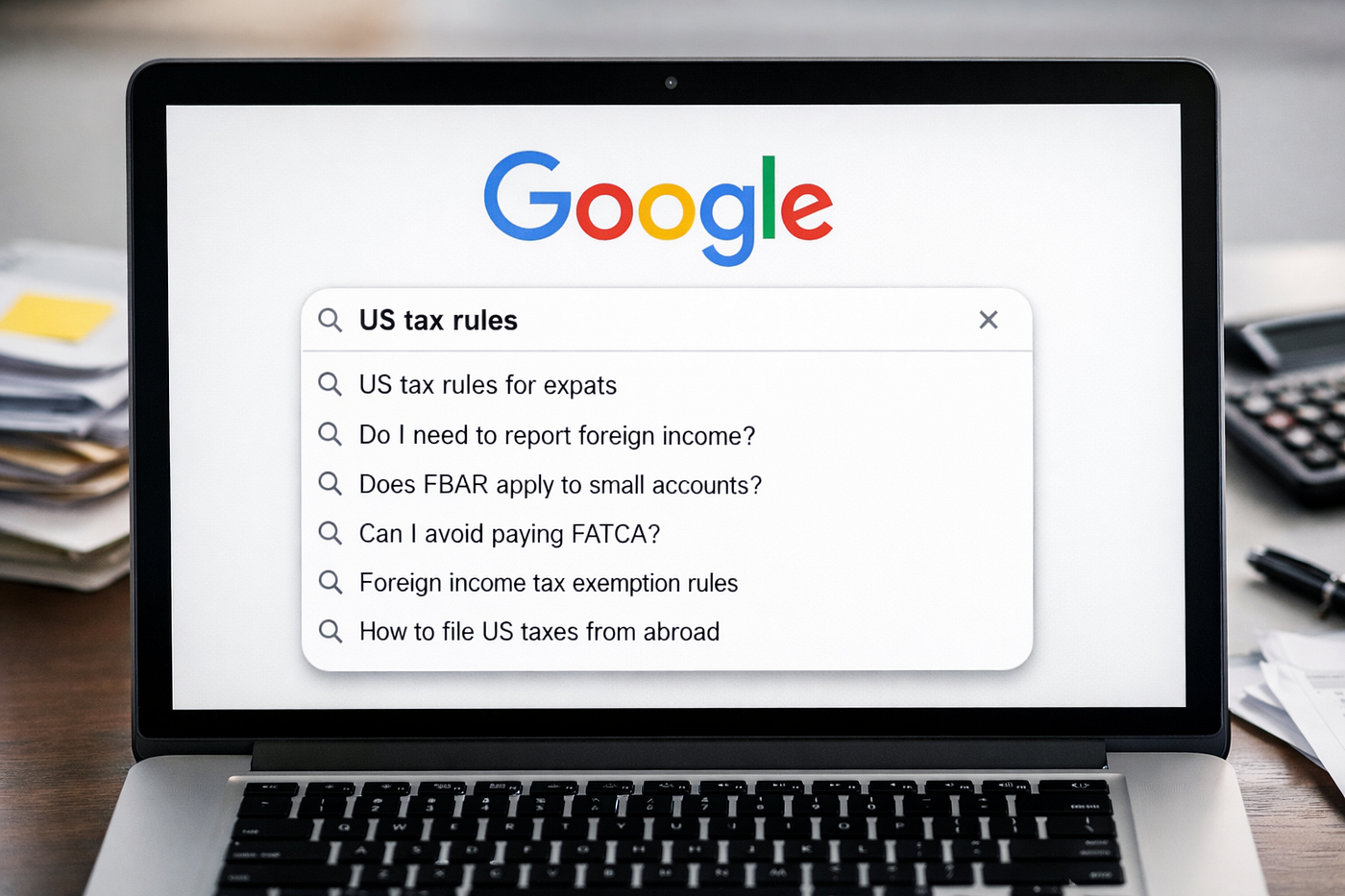
“What happens if I don’t report foreign bank accounts?”
Anand had two Indian savings accounts. Combined balance occasionally crossed $10,000.
That triggers FBAR filing requirements (FinCEN 114). Separately, FATCA reporting through Form 8938 may also apply.
These are not optional disclosures for Indian expats in the U.S.
FBAR penalties for non-willful violations can reach $10,000 per year, per account.
“But they’re just savings accounts,” he said.
‘Yes’. And they’re also reportable foreign financial accounts under the US law.
This is the part no one tells you until it’s already overdue.
“Are my Indian mutual funds creating tax problems?”
He mentioned he also has mutual funds in India. Perfectly normal investment in his home country.
In the US, Indian mutual funds are typically classified as PFICs — Passive Foreign Investment Companies.
PFIC taxation is among the most punishing in the US tax code. (The IRS did not design it with desi investors in mind, I assure you.)
Form 8621 is required. The tax treatment is complex. Retroactive complications are real.
“Normal in India” does not mean “simple in the US.”
This was Anand’s biggest surprise of the conversation.
“I didn’t file in earlier years either… Did I lose my refunds?”
Anand mentioned he may have over-withheld in a previous year.
The IRS allows refund claims up to three years from the original deadline.
If you miss that window, your refund becomes gone forever, to the IRS.
That’s not a penalty. That’s just the money you earned, now permanently uncollectable and owned by the IRS.
For many Indians with foreign income who file late or not at all, this is the quietest and most painful cost they have to pay for this one mistake.
“Can I reduce the IRS penalties if this is my first mistake?”
There’s a provision called First-Time Penalty Abatement.
If you have a clean three-year compliance history, you may qualify to have certain penalties waived.
Anand likely qualified. But he did not know that it’s not automatic.
The request must be filed correctly, at the right time, with the right form.
If done wrong, it gets rejected. If done well, it can meaningfully reduce your financial damage.
“How can I now fix it?”
Here’s what we worked through together.
I reviewed his past filings for gaps. I identified unreported income and missed disclosures.
I filed a corrected return with proper FBAR and FATCA reporting included. I evaluated his Foreign Tax Credit position. Then I submitted a penalty abatement request based on his prior compliance record.
He didn’t just file late. I helped him fix what was already incomplete.
The real cost of missing the April 15 deadline
When Anand first called, he thought the cost was a small late fee.
The actual cost was worse.
Penalties have been accumulating since April 16.
He found out a missed refund from a prior year.
There were unreported FBAR obligations.
PFIC exposure on Indian mutual funds.
A Foreign Tax Credit he was entitled to, but hadn’t claimed.
None of these showed up in a single IRS letter. They were quiet, compounding, and connected.
That’s what makes missing the April 15 deadline genuinely costly for Indian expats in the US, especially those with income, accounts, or investments across both countries.
A final note
Missing the April 15 deadline rarely stays a small mistake, especially for Indians in the U.S. managing W-2 income, Indian bank accounts, mutual funds, and cross-border earnings.
What feels like a delay today can quietly turn into penalties, missed credits, unreported disclosures, and even lost refunds over time.
In Anand’s case, it wasn’t one issue, it was a chain reaction. The late filing uncovered gaps in foreign income reporting, unclaimed tax credits, and compliance requirements he didn’t even know applied to him.
The longer these stayed unaddressed, the fewer options he had to fix them cleanly.
There are ways to correct this — penalty relief options, proper disclosures, and structured filings, but timing makes all the difference. Wait too long, and what could have been manageable becomes expensive and complicated.
If any part of this feels uncomfortably familiar, it’s worth speaking to a tax expert before the situation decides its own next steps for you.
Disclaimer: This content is for general informational purposes only and does not constitute tax advice. Please consult a qualified tax expert for guidance specific to your situation.
메타데이터
- post_id
- 128a997ba9b2
- slug
- i-missed-the-april-15-deadline-and-heres-what-it-cost-me-128a997ba9b2
- url
- https://medium.com/@arun_tax_expert/i-missed-the-april-15-deadline-and-heres-what-it-cost-me-128a997ba9b2
- canonical_url
- https://medium.com/@arun_tax_expert/i-missed-the-april-15-deadline-and-heres-what-it-cost-me-128a997ba9b2
- author_url
- https://medium.com/@arun_tax_expert
- status
- ok
- fetched_at
- 2026-06-23 17:05:31