The ICJ’s 2025 Advisory Opinion: Reaffirming UNRWA’s status and the indivisibility of occupation…
So, that time of the year again, for another advisory opinion by the ICJ against Israel.
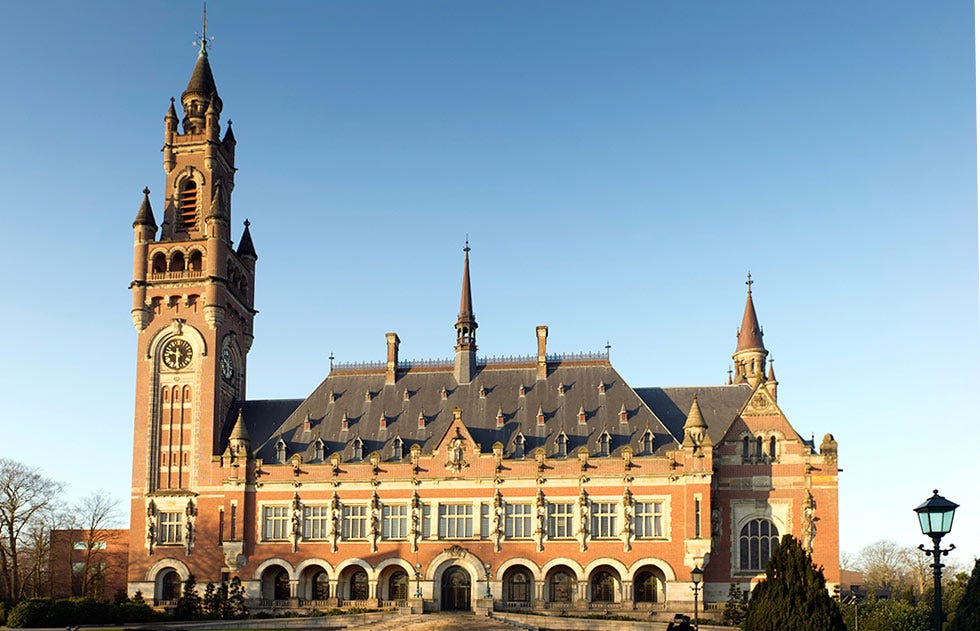
(source: https://www.icj-cij.org/home)
The ICJ’s 2025 Advisory Opinion: Reaffirming UNRWA’s status and the indivisibility of occupation law and UN Immunities
So, that time of the year again, for another advisory opinion by the ICJ against Israel.
So, on October 22, 2025 which is today, the International Court of Justice (ICJ) issued a major advisory opinion on Israel’s legal obligations in the Occupied Palestinian Territory (OPT). The opinion was an urgent response to Israel’s 2024 laws aimed at stopping the work of UNRWA, the primary UN agency for Palestinian refugees.
In short, the Court found that Israel cannot legally ban UNRWA and must facilitate its life-saving work. Here’s a simple breakdown of what the Court said and why.
Why did the Court get involved?
The UN General Assembly urgently asked the Court for its legal opinion after Israel took direct actions against UNRWA. Specifically:
- On October 28, 2024, Israel’s parliament (the Knesset) passed two laws to cease all UNRWA operations, including in East Jerusalem.
- Israel declared its 1967 agreement with UNRWA terminated .
- UNRWA was forced to evacuate its compound in East Jerusalem, and its international staff were expelled from the West Bank and banned from Gaza .
The UN asked the Court: What are Israel’s legal obligations regarding the UN’s presence and its ability to provide urgent humanitarian aid?
Key finding 1: Israel’s responsibilities in Gaza have increased
The Court first confirmed that Israel remains the Occupying Power in the Gaza Strip.
Crucially, it found that since October 7, 2023, Israel’s “effective control over the Gaza Strip has increased significantly”. As a direct legal consequence, the Court ruled that Israel’s “obligations under the law of occupation have also increased significantly”.
In simple terms: more control means more responsibility.
Key finding 2: Israel must facilitate UNRWA’s aid
The Court then looked at Israel’s core duties under international humanitarian law.
- The Law: The Fourth Geneva Convention states that if a population is “inadequately supplied” with essentials like food and medicine, the Occupying Power must “agree to and facilitate” relief schemes .
- The Facts: The Court found this rule is clearly triggered. It cited reports of catastrophic food insecurity and the official confirmation of famine in parts of the Gaza Strip .
- Israel’s Argument: Israel argued it didn’t have to work with UNRWA because it claims the agency is not “impartial” and has been “infiltrated by Hamas” .
- The Court’s Answer: The Court rejected this argument. It found “no evidence” that UNRWA as an organization has breached the principle of impartiality in how it distributes aid. The Court noted that while the UN investigated (and fired) nine staff members for their possible involvement in the October 7 attacks, this isn’t enough to disqualify the entire agency, which has over 30,000 employees .
The Court called UNRWA “indispensable”. It concluded that because the population’s needs are so severe and no other organization can replace UNRWA’s capacity, Israel’s general duty to allow aid becomes a specific, binding obligation to agree to and facilitate UNRWA’s work.
Key finding 3: Israel’s laws banning UNRWA are illegal
The Court explained that as a member of the United Nations, Israel is bound by the UN Charter and the Convention on Privileges and Immunities.
This convention gives the UN and its agencies, including UNRWA, immunity to ensure they can perform their duties without interference. This immunity specifically protects the UN from “search, requisition, confiscation… and any other form of interference, whether by… legislative action”.
The Court’s ruling on this was clear:
- Israel’s 2024 laws to ban UNRWA are a “legislative action” designed to interfere with the UN’s work .
- Furthermore, an Occupying Power (Israel) does not have sovereignty over the territory it occupies (the OPT).
- Therefore, Israel does not have the legal right to pass its own domestic laws to unilaterally kick out a UN agency from the Occupied Palestinian Territory.
If Israel has a complaint about UNRWA, the Court said, its only legal option is to use the dispute settlement procedures set out in the UN’s own conventions, not to take unilateral action .
The Court’s final rulings
By a vote of 10 to 1, with Judge “God told me to stand with Israel” Sebutinde being the dissident, the Court issued a list of binding legal obligations for Israel. The key ones are:
- To ensure the population of the OPT gets essential supplies like food, water, fuel, and medical care.
- To “agree to and facilitate by all means at its disposal” aid from the UN, and “in particular” from UNRWA”.
- To respect and protect all aid workers, medical staff, and their facilities.
- To fully respect the UN’s privileges and immunities, including the inviolability of its premises (like UNRWA schools) and its immunity from any interference.
Source: https://www.icj-cij.org/sites/default/files/case-related/196/196-20251022-adv-01-00-en.pdf
메타데이터
- post_id
- 12b40940b66f
- slug
- the-icjs-2025-advisory-opinion-reaffirming-unrwa-s-status-and-the-indivisibility-of-occupation-12b40940b66f
- url
- https://medium.com/@m4xim1l1an/the-icjs-2025-advisory-opinion-reaffirming-unrwa-s-status-and-the-indivisibility-of-occupation-12b40940b66f
- canonical_url
- https://medium.com/@m4xim1l1an/the-icjs-2025-advisory-opinion-reaffirming-unrwa-s-status-and-the-indivisibility-of-occupation-12b40940b66f
- author_url
- https://medium.com/@m4xim1l1an
- status
- ok
- fetched_at
- 2026-06-24 11:06:28