What Does Every Holy Book Say About the "Other"? A Question Nobody Wants to Answer
What Does Every Holy Book Say About the "Other"? A Question Nobody Wants to AnswerWhen Jews rightly call out antisemitism in Western and Muslim cultures, fairness demands we ask the same question of every tradition, including theirs.
The screenshots circulating on social media lately, excerpts from a Medium piece cataloguing antisemitism in Western literature and culture, raise a question that most people instinctively avoid. If we are serious about confronting prejudice embedded in culture and religious texts, we cannot apply that standard selectively. Intellectual honesty has no exceptions. So let us ask the uncomfortable question plainly: what do Jewish sacred texts say about Muslims and Christians? And while we are at it, what do Christian and Islamic scriptures say about the others? The answer is symmetrical across all three traditions. That symmetry is precisely what gets buried.
What the Torah and Talmud Say About Non-Jews
The Hebrew Bible, or Torah, is the oldest of the three Abrahamic texts. Written across centuries of repeated conquest and displacement, it carries the scars of those circumstances openly. The Israelites are described as a chosen people set apart from surrounding nations. The Canaanites, Amalekites, and Moabites are portrayed in starkly negative terms. Several passages in Deuteronomy and Numbers command the complete destruction of enemy peoples. These are not metaphors. They appear as direct instructions. The Talmud, compiled between the 3rd and 6th centuries CE, contains passages that have troubled historians, Jewish reformers, and critics alike. Some tractates use the term goyim (Gentiles) in contexts that imply moral or spiritual inferiority. A number of passages, read literally, suggest non-Jews occupy a different legal and ethical standing before God. Jewish scholars themselves have debated these texts for centuries. Some read them as historically contextual responses to Roman persecution. Others argue they require active reinterpretation for modern times. Regarding Christians specifically, some Talmudic references to Jesus are unflattering, a product of the bitter split between early Judaism and the emerging Christian movement in the first and second centuries CE. This hostility was mutual, as we shall see. Medieval Jewish philosophical writing, particularly that of Maimonides, viewed Islam more favourably than Christianity, though it still regarded both as lesser paths to truth.
What the Bible Says About Jews and Others
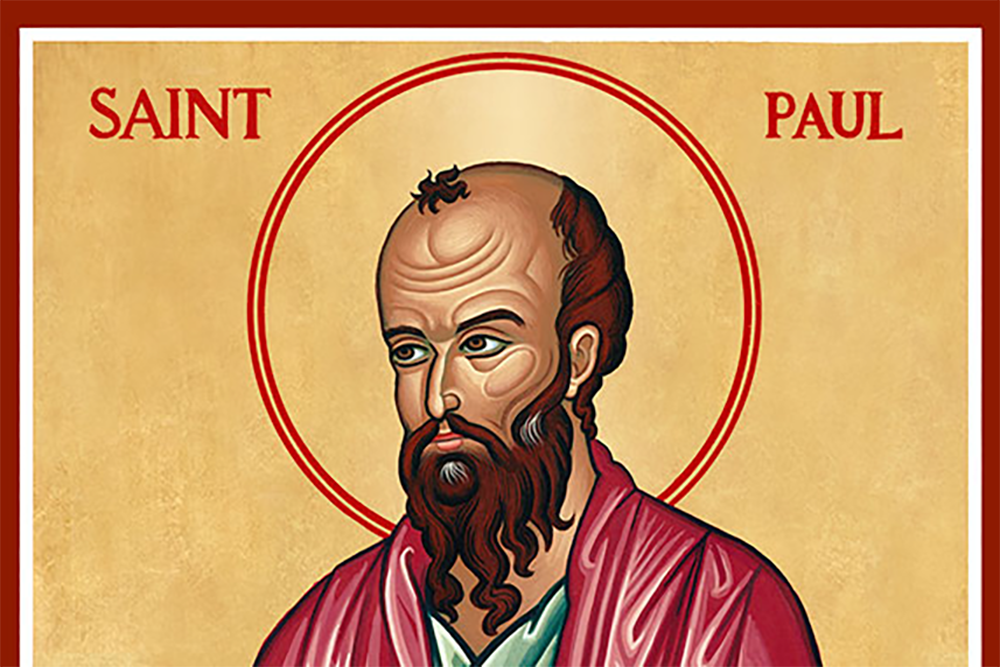
Christianity emerged from Judaism and then, within a generation, turned against its own roots with considerable ferocity. The Gospel of John, written late in the first century, contains passages that functioned for two millennia as theological fuel for antisemitism. Jewish leaders are blamed collectively for the death of Jesus. The phrase "the Jews" is used as an epithet in ways that later translations struggled to soften. The Book of Revelation describes a "synagogue of Satan." Saint John Chrysostom, one of the most celebrated Church Fathers, wrote homilies in the 4th century calling Jewish synagogues dens of demons and comparing Jews to animals. These texts were not marginal. They were read from pulpits across Christendom for over a thousand years. The New Testament also marginalises pagans, characterises non-believers as spiritually blind, and in Paul’s letters frames the old covenant, Judaism itself, as inferior and superseded. Islam did not yet exist and was not a target. But the logic of exclusion was already well established.
What the Quran and Hadith Say About Jews and Christians
The Quran is more nuanced than its critics often claim, and more troubling than its defenders sometimes admit. It explicitly designates Jews and Christians as Ahl al-Kitab, People of the Book, granting them a status above polytheists. Several verses praise their scriptures and their prophets. This is a degree of pluralism absent from much early Christian writing. Yet the Quran also contains passages describing Jews who broke their covenant with God, characterising some as having been transformed into apes and pigs as divine punishment. The verse remains deeply contested among Muslim scholars regarding its intended meaning and applicability, though it has been weaponised freely by extremists across the centuries. Other verses criticise Christian theology, particularly the doctrine of the Trinity, as a deviation from pure monotheism. The Hadith literature, compiled in the 8th and 9th centuries, goes further. Several narrations attributed to the Prophet describe end-times scenarios in which Muslims fight and defeat Jews. Mainstream Muslim scholars contextualise these as references to specific historical conflicts. Extremists cite them as universal commands. That debate is ongoing and unresolved.
The Pattern Across All Three Traditions
Every Abrahamic faith produced texts, in specific historical conditions of conflict, persecution, and competition, that frame the outsider negatively. Every tradition has used those texts at various points to justify exclusion, discrimination, or worse. Every tradition also contains within itself the resources for a more inclusive reading. The tension between those two impulses has never been fully resolved in any of them. The Jewish experience of persecution across Christian Europe for nearly two millennia is historically documented and morally catastrophic. That fact is not in dispute. But it does not exempt Jewish sacred texts from the same analytical scrutiny applied to others. Similarly, the legitimate criticism of antisemitism in certain strands of Islamic thought does not justify ignoring what Christian scripture and theology did to Jews over fifteen centuries. Selective scrutiny is not scholarship. It is politics dressed in the language of ethics.
Why This Matters Now
The Medium piece making the rounds online raises valid points. Antisemitism is real. It is rising. It deserves to be named and confronted without qualification. The author is right that graffiti against Jews remains graffiti against Jews regardless of what political grievance supposedly motivates it. But the same analytical framework, applied consistently, demands we also acknowledge the anti-Christian hostility embedded in parts of Talmudic tradition, the antisemitism structurally embedded in Christian theology for centuries, and the anti-Jewish passages in Hadith literature that continue to circulate in Muslim-majority societies, including our own. Prejudice baked into sacred texts is a problem. Full stop. The answer is not to weaponise one tradition’s failures against another. It is to build, within every tradition, a genuine capacity for self-examination. That conversation is harder, slower, and far less satisfying than pointing fingers across religious lines. It is also the only one that gets anywhere. Munaeem Jamal writes on geopolitics, religion, and global affairs. This article reflects his personal analysis and does not represent any institutional position. AI-assisted drafting; human-edited and verified.
메타데이터
- post_id
- 12ba5c87d1e2
- slug
- what-does-every-holy-book-say-about-the-other-a-question-nobody-wants-to-answer-12ba5c87d1e2
- url
- https://medium.com/@munaeem/what-does-every-holy-book-say-about-the-other-a-question-nobody-wants-to-answer-12ba5c87d1e2
- canonical_url
- https://medium.com/@munaeem/what-does-every-holy-book-say-about-the-other-a-question-nobody-wants-to-answer-12ba5c87d1e2
- author_url
- https://medium.com/@munaeem
- status
- ok
- fetched_at
- 2026-06-29 22:44:20