Forget New York and Tokyo. I Want to Live in Niue
While other people dream of corporate careers and big capitals, I sit over a map wondering how to turn a chunk of rock in the middle of the…
Forget New York and Tokyo. I Want to Live in Niue
While other people dream of corporate careers and big capitals, I sit over a map wondering how to turn a chunk of rock in the middle of the Pacific into a country you can actually live in — like an independent Niue.
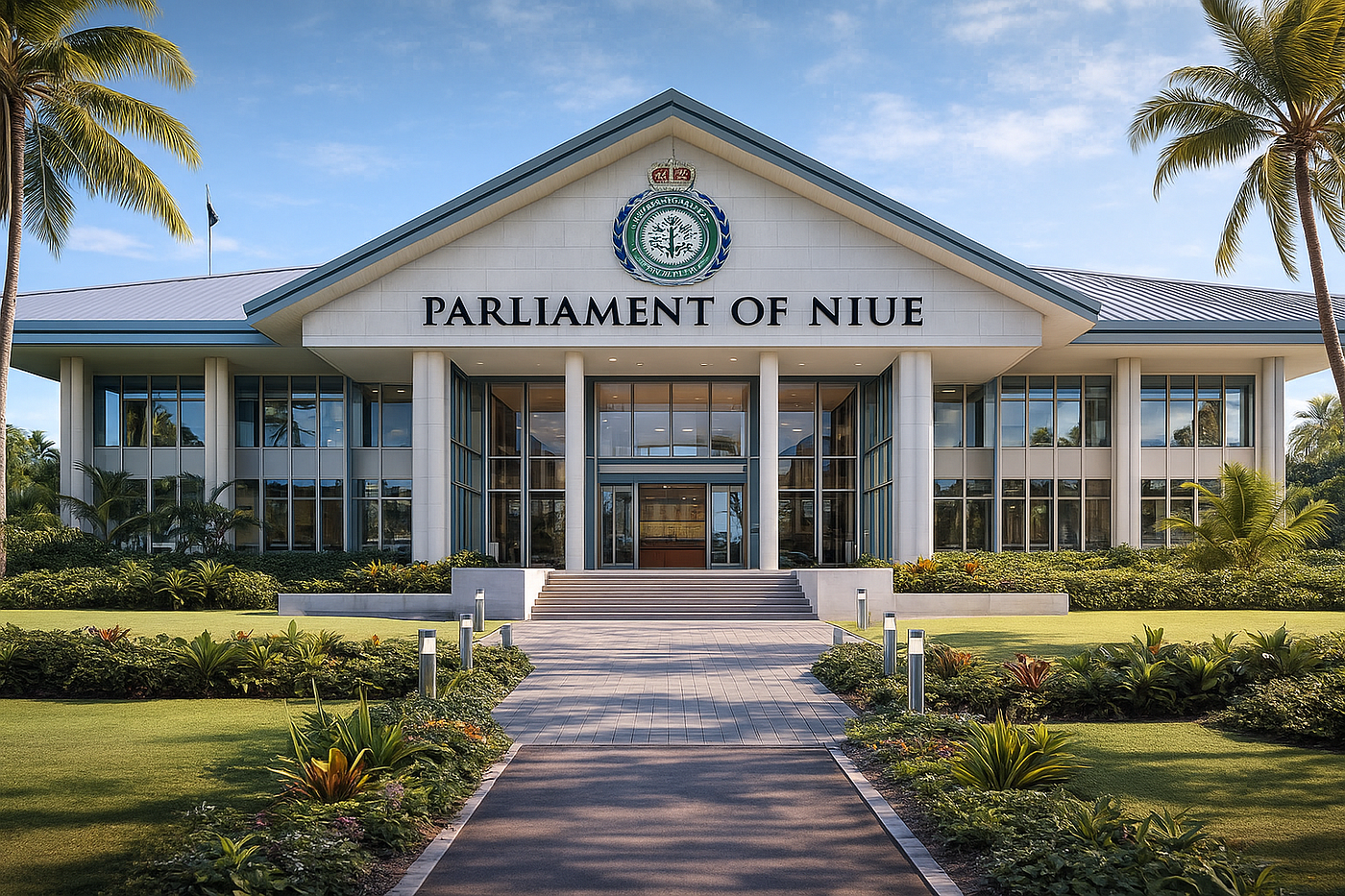
When I think of a country, I don’t immediately see Warsaw, Paris or Tokyo. I see a rock in the middle of the Pacific, big enough to fit a larger Polish housing estate. Sixteen villages, a little over fifteen hundred people, one main road circling the island. Niue.
I have a soft spot for places like this. Tuvalu, Nauru, Nunavut, the imaginary city-state of Thebes — I like taking them apart, putting them back together, designing them from scratch as if someone handed me a box of blocks and said: “Here. Build a country out of this. One you could actually live in.” Maybe it’s homesickness for normality. In big countries things always spill over, get lost, disappear in thousands of laws and institutions. In Niue you can see everything. And that’s its strength.
I picture Niue one day turning to New Zealand and saying: thank you, we’ve got this. Not in a row, but like an adult child coming back from university with a suitcase and telling their parents they’ve got keys to their own place now. They still want to stay in touch, but they’re going to pay their own bills.
What then?
First you’d have to settle the obvious: defence, access to work, movement of people. I can’t imagine New Zealand suddenly cutting Niue off from the world. I see something different: we give you a security umbrella and open doors for anyone who wants to work here, and you stop hanging on the drip, write your own budget, your own taxes, your own laws. Win-win, as people who like English slogans say.
That’s when the part that really excites me begins: designing a state from zero.
You don’t have to patch up old systems that have already been rolled over by three regimes and five political teams. You can ask: what is absolutely necessary to live a normal life on an island with a few thousand people?
Electricity, water, sewage, roads, a school, a hospital, the internet, safety. That’s it. Everything else is extra.
I see Niue in a few years with a simple but very concrete skeleton. One ring road around the island in solid condition, not patch on patch. Next to it a path for bikes and pedestrians so kids can get to school on two wheels instead of being driven everywhere by car. A few viewpoints with bays, benches and toilets, not wild parking on the shoulder and trips into the bushes.
On top of that, water and sewage handled the way this century demands: small treatment plants for villages instead of a thousand individual pits in the ground. A water network where the water doesn’t disappear along the way but actually reaches where it’s supposed to. Nothing less, nothing more.
Energy? No need to chase space technology here either. Roofs of public buildings covered in panels, in the background an energy storage system and ordinary generators as plan B. Not to brag about it in reports, but to make sure you don’t have to turn the lights off in the hospital when clouds cover the sun.
Housing I see as simple, almost stubborn. Houses that can be assembled quickly, from sensible materials, built to withstand the climate, wind and salt. Not glass boxes, but normal one-storey or two-storey homes with good ventilation, shade on the terrace and a decent roof. On top of that, a renovation programme for what already stands: new roofs, new wiring, new bathrooms. No grand words, just work.
All right, but what do you live on?
The easiest answer would be: tourism. Build hundreds of beds, shove the island into brochures and wait for the crowds. Except that with not even two thousand residents, “crowds” very quickly means chaos, rubbish, traffic jams and a place that stops being itself.
That’s why in my head Niue limits the number of visitors. It introduces an island fee that everyone pays on entry. There are no accidental guests. You fly in because you really want to be there, not because it was cheap on a booking site. You sleep in a guesthouse or a small lodge, you eat local food, you leave money that doesn’t evaporate into a network of global hotel corporations.
That’s one leg.
The second leg is services for other small players. Niue could become a sort of administrative heart of the Pacific. Well-organised commercial law, a fast court for disputes between companies, registers of corporations and funds that are transparent and predictable. No tricks, no tax acrobatics, but a clear price list: you want your company registered in Niue, you pay a specific fee and you know exactly where you stand.
Then there’s digital. First at home, then exported. A population register, land register, taxes, health — all tied together in one system that, once polished, can be offered to other small countries. They don’t need an army of programmers. They can buy a ready-made module from someone who has already tested it on themselves. That someone is Niue.
The third leg is training. An island where every month a group of officials from Samoa, Kiribati or Vanuatu lands to learn how to set up public finances, how to fight corruption, how to implement e-services that actually work instead of just looking good in brochures. For a week they listen, practise, and afterwards they sit on the edge of a cliff and look at the ocean. They go home not just with a certificate but with a sense that it is possible to run a country differently than by constantly rushing from one fire to another.
All right, what about people? Because prosperity doesn’t grow out of infrastructure alone. Right now Niue has a depopulation problem. Most of the nation lives in New Zealand. If the island wanted to stand on its own feet, it would have to invite people in. But not en masse.
I’d see three groups. First, its own diaspora. Niueans living in Auckland or Wellington, with kids, stable jobs and often a mental note that the island is done. You have to show them it’s worth coming back because there is something to come back to. Grants for building a house, guaranteed school places, decent medical care for elderly parents. No miracles, just security.
Second, people from other small states that may soon face far more serious problems than Niue: Tuvalu, Kiribati, sometimes Nauru. I imagine Niue taking in a small number of families each year — not as “climate refugees” but as future fellow citizens. Teaching them the language, giving them work in sectors that need hands: farming, services, administration, healthcare. Their kids go to school together with kids from Niue and grow up as one generation.
Third, specialists. IT people, doctors, teachers, engineers. Not digital celebrities, just normal people who want to live in a quiet place, work in a small team and see the effects of their work not in a quarterly report but on the street next door. They get a contract for a few years, solid pay, housing and a clear path to permanent residency and maybe citizenship — if they do well and want to stay.
The whole point is to let the population grow slowly and deliberately. From 1.7 thousand to four or five thousand. Enough to staff schools, the hospital, businesses and the administration. But not so much that the island suddenly can’t cope with water, sewage and rubbish.
In the end I’m left with the question I ask myself with every such project: what’s the point?
I’m not an idealist who believes small countries will save the world. I know politics is a hard game of interests and there will always be someone trying to gain something at someone else’s expense. But that’s exactly why I like small ones. On Niue you can’t pretend that “no one knows where a hundred million went” or that “the system somehow absorbed it.” Here everyone knows everyone. If the state spends money on nonsense, people will see it the next day on their way to the shop.
Niue could become proof that a country doesn’t have to be big to function. That you can have decent infrastructure, decent income, a sensible administration and clear rules for everyone — from the farmer who sells taro to the school to the lawyer handling an arbitration case between two corporations on the other side of the world.
I like to picture what the first day after signing the act of independence would look like. Much like in Nunavut, no one pours out onto the streets with flags, there’s no euphoria. It’s an ordinary morning. Someone goes to work at the post office, someone else opens their shop. On the prime minister’s desk lies a thin folder with a sheet of paper: “Ten-year plan — infrastructure, people, income.” Not a five-hundred-page strategy no one will ever read. Ten boxes to tick. Ring road finished? Yes. Treatment plants working? Yes. Schools fully staffed? Yes. Budget in the red? No. Then we’re fine.
Maybe that’s why Niue fascinates me so much. It’s a place where you can still sketch a state on a single sheet of paper, understand it as a whole, fix it if something goes wrong. And I really like tinkering with sketches like that. Tuvalu, Nauru, Nunavut, Niue — small building blocks you can assemble into something that makes sense.
And sometimes I think that if the world had a few such well-run microstates, it would be harder for everyone else to keep saying “it can’t be done.” Because somewhere in the middle of the Pacific there’d be a nation of four thousand people who simply got to work and did it.
메타데이터
- post_id
- 12be63f320fe
- slug
- forget-new-york-and-tokyo-i-want-to-live-in-niue-12be63f320fe
- url
- https://medium.com/@jaceksumislawski/forget-new-york-and-tokyo-i-want-to-live-in-niue-12be63f320fe
- canonical_url
- https://medium.com/@jaceksumislawski/forget-new-york-and-tokyo-i-want-to-live-in-niue-12be63f320fe
- author_url
- https://medium.com/@jaceksumislawski
- status
- ok
- fetched_at
- 2026-07-14 16:26:26