Pollution Is Obvious, but Climate Change?
A baseline condition hard to pin down
CLIMATE CHANGE
Pollution Is Obvious, but Climate Change?
A baseline condition hard to pin down
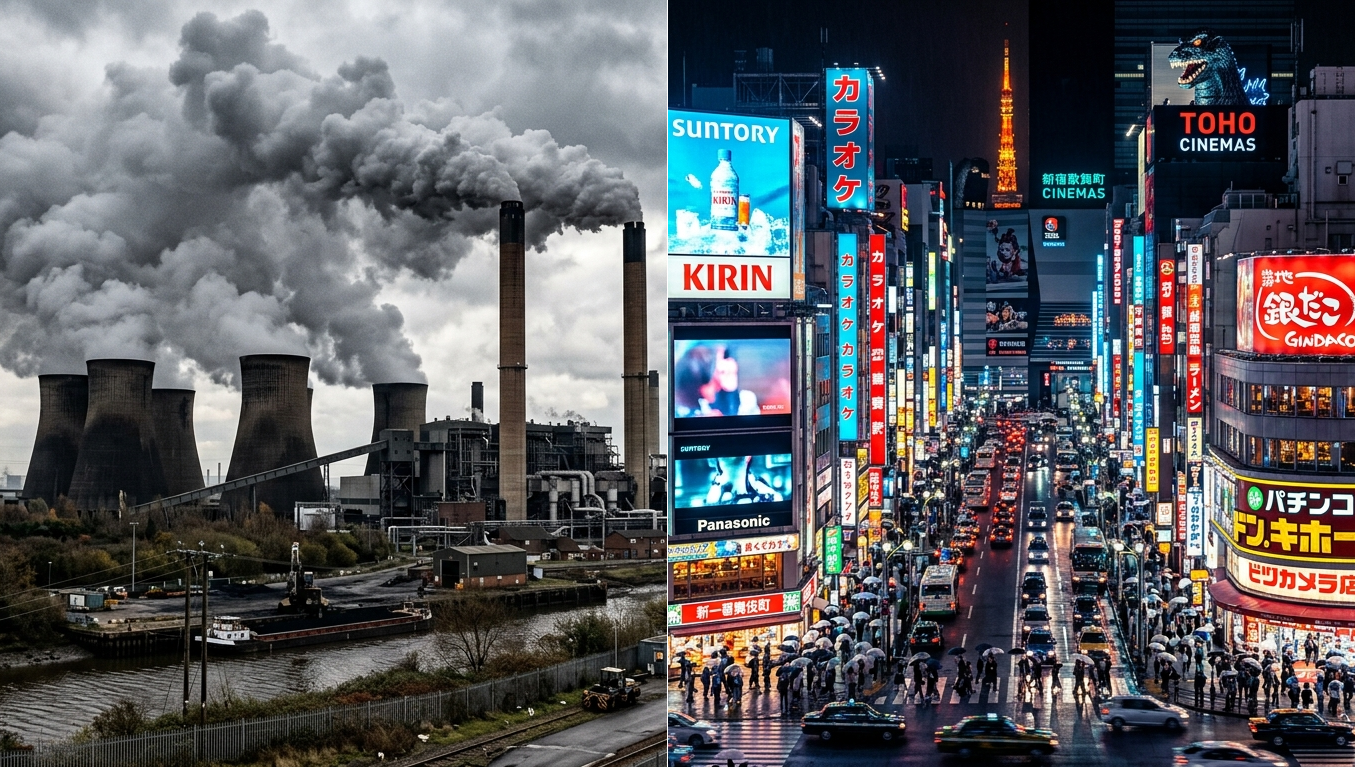
Image generated by AI — Gemini
Climate change politics exerts so much influence on the framing of climate science that the word “change” has cemented an adverse connotation, to many even a self-validating truism of apocalyptic inevitability, as if climate was meant to be unchanged, when change in climate is in fact the most expected phenomenon. Countless op-eds guilt-trip hydrocarbon use and complicate economic realities, like the ongoing energy crisis, where for the first time in a long time it is harder to see oil shortages in terms of environmental relief because millions of people are under threat of famine.
When climate science is used in appeals to authority fallacy, I do not shy away from reminding about how the work of scientists is entangled with sentiments before any useful data for constructive discourse becomes viable.
Grounded arguments benefit from noting that studies opposing panicked transition to alternative fuels do not necessarily mean all climate skeptics are motivated by vested interests in fossil fuels. Many investments in alternative fuels simply fail to deliver, and claims about new energy sources are elusive. Exotic energy tech is constrained by material science, manufacturing hurdles as well as major supply chain bottlenecks. The massive scale of existing infrastructure, like residential gas heating networks and heavy shipping fleets, needs decades and trillions of dollars to overhaul. Thus it helps, if only a little, to reach for the fullest possible perspective here, a systems view involving 8 billion people’s livelihoods, that includes access to goods, services, and basic opportunities, all dependent on cheaply accessible energy, so that the most vulnerable do not starve and mass migrations averted.
But before I attempt to overcome my humanitarian framing and talk about the bigger elephant in the oil pond, I’d quote a paragraph from Borut’s story published in the Entrepreneurship Handbook:
In science, similarly to politics — the more competent are highly aware of their fallibility, misleading presumptions, and missing details due to technology limitations. The unskilled, on the other hand, are overconfident about their clarity and infallibility. Being a majority (mainstream science), they mostly manage to outvote and overrule the more competent and mindful minority.
There is no shortage of non-peer-reviewed science articles, those with manipulated data, advocacy-funded, then leveraged in questionable journals to build a make-believe perceptions. Both sides of the argument use talking points antithetical to scientific research in need of empirical rigor over moral support. This is where we are on climate, not so clean a slate, and not always rational because of the fears associated with the subject matter.
My own position on climate change leans toward skepticism because I read politics and see that ideology overextended itself. Leaders are not known to chase truth, and even expected to capitalize on strong sentiment. What upsets me about the climate hype is that nobody bothers debunking the notion of consensus. Scientific consensus is a mere collective agreement, like any other historical taboo. It’s big and powerful, and it feeds on established paradigms. Probabilistic events and emerging evidence in need of time are not immune to ignorance.
The so-called “scientific consensus” is a social convergence on the most probable current model, as opposed to finalized verification of objective reality. This is why I am convinced, for now anyway, that climate change suffers from lagging indicators frequently upended by the very anomalies and evolving data it initially dismissed as outliers. The power of consensus makes climate emergency feel true enough but not scientifically so factual that you should be certain CO2 release is turning the atmosphere into a cooking oven and that human activity is killing the Earth. I am not convinced of that when politics is allowed to muddy the ongoing research with an alarmist agenda.
So let’s at least agree that the foundation for consensus is ideological and not scientific.
The EU was cut off from Russia’s hydrocarbons more than 4 years ago, and despite high investment in renewables, according to 2026 edition of Eurostat’s “Energy in Europe,” fossil fuels like crude oil, natural gas, and solid fuels still account for roughly 70% of the EU’s total energy mix. Wonder why? That’s because of political hype and technical difficulties around decarbonizing high-heat industrial processes and long-range transport. Steel, cement, and chemical manufacturing all need temperatures or raw molecular feedstocks that current battery technology can’t deliver. Germany’s hydrogen ambitions did not pan out, and the reported numbers were an embarrassment. Now think about how much more difficult it is for developing nations to tap into alternative energy sources.
Earth’s climate cycle, a multi-million-year process, is now arrogantly condensed into the lifetimes of those concerned. And the concern itself, either of real estate affected by extreme weather, or that of our planet in general, vaguely articulated to mean survival of the Earth because of panic-relevant stimulus like the perceived criticality of CO2 concentrations in the atmosphere.
Climate science needs funding, time, and space, quite a bit of space. A kind of rigor that asks for impartiality and less pressure. To save its legitimacy science must avoid inconsistencies. But because it has all gotten politicized, climate science is now fighting the, “planet may not exist in 50 years,” of which people have the right to question alarmism. Scientists pressured into membership of “good scientists” against “climate deniers” is no different from leadership surrounding itself with yes-men. Policy paradox, misaligned with empirical investigation, work in need of sufficient testing, in the atmosphere lab in no pesky need of political interference.
It is clear that 8 billion consumers would impact the Earth’s atmosphere somehow. There is a registered warming trend. Nobody argues against that. But what does it mean? The extent of the impact, relative to Earth’s natural climate changes, geological cycles, and mitigation strategies we want to have in place is largely uncertain and hard to define. Political talking points extrapolate measurements without acknowledging the Earth’s potential warming absent human activity, had we not been planting trees, putting out fires, hunting gas emitting mammals, and consuming various volatile gases that would otherwise have a higher greenhouse effect. If natural gas were vented instead of burned, nearly all of it would enter the atmosphere as methane, which is 28 to 34 times more potent than CO2. The world consumes over 132 trillion cubic feet (MMcf) of natural gas per year, so we may never know how heated the Earth would have been had human beings not existed precisely because we also mitigate many of the naturally polluting/heating processes.
Climate science, having only recently begun using advanced physics and satellite technology, needs 100 more years of accurate data to produce credible climate models. Incomplete data leaves room for errors and revisions. But that doesn’t deter activism. To many observers, alarmist policies are just-in-case contingencies driven by popular fears. There have been six IPCC assessment reports since 1990, along with multiple generations of climate model frameworks, with broad updates built from thousands of individual studies and model refinements. Outputs get adjusted because the system is continuously recalibrated with new observations and methods.
This does not justify the burning of fossil fuels recklessly because “we can’t assess climate risk accurately enough,” of course not. Babies in India can’t grow strong lungs because of air pollution, that’s immediately human-centric enough, but not necessarily an atmospheric emergency, just very important for the well-being of billions of people who depend on access to cheap fossil fuels, without comparable energy density or adequate energy storage tech available as of yet. The transition toward renewables and alternative energy sources is correct, even natural, just not pragmatic when informed by political sentiment interfering with science, where the jury is still out, hypothesis still contested, while people’s livelihoods are at stake. A 50% increase in fuel costs for a family in the developed nation is a mere annoyance compared to the crippled well-being of a poor family in a third-world country who would no longer afford transport, cooking fuels, and forced to ration food.
A country like India, with 77% fossil fuel dependency, has to rely heavily on coal burning to compensate for high-cost energy imports. That only worsens its already severe air pollution, regardless of the cause of spikes in energy prices, whether war or environmentalist agendas.
Developing nations are unprepared to convert their national grid system into smart virtual power plants with solar and computer-controlled energy storage in every facility. They don’t have trillions of dollars to spare, there are too many mouths to feed. Their transport fleet is sustainable, along with the farming equipment and lands in need of ammonia derived from natural gas and is the fundamental chemical source for almost all the nitrogen-based fertilizers they can’t feed the nation without. Same goes for plastics and rubbers.
Removing those from India’s economy because of some environmental ideas about cleaner ecology would starve the nation wholly dependent on low cost and versatile material for packaging and consumer goods. Plastics made of petroleum keeps essential products affordable for a massive population while supporting the logistics of a growing retail economy. In fact, plastics are fundamental to India’s industrialization, modernization, and the expansion of its manufacturing sector. Who are we to tell them to stop evolving economically if we advocate with coffee cups in hand on paid day offs? This reminds me of the same people who complain about microscopic levels of pesticide residues on apple skin but still load up on ridiculously unhealthy ice cream full of sugar and artificial colorants.
Renewables are proving hard to transition, given the cost of battery tech and ongoing research, most of it failing past lab prototypes, is still prohibitively expensive and constrained by manufacturing. China exports renewable tech because of its manufacturing super capacity, but not everyone can afford it, not least because it costs so much to overhaul existing infrastructure, and even China, the leader in electrification and alternative energy tech, uses fossil fuels for 84% of its primary energy mix. That is significantly more than the environmentally conscious EU.
Transitioning to cleaner energy is not a panacea for all environmental issues, with new and worse side effects. The mining of metals needed for renewable tech is incredibly polluting, which is why only authoritarian China is crazy enough to do on a mass scale. Much of their ground water is irreversibly polluted. Millions of acres so contaminated that nothing grows. Not to mention the disruption of ecosystems and extermination of biodiversity.
Isn’t it the over-extraction of resources that is the primary impact on Earth’s climate and its ecosystems? Large fossil fuel corporations are an easy target for political messaging, but eight billion fully dressed, equipped, and sheltered bodies is a burden on the Earth’s ecosystem, and corporations merely supply existing demand.
Passing responsibility to big energy is spineless because climate change is consumption driven. The rapidly growing middle class in countries like India and China is hungry for more energy, plastics, metals, and minerals. Pollution keeps increasing despite some carbon capture and improved efficiency.
Our population growth is unsustainable for the fact that we are materialists and most resources are finite, never mind pollution. Large-bodied herbivores and certain invasive species too impact the environment and exacerbate greenhouse gas emissions. And who decides how much carbon is too much, based on what risk criteria exactly, if geological records do show higher concentrations of CO2 in the past?
By trampling and thinning the snow “blanket,” humans allow the extreme cold of the Siberian winter to penetrate deeper into the soil. So the permafrost is now kept frozen longer because of large herbivores like horses, bison, and oxen. The release of some greenhouse gases are prevented, and would occur if humans weren’t there to manage the herds otherwise.
So much talk about methane from cows and sheep, but feral camels in Australia have no natural predators. So their population would double every 9 years was it not for large-scale culling and management programs. They are ruminants, meaning they produce massive amounts of methane, all that is verted. How much methane is saved? A single feral camel emits about 45kg of methane a year, equivalent to roughly 1 ton of CO2! Someone recently told me camels were first introduced into Australia from the Canary Islands in 1840. But what difference does it make where they are? The earth is one, the important thing is that we are here. We have multiplied to exploit and consume. Every new human is a major contribution of carbon, as much as 10–16 tons on average of carbon footprint in a lifetime (including carbon dioxide and methane).
But we also conserve it, by restoring peatlands, planting of billions of trees, managing forests and preventing “carbon bombs” of a catastrophic wildfires, etc., just to show the complexity in trying to assess human-present vs. no-human impacts of greenhouse effects on Earth.
More importantly, I’d like to point out that we can reduce technological and industrial pollution, to an extent, before it becomes futile when production demand continues to increase because everyone wants maximum comfort. This is where advocating for electric vehicles breaks down.
Putting Earth’s well-being before human socio-economic needs is a daunting task, but also an open philosophical question, that makes us into impostors when we advocate for decarbonization without accounting for a high standard of living and its consumptive cycle.
Billions of people want modern conveniences but rarely question the impact of their very existence and instead transfer blame, as if major industrial polluters do it for their own sake and not to support our collective human consumption, our very polluting existence. We are the primary source of pollution no matter what new technology we invent. No alternative energy source is going to contain excess heat emitted from our countless urban sprawls. Your phone puts out excess heat, making the atmosphere warmer than it would be otherwise. So what do we do? Go back to living in a cave because we are scared of what might happen?
Perhaps a time will come when maximum recyclability and radical minimalism could dictate political discussion. For now the impact of consumption is swept under the rug of hypocrisy. Heat emissions from our very existence are strangely absent from climate models. This is deliberate because the focus is political, and largely irrational. Emil Bruce Lester, Jr., considering how aware you are about excessive consumerism, I’d love to get your thoughts on this critique.
Support my journey and help more readers discover my work, a contribution to my Ko-Fi account would be deeply appreciated. Thank you for engaging with my writing. Your attention and commentary mean a lot to me.
메타데이터
- post_id
- 12cf80585b05
- slug
- pollution-is-obvious-but-climate-change-12cf80585b05
- url
- https://medium.com/said-differently/pollution-is-obvious-but-climate-change-12cf80585b05
- canonical_url
- https://medium.com/said-differently/pollution-is-obvious-but-climate-change-12cf80585b05
- author_url
- https://medium.com/@f.butochnikow
- status
- ok
- fetched_at
- 2026-06-13 12:55:53