The Skill We Forgot to Teach Children (And Now Can’t Ignore)
As an education entrepreneur, I find myself returning to the same question:
The Skill We Forgot to Teach Children (And Now Can’t Ignore)
As an education entrepreneur, I find myself returning to the same question:
What should we actually be helping children develop for a post-AI world?
The usual answers come quickly.
Ownership. Problem-solving. Emotional regulation. Cognitive flexibility. Resilience. Self-esteem.
All important. All valid.
But there’s a deeper layer beneath all of them. One that rarely gets named.
Metacognition: thinking about your thinking It is one of the most powerful forms of intelligence your brain can develop. It isn’t about memorizing facts or how fast you think… it’s about becoming aware of how you think, evaluate, and regulate your own mind in real time.
Most of us were never taught this. We were taught to solve. To perform. To get to the answer.
Not to pause and ask:
- What am I doing right now?
- Why am I thinking this way?
- Is this working?
Researchers like John Flavell, who first formalized the concept, described metacognition simply:
- Knowing what you know
- Knowing how you learn
- Knowing when to change strategy
It’s not intelligence. It’s awareness of intelligence in motion. And in a world where AI can execute faster than us, this is the edge that remains.
How metacognition actually develops
Metacognition is not something we “teach” directly. It emerges slowly, through interaction.
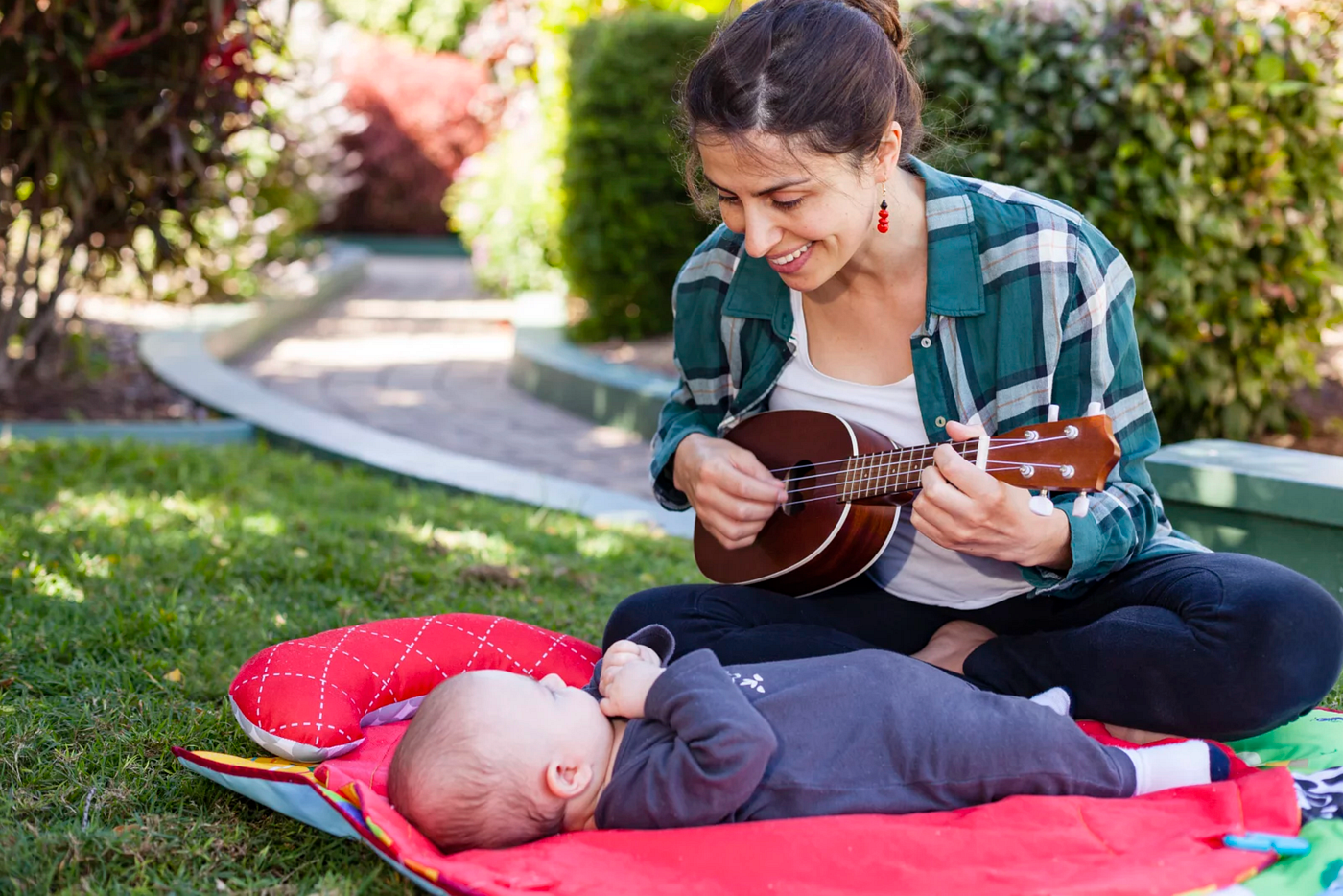
0–2 years: The invisible foundation There is no thinking about thinking yet. But something more fundamental is forming. The capacity to notice.
Through serve-and-return interactions, mirroring, and adults labeling experiences, the brain begins to build awareness.
Low noticing here often means weaker metacognition later.
2–5 years: The first sparks Children begin to talk about what they are doing. They plan, experiment, pretend. This is where metacognition quietly begins.
Not through instruction, but through interaction:
- “What are you trying to do?”
- “Why do you think that didn’t work?”
When adults narrate thinking, not just outcomes, children start to see that thinking itself can be observed. This is a critical window.
5–10 years: From doing to understanding Now children can reflect on strategies. They can compare approaches. They can explain their reasoning. This is where school has the opportunity to build metacognition.
But often, it doesn’t. Instead of asking, How did you solve this? We ask, What’s the answer?
And in doing so, we shift attention away from thinking and toward performance.
10–14 years: Awareness becomes explicit As the prefrontal cortex develops, especially the regions involved in monitoring thinking, children gain the ability to think about thinking as a concept.
Research from Flavell, Desoete, and Veenman suggests that ages 2 to 12 are especially important for building metacognitive habits that persist into adulthood. If missed, the window doesn’t close. But it does narrow.
What gets in the way
Metacognition doesn’t just fail to develop. It gets suppressed.
Outcome-focused environments When only the right answer matters, children stop examining how they got there.
Over-directed adults When we constantly guide, correct, and intervene, children lose the chance to monitor their own thinking.
Fear and criticism When mistakes are punished, children stop reflecting. They start performing. They hide confusion instead of exploring it.
Speed over depth Constant urgency leaves no space for reflection. You cannot observe your thinking if you are always rushing to finish it.
Lack of thinking language Metacognition grows in environments where children hear: “I’m confused…” “What if I try…” “That didn’t work, I’ll change…”
Without this, the inner voice that supports reflection never fully forms.
Stress and instability Under stress, the brain defaults to automatic responses. Reflection requires safety.

What this changes
If metacognition is the foundation, then our role shifts. We are not just helping children think better. We are helping them notice their thinking while it is happening.
And that doesn’t happen in structured lessons. It happens in small, ordinary moments:
When a child is stuck. When they make a mistake. When they try again. When they give up.
Those moments are not interruptions. They are the work. If there is one shift to make, it is this:
Move from “Did you get it right?”
to “What did you notice about how you did that?”
That is where real learning begins.
메타데이터
- post_id
- 12e2b1432d2e
- slug
- the-skill-we-forgot-to-teach-children-and-now-cant-ignore-12e2b1432d2e
- url
- https://medium.com/@Suhali/the-skill-we-forgot-to-teach-children-and-now-cant-ignore-12e2b1432d2e
- canonical_url
- https://medium.com/@Suhali/the-skill-we-forgot-to-teach-children-and-now-cant-ignore-12e2b1432d2e
- author_url
- https://medium.com/@Suhali
- status
- ok
- fetched_at
- 2026-06-10 15:53:41