How a Patent Tokenization Platform Is Transforming Intellectual Property Financing
Patents are among the most valuable assets a modern company owns — and among the hardest to turn into working capital. A pharmaceutical…
How a Patent Tokenization Platform Is Transforming Intellectual Property Financing
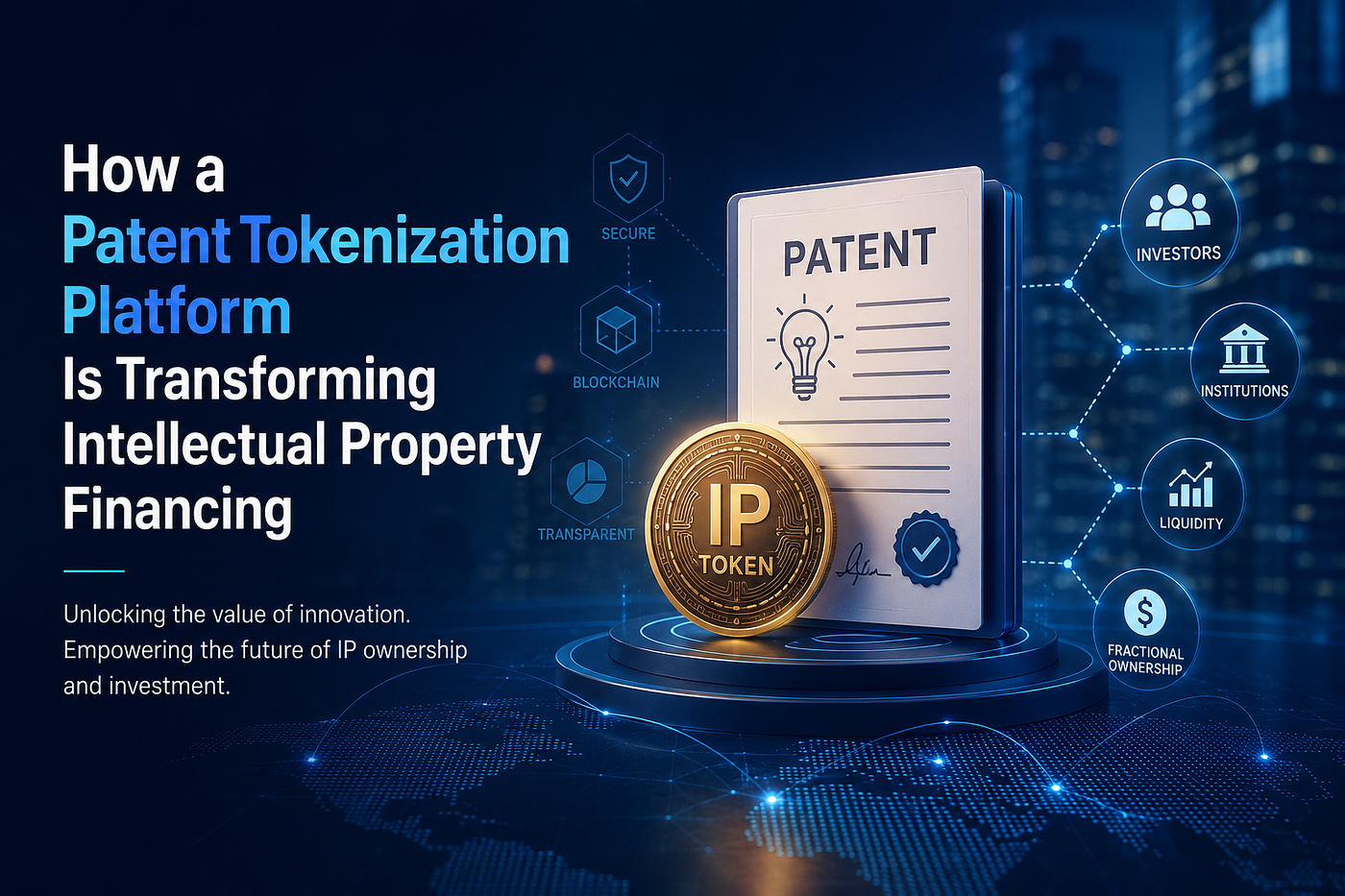
Patents are among the most valuable assets a modern company owns — and among the hardest to turn into working capital. A pharmaceutical group might hold a portfolio worth hundreds of millions on paper, yet still struggle to borrow against it or sell a fraction to fund the next clinical trial. A patent tokenization platform changes that equation by representing patent rights as programmable digital assets on a blockchain, making ownership divisible, transferable, and continuously auditable.
The timing matters. Intangible assets now sit at the center of corporate value, but the financing tools built around them still belong to an era of physical collateral. As enterprises look for faster, more flexible ways to raise capital against their innovation, patent tokenization has moved from an academic idea to a practical option for R&D-heavy organizations, universities, and investors.
This guide walks through how the model works, where it creates value, what to look for when evaluating a platform, and the regulatory realities you can’t ignore.
Why Intellectual Property Has Become an Important Financial Asset
The composition of corporate value has quietly inverted over the past half century. According to Ocean Tomo’s 2025 Intangible Asset Market Value study, intangible assets — patents, trademarks, software, brands, and know-how — accounted for roughly 92% of the S&P 500’s market capitalization by the end of 2025, compared with just 17% in 1975.
That shift is global. WIPO and Brand Finance’s Global Intangible Finance Tracker found that the worldwide value of corporate intangible assets reached about USD 80 trillion in 2024 and climbed toward USD 97 trillion in 2025, nearing the USD 100 trillion mark.
Patents specifically continue to grow in volume. WIPO’s World Intellectual Property Indicators 2025 reported a record 3.7 million patent applications filed worldwide in 2024, up 4.9% year over year — the fifth straight year of growth and the fastest pace since 2018. Patents in force across jurisdictions had already surpassed 18 million by 2023.
The problem is that this enormous store of value is largely locked up. Patents generate licensing revenue and underpin valuations, but they are notoriously illiquid: expensive to value, slow to sell, and difficult to pledge as collateral. This is exactly the gap a patent tokenization platform is designed to close.
What Is a Patent Tokenization Platform?
A patent tokenization platform is enterprise software that creates a secure digital representation of a patent — or a right derived from it, such as a royalty stream — and manages that asset across its full lifecycle on a blockchain.
In practice, the platform handles several jobs at once:
It’s worth being precise here, because the term “tokenization” gets confused with NFT minting. Creating an NFT of a patent certificate is a collectible with no enforceable link to the underlying legal right. Enterprise patent tokenization is the opposite: a token is bound to a legally structured claim — equity in a holding vehicle, a licensing right, or a share of royalties — governed by contracts and enforceable off-chain. The token is a settlement and ownership layer, not the asset itself. That distinction is what makes the model usable by pharma companies, universities, and regulated investors rather than speculators.
How Patent Tokenization Works
Tokenizing a patent is a structured, multi-step process. The blockchain is only the final rail; most of the work is legal and financial groundwork.
- Patent verification — Confirm the patent exists, is valid, and is in force in the relevant jurisdictions (e.g., via USPTO or EPO records).
- Legal ownership validation — Establish clear, unencumbered title and resolve any co-ownership or prior assignments.
- Independent valuation — Commission a defensible valuation of the patent or its royalty potential.
- Token structure — Decide what the token represents: fractional equity in a special-purpose vehicle, a royalty right, or a licensing entitlement.
- Compliance setup — Define investor eligibility, jurisdictional limits, and disclosure requirements.
- Smart contract deployment — Encode ownership, transfer restrictions, and royalty logic into audited smart contracts.
- Token issuance — Mint tokens against the structured asset.
- Investor onboarding — Run KYC/AML and accreditation checks, then grant access.
- Royalty automation — Distribute licensing income to token holders automatically as payments arrive.
- Secondary transfers — Allow compliant peer-to-peer trading where local securities law permits it.
The efficiency gain comes from steps 6 through 10. Once the legal structure is in place, actions that used to require lawyers, escrow agents, and manual reconciliation can execute programmatically.
Challenges of Traditional Patent Financing
Anyone who has tried to raise money against a patent portfolio knows why the process feels stuck in the past. The core frictions include:
The data backs up the friction. The European Central Bank has found that around 26% of EU SMEs face financing difficulties tied to their reliance on intangible assets, and a WIPO/UK IPO study cited by IP finance specialists found that roughly 95% of businesses holding IP have never considered using those assets to raise finance. Meanwhile, McKinsey estimates that more than USD 400 trillion in global assets are effectively illiquid — expensive to transfer, hard to price in real time, and inaccessible to most investors. Patents sit squarely in that pool.
Benefits of an Enterprise Patent Tokenization Platform
An enterprise patent tokenization platform doesn’t just digitize paperwork; it re-engineers how value moves. The most meaningful benefits for decision-makers are:
The market context reinforces the opportunity. Forecasts for real-world asset (RWA) tokenization vary widely — McKinsey projects a roughly USD 2 trillion base case by 2030 (with a USD 1–4 trillion range), Boston Consulting Group and ADDX put the figure at USD 16 trillion, and Standard Chartered has floated USD 30 trillion by 2034 — but every credible estimate points in the same direction: sharp, structural growth. Tokenized intellectual property is a natural extension of that curve.
Enterprise Use Cases
Patent tokenization isn’t one-size-fits-all. Different sectors adopt it for different reasons.
Universities are an especially compelling case. Tech-transfer offices sit on thousands of patents that never reach commercialization simply because the financing path is too slow. Tokenization offers a compliant way to share upside with investors while keeping the research mission intact.
Patent Tokenization Platform vs Traditional Patent Financing
The table simplifies a nuanced reality-legal structuring still takes effort-but the direction of improvement is clear.
Key Features to Look for in a Patent Tokenization Platform
Not all platforms are built for enterprise scale. When evaluating an intellectual property tokenization platform, weigh these capabilities:
The through-line is control. Enterprises need to tokenize without handing sensitive information to a fully public network or rebuilding their tech stack from scratch.
How Spydra Enables Enterprise Patent Tokenization
Spydra is an enterprise asset tokenization platform designed around exactly these requirements. Rather than a single-asset product, it’s a configurable, low-code environment for turning real-world assets-including patents and other intellectual property-into managed digital assets.
A few elements make it well suited to IP financing:
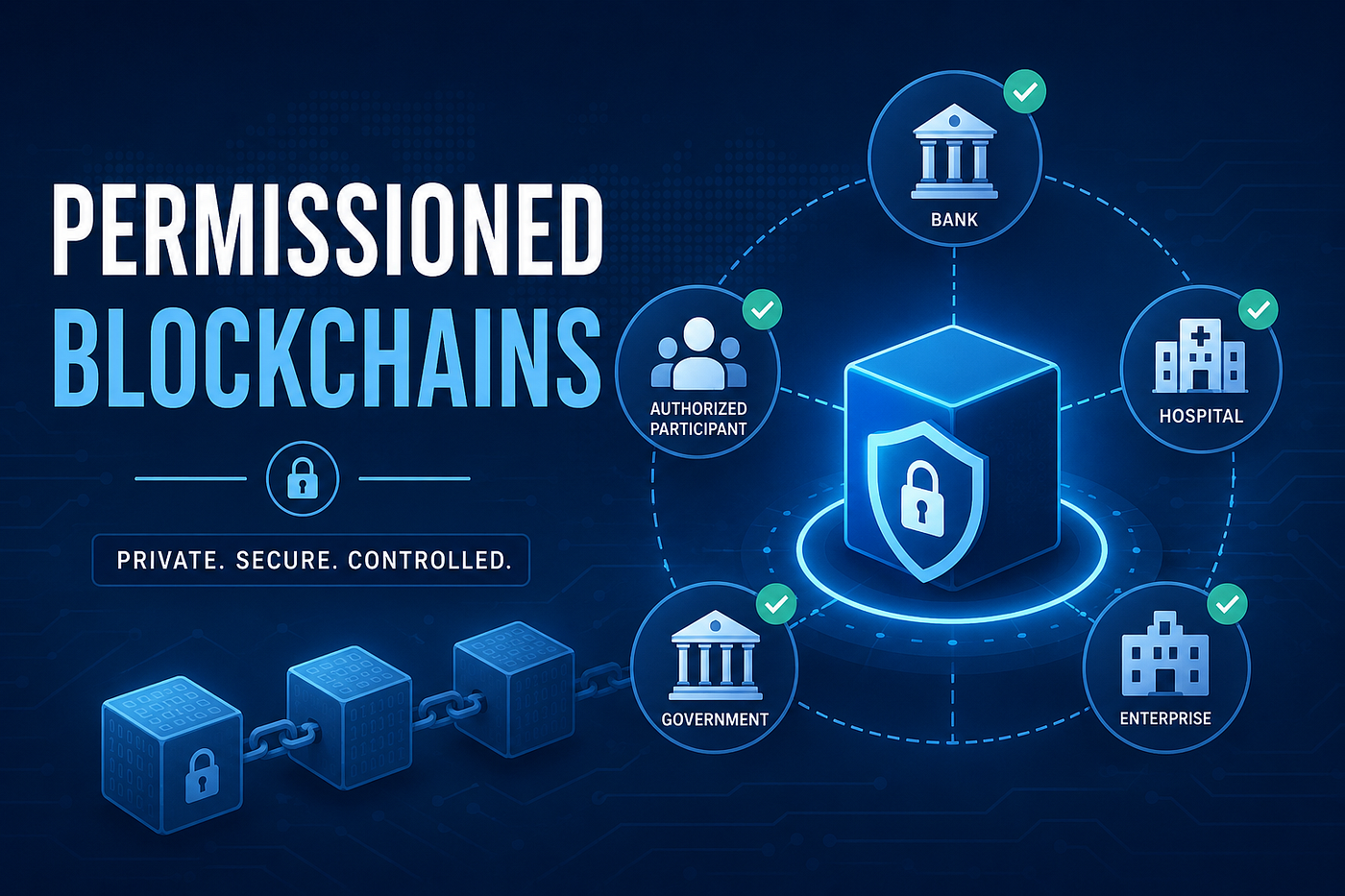
- Permissioned blockchain built on Hyperledger Fabric, giving enterprises private, consortium-style networks where sensitive patent and deal data stays protected. Fabric’s modular design supports the privacy and governance controls that IP transactions demand.
- Public blockchain integration when broader investor reach and liquidity are the goal, so organizations aren’t forced to choose privacy or accessibility upfront.
- A Token Engine for fractionalizing assets and issuing configurable tokens against them.
- Smart contract automation through custom chaincode, letting teams encode royalty splits, transfer rules, and governance logic.
- Compliance and KYC workflows that support controlled investor onboarding and enforceable transfer restrictions.
- Token lifecycle management with configurable assets, roles, and permissions for every party in a network.
- Enterprise APIs and no-code workflows, including REST APIs and connectors to thousands of applications, so tokenization fits into existing ERP and finance systems.
- Scalability and security, with multi-cloud, multi-region deployment and enterprise certifications including ISO 27001, ISO 9001, SOC, and GDPR alignment.
Because the platform is built on Hyperledger Fabric, organizations can stand up a private network and deploy a tokenization use case quickly, then integrate it with the tools they already run. For teams new to the space, Spydra’s explainer on what asset tokenization is is a useful starting point.
Regulatory and Compliance Considerations
Patent tokenization lives at the intersection of IP law and financial regulation, so compliance is not optional. Key areas to plan for include:
Encouragingly, IP-backed finance is gaining institutional momentum. WIPO has made moving intangible-asset finance “from the margins to the mainstream” an explicit priority, and markets are scaling: China alone processed roughly USD 58.8 billion in IP-pledged financing in the first half of 2024, up 57% year over year. Tokenization is a natural next layer on that trend, not a detour from it.
Future of Patent Tokenization
Several forces are converging to push patent tokenization forward over the next few years:
The likely path is gradual and institution-led: low-risk, well-structured offerings first, followed by broader liquidity as standards and secondary markets develop.
Conclusion
Intellectual property has become the dominant form of corporate value, yet the tools to finance it lag decades behind. A patent tokenization platform bridges that gap — converting illiquid patents into transparent, tradable, patent-backed digital assets, automating royalties, and opening access to a global pool of investors. For pharma companies, universities, and technology firms sitting on underused portfolios, that’s a genuinely new financing path.
The caveat is that doing it properly requires enterprise-grade security, permissioned infrastructure, built-in compliance, and smart contracts you can trust — not a consumer NFT tool. That’s why purpose-built platforms matter.
If your organization is evaluating how to bring intellectual property on-chain, it’s worth exploring how Spydra’s enterprise asset tokenization platform and its Token Engine can be configured for patents and other real-world assets — and booking a walkthrough to see the workflow end to end.
Frequently Asked Questions
What is a patent tokenization platform?
It’s enterprise software that creates a blockchain-based digital representation of a patent or a right derived from it (such as royalties), and manages ownership, compliance, and transfers across the asset’s lifecycle.
Can patents legally be tokenized?
Yes, when structured correctly. The token typically represents a legally enforceable interest — equity in a holding vehicle, a licensing right, or a royalty share — governed by contracts and existing IP law. Tokenization is a settlement and ownership layer, not a replacement for legal title.
Who can invest in tokenized patents?
That depends on jurisdiction. Many offerings are limited to accredited or professional investors under securities rules, with eligibility enforced through KYC and accreditation checks at onboarding.
How does patent tokenization generate liquidity?
By enabling fractional ownership and compliant secondary transfers, investors can buy or sell slices of an asset that previously had no practical market.
Is patent tokenization regulated?
Generally, yes. Tokens representing financial interests are often treated as securities and fall under bodies like the SEC or ESMA, with frameworks such as the EU’s MiCA adding further structure. AML, KYC, and data-protection rules also apply.
How are royalties distributed?
Smart contracts automate distribution, sending licensing income to token holders proportionally as payments arrive, without manual reconciliation.
What industries benefit most?
Pharmaceuticals, semiconductors, AI, clean energy, software, telecom, aerospace, and university research-sectors with valuable patents and long or capital-intensive commercialization cycles.
Can universities tokenize patents?
Yes. Tech-transfer offices can use tokenization to share upside from dormant research IP with investors while retaining control of their core mission.
How secure are blockchain patent platforms?
Enterprise platforms use permissioned blockchains, encryption, audited smart contracts, and certifications such as ISO 27001 and SOC to protect sensitive data and transactions.
What should enterprises look for in a patent tokenization solution?
Permissioned and public blockchain support, built-in KYC/AML, configurable and auditable smart contracts, token lifecycle management, transfer restrictions, audit logs, API integration, and strong governance and compliance controls.
Originally published at https://www.spydra.app.
메타데이터
- post_id
- 12e7cdfe9a7e
- slug
- how-a-patent-tokenization-platform-is-transforming-intellectual-property-financing-12e7cdfe9a7e
- url
- https://medium.com/@spydra/how-a-patent-tokenization-platform-is-transforming-intellectual-property-financing-12e7cdfe9a7e
- canonical_url
- https://medium.com/@spydra/how-a-patent-tokenization-platform-is-transforming-intellectual-property-financing-12e7cdfe9a7e
- author_url
- https://medium.com/@spydra
- status
- ok
- fetched_at
- 2026-08-11 18:41:33