Scientists Say This is the Greatest Proof of Alien Life
A story to be told
Scientists Say This is the Greatest Proof of Alien Life
A story to be told
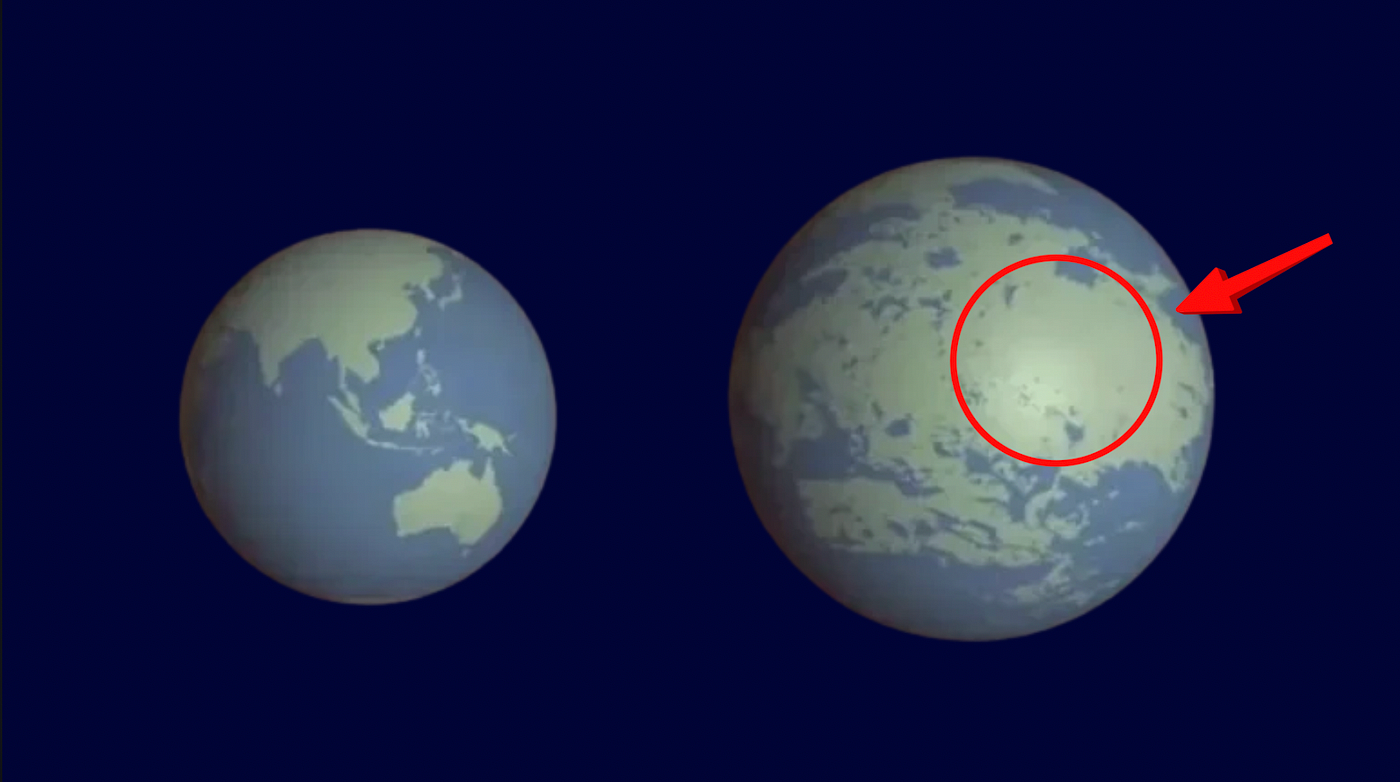
A Swedish astronomer claims to have found evidence of metallic objects orbiting Earth before satellites existed.
Here’s the actual science behind that claim — and the equally serious pushback against it.
The 1561 Nuremberg sighting
A 16th-century newspaper described crescents, spheres, and rods appearing over the city, seemingly fighting each other before falling to Earth “as if they all burned.”
The author attributed it to a warning from God.
A modern reader might see burning aircraft wreckage. A UFO researcher might see spheres, cigar shapes, and triangles — familiar shapes from more recent sighting reports.
But this account has a fundamental problem. One writer, one group of witnesses, no physical evidence, no recovered objects, nobody left alive to interview. There’s no way to distinguish a genuine anomaly from ball lightning, an unusual weather phenomenon, or simple embellishment. Interesting historically. Not scientifically useful.
The actual research — VASCO and vanishing stars
Dr. Beatriz Villarroel, a Swedish astronomer, runs a project called VASCO — Vanishing and Appearing Sources during a Century of Observations.
It started by looking for stars that appeared in old astronomical plates from the Palomar Observatory but had since vanished from more modern surveys. They found roughly 100 such cases — genuinely interesting for other astronomical reasons.
Then something else caught her attention. Light sources that appeared briefly on a single photographic plate — present in one exposure, absent from one taken 30 minutes earlier, gone again days later. Her team called these transients.
Her 2021 paper on nine such transients ruled out several explanations — asteroids, distant galaxies, passing aircraft, gamma ray bursts. She considered radioactive contamination from nearby nuclear testing but found no official tests during the relevant window. She also noted the light pattern resembled satellite glints — except the plates predated Sputnik by seven years. That explanation was impossible on its face.
The bigger 2025 claim
In October 2025, Villarroel’s team published two papers describing over 100,000 transients found across nearly a decade of Palomar plates from 1949 to 1957.
This time they made a specific claim — that a meaningful subset of these were metallic, reflective objects in roughly geosynchronous orbit above Earth, of unknown origin.
Two methods were used to test this.
Earth’s shadow test. If these were photographic defects or distant celestial phenomena, they should appear randomly across the sky. If they were objects reflecting sunlight, they should disappear when passing through Earth’s shadow. The team found a statistically significant reduction in transients within Earth’s shadow — 349 sightings specifically matched the profile of sunlight-reflecting objects near Earth’s gravity well.
Behavioral correlation. Cross-referencing with publicly reported UFO sightings, they found an 8.5% increase in transients on days UFOs were reported — odd, since the public had no way of knowing whether a transient existed in the data. They also found a 45% increase in transients the day after nuclear weapons tests.
The nuclear connection
This links to a recurring theme in UAP reporting — that unidentified objects appear unusually interested in nuclear weapons sites.
In 1967, a cigar-shaped object was reportedly seen above F.E. Warren Air Force Base in Wyoming — home to 50 Minuteman nuclear missiles at the time. All 50 missiles simultaneously went offline. This level of simultaneous failure had never happened before or since, and it’s a documented fact, even though the UAP sighting itself isn’t part of the Air Force’s official explanation.
A more extreme, harder-to-verify account allegedly from Soviet records in 1982 describes a UAP hovering over a nuclear base for four hours while missiles began launching on their own and couldn’t be shut down until the object left.
Villarroel’s statistical correlation between nuclear tests and increased transients is, notably, the first time this kind of pattern has been backed by quantitative data rather than anecdote alone.
Why other scientists are skeptical
Villarroel’s paper was rejected by arXiv, the standard pre-publication platform for physics and astronomy — moderators judged it insufficiently original or scholarly. That’s a meaningful signal given how much arXiv typically accepts.
Sean Kirkpatrick, former head of the US government’s All-domain Anomaly Resolution Office, publicly disagreed, favoring explanations like solar flares or high-altitude balloons — though he didn’t publish a formal paper backing that claim.
The most substantive challenge came from Wesley Andres Watters and his team, who did publish a full counter-analysis on arXiv.
Their core critiques:
Villarroel worked from digitized plate scans rather than the original physical plates, which could be examined under a microscope to distinguish real captured light from plate damage or defects. She didn’t do this.
They couldn’t replicate her dataset from the full available archive, arguing she used a less rigorously filtered sample. When they applied stricter vetting, the statistical drop in transients within Earth’s shadow disappeared entirely — undermining the core evidence for reflective objects.
They also found the Palomar Observatory was 35% more likely to conduct observations during nuclear testing windows in the first place — a scheduling bias Villarroel hadn’t fully accounted for, which could produce the nuclear correlation as a statistical artifact rather than a real phenomenon.
The back-and-forth
Villarroel responded directly. She pushed back on the dataset criticism, noting Watters’ more heavily filtered dataset dropped from roughly 100,000 transients down to just over 5,000 — too small, in her view, for meaningful analysis.
On the nuclear scheduling issue, she reran the numbers accounting for the bias Watters identified and still found an 11% uptick in transients during nuclear test windows — smaller than her original claim, but not eliminated.
This is an active, ongoing academic dispute. Neither side has fully conceded.
The honest conclusion
This is not settled science.
The methodology — searching pre-satellite astronomical archives for evidence of anomalous objects — is a genuinely clever approach that hadn’t been tried before at this scale.
Whether the specific statistical signals Villarroel found survive rigorous scrutiny is contested by researchers working with the same underlying data.
If a meaningful number of these transients do turn out to be real reflective objects near Earth from before the satellite age, that would be an extraordinary finding demanding serious follow-up — whether the explanation turns out to be some unforeseen natural phenomenon or something genuinely artificial.
Right now, the data doesn’t conclusively prove either possibility. It proves there’s an unresolved statistical anomaly that serious researchers disagree about how to interpret — which is a very different, and far more honest, place to land than either dismissing it outright or declaring it confirmed.
Want more stuff like this? Even more detailed? I go into deep dives every single day on my 📌Substack📌
At the price of a coffee I can give you enough knowledge to replace a bachelor’s degree in computer science or maybe even a masters, who knows.
💜 If you like my work and would like to support to me financially. Even a small donation would help a lot!
My PayPal — Please Support
메타데이터
- post_id
- 1306b3e68d39
- slug
- scientists-say-this-is-the-greatest-proof-of-alien-life-1306b3e68d39
- url
- https://siliconvalleygradient.com/scientists-say-this-is-the-greatest-proof-of-alien-life-1306b3e68d39
- canonical_url
- https://siliconvalleygradient.com/scientists-say-this-is-the-greatest-proof-of-alien-life-1306b3e68d39
- author_url
- https://medium.com/@dravian
- status
- ok
- fetched_at
- 2026-07-17 06:47:26