Why 69% of B2B Buyers in 2026 Need Sales Reps to Validate AI
The B2B buying journey has officially shifted. If you look back at the predictions from a few years ago, many experts claimed that…
Why 69% of B2B Buyers in 2026 Need Sales Reps to Validate AI
The B2B buying journey has officially shifted. If you look back at the predictions from a few years ago, many experts claimed that artificial intelligence would completely replace the traditional B2B sales representative. Buyers would simply use AI bots to research, compare, and purchase software or services without ever talking to a human.
The reality of 2026 is vastly different — and far more interesting.
According to recent data from Gartner, 69% of B2B buyers now turn to human sales reps specifically to validate insights generated by AI.
Buyers are not using humans less; they are using them differently. The modern B2B buyer uses AI to self-educate and narrow down options, but they deeply mistrust making a final decision based solely on an algorithm. They need a human guardrail.
Here is a look at why this shift happened and how top sales teams are adapting to win in 2026.
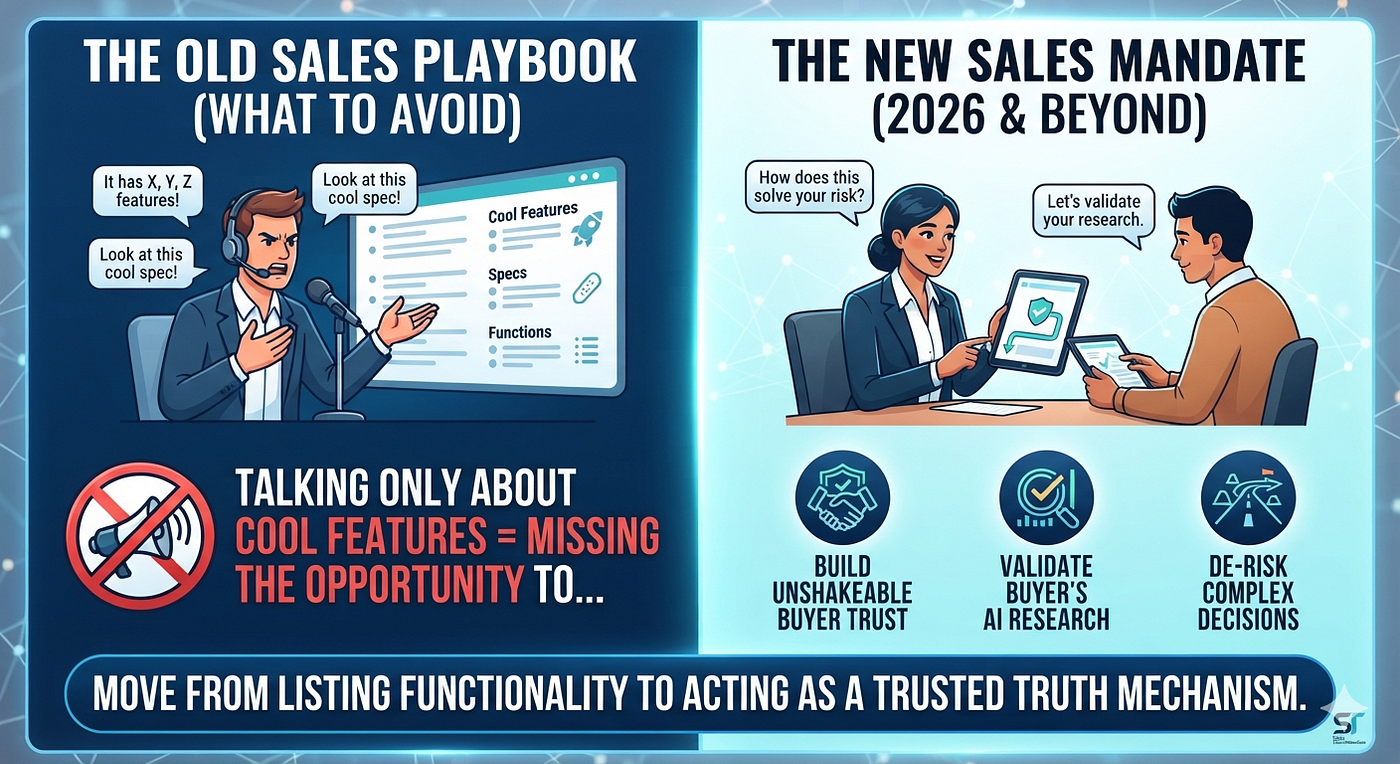
Your Reps Must Have Sales Enablement Tools That Reflect the AI Revolution
The Rise of “AI Fatigue” and Information Overload
In 2026, buyers have access to unlimited, AI-generated content, summaries, and comparison charts. While this makes early-stage research incredibly fast, it creates a new problem: information trust.
Buyers routinely face:
- AI Hallucinations: Generative tools frequently invent or misrepresent software features, pricing tiers, and compliance capabilities.
- Generic Recommendations: AI models often recommend solutions based on broad industry data, missing the highly specific nuances of a buyer’s unique tech stack or operational workflows.
- Risk Aversion: B2B purchases involve large budgets and career-defining decisions. No executive wants to tell their board, “We bought this software because a chatbot told us to.”
Because of this, the human sales rep has become the ultimate truth mechanism. Buyers use AI to build their shortlist, but they call a human to separate AI fiction from operational reality.
From Product Pitchers to AI Validators
This shift has fundamentally redefined the day-to-day role of the B2B sales professional. The era of the “feature-dump” pitch is dead. Because buyers already know your basic features from their AI research, your value is no longer just providing information. Your value is contextualizing it.
To succeed today, reps must pivot to act as:
- Contextual Engineers: You must deeply understand how your product integrates with the buyer’s exact infrastructure, filling in the gaps that public AI models cannot see.
- Truth Auditors: When a buyer says, “Your competitor’s AI bot told me their software does X, Y, and Z,” top reps don’t just say “no.” They provide clear, verified data to audit that claim.
- De-Risking Advisors: Reps must guide buyers through internal alignment, security reviews, and implementation roadmaps — areas where AI tools still fall short.
How Top-Performing Teams Win in 2026
The sales organizations hitting their targets this year aren’t fighting AI; they are pairing human expertise with machine efficiency. They focus on three core pillars:
1. Embracing AI-Enabled Workflows
While buyers use AI to research vendors, top sales teams use AI to research buyers. Reps use advanced tools to cut prospecting and meeting preparation time by more than 50%. This frees up their calendar to spend less time digging through spreadsheets and more time having deep, strategic conversations with buyers.
2. Leveraging Real-Time Next-Best Actions
Data shows that sales teams utilizing AI platforms to deliver real-time, in-the-moment “next-best actions” are 2.6 times more likely to achieve major commercial growth. These systems analyze buyer intent data and signal exactly when a human rep needs to step in, what content to send, or when to schedule a validation call.
3. Deploying Digital Sales Rooms (DSRs)
The traditional back-and-forth email thread is a relic of the past. Modern teams use Digital Sales Rooms — centralized, interactive portals where buyers and sellers collaborate. DSRs securely house tailored mutual action plans, compliance documents, and customized pricing, allowing human reps to seamlessly guide the buyer’s internal stakeholders through the final stages of the purchase.
The Bottom Line
If your sales team is still spending their calls talking about your product’s cool features, they are missing the ultimate opportunity to build unshakeable buyer trust by validating AI research and de-risking decisions. The real opportunity in 2026 lies in acting as a trusted truth mechanism for overwhelmed buyers rather than simply listing product functionalities.
Sales tools (pitch decks, data sheets, video snippets…) should all reflect the deep understanding of the buyer and how your solution is the solution to their problems. If your content does not reflect this, it’s time for a shake-up of your sales enablement program. No company wants to go the way of the dinosaur.
Check out the inexpensive starter kit that I can bring to your organization: https://winthedeal.carrd.co/ or connect with me at https://www.linkedin.com/in/saasproductmarketing/
메타데이터
- post_id
- 132797ae5de1
- slug
- why-69-of-b2b-buyers-in-2026-need-sales-reps-to-validate-ai-132797ae5de1
- url
- https://medium.com/@daccord7/why-69-of-b2b-buyers-in-2026-need-sales-reps-to-validate-ai-132797ae5de1
- canonical_url
- https://medium.com/@daccord7/why-69-of-b2b-buyers-in-2026-need-sales-reps-to-validate-ai-132797ae5de1
- author_url
- https://medium.com/@daccord7
- status
- ok
- fetched_at
- 2026-07-16 03:59:56