Google’s May 2026 Core Update Is Here: Is Your Website an Asset or a Digital Liability?
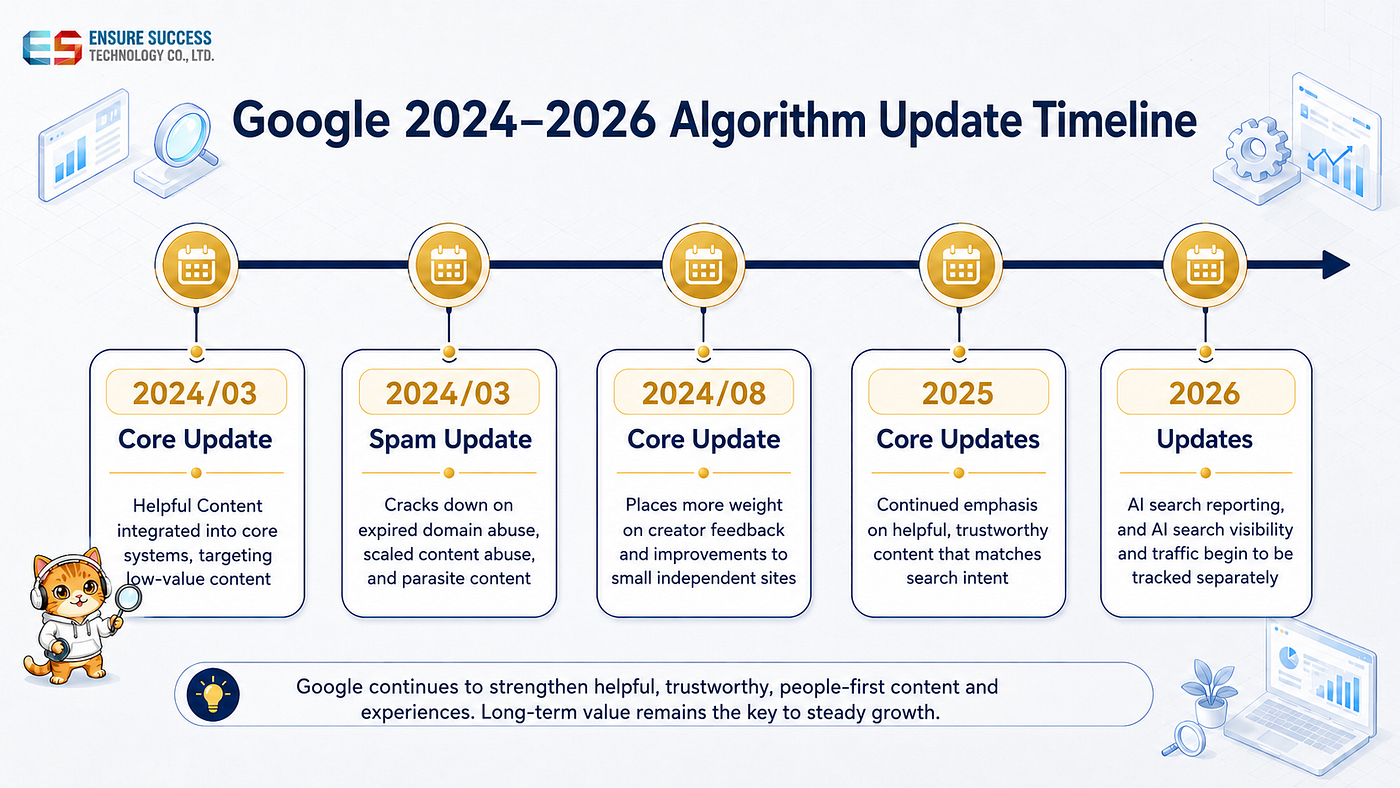
On May 21, 2026, Google began rolling out the May 2026 Core Update.
Google’s May 2026 Core Update Is Here: Is Your Website an Asset or a Digital Liability?
On May 21, 2026, Google began rolling out the May 2026 Core Update.
This update arrived at a very interesting moment.
AI search is expanding fast. Search behavior is changing. Users are no longer only typing keywords into Google and scrolling through ten blue links. They are asking AI systems to summarize, compare, recommend, and decide.
In that environment, a website can no longer rely on looking good alone.
This update makes one thing painfully clear: some websites have real content, structure, speed, and technical discipline. Others are expensive digital shells — beautifully designed, but weak underneath.
And when the algorithm shakes the table, the difference becomes obvious.
One question I hear all the time from business owners is:
“My website cost a lot of money. Why does it still get fewer than 1,000 clicks a year?”
The answer is usually not that they did no SEO.
It is also not always because they did not publish enough articles.
The real issue is often the foundation.
The site is slow. The mobile experience is poor. The content is too similar to everything else online. The Schema markup is messy. The pages do not clearly answer what real users are trying to ask.
Most of these problems are invisible on a normal day.
But when a core update arrives, they show up like a medical report.
On May 21, des13.com showed the opposite signal

While many websites started seeing unstable rankings and fluctuating visibility, des13.com showed a different pattern inside Google Search Console.
Impressions rose sharply. Clicks formed a V-shaped rebound.
I am not saying this means we “won” SEO forever.
Nobody can guarantee anything in SEO. Anyone who promises certainty is either a god — or has not been punished by Google yet.
But this signal tells us something important.
A website that keeps investing in technical foundations, clear content structure, and real information gain does not always have to become a victim during an algorithm update.
Sometimes, it becomes a beneficiary.
The three things we have been doing for years
1. Website performance must be stable
Mobile speed cannot simply mean “the website opens.”
That is not enough anymore.
Most users enter websites from mobile devices. If a mobile page loads slowly, jumps around, uses oversized images, or blocks the experience with heavy JavaScript, Google does not even need to dislike your website.
Users will leave first.
Performance is not just a technical score.
It is part of trust.
A slow website feels neglected. A broken mobile layout feels careless. A page that takes too long to load quietly tells the visitor: this company may not be ready for me.
2. Content needs real information gain
AI has made rewritten content almost worthless.
The internet does not need another recycled article that says the same thing with slightly different wording.
What still matters is lived experience.
Cases. Judgment. Process. Data. Mistakes. Before-and-after decisions. What you tried, what failed, what worked, and why.
Google does not need the 100th article explaining “What is SEO?”
What it needs is something more useful:
What real client problem did you solve? How did you diagnose it? What did you change? What happened after the fix?
That is information gain.
And in the age of AI search, information gain becomes one of the few things that cannot be mass-produced easily.
3. Search engines and AI systems both need to understand your website
SEO used to be mostly about helping Google rank your pages.
That is still important.
But now there is another layer.
Your website must also be understandable to AI search systems.
That means your technical structure matters more than before:
Schema markup. FAQ structure. Sitemaps. robots.txt. llms.txt. Internal links. Service pages. Case study pages. Clear headings. Clean page hierarchy.
These are not decorative details.
They are signals.
They help search engines and AI systems understand who you are, what you do, what problems you solve, and whether your content can be trusted enough to be surfaced, cited, or recommended.
Old SEO was about being ranked by Google.
Modern AI SEO is about being understood, cited, and recommended by both Google and AI search.
That is a very different game.
A beautiful website can still become a digital liability
Many companies still treat their website like a one-time design project.
They pay for the homepage. They approve the layout. They upload the content. Then they leave it there.
For a while, this feels fine.
The site exists. The brand looks professional. The boss can send the URL to clients.
But over time, the website begins to age.
The content becomes thin. The structure becomes unclear. The loading speed gets worse. Tracking is not properly reviewed. Search Console data is ignored. The site stops matching how users search. AI systems cannot understand or cite it properly.
At that point, the website is no longer an asset.
It becomes a digital liability.
It looks like an owned media channel, but it does not bring visibility. It looks like a business tool, but it does not generate inquiries. It looks like a brand investment, but it slowly loses relevance.
That is the quiet danger.
Most websites do not fail overnight.
They fail slowly.
Then one algorithm update makes the failure visible.
The real question after the May 2026 Core Update
The real question is not:
“Did Google change again?”
Google always changes.
The better question is:
“Is my website strong enough to survive the change?”
Can it load fast on mobile? Can users quickly understand what you offer? Can Google understand the structure of your pages? Can AI systems extract useful context from your content? Does your website contain original experience, or only generic rewritten text? Does your content help people make decisions? Does your technical foundation support long-term visibility?
If the answer is no, then buying a cheap SEO package will not solve the problem.
It may only make the problem look busy.
Publishing more articles on a weak foundation is like decorating a house with a cracked floor.
It may look active from the outside.
But structurally, nothing has changed.
SEO is no longer just about keywords
In 2026, SEO is no longer just about ranking for keywords.
It is about building a website that can be found, understood, trusted, and recommended.
By humans. By Google. By AI search. By future agents that may compare your business against others before the user even visits your website.
This is why technical SEO, content structure, site performance, Schema markup, and AI readability now belong in the same conversation.
They are not separate tasks.
They are parts of the same system.
A website should not just be a digital brochure.
It should be a living acquisition engine — one that keeps accumulating content value, search visibility, and trust over time.
Final thought
The May 2026 Core Update is not only a ranking event.
It is a reminder.
A website with weak performance, generic content, and messy structure may still look fine on the surface. But under algorithm pressure, those weaknesses become visible.
A website with strong foundations may not win every update.
But it has a better chance of staying visible, being understood, and turning search traffic into real business opportunities.
That is the difference between a website as an asset and a website as a digital liability.
If your website fluctuated during this update, or if you want to know whether your site is ready for AI search, the first step is not to buy more articles.
The first step is to diagnose the foundation.
At ES Design / des13.com, we provide technical SEO audits, AI SEO architecture planning, and website structure optimization for businesses that want their website to be more than a pretty homepage.
In the AI search era, a website needs to do more than exist.
It needs to be understood.
메타데이터
- post_id
- 133df42830cc
- slug
- googles-may-2026-core-update-is-here-is-your-website-an-asset-or-a-digital-liability-133df42830cc
- url
- https://medium.com/@ringlin_63099/googles-may-2026-core-update-is-here-is-your-website-an-asset-or-a-digital-liability-133df42830cc
- canonical_url
- https://medium.com/@ringlin_63099/googles-may-2026-core-update-is-here-is-your-website-an-asset-or-a-digital-liability-133df42830cc
- author_url
- https://medium.com/@ringlin_63099
- status
- ok
- fetched_at
- 2026-06-09 15:37:30