HSMs in Action: Use Cases and Examples
HSMs aren’t just for security specialists. They sit behind many systems developers use every day, often invisibly.
HSMs in Action: Use Cases and Examples

HSMs aren’t just for security specialists. They sit behind many systems developers use every day, often invisibly.
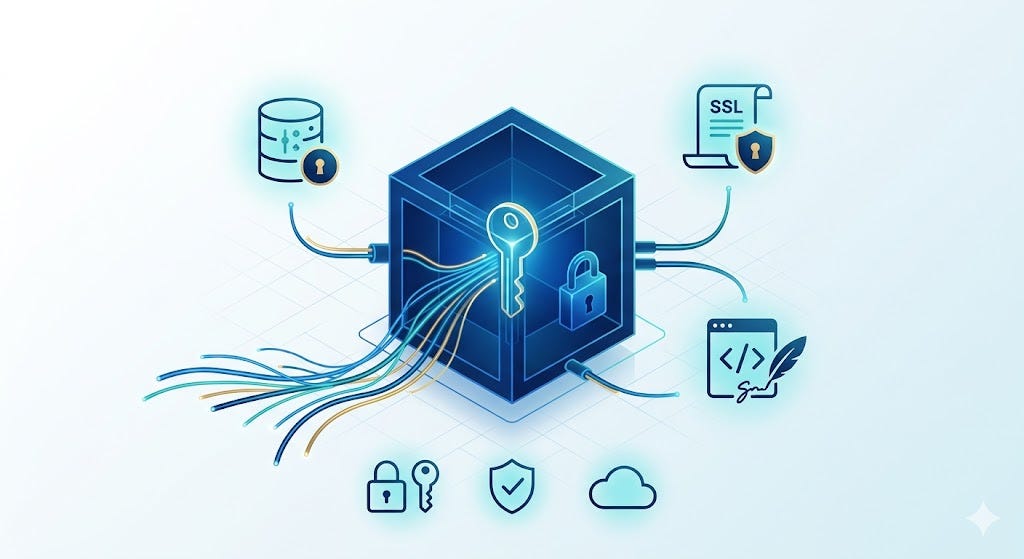
One common use case is database encryption. A database may encrypt stored records, but the keys that protect those records need strong protection too. An HSM-backed system can protect those database keys and reduce the risk of exposure.
Another major use case is SSL/TLS certificate management. The private key behind an HTTPS certificate is extremely sensitive. If it’s stolen, an attacker may be able to impersonate a trusted service. HSMs help protect those private keys and make certificate-based trust more robust.
HSMs are also important for code signing. When software is signed before release, the signing key becomes one of the most sensitive assets in the delivery pipeline. If an attacker gains access to that key, they can sign malicious code and make it appear trustworthy. Keeping signing keys in an HSM-backed environment reduces that risk.
Other common HSM-backed scenarios include:
● Payment processing and PCI-DSS workloads
● Digital signatures and public key infrastructure (PKI)
● Protection of cryptographic material for regulated applications
● Blockchain or cryptocurrency systems that need strong wallet key protection
For cloud scenarios, the relevance becomes even more concrete. HSM-backed key management can help protect customer data stored in cloud databases, secure data in object storage, manage keys for containerized applications, and protect secrets used by microservices and distributed applications.
With cloud key management services, teams can integrate HSM-backed key management into their cloud applications through APIs rather than specialized hardware workflows. That’s an important point for developers. You don’t need to become an HSM expert to benefit from HSM-level protection. You need to understand when the extra level of assurance matters and how to use the right service for the job.
So when do you need an HSM?
A few signals usually point in that direction:
● Regulatory requirements say you need one
● You handle highly sensitive data such as PII, health data, or payment information
● Customers expect proof of a strong security posture
● Your architecture requires separation of duties
● Your industry has strict audit or security standards
If you work on systems that process customer payments, personal health information, financial records, or sensitive enterprise data, there’s a good chance HSMs are already part of the security architecture around you, even if you never touch one directly.
HSMs vs. Other Key Management Approaches
Not every application needs the same level of key protection. It helps to see where HSMs fit compared to more familiar options.

The goal isn’t to say every team must use an HSM for everything. That wouldn’t be practical. The point is to understand the tradeoffs. If your requirements are modest, lighter-weight solutions may be enough. But when stakes rise, HSMs become the gold standard because they provide a stronger boundary around the most sensitive asset in your encryption system.
Getting Started: HSMs in Your World
One reason HSMs can feel intimidating is that people imagine they need to understand every low-level detail. Most developers don’t.
In practice, many teams interact with HSMs through key management services, SDKs, or APIs. The hardware complexity is abstracted away. That’s part of the value. Cloud key management services let developers use HSM-backed protection through familiar cloud workflows instead of specialized hardware administration.
So what should developers take away from all of this?
● When you design secure systems, think about where keys are stored, not just whether data is encrypted
● If your application handles sensitive or regulated data, ask whether HSM-backed key management is available
● Understand that HSMs provide the highest level of protection for cryptographic keys
● Recognize that compliance requirements often drive HSM adoption, even when the technology stays behind the scenes
If you’re looking to learn more, a few good next steps include:
● Reviewing cloud key management service documentation
● Reading an overview of FIPS 140–2 and FIPS 140–3 standards
● Exploring cloud security architecture guidance
● Using available security learning resources
Understanding how cloud key management services leverage HSMs to protect customer data is a practical way to connect the concepts in this post to real cloud workflows.
Conclusion
We started with a simple question about encryption keys, and that question led us to one of the most important building blocks in modern cloud security.
Encryption protects data by turning it into something unreadable. But the protection only holds if the keys remain secure. That’s why HSMs matter. They’re specialized hardware systems built to generate, protect, and use keys inside a hardened boundary where ordinary software controls aren’t enough.
HSMs might sound mysterious at first, but the core idea is actually very practical. They solve a specific problem: how to keep cryptographic keys safe in environments where files, memory, and software-only protections may not be sufficient. In cloud environments, that makes them especially important because they provide a trusted foundation for stronger key management, compliance, and separation of duties.
Understanding these fundamentals makes security conversations much less intimidating. You don’t need to be a cryptography specialist to understand why HSMs matter. You just need to follow the chain of trust back to the keys.
The next time you’re designing a system that handles sensitive data, ask one extra question: where are the keys, and how are they protected? For many high-security and regulated workloads, that question leads directly to HSM-backed key management.
For teams building in the cloud, cloud key management services provide a practical path to getting HSM-backed protection without taking on the burden of operating HSM infrastructure directly. They bring the benefits of strong key security into a model developers can actually use.
If there’s one idea to remember, it’s this: when keys matter, how you protect them matters just as much as the encryption itself.
메타데이터
- post_id
- 135caa75db80
- slug
- hsms-in-action-use-cases-and-examples-135caa75db80
- url
- https://medium.com/@srimeghana/hsms-in-action-use-cases-and-examples-135caa75db80
- canonical_url
- https://medium.com/@srimeghana/hsms-in-action-use-cases-and-examples-135caa75db80
- author_url
- https://medium.com/@srimeghana
- status
- ok
- fetched_at
- 2026-06-09 15:37:30