Odin and Satan: Archetypes of Wisdom, Rebellion, and Power (A brief examination by Aerik Von)
Odin and Satan: Archetypes of Wisdom, Rebellion, and Power (A brief examination by Aerik Von)
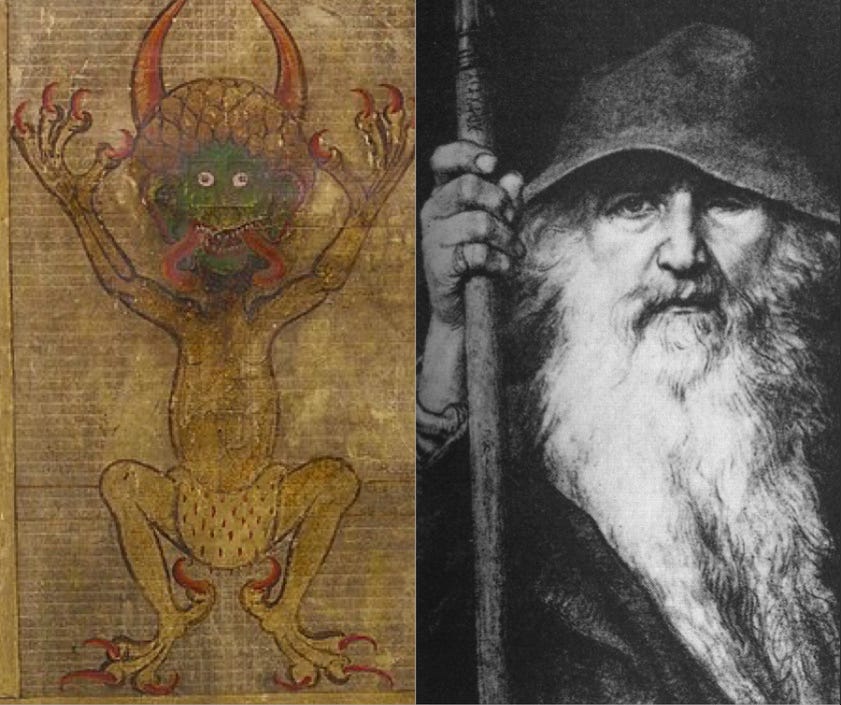
In the vast tapestry of world mythology and religion, Odin and Satan stand as two of the most compelling and enigmatic figures. Odin, the Allfather of Norse paganism, embodies the relentless pursuit of knowledge, war, and cosmic order in a polytheistic worldview. Satan, the central antagonist of Abrahamic traditions (primarily Christianity, with roots in Judaism), represents temptation, rebellion, and opposition to divine authority in a monotheistic framework. Though separated by geography, time, and theology — Norse myths preserved in the Poetic Edda and Prose Edda versus biblical texts like the Hebrew Bible and New Testament — these figures invite comparison. Historical Christian encounters with Norse culture even led to Odin being demonized as a form of the Devil in medieval folklore and trials. Their similarities highlight shared human themes of cunning, sacrifice, and defiance, while their differences underscore contrasting views of divinity, morality, and the universe.
Background on Odin:
Odin (Old Norse Óðinn, also Wodan or Wotan) is the chief god of the Æsir in Germanic and Norse mythology. He is the son of Borr and Bestla, husband to Frigg, and father to gods like Thor and Baldr. Depicted as a tall, one-eyed old man with a flowing beard, wide-brimmed hat, and spear Gungnir, Odin rules Asgard and presides over Valhalla, where he gathers fallen warriors for the final battle of Ragnarök.
His domains are multifaceted: god of wisdom, poetry, magic (including runes and seiðr), war, death, and ecstasy. Odin is a wanderer who sacrifices greatly for insight — he gouges out one eye at Mímir’s well for wisdom and hangs from the world tree Yggdrasil for nine days to discover the runes. Accompanied by ravens Huginn and Muninn (thought and memory) and wolves, he values cunning over brute strength and often acts as a trickster or outlaw patron. While revered as the Allfather and protector of rulers and poets, he is morally ambiguous: self-serving, ruthless in pursuit of knowledge, and willing to break conventions.
Background on Satan:
Satan (Hebrew śāṭān, meaning “adversary” or “accuser”) originates in the Hebrew Bible as a heavenly functionary or prosecutor in God’s court, testing human loyalty (as in the Book of Job). In post-exilic Jewish thought and especially Christian theology, he evolves into the Devil — a fallen angel (sometimes identified with Lucifer) who rebels against God out of pride and is cast from heaven with his followers.
In the New Testament and later traditions, Satan becomes the ultimate tempter, deceiver, and embodiment of evil. He appears as the serpent in Eden, offering forbidden knowledge; accuses and slanders the faithful; and opposes God’s plan of salvation. Titles include the Evil One, the Dragon, the Prince of this World, and the Accuser. He rules demons, promotes sin, and will face final defeat at the end of time. Unlike Odin, Satan is not worshipped but feared and resisted as the chief opponent of God and humanity.
Similarities:
Despite their origins, Odin and Satan overlap in several archetypal ways:
• Pursuit and Temptation of Knowledge: Both are deeply linked to wisdom and its costs. Odin sacrifices an eye and endures pain for runes and foresight. Satan tempts Eve with the fruit of the Tree of Knowledge, promising godlike insight (“your eyes will be opened”). In both cases, forbidden or hard-won knowledge challenges divine or cosmic boundaries.
• Cunning, Deception, and Trickster Roles: Odin is a master of disguise, lies, and manipulation to achieve his goals, often at others’ expense. Satan is the ultimate deceiver and tempter, using guile to lead people astray. Historical Christianization in Scandinavia amplified this: medieval Swedish trials accused people of “serving Odin” in ways that equated him with the Devil, portraying Odin as a tempter of apostasy and sin.
• Rebellion and Marginal Authority: Odin defies fate and convention as a wanderer and patron of outlaws, operating outside strict communal norms. Satan outright rebels against God, seeking his own dominion. Both are associated with magic, witchcraft, and the occult — Odin through runes and shamanic practices; Satan through accusations of sorcery in Christian Europe. In some folk traditions and modern esoteric interpretations, Odin was explicitly linked to or seen as a guise of the Devil.
• Cultural Demonization and Legacy: During the Christian conversion of Northern Europe, pagan gods like Odin were recast as demonic. Folklore sometimes portrayed Odin leading witches’ sabbaths, mirroring Satanic imagery.
Differences:
The contrasts are sharper and reveal deeper worldview divides:
• Moral and Theological Status: Odin is a worshipped deity within a polytheistic system — flawed and ruthless, but part of the divine order and essential to cosmic balance (e.g., preparing for Ragnarök). Satan is a created being and pure antagonist in monotheism, inherently evil and opposed to the one true God. There is no “worship” of Satan in mainstream Abrahamic faith; he is the adversary to be overcome.
• Scope of Power and Role: Odin is multifaceted (war leader, poet, magician, ruler) and central to creation and destruction myths. Satan’s role is narrower: accuser, tempter, and destroyer of souls, without creative or heroic attributes. Odin chooses the worthy slain for glory; Satan drags souls toward damnation.
• Relationship to Humanity and the Cosmos: Odin protects heroes and seeks human-like ecstasy and inspiration. He is distant yet involved in mortal affairs. Satan is humanity’s eternal foe, exploiting weaknesses to thwart salvation. Odin faces inevitable doom in Ragnarök (where he is swallowed by Fenrir); Satan is ultimately bound or defeated by God in eschatology, with no such heroic end.
• Historical and Cultural Context: Norse views of Odin reflect Viking-age values of honor, fate, and pragmatic cunning in a harsh world. Satan’s portrayal evolved amid Jewish exile, Zoroastrian dualism, and Christian theology, emphasizing absolute good versus evil. Loki (Odin’s blood-brother) is more commonly likened to Satan as a chaotic trickster, while Odin himself was the one demonized in folk practice.
Finit:
Odin and Satan both captivate as symbols of intellect over obedience, sacrifice for power, and the blurred line between hero and villain. Odin represents a pagan ideal of wisdom earned through suffering in a chaotic, doomed universe; Satan embodies the dangers of unchecked pride and rebellion against an omnipotent, benevolent order. Their occasional historical conflation in Christian Scandinavia underscores how conquering cultures reinterpret rivals as evil. Ultimately, these figures endure in literature, art, and modern neopaganism or occult traditions not as identical entities, but as mirrors reflecting humanity’s eternal questions about knowledge, authority, and the price of defiance.
메타데이터
- post_id
- 136753a6e893
- slug
- odin-and-satan-archetypes-of-wisdom-rebellion-and-power-a-brief-examination-by-aerik-von-136753a6e893
- url
- https://medium.com/@aerikvon/odin-and-satan-archetypes-of-wisdom-rebellion-and-power-a-brief-examination-by-aerik-von-136753a6e893
- canonical_url
- https://medium.com/@aerikvon/odin-and-satan-archetypes-of-wisdom-rebellion-and-power-a-brief-examination-by-aerik-von-136753a6e893
- author_url
- https://medium.com/@aerikvon
- status
- ok
- fetched_at
- 2026-06-17 08:20:12