Code Layers Are Coming. Your Design System Contribution Model Isn’t Ready.
Code Layers Are Coming. Your Design System Contribution Model Isn’t Ready.
Code Layers let anyone turn a design layer into live, GitHub-connected code on the Figma canvas. That’s powerful. It’s also a governance question your design system team has probably never been asked before.
Disclaimer: I earn a small amount when Medium members read my work, so this article is set to members-only. Not a member? You can still read the full article using my friend link.

Code Layers shift design systems from managing static components to governing live, GitHub-connected code — making contribution workflows as important as component libraries
Introduction: The Biggest Shift Since Design Systems
For more than a decade, digital product teams have lived with a clear separation between design and code. Designers created interfaces inside Figma, developers rebuilt those interfaces in React or another framework, and design systems acted as the bridge between those two worlds. That workflow wasn’t perfect, but it created predictable governance. Components followed review processes, tokens were centrally managed, and contribution models ensured quality before anything became part of the shared system.
That separation is beginning to disappear.
At Config 2026, Figma expanded its vision of Code Layers, allowing teams to place executable, GitHub-connected code directly on the design canvas. Designers can generate interactive experiences using prompts, import existing repositories, edit React components inside Figma, compare multiple implementations side by side, and synchronize changes with production code. Rather than treating code as something that exists after design, Figma is positioning code as another design material that belongs on the collaborative canvas.
This may sound like another productivity feature, but it represents something much larger. The bottleneck has shifted. Organizations are no longer asking whether designers can build functional interfaces — they increasingly can. The real question becomes who decides which pieces of executable UI become part of the organization’s design system? That is a governance challenge most design system teams were never designed to solve.
What Are Figma Code Layers?
From Static Layers to Executable Components
Code Layers first appeared alongside Figma Sites in 2025, enabling creators to enhance websites with interactive React-powered elements such as maps, dropdown menus, forms, shaders, and dynamic components. Rather than exporting designs for developers to recreate, users could convert existing layers into live code, edit them directly, or generate new implementations using AI.
Config 2026 dramatically expanded this concept.
Instead of existing only inside Sites, Code Layers are now becoming a fundamental capability across the Figma canvas. Teams can import GitHub repositories, transform design frames into executable components, move seamlessly between design layers and code layers, and iterate collaboratively without leaving the workspace. This eliminates one of the longest-standing boundaries in digital product development — the transition between design files and engineering environments.
The implications are enormous because the canvas is no longer just describing software. It is becoming part of the software itself.
GitHub Integration Changes Everything
Perhaps the most important announcement wasn’t simply that code runs inside Figma — it was that code remains connected to real repositories.
Instead of creating disposable prototypes, teams can work with production-ready React components synchronized with GitHub. Designers, developers, and AI agents can all contribute to the same implementation while remaining inside a collaborative environment built around iteration rather than handoff. Industry coverage described this as collapsing one of the defining steps of modern product development by allowing repositories to be cloned directly onto the design canvas and synchronized back into engineering workflows.
That changes the nature of contribution.
A component created during a design exploration is no longer just a visual experiment. It may already be executable, reusable, connected to source control, and potentially ready for production. The traditional distinction between “prototype” and “implementation” begins to blur.
Why Code Layers Matter Beyond Prototyping
For many organizations, the immediate reaction will be excitement about faster prototyping. Teams can validate ideas earlier, create richer user testing experiences, and reduce repetitive engineering work.
Those benefits are real — but they are only the surface.
The deeper transformation is organizational. Historically, design systems controlled visual consistency through curated libraries of components and documentation. Engineering teams remained responsible for implementation quality, architectural decisions, dependency management, accessibility testing, performance optimization, and repository maintenance.
Code Layers compress these responsibilities into a single collaborative space.
Imagine a product designer creating an interactive pricing calculator using live API calls. Another designer builds a complete onboarding wizard connected to authentication logic. An engineer imports a production React component directly into Figma. Each artifact now exists on the same canvas, behaves like working software, and can potentially be reused by dozens of teams.
The question shifts from “Can we build this?” to “Who owns this?”
Without governance, every successful prototype risks becoming an unofficial platform component.
Every product team becomes a potential design system contributor.
Every AI-generated interaction becomes another asset requiring review.
The explosion of creative possibilities is exciting, but abundance introduces a different kind of complexity. Design system teams are no longer curating colors, typography, spacing, and reusable layouts. They are increasingly curating executable software.
The Governance Problem Nobody Expected
Traditional Design System Governance
For years, design system governance has been built around a simple assumption: design assets are not production code. A designer proposes a new component, the design system team evaluates its usability and consistency, engineering implements it in the shared component library, and product teams consume the approved version. That workflow naturally creates checkpoints for quality, accessibility, performance, and long-term maintenance.
Code Layers challenge every one of those assumptions. According to Figma, any design layer can now become an interactive code layer, generated from a prompt, created from an existing frame, or imported directly from a GitHub repository. Teams can compare multiple implementations side by side, convert code back into editable design layers, and synchronize changes without leaving the canvas.
The consequence is subtle but significant. The artifact under review is no longer a visual mockup — it is executable software. A design review now has to answer questions that traditionally belonged to engineering architecture reviews:
- Is this dependency approved?
- Does it follow accessibility standards?
- Who maintains it?
- Can it be versioned safely?
- Does it duplicate an existing component?
Those questions extend far beyond visual consistency. They redefine what it means to govern a design system.
Why Existing Contribution Models Break
Most enterprise design systems use a binary contribution model:
For years, contribution models have been intentionally simple. A component was either a draft — still being designed, reviewed, and refined — or it was approved, meaning it had earned its place in the official design system. This binary approach worked because creating production-ready components required close collaboration between designers and engineers, naturally limiting both the number of contributions and the speed at which new assets entered the system. Code Layers fundamentally challenge this model by making executable components far easier to create, increasing both the volume and diversity of contributions.
That model worked because creating reusable production code required engineering investment. Code Layers dramatically reduce that barrier. A designer, engineer, or AI assistant can now create a working React component directly on the canvas, complete with interactions and GitHub connectivity.
When contribution becomes easier, volume increases. Instead of reviewing ten new components every quarter, governance teams may soon evaluate hundreds of executable experiments created by product teams across the organization.
The challenge is no longer scarcity.
It’s abundance.
Successful governance will depend less on building components and more on deciding which components deserve to become organizational standards.
Design Systems Are Becoming Software Platforms
New Ownership Challenges
Ownership becomes surprisingly complicated once code enters the design canvas.
Imagine a product designer creates an advanced pricing calculator during a discovery sprint. It uses live calculations, animation, validation logic, and responsive layouts. The prototype is successful, stakeholders love it, and another product team wants to reuse it.
Who owns that component?
Possible answers include:
- The original designer
- The product engineering team
- The platform engineering team
- The design system team
- Nobody
Without explicit ownership, every successful prototype becomes technical debt waiting to happen. Updates stall, bugs accumulate, accessibility falls behind, and duplicated implementations begin to spread throughout the organization.
Figma’s vision is intentionally collaborative — designers, developers, AI agents, and stakeholders can all iterate together on executable artifacts. That collaboration is powerful, but it also requires organizations to establish clear rules for stewardship rather than assuming ownership will emerge naturally.
Versioning, Security, and Maintenance
Code introduces responsibilities that static design files never had.
A modern contribution framework should evaluate dimensions such as:
As Code Layers become executable assets, design system governance must expand beyond visual consistency to include software lifecycle considerations. Every component should be evaluated across several critical areas:
- Versioning — Determine which release or version of the product owns the component and how future updates will be tracked.
- Dependencies — Verify that all third-party libraries and packages are approved, secure, and aligned with organizational standards.
- Accessibility — Ensure the implementation has been validated against accessibility guidelines and works for all users.
- Security — Review whether the component exposes sensitive APIs, credentials, or introduces potential security risks.
- Performance — Assess whether the component meets established performance benchmarks and avoids unnecessary overhead.
- Maintenance — Clearly define ownership and identify who will review future pull requests, fix bugs, and maintain the component over time.
These aren’t theoretical concerns. Industry coverage of Config 2026 consistently describes Code Layers as collapsing the traditional design-to-development handoff by enabling repository cloning, bidirectional synchronization, and collaborative editing directly on the Figma canvas.
That means governance can no longer stop at colors, typography, and spacing. It must expand to include software lifecycle management.
Building a Modern Contribution Framework
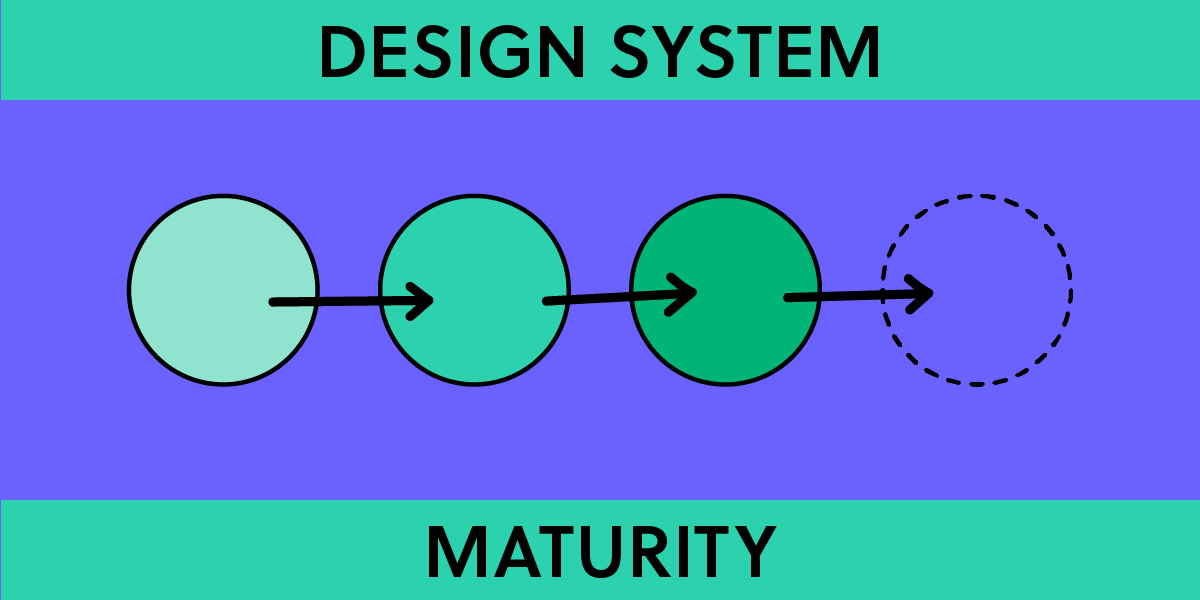
Organizations adopting Code Layers should consider replacing binary approval models with a maturity model that reflects how reusable an asset truly is:
Experimental — Components created for early exploration, rapid prototyping, or idea validation. These are typically owned and maintained by the individual creator until they prove their value.
Team Asset — Components that have matured enough to be reused within a single product or feature team. Ownership shifts to the product team, which is responsible for maintaining and evolving them.
Shared Component — Components that demonstrate value across multiple products or business units. At this stage, they’re usually managed by a platform or shared engineering team to ensure consistency, scalability, and reliability.
Design System Primitive — Fully approved, documented, and versioned components that become part of the organization’s official design system. These are governed and maintained by the design system team to ensure long-term quality and consistency.
This approach acknowledges an important reality: not every successful prototype deserves to become part of the design system.
Some ideas should remain experiments.
Some belong only to a product.
Only a small percentage should become organization-wide standards.
That distinction may become the defining governance skill of modern design system teams.
Best Practices for Design System Teams
The arrival of Code Layers doesn’t mean every organization should immediately rewrite its design system strategy. Instead, it should prompt a fundamental shift in governance philosophy. Design systems have traditionally optimized for consistency, ensuring every button, form field, and navigation pattern looked and behaved the same across products. In a world where designers, engineers, and AI agents can all generate executable UI directly on the canvas, consistency alone is no longer enough. Teams must optimize for controlled contribution. Figma itself frames Code Layers as a collaborative medium for exploring, comparing, and iterating on code alongside design, rather than replacing engineering workflows outright. Teams can generate code from prompts, clone GitHub repositories, extract editable design layers, and synchronize changes as ideas mature.
That means successful organizations should establish clear governance principles before rolling Code Layers out broadly. Every executable component should have a documented owner, a defined lifecycle, and review criteria that extend beyond visual design. Accessibility, dependency management, security, testing, performance, and maintainability should become first-class review dimensions. Equally important is documentation that explains why a component exists, when it should be used, and who is responsible for evolving it. Rather than treating every working prototype as a candidate for the design system, organizations should encourage experimentation while maintaining a deliberate promotion process. This balance allows innovation to flourish without turning the design system into an unmanageable collection of one-off implementations.
AI Will Accelerate Contributions Faster Than Governance
If Code Layers change who can contribute, AI changes how many contributions teams will receive.
At Config 2026, Figma paired Code Layers with expanded AI capabilities, including an improved Figma Agent, web search, reusable agent skills, generative plugins, and deeper context from connected tools. Together, these features make it possible to generate working interfaces, reusable utilities, and interactive experiences far more quickly than traditional manual workflows.
This creates an entirely new governance challenge. Historically, design system teams reviewed a relatively small number of human-created proposals. Tomorrow, they may review dozens — or hundreds — of AI-assisted implementations every month. The limiting factor is no longer engineering capacity; it’s human decision-making. Design system teams must become curators, deciding which artifacts represent enduring patterns and which should remain temporary experiments. Organizations that embrace this mindset will preserve quality while benefiting from dramatically faster exploration. Those that don’t risk overwhelming their design systems with duplicate, inconsistent, or poorly maintained components that slowly erode trust across the organization.
Frequently Asked Questions
1. What are Figma Code Layers?
Code Layers allow users to create, edit, and collaborate on live code directly within the Figma canvas. They can be generated with AI, created from existing design frames, or imported from GitHub repositories.
2. Are Code Layers intended for production code?
Not directly. Figma positions Code Layers primarily as a collaborative environment for exploration, iteration, and design-development collaboration, although they can remain connected to real repositories and evolve toward production workflows.
3. Why do Code Layers affect design system governance?
Because contributors are no longer limited to static design assets. Teams can now create executable UI, requiring governance over ownership, maintenance, accessibility, dependencies, and software lifecycle — not just visual consistency.
4. Should every Code Layer become part of a design system?
No. Most organizations should adopt a staged contribution model where experiments remain temporary, team assets stay within products, and only proven, reusable patterns become official design system components.
5. What is the biggest challenge introduced by Code Layers?
The biggest challenge isn’t creating interactive components — it’s governing them. As AI and collaborative tooling dramatically increase the volume of contributions, design system teams must develop scalable processes for reviewing, approving, maintaining, and retiring executable assets.
Conclusion
Code Layers represent one of the most significant shifts in digital product development since the rise of modern design systems. By bringing executable, GitHub-connected code directly onto the Figma canvas, they reduce the traditional gap between design and engineering and empower designers, developers, and AI agents to collaborate around the same artifacts.
The technical innovation is impressive, but the larger story is organizational. As the barrier to creating functional UI falls, the importance of governance rises. Design system teams are no longer responsible only for maintaining visual consistency — they are becoming stewards of executable assets, contributor workflows, ownership models, and long-term software quality. The organizations that succeed with Code Layers won’t necessarily build the most components. They’ll establish the clearest rules for deciding which components deserve to become shared standards.
메타데이터
- post_id
- 13d8e26ce1ac
- slug
- code-layers-are-coming-your-design-system-contribution-model-isnt-ready-13d8e26ce1ac
- url
- https://www.designsystemscollective.com/code-layers-are-coming-your-design-system-contribution-model-isnt-ready-13d8e26ce1ac
- canonical_url
- https://www.designsystemscollective.com/code-layers-are-coming-your-design-system-contribution-model-isnt-ready-13d8e26ce1ac
- author_url
- https://medium.com/@madheshp
- status
- ok
- fetched_at
- 2026-07-17 05:24:22