Nothing You See Is Real, and That Is Keeping You Alive
You do not look out at the world. You sit inside a model of it that your brain builds, predicts and edits in real time, and the gaps are…
Nothing You See Is Real, and That Is Keeping You Alive
You do not look out at the world. You sit inside a model of it that your brain builds, predicts and edits in real time, and the gaps are extraordinary.
You open your eyes and the room is simply there. The grey light at the curtains, the weight of the duvet, the furniture standing exactly where you left it. No assembly, no loading bar, no seams. It feels like the most basic and honest thing a person can do: open your eyes and let the world in. That feeling (that you are looking straight at reality, live and unedited) is the most convincing illusion your brain will perform all day.
You did not see the world. You met a model of it; a fast, seamless, full-colour reconstruction your brain assembles on the inside and projects outward, constantly checking it against your senses to keep the story roughly honest. You have spent your whole life inside that model, mistaking it for the view. The model is magnificent. What is unsettling is how much it leaves out, how much it invents, and how much it quietly decides on your behalf.
Start with time.
You Are Already Too Late
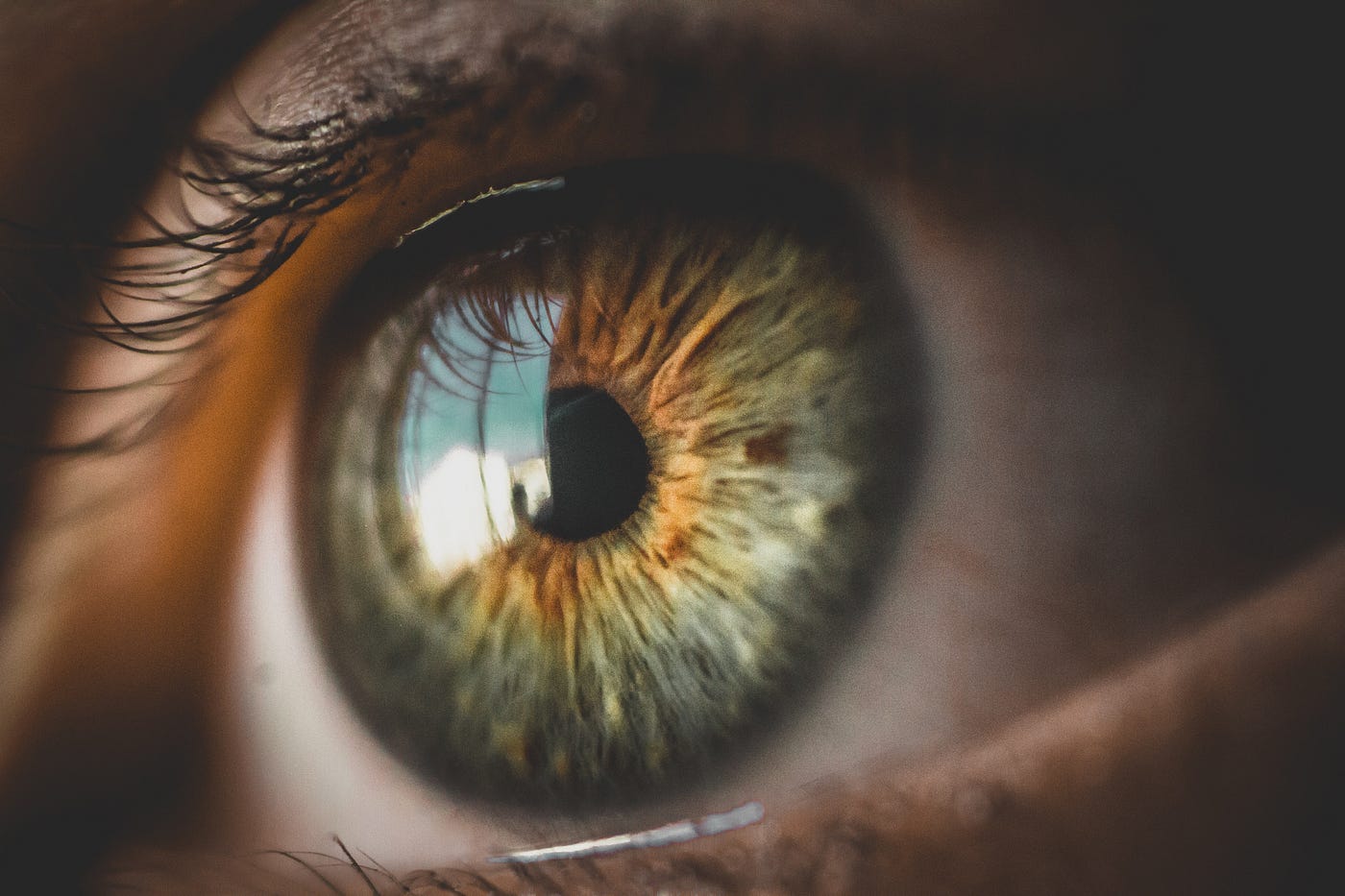
Seeing is slow. Light hits the back of your eye, turns into a smear of electrical signals, and those signals take time (roughly a tenth of a second ) to crawl through to the machinery that produces the thing you call sight. A tenth of a second sounds like nothing. It is the difference between catching a falling glass and hearing it shatter. If you only ever saw the raw, delayed feed, you would live permanently a beat behind the world, forever grabbing at things that had already moved on.
So your brain does something ingenious. It does not show you the past; it shows you a prediction of the present. It takes whatever is moving, runs its path forward, and serves you the world as it calculates the world must be now; a forecast dressed up as live footage.
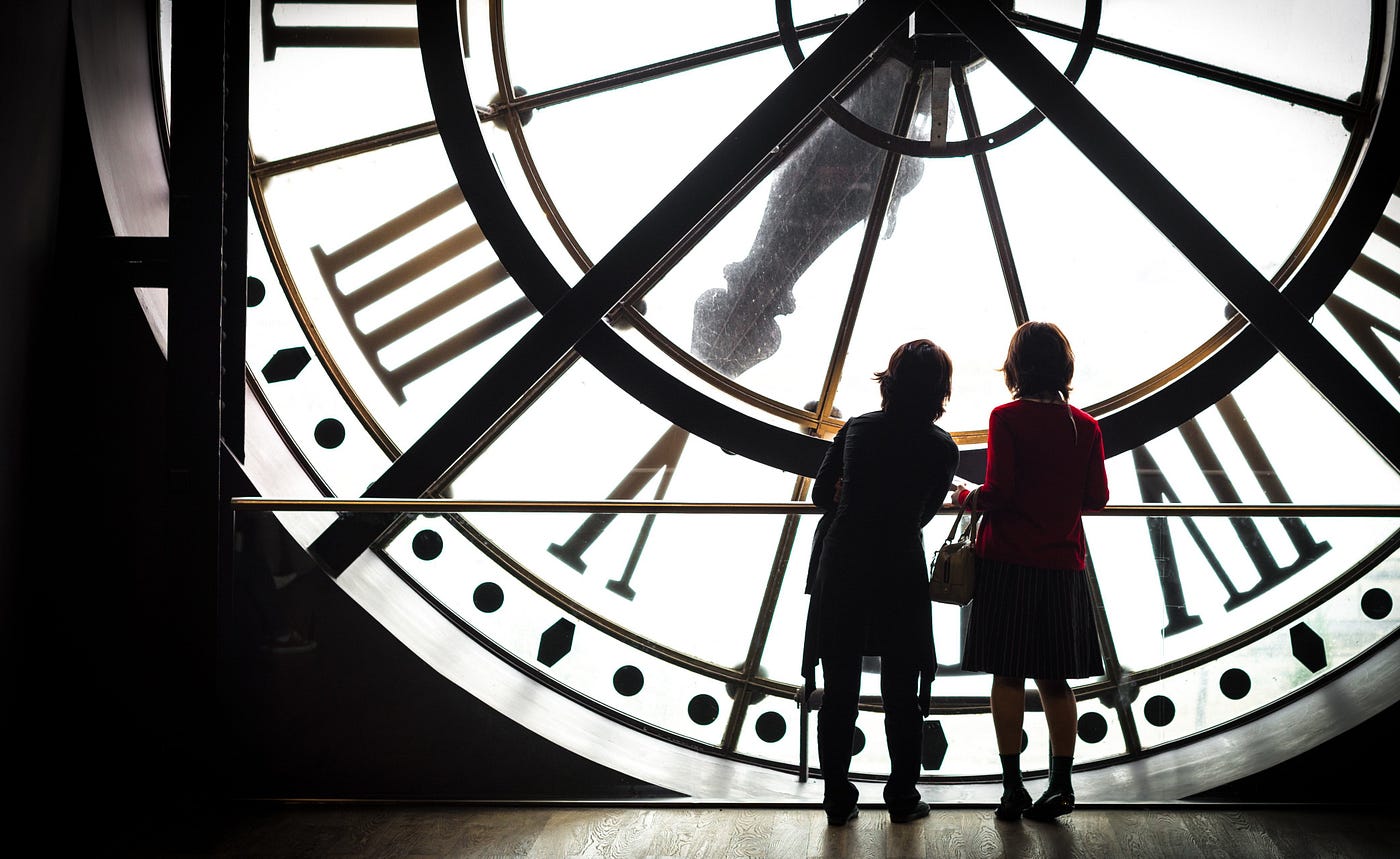
That is why you can snatch a falling glass before you have even noticed it drop. Something in you works out where the glass is going and moves your hand there, before news of the fall reaches the part of you that feels in charge. Brain recordings have caught the visual system doing exactly that: lighting up an object’s next position before the signal for it has arrived. Even the retina does it. So you are not quite living in the present. You are living in your brain’s best guess at it, and now and then the guess and the real signal slip out of step, and you catch the seam, like the second hand of a clock that seems to freeze for a beat too long the moment your eyes land on it.
You Are Barely Looking
Now notice how little of the world gets in at all. Your senses are firehoses: by one recent Caltech estimate, they gather information at around a billion bits every second. Your conscious mind runs at about ten. Not ten million. Ten. The broadband line in your home moves data millions of times faster than your own train of thought, and of every hundred million bits your body collects, you become aware of roughly one. The rest is dropped before you ever know it was there.
There is a hard reason for that. The brain is a famously frugal machine: for all its eighty-odd billion neurones, it runs on roughly twenty watts, dimmer than the old sixty-watt bulb in a bedside lamp, and a fraction of what your laptop draws. Two per cent of your body weight, a fifth of its energy, and nowhere near the power to haul a billion bits a second all the way up into awareness. So it does not try. It spends its tiny budget on the handful of things that might matter and throws the rest away, and it has been making that bargain so long that you take the result for the world itself.
What survives the cull is whatever you happen to be looking for, and almost nothing else, however obvious. In the famous experiment, people told to count basketball passes in a video fail, about half the time, to notice a man in a gorilla suit walk into shot, turn to the camera and thump his chest. They are not being stupid. They are being efficient. The truly unnerving version came in 2013, when researchers hid a small gorilla in a lung scan and handed it to twenty-four expert radiologists. Eighty-three per cent missed it, and eye-tracking showed that most had looked directly at it. They were hunting for tumours, and a gorilla is not a tumour, so for them it simply was not there. You do not see what is in front of you. You see what you came to find.
And What You Do See, You Are Inventing
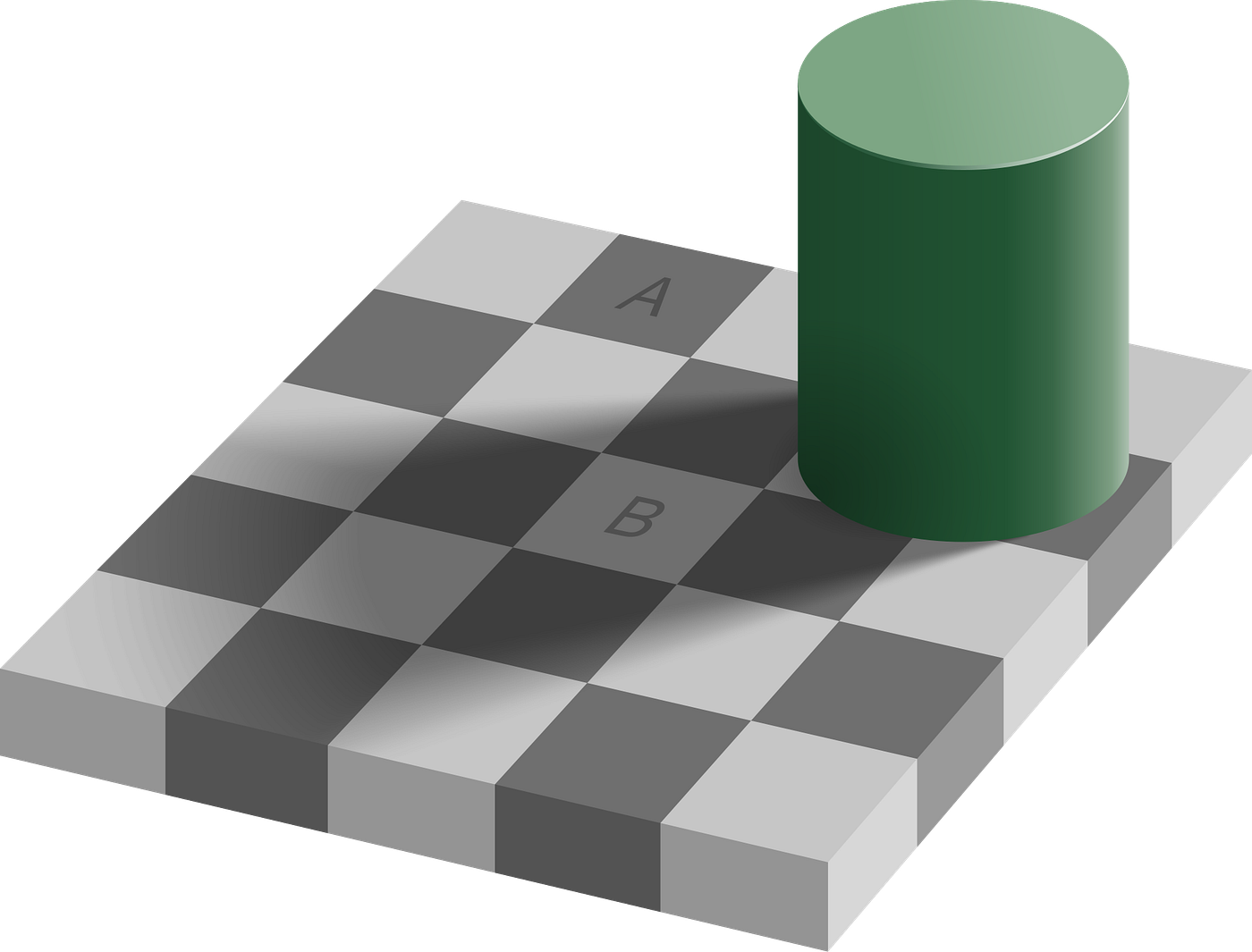
The regions marked A and B are the same shade of gray. / Original: Edward H. Adelson, vectorized by Pbroks13. — Own work, CC BY-SA 4.0, https://commons.wikimedia.org/w/index.php?curid=75000950
A pattern is forming by now, and it is the whole point. Your brain is not a window; it is a guessing machine. The neuroscientist Anil Seth puts it without flinching: perception is a “controlled hallucination.” Your brain is forever generating its best guess about what is out there, and your senses are less the source of the picture than the fact-checker, tugging the guess back when it drifts. The image is built from the inside out.
The word hallucination is exact, not lurid. What you experience is conjured inside your skull, exactly as a hallucination is, the only difference being that ordinary seeing is kept on a tight leash by reality. Loosen the leash and the guesswork shows its hand. That is the entire story of the dress: the photograph half the world saw as white and gold and the other half as blue and black. Same pixels. Same light. Two brains making two different guesses, each one certain it was simply seeing.
Even You Are a Guess
If the invention stopped at the world out there, you could still retreat to the one thing that feels beyond argument, your own body, your own past. Neither is safe.
Sit someone at a table, hide one of their hands, set a rubber hand where the real one should be, and stroke both in time. Within a minute or two, most people feel the rubber hand turn into their own, and wince when it is threatened, as though the latex could hurt. The certainty that this body belongs to you (perhaps the most solid feeling you possess ) can be coaxed into a shop prop with two paintbrushes and a little patience.
Your memories give way just as easily. They are not recordings played back; they are rebuilt from scratch each time you reach for them, and quietly rewritten by whatever you reach with. Elizabeth Loftus found that asking how fast cars were going when they “smashed” rather than “hit” not only raised people’s estimates but had them remembering broken glass that was never there. She has planted whole events that never happened, convincing people they once met Bugs Bunny at a Disney resort, which is impossible, since Bugs is not a Disney character. Every time you revisit a memory, you save over it with a slightly altered draft. The past you carry around is a guess about a guess, and not an even-handed one. Your brain clings to the bad far more fiercely than the good: frightening and painful events are burned in faster, deeper and for longer than pleasant ones, which is why a single cruel remark can outlast a year of kindnesses. Psychologists have a blunt name for it; bad is stronger than good. It is not spite; it is bookkeeping. The ancestor who vividly remembered which berry made him sick, and where the thing with teeth was waiting, lived to pass it on. The one who merely savoured a nice afternoon did not. Your memory is not trying to hand you an accurate past. It is trying to keep you alive, and it has decided the dangers matter most.
The Miracle is That it Works
It would be easy to read all this as a charge sheet, an unreliable brain getting everything slightly wrong. That is exactly the wrong conclusion, and it is the part worth keeping. None of this is a malfunction. It is the only design that could possibly work.
Look at the problem your brain is actually solving. The incoming data is thin, blurred, upside-down, full of holes, and always a little late. A creature that held out for certainty before it moved would be eaten before it decided anything. So the brain guesses (fast, ceaselessly, and under constant correction) and hands you the guess, because the guess is quick enough to keep you alive. It was never lying to you. What looks like deception is only inference, running flat out, doing the one thing that gets a slow, three-pound, electrified organ through a fast world in one piece.
***
Literary sci-fi and fantasy coming soon at https://medium.com/@rennienovels. Follow if you want the first episode the day it arrives.
***
Sources: Zheng, J. & Meister, M. (2024). The unbearable slowness of being: Why do we live at 10 bits/s? Neuron, 113(2)./Blom, T., Feuerriegel, D., Johnson, P., Bode, S. & Hogendoorn, H. (2020). Predictions drive neural representations of visual events ahead of incoming sensory information. PNAS, 117(13). (See also Nijhawan on the flash-lag effect, and Berry et al., Nature, 1999, on the retina anticipating moving stimuli.)/Simons, D. J. & Chabris, C. F. (1999). Gorillas in our midst: sustained inattentional blindness for dynamic events. Perception, 28(9)./Drew, T., Võ, M. L.-H. & Wolfe, J. M. (2013). The Invisible Gorilla Strikes Again: Sustained Inattentional Blindness in Expert Observers. Psychological Science, 24(9)./Seth, A. (2021). Being You: A New Science of Consciousness. Faber & Faber./Botvinick, M. & Cohen, J. (1998). Rubber hands “feel” touch that eyes see. Nature, 391, 756./Loftus, E. F. & Palmer, J. C. (1974). Reconstruction of automobile destruction. Journal of Verbal Learning and Verbal Behavior, 13(5). (Bugs Bunny study: Braun, Ellis & Loftus, 2002.)/Raichle, M. E. & Gusnard, D. A. (2002). Appraising the brain’s energy budget. PNAS, 99(16). (The brain runs on roughly 20 watts.)/Baumeister, R. F., Bratslavsky, E., Finkenauer, C. & Vohs, K. D. (2001). Bad is stronger than good. Review of General Psychology, 5(4).
메타데이터
- post_id
- 13f48a34a1d6
- slug
- nothing-you-see-is-real-and-that-is-keeping-you-alive-13f48a34a1d6
- url
- https://medium.com/@missrennie/nothing-you-see-is-real-and-that-is-keeping-you-alive-13f48a34a1d6
- canonical_url
- https://medium.com/@missrennie/nothing-you-see-is-real-and-that-is-keeping-you-alive-13f48a34a1d6
- author_url
- https://medium.com/@missrennie
- status
- ok
- fetched_at
- 2026-06-11 17:55:54