Pointe du Hoc
Pointe du Hoc is a promontory (raised mass of land) near the town of Cricqueville-en-Bessin in Normandy, France overlooking the English…
Pointe du Hoc
Pointe du Hoc is a promontory (raised mass of land) near the town of Cricqueville-en-Bessin in Normandy, France overlooking the English Channel. The location witnessed an important battle on D-Day (6 June 1944) during Operation Overlord, the codename for the Allies’ amphibious military campaign in Normandy in World War II.

The beautiful cliffs at Pointe du Hoc
Located in between Utah Beach and Omaha Beach, Pointe du Hoc offers a majestic view of the cliffs measuring 30 metres high, bordered by heavy sea waves.
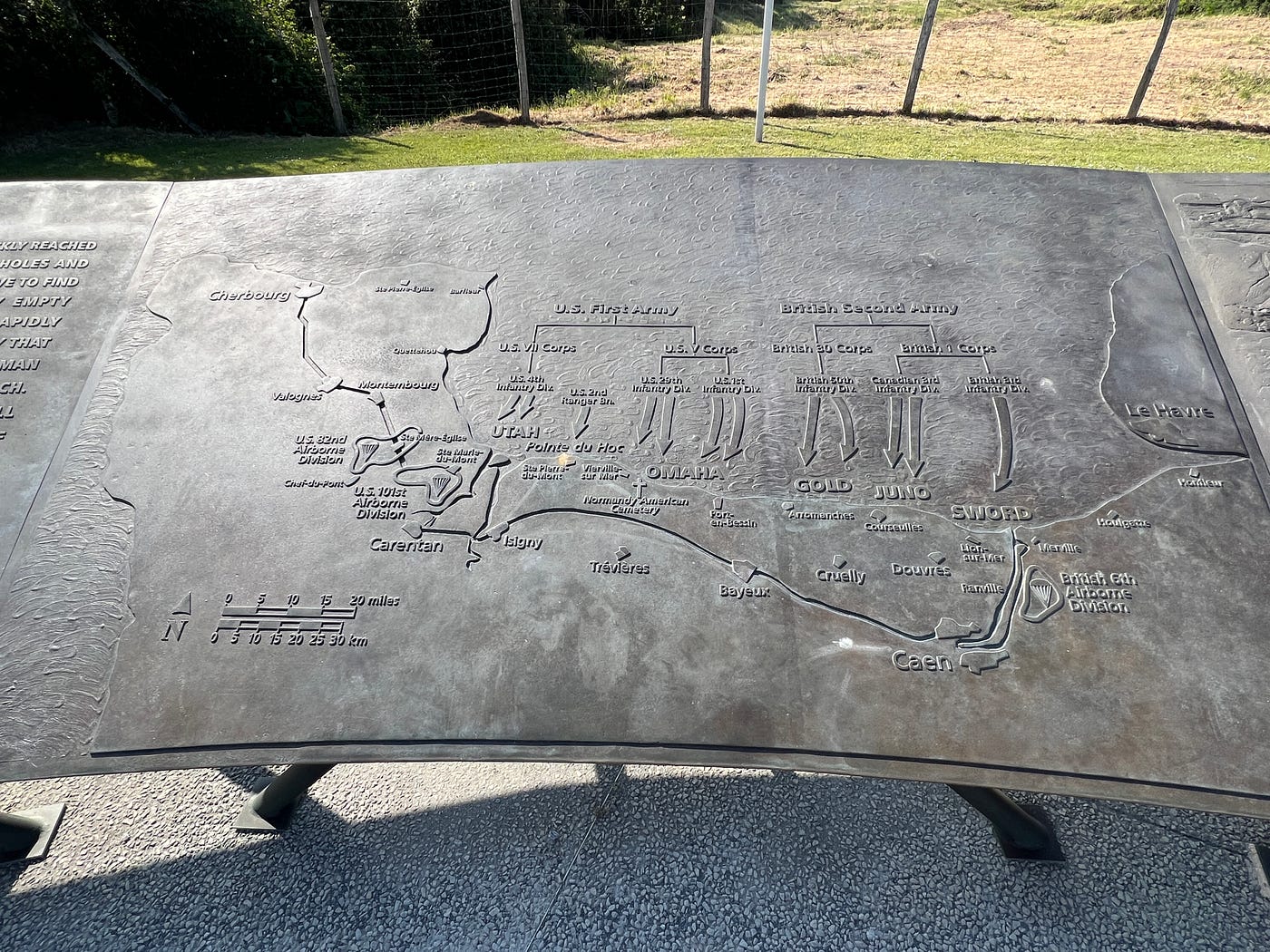
Location of Pointe du Hoc vis-à-vis Utah and Omaha
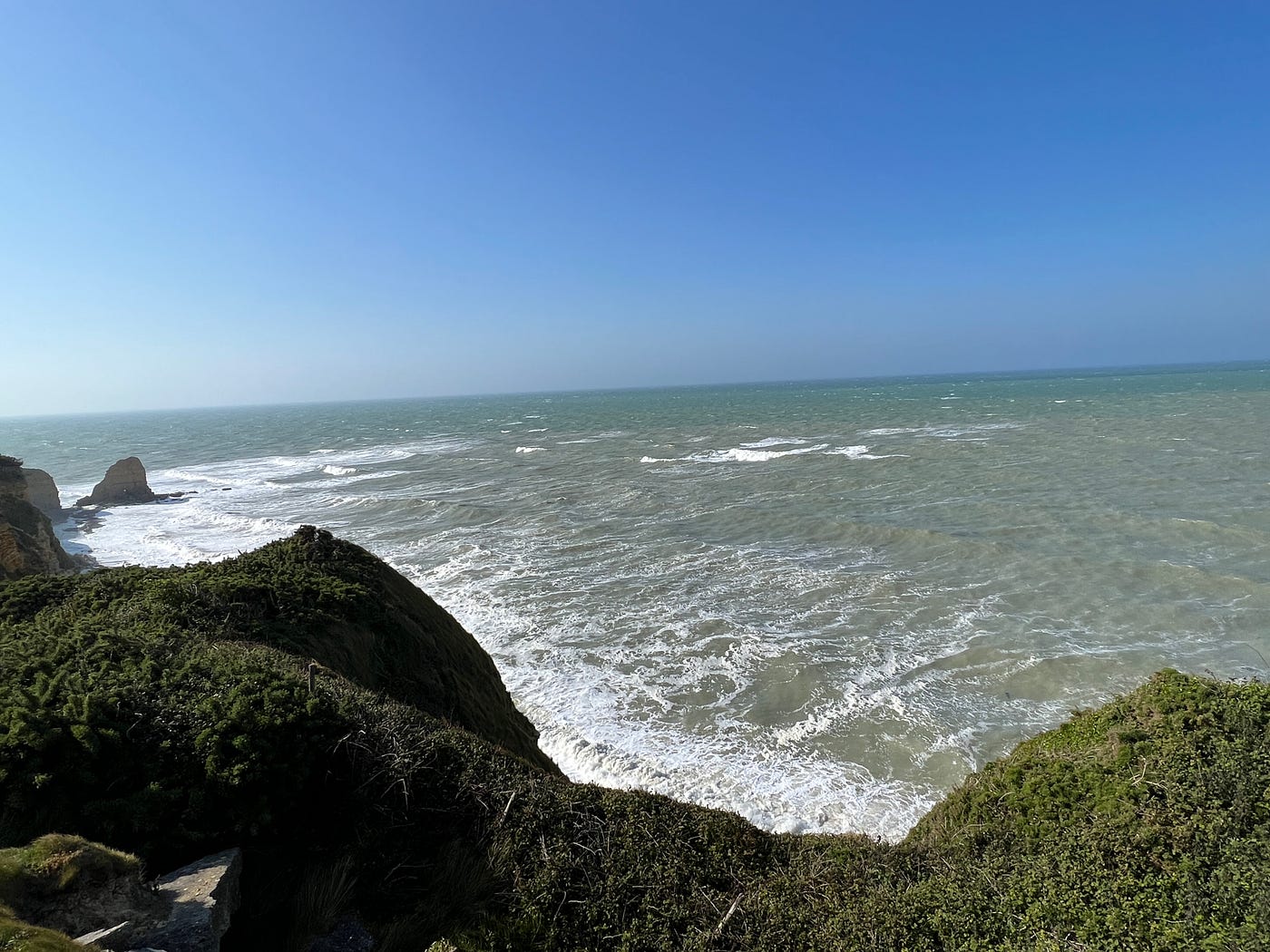
The strong and beautiful waves
[embed]My recording of the waves during my visit on 1 June 2023
When I was there on 1 June 2023, I took a photo and texted my friend. I joked that if I were to swim in a straight line for some 150km, I would reach England. According to Google map, Portsmouth would be my landing point.
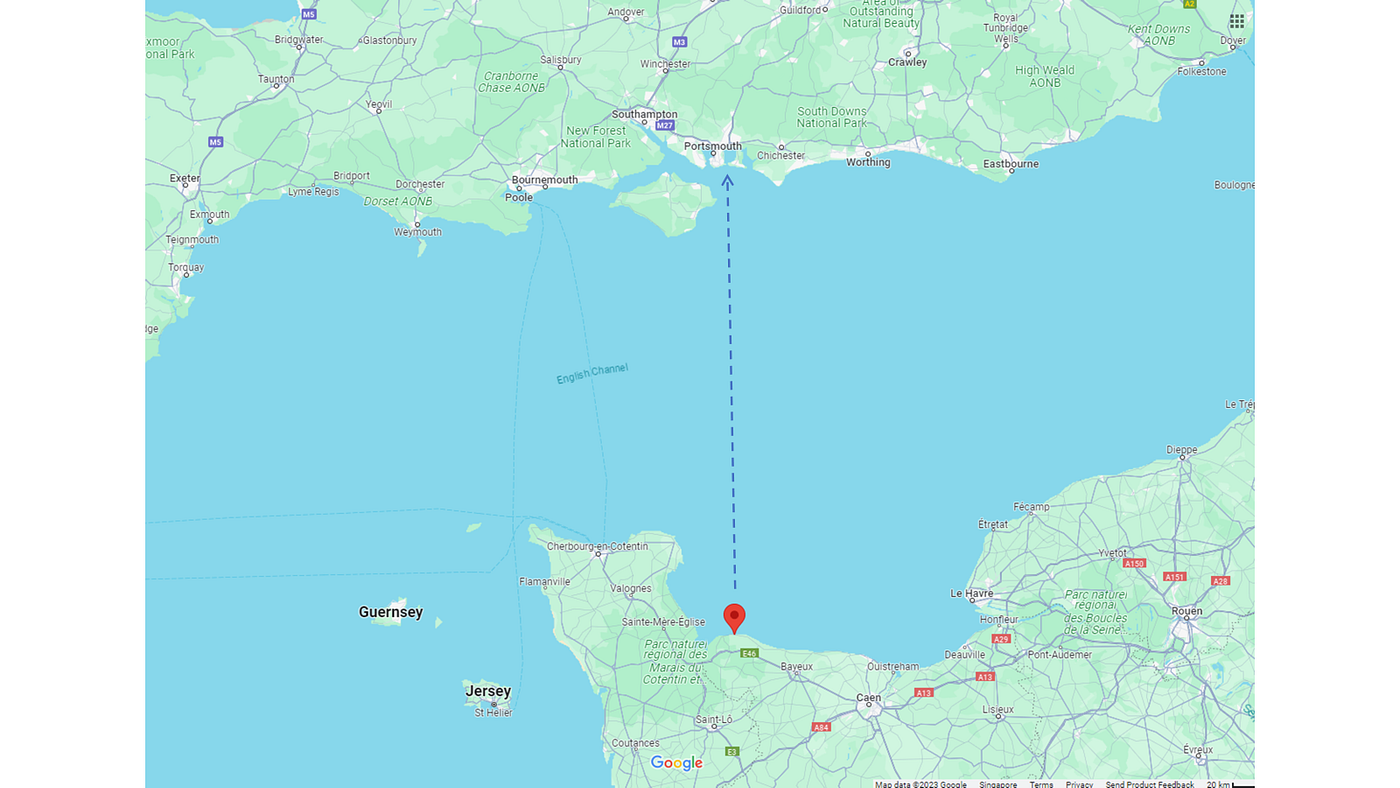
Facing Pointe du Hoc across the English Channel is Portsmouth (image drew from Google Map)
But first the history of this Normandy battle……
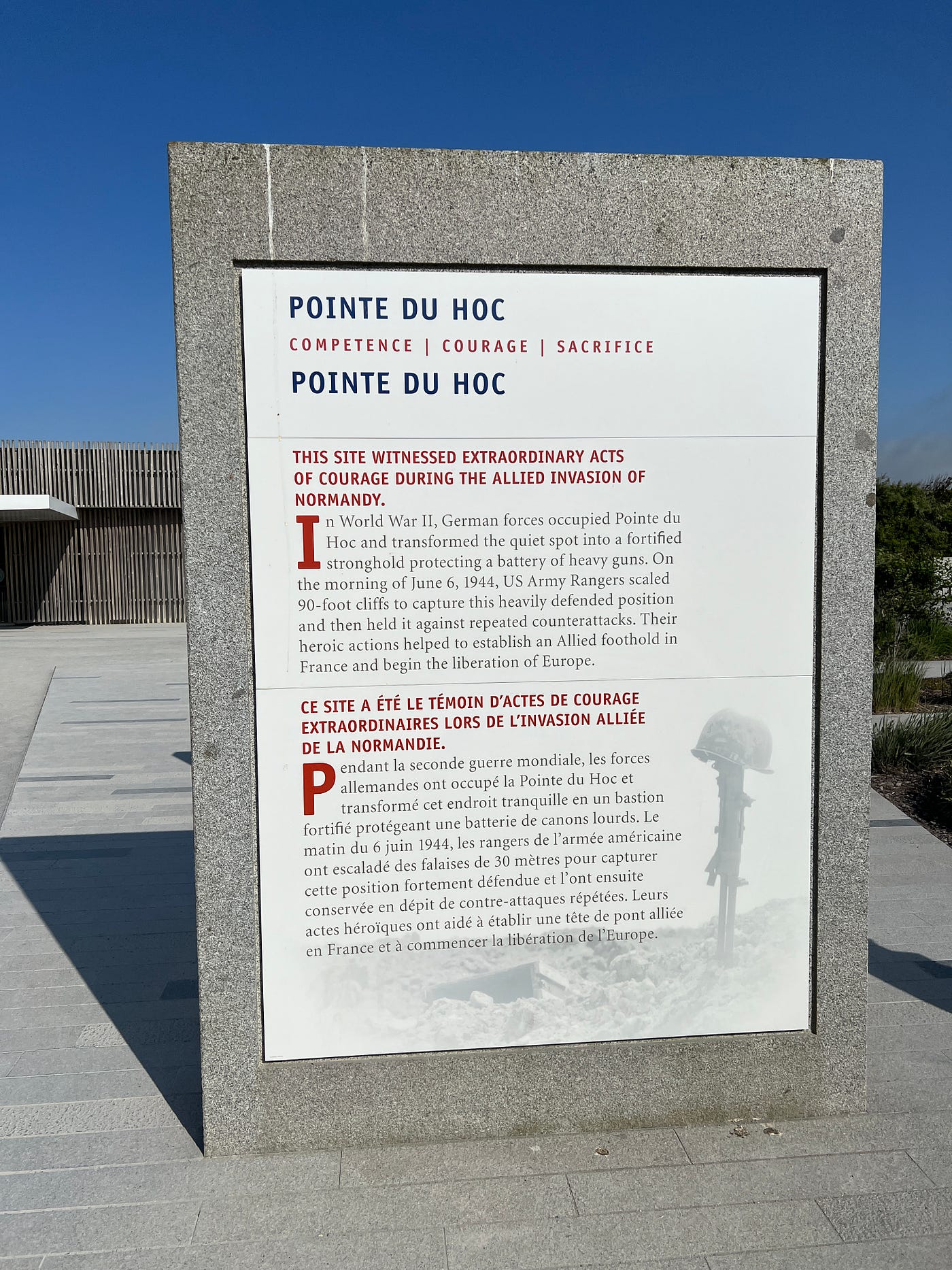
Plaque at Pointe du Hoc
The Allies had already received intelligence that the Germans had an artillery battery in Pointe du Hoc. If the battery was not taken down, the Germans could use the six 155mm guns (with a range of 25km) to repel the soldiers landing in Utah and Omaha.


The battery positions preserved
Supreme Allied Commander General Dwight D. Eisenhower assigned the American Rangers of the 2nd and 5th Ranger Battalions, under the direction of Lieutenant Colonel James Earl Rudder, to destroy the enemy positions at Pointe du Hoc.

A majestic view of Pointe du Hoc
Looking at the aerial photographs of Pointe du Hoc, Rudder was not sure whether it was a joke or a “madman mission”, considering the protection from the bunkers and the heights.
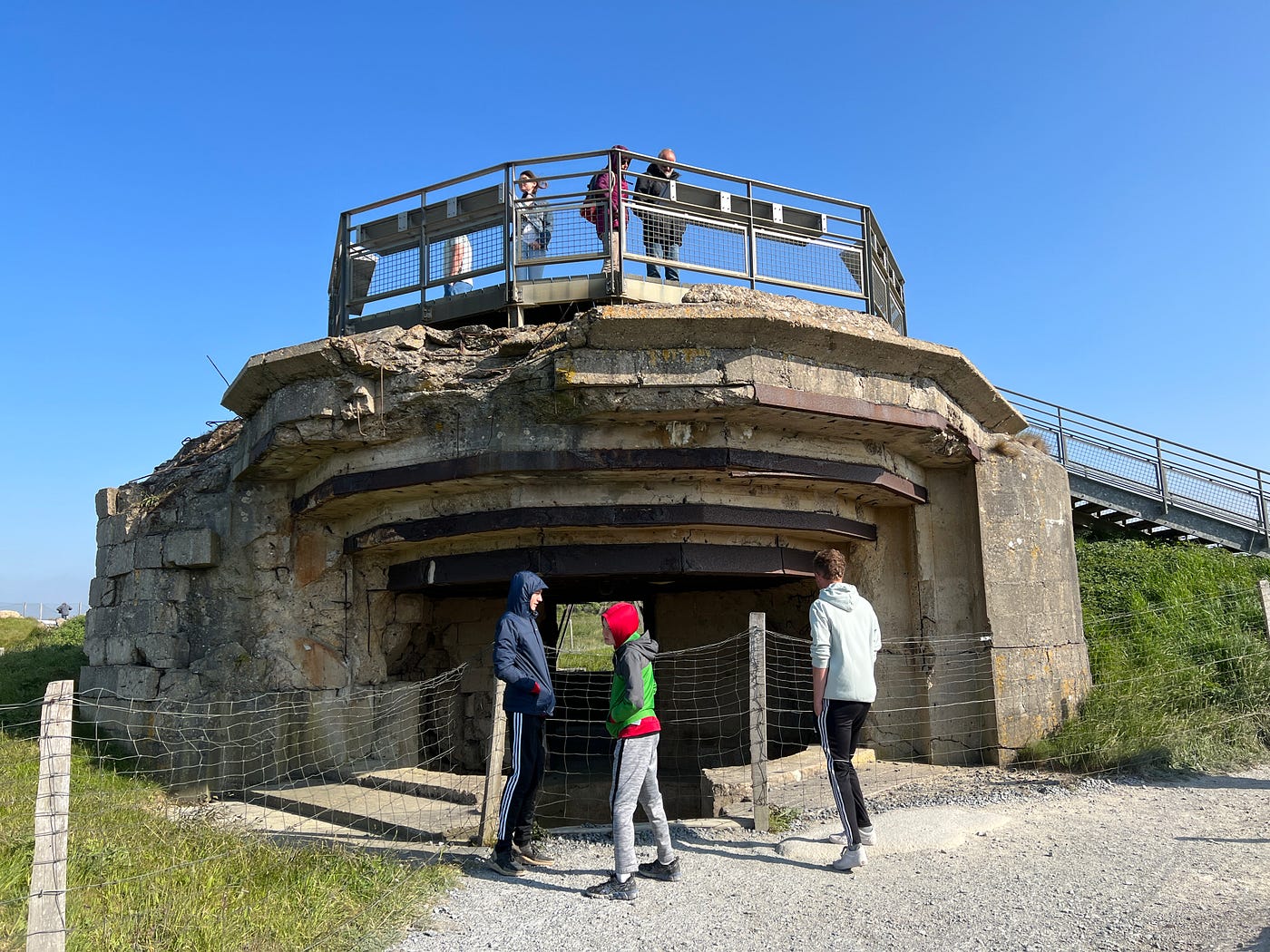
A bunker preserved at Pointe du Hoc
The battery was part of the Atlantic Wall defence and the Germans did not believe that the Allies were capable to access the cliff from the sea.

My brilliant guide Pierre taking a photo of my son
Scaling cliffs became a major part of the Ranger training. They indulged in endless training using ropes and ladders. No stone was unturned in the preparation.

The cliff behind me
In the weeks leading to the operation, the training was refined at various cliffs in England and in the Isle of Wight.
At 5.50am on D-Day, the naval bombardment of the Pointe du Hoc began. The landings were slightly delayed but the Rangers’ ascent of the cliff started at 7.10am. In 30 minutes, most of the Rangers reached the summit.
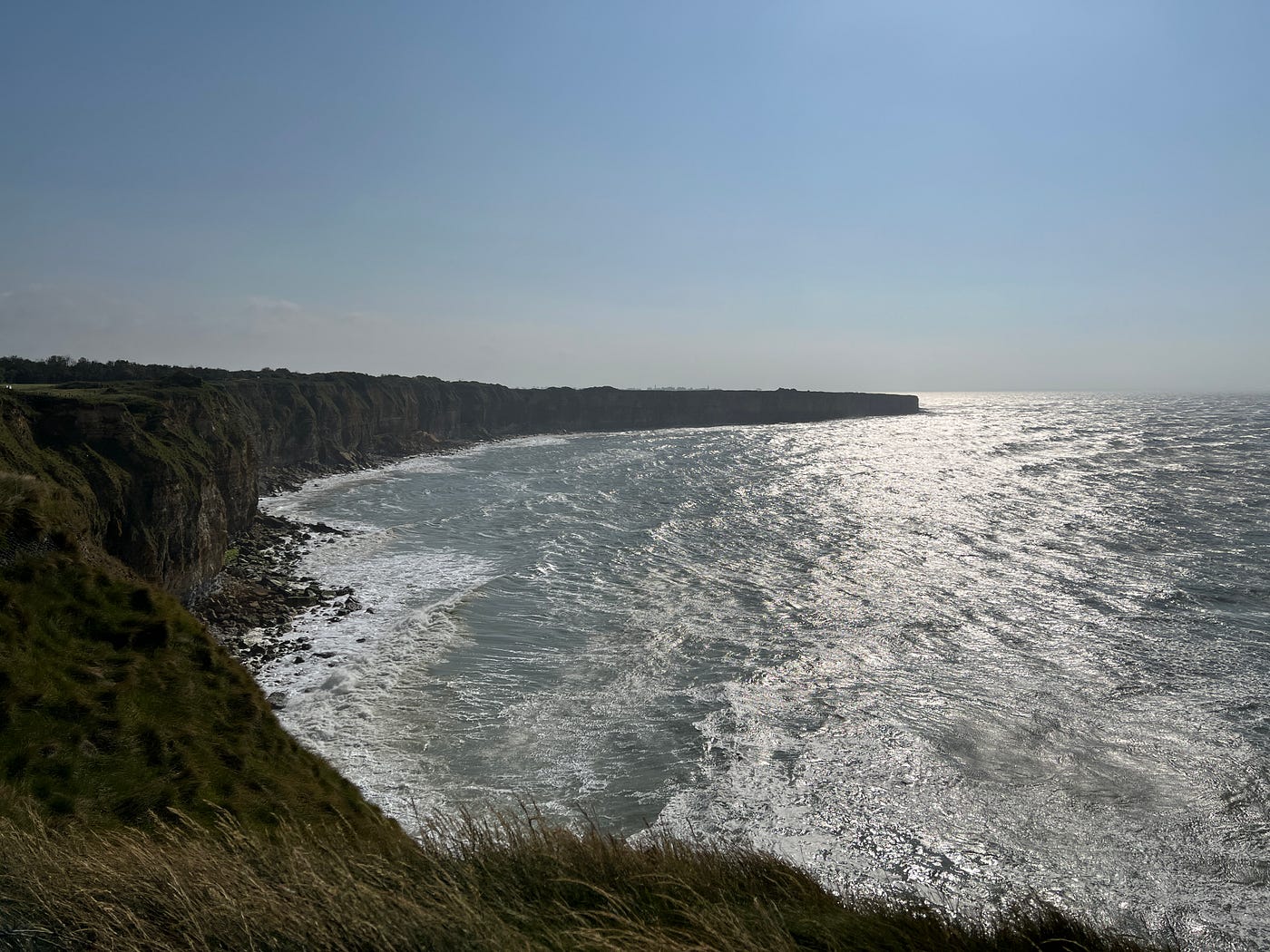
Wjat a feat to scale the cliffs!
The Rangers were astonished to find the gun bunkers empty and the guns missing. It turned out that they had been recently moved by the Germans.
They moved forward to a road nearby and discovered the guns some 500 metres from the casemates. Using thermite grenades, the two rangers melted and destroyed the guns’ mechanisms. They then returned to their positions.
Although early reports said that the attack on the Pointe was a wasted effort because the guns were not there, the attack was in fact highly successful. By 9am, the Rangers had put the guns out of action. They were thus the first American unit to accomplish its mission on D-Day but this came at a cost.
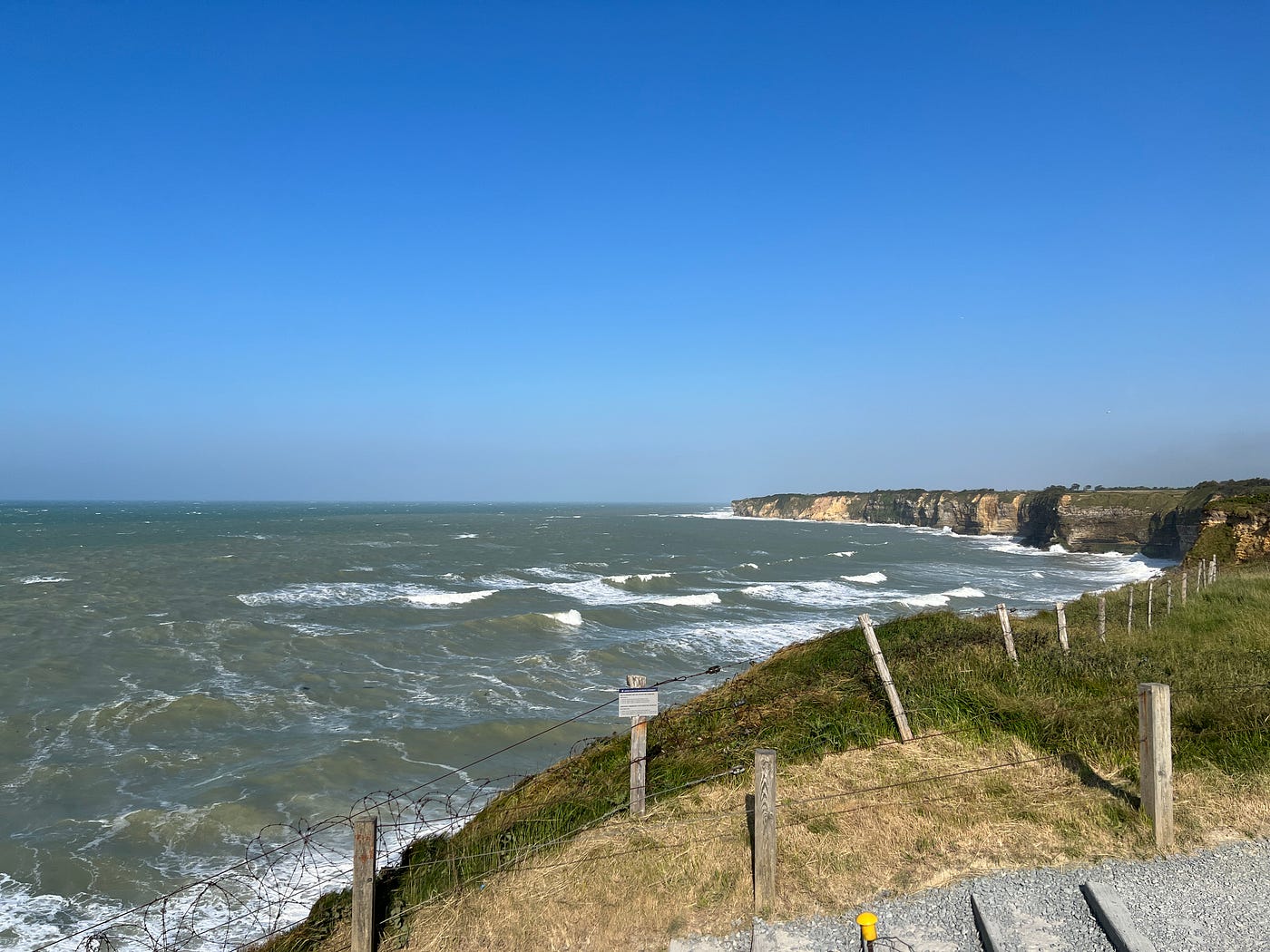
I really enjoyed the views
It would be a further 24 hours before the 5th Ranger Battalion would make the 4-mile journey to relieve them. They were almost two days behind schedule.
At the end of the two-day action, the initial Ranger landing force of 225 was reduced to about 90 fighting men. In the aftermath of the battle, some Rangers became convinced that French civilians had taken part in the fighting on the German side. They were rounded up and executed.

Short history of the battle at Pointe du Hoc
Rudder would be awarded a Distinguished Service Cross for his role at Pointe du Hoc and would later command 109th Infantry Regiment.
The Pointe du Hoc Ranger Monument stands on top of the cliffs taken by Rudder’s men on 6th June 1944. It consists of a granite pylon blade pointing skywards and uses a concrete German bunker as its base. Tablets inscribed in both French and English pay tribute to the Rangers’ heroic actions.
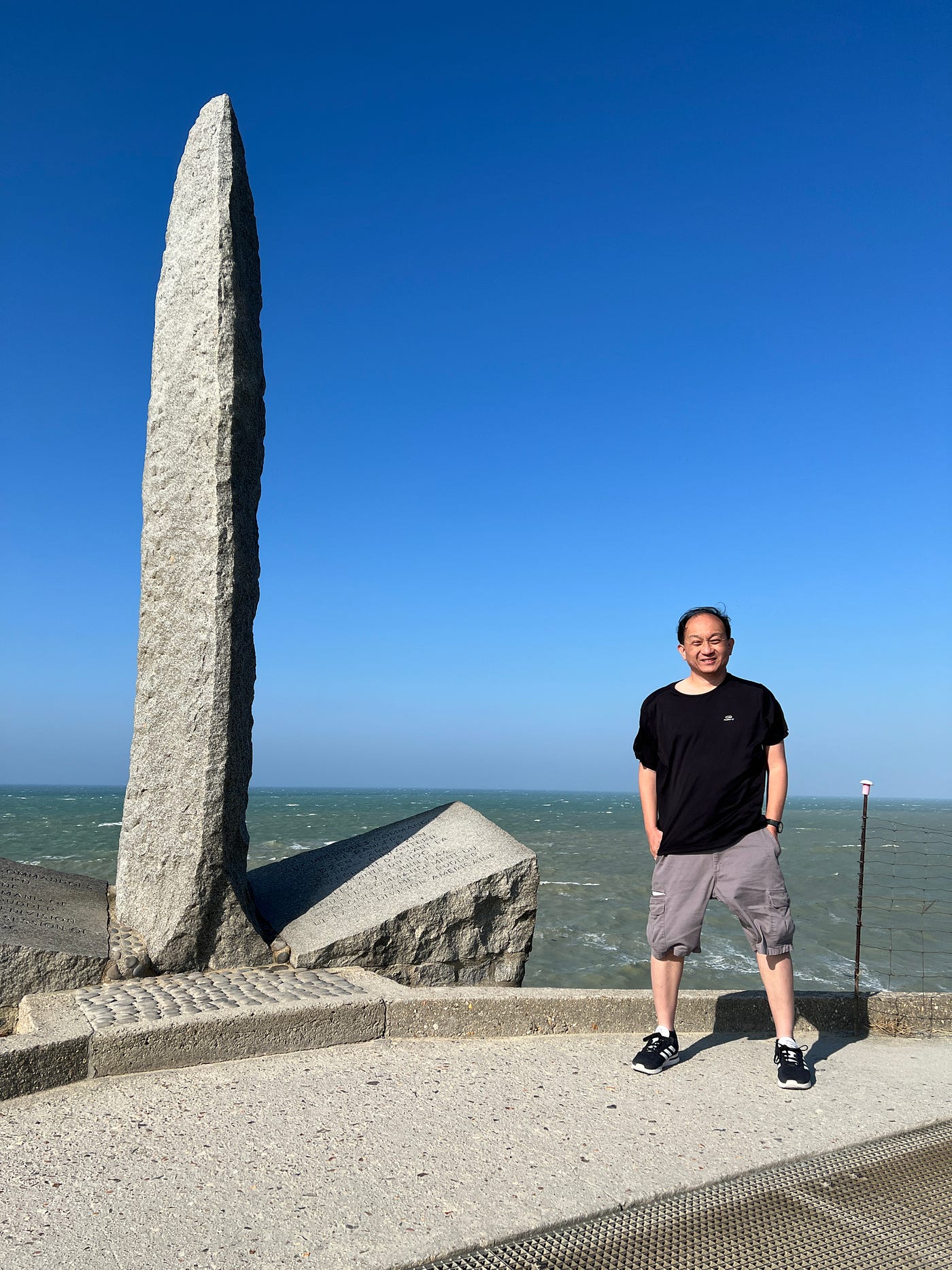
Posing with the Pointe du Hoc Ranger Monument
The battle for Pointe du Hoc became one of the most heroic moments of the D-Day invasion. It was serialised in the film “The Longest Day”.
On 6 June 1984 at the ceremony to commemorate the 40th anniversary of D-Day, President Ronald Reagan stood at Pointe du Hoc to deliver one of his most famous speeches, paying tribute to the bravery of the “Boys of Pointe du Hoc”.
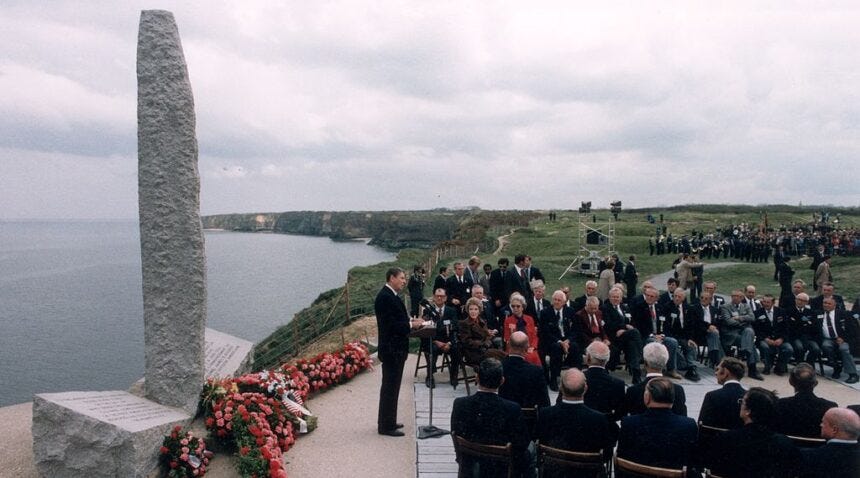
Ronald Reagan delivering his speech in 1984 (Photo credit: Ronald Reagan Library)
[embed]Full speech by Ronald Reagan on 6 June 1984 at Pointe du Hoc, on the occasion of the 40th anniversary of D-Day.
In 6 months from the time of my writing, we will commemorate the 80th anniversary of D-Day on 6 June 2024. I hope more from the younger generation will tune in to this milestone and appreciate history. It was through the victory in World War II, that peace was won with blood and sweat. Remember it is not free!
[embed]Highlights of Ronald Reagan’s visit of Pointe du Hoc in 1984 on the occassion of the 40th anniversary of D-Day
[Update 21 Dec 2023] I just found an interesting documentary (55 mins) on the battle at Pointe du Hoc. It is commissioned by the World War II Foundation (https://wwiifoundation.org/). You can watch the documentary here!
[embed]
============================
Resources
메타데이터
- post_id
- 140c12aa9f38
- slug
- pointe-du-hoc-140c12aa9f38
- url
- https://medium.com/@bernardyeoloychong/pointe-du-hoc-140c12aa9f38
- canonical_url
- https://medium.com/@bernardyeoloychong/pointe-du-hoc-140c12aa9f38
- author_url
- https://medium.com/@bernardyeoloychong
- status
- ok
- fetched_at
- 2026-07-25 22:39:11