Understanding the Financial Economics of Contract Chip Manufacturing
The semiconductor industry has become one of the most strategically important sectors in the global economy. From artificial intelligence…
Understanding the Financial Economics of Contract Chip Manufacturing
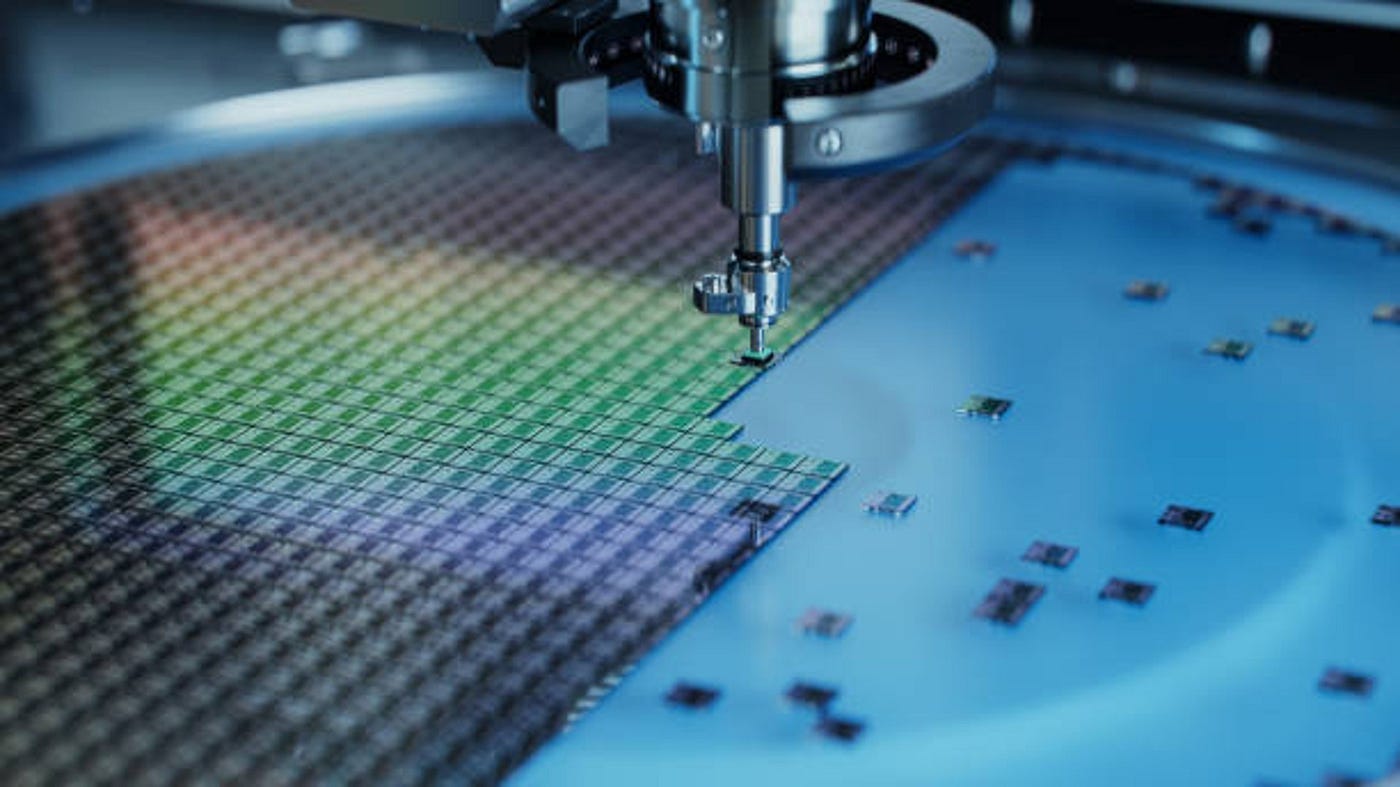
Photo by SweetBunFactory iStock
The semiconductor industry has become one of the most strategically important sectors in the global economy. From artificial intelligence and autonomous vehicles to cloud computing and medical devices, nearly every modern innovation depends on increasingly sophisticated semiconductor chips. Yet while headlines often focus on breakthrough technologies or geopolitical competition, one critical aspect receives far less attention: the financial economics behind contract chip manufacturing.
Why do the world’s largest technology companies — including Apple, NVIDIA, AMD, Qualcomm, and countless others — design their own chips but outsource manufacturing? Why do foundries invest hundreds of billions of dollars into fabrication facilities despite operating in one of the most capital-intensive industries on Earth? And how do these economic realities influence pricing, profitability, investment decisions, and ultimately shareholder value?
Understanding these questions isn’t simply an academic exercise. For finance professionals, investors, executives, and accounting leaders, the economics of contract chip manufacturing provides an exceptional case study in capital allocation, cost accounting, risk management, and strategic financial planning.
The companies that understand these financial dynamics are often better positioned to make informed investment decisions, evaluate supplier relationships, and anticipate shifts throughout the global technology ecosystem.
The Economics That Most People Never See
When consumers purchase a smartphone or laptop, they rarely consider the financial machinery required to manufacture the processor inside it.
Building a leading-edge semiconductor fabrication plant (“fab”) has become one of the largest capital investments in modern manufacturing. Depending on process technology and production capacity, a single advanced fabrication facility can cost well over $20 billion before producing its first commercial chip.
That investment doesn’t end once construction is complete.
Advanced lithography equipment, process upgrades, clean-room maintenance, engineering talent, research and development, utilities, and ongoing equipment replacement create enormous fixed costs that continue throughout the facility’s operating life.
This raises an important financial question:
How can any manufacturer generate acceptable returns on investments of this magnitude?
The answer lies in the contract manufacturing — or foundry — business model.
The Rise of the Pure-Play Foundry
Rather than designing and manufacturing their own semiconductors, many technology companies now specialize in chip architecture while outsourcing production to dedicated semiconductor foundries.
This separation creates significant economic advantages for both parties.
Chip designers avoid massive capital expenditures while focusing resources on research, product development, and software ecosystems.
Foundries, meanwhile, maximize asset utilization by producing chips for hundreds of customers across numerous industries.
Instead of relying on one product line, they spread fixed manufacturing costs across thousands of production runs.
From an accounting perspective, this dramatically improves operating leverage.
Higher utilization rates reduce fixed cost allocation per wafer, improving gross margins while generating stronger returns on invested capital.
In capital-intensive industries, utilization often becomes one of the most important profitability drivers.
Why Capital Allocation Matters More Than Ever
One misconception is that semiconductor manufacturing is primarily an engineering challenge.
In reality, it is equally a capital allocation challenge.
Every fabrication facility represents billions of dollars committed years before demand materializes.
Management teams must forecast customer demand, technology transitions, competitive dynamics, geopolitical risks, and equipment depreciation over investment horizons that may exceed a decade.
Poor forecasting can create excess capacity.
Excess capacity reduces utilization.
Reduced utilization increases unit costs.
Higher unit costs compress margins.
This cascading effect demonstrates why financial planning is just as important as engineering excellence.
Accounting professionals frequently encounter similar principles across other capital-intensive industries, but semiconductor manufacturing amplifies every variable because of the extraordinary scale involved.
The Importance of Economies of Scale
One of the defining characteristics of contract chip manufacturing is the power of economies of scale.
Fixed costs dominate the cost structure.
Once a fabrication facility is operational, producing additional wafers often costs significantly less than building additional facilities.
As production volumes increase, fixed expenses — including depreciation, facility maintenance, engineering salaries, and infrastructure — are allocated across more units.
The result is lower average production costs.
This creates a competitive advantage that becomes increasingly difficult for smaller manufacturers to overcome.
Scale also enables larger foundries to negotiate more favorable supplier contracts, invest in next-generation process technologies, and continuously improve manufacturing yields.
Financially, these efficiencies compound over time.
But Isn’t Outsourcing Risky?
This is one of the most common objections raised when discussing contract manufacturing.
On the surface, depending on external manufacturers appears to increase operational risk.
And to some extent, it does.
Companies become vulnerable to supply disruptions, geopolitical instability, natural disasters, capacity shortages, and pricing pressures.
However, the alternative carries even greater financial risk.
Owning and operating advanced fabrication facilities requires enormous capital commitments, specialized engineering expertise, continuous technology upgrades, and significant operational complexity.
For most semiconductor designers, investing tens of billions of dollars into manufacturing infrastructure would dramatically reduce financial flexibility.
Instead, outsourcing allows organizations to maintain asset-light business models while allocating capital toward innovation, acquisitions, customer growth, and intellectual property development.
From a financial economics perspective, outsourcing often improves expected returns while reducing long-term capital risk.
The objective is not eliminating risk — it is optimizing the balance between operational dependence and financial efficiency.
Understanding the Cost Drivers
To appreciate the economics of contract manufacturing, it helps to examine the primary cost components.
These typically include:
- Capital depreciation on fabrication facilities and equipment
- Raw silicon wafers and specialty materials
- Advanced lithography systems
- Chemicals and specialty gases
- Energy consumption
- Highly skilled engineering labor
- Process research and development
- Yield improvement initiatives
- Quality assurance and testing
- Packaging and assembly support
Unlike many manufacturing sectors, labor represents only a portion of total production costs.
Capital assets dominate the economic model.
Consequently, depreciation accounting, asset utilization, impairment analysis, and capital budgeting become especially significant financial disciplines.
The Hidden Variable: Manufacturing Yield
One of the most overlooked drivers of semiconductor profitability is manufacturing yield.
Yield measures the percentage of usable chips produced from each wafer.
Even small improvements in yield can dramatically increase profitability because the majority of production costs have already been incurred.
Imagine spending millions of dollars producing wafers.
If only 80% become functional chips, profitability suffers.
If process improvements increase yields to 95%, revenue rises substantially without proportionately increasing fixed costs.
This is why foundries invest heavily in process optimization, quality systems, statistical process control, and advanced manufacturing analytics.
Operational improvements frequently generate financial returns that exceed many traditional cost-cutting initiatives.
Why Financial Leaders Should Pay Attention
The semiconductor industry provides valuable lessons that extend far beyond technology.
Finance professionals can apply these principles across manufacturing, healthcare, aerospace, energy, and other capital-intensive industries.
Several themes consistently emerge:
- Capital allocation often determines long-term competitiveness.
- High fixed-cost businesses require disciplined capacity planning.
- Asset utilization significantly influences profitability.
- Strategic outsourcing can improve return on invested capital.
- Small operational improvements can produce disproportionate financial gains.
These concepts are directly relevant to CFOs, controllers, auditors, financial analysts, and accounting professionals evaluating investment opportunities or advising executive leadership.
Understanding the financial economics behind semiconductor manufacturing strengthens decision-making far beyond the technology sector.
Looking Ahead
Demand for advanced semiconductors continues to accelerate as artificial intelligence, edge computing, autonomous systems, and next-generation communications expand worldwide.
Meeting this demand will require continued investment in manufacturing capacity measured in hundreds of billions of dollars over the coming decade.
At the same time, investors and stakeholders will increasingly evaluate whether these investments generate sustainable economic returns.
The companies that succeed will likely be those capable of balancing engineering innovation with disciplined financial management.
That balance — between technological leadership and financial stewardship — is where the true economics of contract chip manufacturing reside.
Summary
Contract chip manufacturing is far more than an engineering achievement. It is one of the most compelling examples of financial economics in modern business.
Every fabrication facility reflects decisions about capital allocation, depreciation, operating leverage, risk management, cost accounting, and long-term strategic planning. The financial models supporting these investments are every bit as sophisticated as the technologies being manufactured inside them.
For accounting and finance professionals, understanding these dynamics provides valuable insights into how organizations evaluate billion-dollar investments, optimize returns on capital, and manage risk in rapidly evolving markets.
As technology continues reshaping the global economy, financial leaders who understand the economics behind semiconductor manufacturing will be better equipped to advise organizations, evaluate investment opportunities, and contribute to sustainable long-term growth.
If you found this article helpful and have further questions regarding this subject or other accounting issues, reach out to us at the link below this paragraph. Together, we can navigate these challenges and help your firm thrive in an increasingly complex financial world.
Connect with ROI Accounting Consultants to learn more.
Sources
- Semiconductor Industry Association (SIA). State of the U.S. Semiconductor Industry and industry statistics. https://www.semiconductors.org/
- Taiwan Semiconductor Manufacturing Company (TSMC). Annual Reports and Investor Relations. https://investor.tsmc.com/
- Intel Corporation. Annual Reports and SEC Filings. https://www.intc.com/
- McKinsey & Company. The Semiconductor Decade: A Trillion-Dollar Industry. https://www.mckinsey.com/
- Deloitte Insights. 2025 Semiconductor Industry Outlook and prior semiconductor industry outlook reports. https://www2.deloitte.com/
- Gartner. Semiconductor market research and industry forecasts. https://www.gartner.com/
- U.S. Department of Commerce. CHIPS for America Program. https://www.chips.gov/
Please remember to clap (feel free to clap up to 50 times per person), highlight key points in the article that you think other readers will find interesting, leave a comment, and follow me. If you enjoy my articles on Medium and want to stay updated on upcoming exciting content, be sure to subscribe and receive an email whenever I publish a new post. Simply click the email icon to join! Your support is greatly appreciated, and these actions help the algorithms, making it easier for more readers to discover my articles. Thank you!
Click on the link below to read additional articles
메타데이터
- post_id
- 1432c602bc2f
- slug
- understanding-the-financial-economics-of-contract-chip-manufacturing-1432c602bc2f
- url
- https://medium.datadriveninvestor.com/understanding-the-financial-economics-of-contract-chip-manufacturing-1432c602bc2f
- canonical_url
- https://medium.datadriveninvestor.com/understanding-the-financial-economics-of-contract-chip-manufacturing-1432c602bc2f
- author_url
- https://medium.com/@toverstreet_54150
- status
- ok
- fetched_at
- 2026-07-27 16:19:55