Crepe Bandage vs Elastic Adhesive Bandage: Which One Should You Use for a Sprain or Injury?
If you’ve ever twisted your ankle, pulled a muscle, or had a joint injury, you’ve probably stood in a pharmacy aisle staring at two…
Crepe Bandage vs Elastic Adhesive Bandage: Which One Should You Use for a Sprain or Injury?
If you’ve ever twisted your ankle, pulled a muscle, or had a joint injury, you’ve probably stood in a pharmacy aisle staring at two similar-looking rolls — a crepe bandage and an elastic adhesive bandage — wondering which one actually fits your situation. They look alike, they both stretch, and both claim to help with swelling and support. But they’re not interchangeable, and picking the wrong one can mean less support exactly when you need it most.
This guide explains what each bandage does, how to use it correctly, and which one is right for your injury — in plain, practical language.
Note: This article is for general informational purposes only and does not replace professional medical advice. For any injury that causes severe pain, swelling, or limited movement, please consult a doctor or physiotherapist before self-treating.
What Is a Crepe Bandage Used For?
A cotton crepe bandage is a woven, stretchable bandage without any adhesive. It doesn’t stick to your skin — instead, you wrap it around the injured area and secure the end with a clip or pin.
A crepe bandage is best for:
- Sprained or swollen ankles — wrapping helps control swelling in the first 24–48 hours
- Knee and joint support during recovery from a strain
- Holding a wound dressing in place without sticking to the skin underneath
- Reusable compression for ongoing physiotherapy or sports recovery
Because it’s washable and reusable, a crepe bandage is the more economical, everyday choice for general compression — it’s the one most people keep in their home first-aid box.
How to Use a Crepe Bandage for a Sprained Ankle
- Start wrapping from the toes upward, moving toward the heart, to help reduce swelling.
- Overlap each layer by about half the bandage width.
- Keep it firm but not tight enough to cut circulation — you should still be able to slide a finger underneath.
- Secure the end with the clip provided.
- Check your toes for color and warmth after wrapping; numbness or discoloration means it’s too tight.
This wrapping method is commonly taught alongside the RICE technique (Rest, Ice, Compression, Elevation) used for managing minor sprains and strains at home.
What Is an Elastic Adhesive Bandage Used For?
An elastic adhesive bandage — sometimes called sports tape or adhesive crepe — is a stretchable cloth bandage with a porous adhesive coating, so it sticks directly to the skin. No pins or clips needed.
An elastic adhesive bandage is best for:
- Securing dressings after surgery or a deep wound, where the bandage needs to stay put during movement
- Taping joints for sports activity — knees, shoulders, wrists
- Injuries where a crepe bandage keeps slipping, since the adhesive holds it firmly in place
- Sensitive skin, if it’s hypoallergenic and latex-free (always check the label)
Because the adhesive is porous, air and moisture can pass through it, which is why it tends to be more comfortable for longer wear than ordinary tape.
Crepe Bandage vs Elastic Adhesive Bandage: Key Differences
Sticks to skin?
- Crepe Bandage: No — needs a clip or pins to stay in place
- Elastic Adhesive Bandage: Yes, self-adhesive
Reusable?
- Crepe Bandage: Yes, washable and reusable multiple times
- Elastic Adhesive Bandage: No, single-use only
Best for
- Crepe Bandage: General swelling, ankle and knee support
- Elastic Adhesive Bandage: Securing dressings, sports taping
Skin sensitivity
- Crepe Bandage: Generally gentle on skin
- Elastic Adhesive Bandage: Look for hypoallergenic, latex-free options
Cost over time
- Crepe Bandage: More economical, since it’s reusable
- Elastic Adhesive Bandage: Higher per-use cost, since it’s single-use
Which Bandage Should You Buy?
- For a sprained ankle, swollen knee, or everyday joint support → go with a crepe bandage. It’s reusable, breathable, and easy to apply yourself.
- For securing a wound dressing after a cut, stitches, or surgery → go with an elastic adhesive bandage, since it won’t slip during movement.
- For sports strapping or taping before activity → an elastic adhesive bandage offers the firmer, longer-lasting hold.
If you’re unsure which applies to your situation, a quick rule of thumb: if the bandage needs to stay fixed in one place without moving, choose adhesive. If you just need flexible, reusable compression, choose crepe.
Why Bandage Quality Matters
Not every crepe bandage or adhesive bandage performs the same. Cheaper, low-thread-count bandages lose elasticity after one or two washes, and low-quality adhesives can irritate the skin or fail to hold dressings securely — which matters a lot when you’re recovering from an injury or surgery.
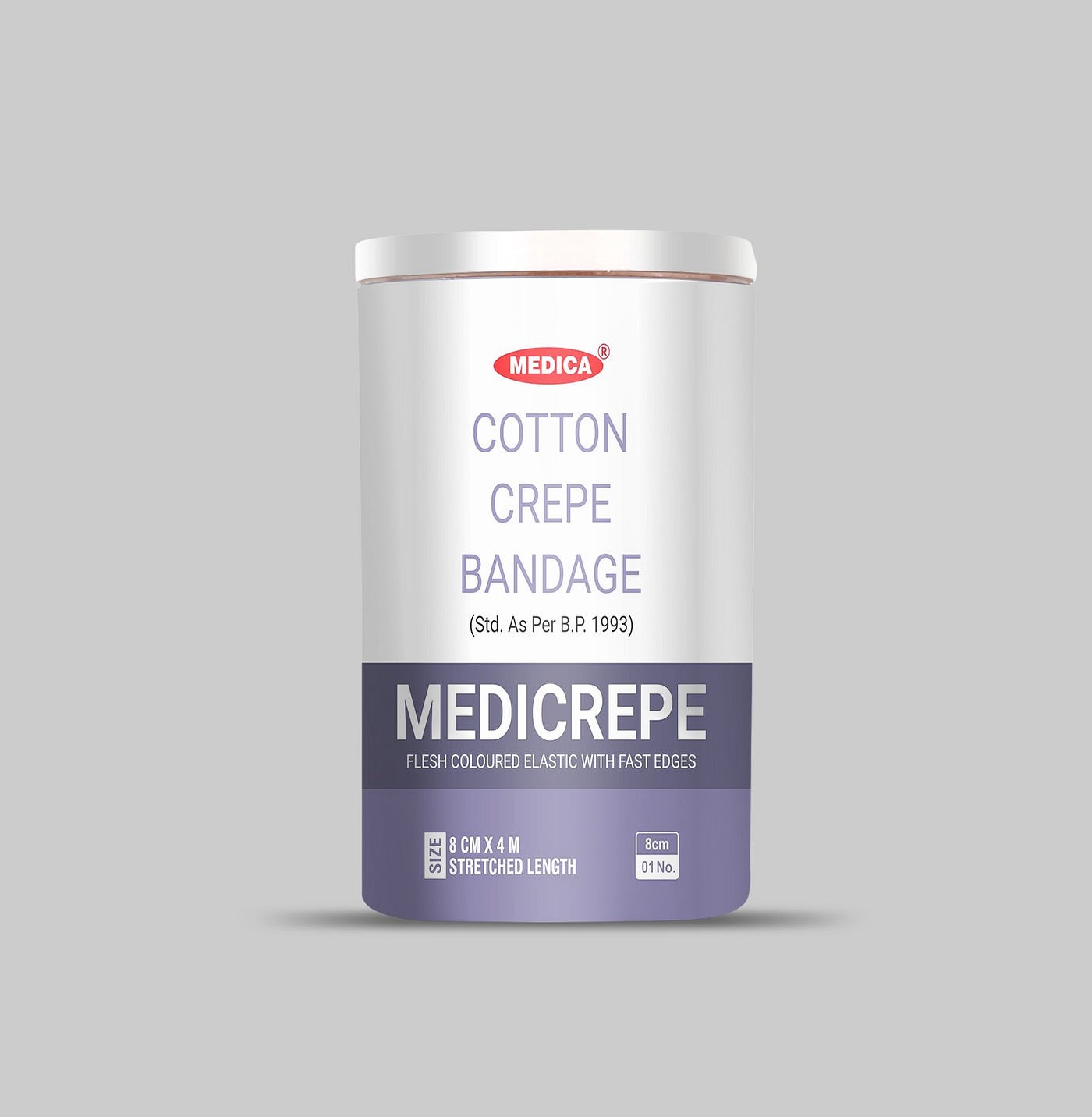
Medicare Hygiene Limited, an Ahmedabad-based manufacturer that has been producing surgical dressings and wound care products since 1994, makes both:
- **Medicrepe** — a cotton crepe bandage built for better elasticity, breathability, and compression retention even after repeated washing.
- **Mediplast** — a hypoallergenic, latex-free elastic adhesive bandage with a porous adhesive that holds firmly without restricting movement.

Both are manufactured under ISO 13485 and CE certification standards, the same quality benchmarks hospitals and distributors rely on, and are exported to healthcare providers in 25+ countries.
Frequently Asked Questions
Can I reuse a crepe bandage after washing it? Yes, a good-quality cotton crepe bandage can be washed and reused multiple times without losing its elasticity, as long as it’s air-dried and not wrung out forcefully.
Is an elastic adhesive bandage safe for sensitive skin? Look for one that’s labeled hypoallergenic and latex-free — this significantly reduces the chance of skin irritation, especially for extended wear.
Can I use a crepe bandage to hold a wound dressing in place? Yes, but since it doesn’t stick to skin, it works best for dressings on areas with low movement. For high-movement areas or deeper wounds, an elastic adhesive bandage holds more securely.
How tight should I wrap a crepe bandage? Firm enough to provide compression, but loose enough that you can still slide a finger under it. If toes or fingers turn pale, blue, or numb, loosen it immediately.
What’s the difference between a crepe bandage and a regular gauze bandage? A crepe bandage is woven for elasticity and compression, while gauze is a soft, absorbent dressing used directly on wounds. They’re often used together — gauze on the wound, crepe bandage to hold it in place.
Medicare Hygiene Limited is an ISO 13485 and CE certified manufacturer of surgical dressings and wound care products, based in Ahmedabad, India, with over 30 years of manufacturing experience. For product specifications or bulk inquiries, contact marketing@medicarehygiene.in or +91 79 4006 9250.
메타데이터
- post_id
- 143b06db2a90
- slug
- crepe-bandage-vs-elastic-adhesive-bandage-which-one-should-you-use-for-a-sprain-or-injury-143b06db2a90
- url
- https://medium.com/@ecomm.mhl/crepe-bandage-vs-elastic-adhesive-bandage-which-one-should-you-use-for-a-sprain-or-injury-143b06db2a90
- canonical_url
- https://medium.com/@ecomm.mhl/crepe-bandage-vs-elastic-adhesive-bandage-which-one-should-you-use-for-a-sprain-or-injury-143b06db2a90
- author_url
- https://medium.com/@ecomm.mhl
- status
- ok
- fetched_at
- 2026-06-29 22:44:20