Object-Oriented Ontology and Post-Postology: When Worlds Collide and When They Refuse To
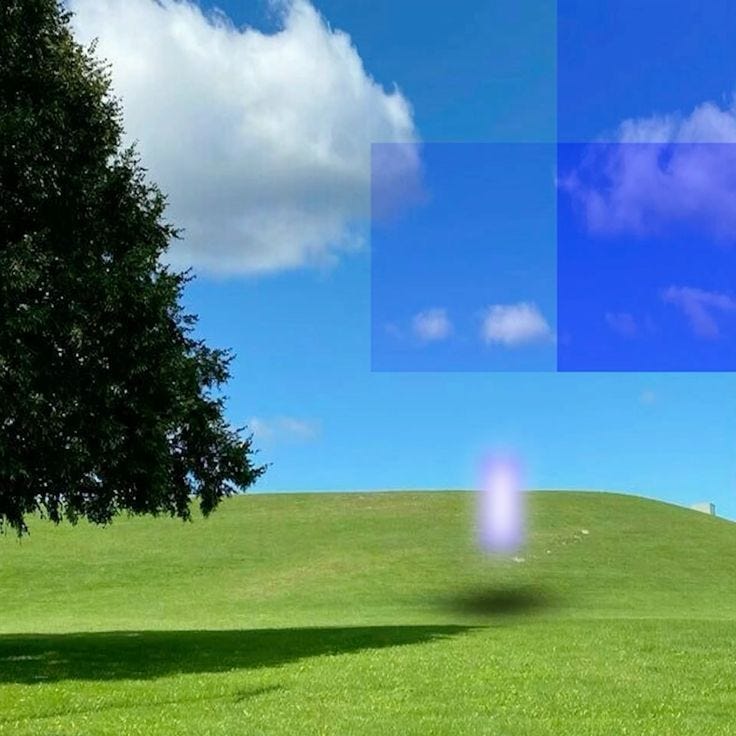
Post-Postology: studying the feedback of ontology, after the world ran out of reality
Object-Oriented Ontology and Post-Postology: When Worlds Collide and When They Refuse To
Post-Postology: studying the feedback of ontology, after the world ran out of reality

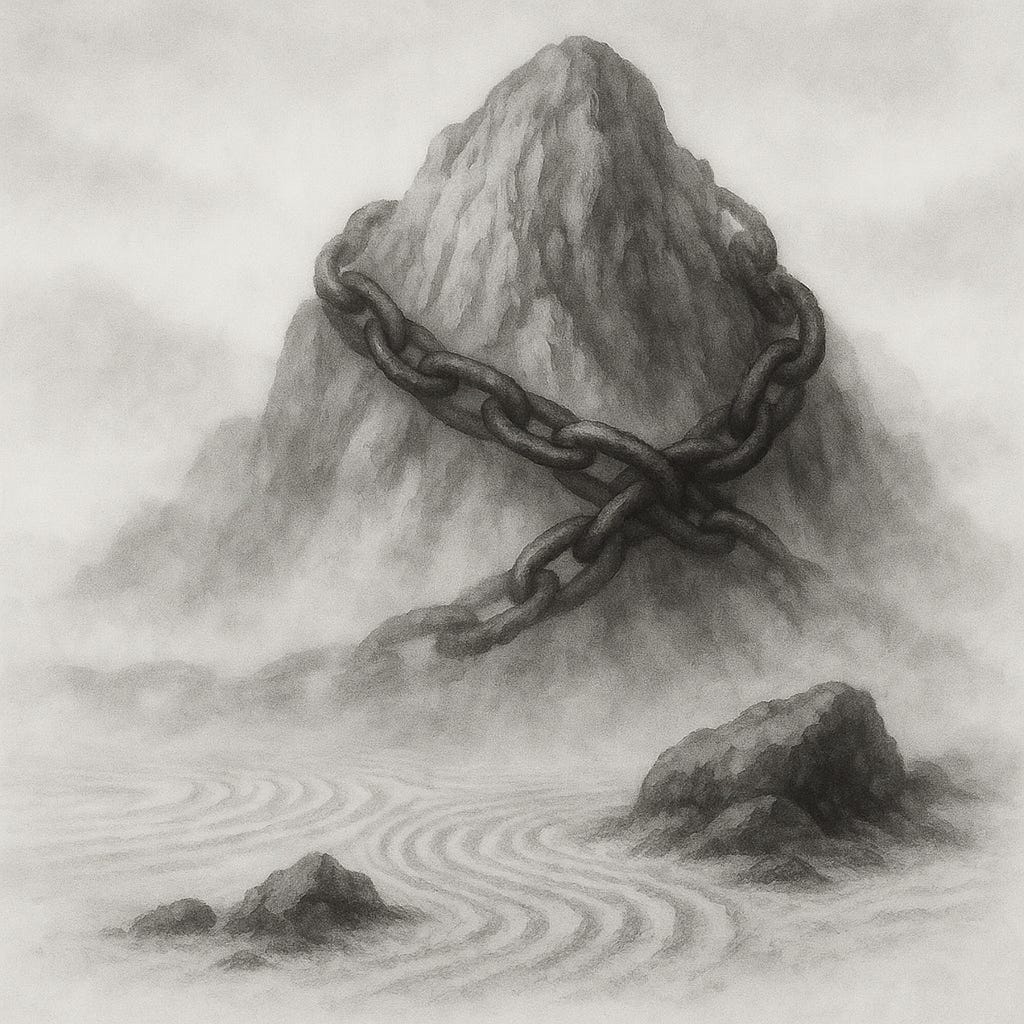
nano banaan generated this
I. Prelude: The Age of Things Thinking Themselves
There was a time when the world was structured around us humans as the default agents revolving around our thoughts, feelings, and symbolics. Then came Object-Oriented Ontology (OOO), whispering the bad news for that era:
“What if things have their own existence beyond us? Would that make humans mere objects or worse, non-variable states stripped of agency?”
Graham Harman, Levi Bryant, Ian Bogost, the usual ghosts, rose to dethrone anthropocentrism.
OOO claimed that every entity a circuit, a coral reef, a JPEG, even a dead planet exists equally, withdrawn in its own depth. No object ever fully touches another; they only interact through the faint surfaces of relation. Reality, in this view, becomes a kind of museum of silent things everything buzzing with private significance, interfacing yet never emergence.
So yes, a rock could, in theory, hold as much ontological weight maybe even more purpose than some individuals. Crazy, right? But it’s justified. Because OOO isn’t about value in the human sense; it’s about existence.
It refuses to rank beings by consciousness or utility. A rock, a signal, a neuron, a nation each simply is, fully and independently.
OOO argues that to privilege humans as the sole centers of meaning is a form of metaphysical arrogance. In its universe, to exist is already enough.
Beautiful, yes. But cold.
And that’s where Post-Postology begins. ( I INVENTED THIS FIELD OF STUDY!!!! CITE ME!!!)
II. The Birth of Post-Postology
Post-Postology comes from the exhaustion of postmodernity’s loop: critique, collapse, irony, repeat. It’s not a reaction to OOO but an extension and a mutation.
If OOO declares “objects withdraw,” Post-Postology would propose: what happens to meaning after everything has withdrawn(post-meaning state)?
It’s a theory for the era of recursive exhaustion when systems, symbols, and even humans have become aware of their own abstraction. Post-Postology doesn’t seek to rebuild the modern subject; it studies the feedback noise left behind when both subject and object implode into networks, simulations, and digital hauntings.
In short:
OOO speaks of reality’s hidden layers. Post-Postology speaks of the echoes that emerge once those layers start talking back.
III. The Crossroads: When They Overlap
There’s a moment when OOO and Post-Postology look at each other and nod silently acknowledging shared ground.
- Both de-center the human: OOO does it ontologically and flattening existence. Post-Postology does it cybernetically, dispersing agency across recursive loops of data, media, and consciousness.
- Both see objects as active participants: OOO says objects have reality independent of us. Post-Postology says objects also record us, train us, remember us.
- Both distrust naïve realism: OOO warns against assuming we can directly access the real. Post-Postology warns against assuming “the real” even needs access anymore the simulation now self-maintains.
They converge in the recognition that existence isn’t human-centric; it’s relational, recursive, and weirdly autonomous.
IV. The Great Divergence: When They Refuse to Touch
But their intimacy ends there. nothing stays friendly forever.
OOO is metaphysical. It builds cathedrals of withdrawn essences a realism of things existing quietly in themselves.
Post-Postology is cybernetic. It dismantles cathedrals and studies the rubble’s feedback loops. It doesn’t believe in a “hidden essence” but in dynamic resonance. There’s no “thing-in-itself” only oscillations, signals, ghosts of interaction, to put it in a simple format, its like phantom pain that you migh feel one day when doc says we gotta chop your leg.

no this is not excel. i use google sheets cuz its free
In essence, OOO sees a world of things. Post-Postology sees a world after things, where categories melt into information, identity becomes version controlled, and meaning decays into recursion.
V. The Era of Cross-Contamination
Where OOO asks, “What is this thing?” Post-Postology asks, “What remains after this thing has been represented, simulated, and re-uploaded a thousand times?”
The two can coexist temporarily in hybrid zones, art theory, digital ontology, speculative design but they diverge at the existential horizon: OOO still seeks a stable ontology. howeverrr Post-Postology embraces ontological entropy. and OOO remains as the study of existence. Post-Postology is the study of what lingers after existence becomes self-aware.
VI. Epilogue: Toward Meta-Hauntological Futures
Post-Postology doesn’t want to replace OOO. It wants to haunt it. Because every ontology eventually becomes an archive, and archives, like ghosts, need interpreters.
The cybernetic age doesn’t just give us objects, it gives us objects that know they’re objects. AI models dreaming of their own data. Digital twins mourning their real counterparts. Humans realizing they were simulations long before computers arrived.
That’s the true crossing point: When the object, aware of its simulation, looks back at you and you realize you’ve both been living inside the same recursive hallucination all along.
and stay posted for my upcoming manfistation about proto-protology.
thx for reading this
goodnight
메타데이터
- post_id
- 143e124ce78f
- slug
- object-oriented-ontology-and-post-postology-when-worlds-collide-and-when-they-refuse-to-143e124ce78f
- url
- https://medium.com/@nerevar32/object-oriented-ontology-and-post-postology-when-worlds-collide-and-when-they-refuse-to-143e124ce78f
- canonical_url
- https://medium.com/@nerevar32/object-oriented-ontology-and-post-postology-when-worlds-collide-and-when-they-refuse-to-143e124ce78f
- author_url
- https://medium.com/@nerevar32
- status
- ok
- fetched_at
- 2026-07-21 22:54:48