Montaigne’s Most Powerful Advice for Overthinkers
The antidote for People who think too much.
Montaigne’s Most Powerful Advice for Overthinkers
The antidote for People who think too much.

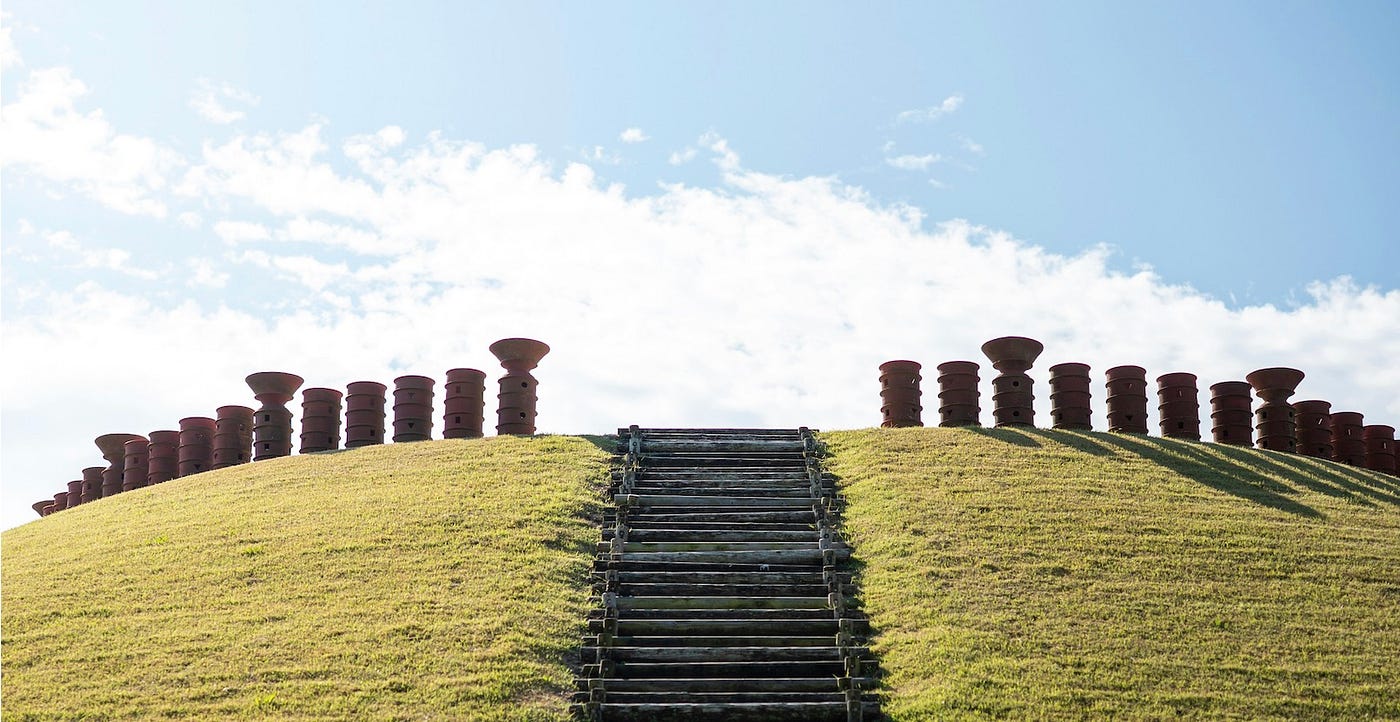
Photo by Enq 1998 on Unsplash
I take Montaigne seriously when he says, “My life has been full of terrible misfortunes most of which never happened.” This guy locked himself in a tower for years away from public life to figure out who he was. He was surrounded by thousands of books. And trapped in his own head. And knew exactly what it felt like to overthink. He watched his mind breed monsters, doubts, and anxieties on loop. But also analysed his habits, fears, health, and relationships. But Montaigne didn’t drown in his thoughts. Michel de Montaigne was one of the most powerful philosophers of the french renaissance. To save his sanity, he started writing essays. Montaigne found the cure for the overthinking mind. His advice is practical and incredibly efficient. If your brain won’t shut up, Montaigne’s wisdom is a practical toolkit to take your sanity back.
First of all, stop trying to control your mind. For most people who want a quick way out of the spinning brain, their first instinct is to force it to be still. They try to suppress the thoughts.
Montaigne found that this makes things worse. When he first retired to his estate, he expected his mind to settle into a peaceful calm. It did the exact opposite. Montaigne says this is a trap. He compared an untamed mind to a runaway horse or a patch of wild soil. If you let a field sit idle, it doesn’t stay clean. It grows weeds. The harder you fight to empty your mind, the more wild weeds it grows.
“My mind… like a runaway horse, breaks loose and gives itself a hundred times more trouble than it used to take for others; it breeds so many chimeras and fantastic monsters, one after another, without order or purpose…” he wrote.
Don’t battle the thoughts.
Give the mind a job.
Montaigne sat down and forced his thoughts into writing. He wrote things down. He wrote 107 essays in the tower. When you write down your worries, you objectify them. They stop being scary inside your head and become things you can look at, analyse, and possibly dismiss.
By putting the “monsters” of his mind on paper, Montaigne took away their ability to haunt him. Dare I say, the first rule is don’t argue, fight or battle with your brain. You will lose every time. Give it a task.
Write what’s going on in your head down.
Also, remember you are not that important.
Overthinking comes from a heavy dose of self-importance. We obsess over our choices. What we want or need to feel better. We think the universe is watching us with a magnifying glass. What if I look foolish? What if this decision ruins everything? You don’t need absolute certainty. Overthinking is almost always a desperate search for certainty. Montaigne kept a famous question carved into the wooden beams of his ceiling. It said Que sçay-je? (“what do I know?”) He reminded himself that humans are fragile and don’t know as much as they think. Socrates also said, “The only thing I know is that I know nothing, and i am no quite sure that i know that.” No matter how powerful someone is, they are still just a normal human being.
I like how astronomer and planetary scientist puts it in his book, *Pale Blue Dot, *“Look again at that dot. That’s here. That’s home. That’s us. On it everyone you love, everyone you know, everyone you ever heard of, every human being who ever was, lived out their lives. The aggregate of our joy and suffering, thousands of confident religions, ideologies, and economic doctrines, every hunter and forager, every hero and coward, every creator and destroyer of civilization, every king and peasant, every young couple in love, every mother and father, hopeful child, inventor and explorer, every teacher of morals, every corrupt politician, every “superstar,” every “supreme leader,” every saint and sinner in the history of our species lived there-on a mote of dust suspended in a sunbeam.
Minimise the significance of what you think.
And be free. If you are small, your mistakes are small too. The world won’t stop spinning if you bomb a presentation or make the wrong choice. Zoom out. Admitting you don’t know everything lowers the stakes. You don’t need the perfect, flawless plan to take action. Make your best guess with the knowledge you have right now. And accept that you will figure out the rest as you go. Action cures anxiety; endless analysing paralyses you. You are a tiny dot on a giant rock. Lower the stakes. Start from everything you are unnecessarily making too important in your head.
Get back to your body.
Overthinkers live entirely in their heads. They get trapped in a loop of abstract worries. They treat their bodies like a mere vehicle to carry their heavy brains around. Montaigne hated this. He loved the physical reality of life. He wrote essays about smells, sleeping, riding horses, coaches, and his own kidney stones. He knew that the mind and body are locked together. If only we allowed them to work together, we would feel so much better.
“When I dance, I dance; when I sleep, I sleep; yes, and when I walk alone in a beautiful orchard, if my thoughts drift to far-off matters for some part of the time, for another part I guide them back to the walk, to the orchard, to the sweetness of this solitude, and to myself.”
When your mind spins out of control, it means you are not in your body. The antidote is to step out of your head and into your physical senses. Stand up. Walk and feel everything around you. Feel your feet. Drink a glass of water and notice how it makes you feel. Use the physical world to engage your senses. When you are trapped in a loop about next week’s schedule, you are not where your feet are. You are living in a ghost world of the future. To break the loop, engage your senses immediately. You cannot overthink while you are truly tasting your food or running a mile. Break the mental loop with a physical reality.
Stop trying to impress imaginary people.
Overthinkers think too much about what other people think of them. They replay minor social mistakes over and over in their heads. Assuming everyone else is analysing it too. Montaigne cuts right through this vanity.
“Even on the highest throne in the world, we are still sitting only on our own rear ends.”
Everyone is the main character in their own story. Kings, presidents, and your coworkers all have their own insecurities, digestive issues, and secret flaws. People think about you far less than you think they do. They are too busy overthinking their own lives. If you trip over your words or make a small mistake, laugh it off.
No one is keeping score.
Something else to remember.
Overthinkers are perfectionists. Montaigne thought perfectionism robs us of life’s simple pleasures.
“Our big and glorious masterpiece is to live properly. All other things — ruling, hoarding, building — are at best but little appendixes and props.”
You don’t need to optimise every minute of your day. You don’t need a perfect career, diet, or the perfect response to every crisis in your life. Change your goal from “perfect” to “useful” or “done.” A finished task that is 80% perfect is infinitely better than a flawless project that never leaves your brain. Give yourself permission to be functionally imperfect. Montaigne’s ultimate lesson for overthinkers is to stop treating life like a riddle to be solved. Life is a reality to be experienced. The next time your mind gets caught in a loop, accept the uncomfortable reality and come back to the room with your full senses.
Build a better relationship with the worst-case scenario (and realise you can handle it). Overthinking feeds on vague monsters. We worry about “failing” or “looking foolish” without ever defining what those words actually mean. Montaigne learned to stare his biggest fears directly in the face. He lived through a deadly plague and a violent civil war. He didn’t run from the thought of disaster; he invited it in for a chat.
“Let us disarm [death] of its strangeness… let us have nothing so frequent in our thoughts as death… At every flash of lightning, at every stumble of a horse, let us say to ourselves: ‘Well, what if it were death itself?’”
When you refuse to look at your fear, it stays big and scary. When you look closely, it shrinks. Run the reality or experience all the way to the end. What is the absolute worst thing that can happen? And how do you intend to survive it? Once you realise you can survive the worst-case scenario, the overthinking stops because the mystery is gone.
Now, the final Montaigne test is a simple question.
Whenever you find yourself stuck in a mental loop, apply this useful question from Montaigne’s playbook: Is this thought helping me live my best life right now? If it’s not, step outside your head and go do something practical. Life is too short to be stuck in your head all day.
Stop preparing for life and just live it
Overthinkers spend so much time anticipating future problems that they forget to experience the present. We build elaborate mental defenses against things that might never happen. Montaigne said uneducated peasants handled life’s major crises better than philosophers because they didn’t waste energy pre-worrying.
“The anxiety about future events makes us miserable before our time… It is a great folly to be always preparing for life, and never to live it.”
Catch yourself when you are “pre-living” a future scenario. If you are rehearsing an argument that hasn’t happened, or stressing about a problem three months away, pull your brain back. Deal with today’s reality. You will have the strength to handle tomorrow’s problems when tomorrow gets here. Remember, you are the source of your suffering. “We are more troubled by the things that are told us than by the things that are,” Montaigne wrote. Separate the facts from your interpretations. interpretations like, “they are mad at me.” “I did something wrong.” Our relationship is ending,” only makes us more miserable. Stick strictly to the hard facts. It away the fuel overthinking needs to burn. You don’t have to believe everything you think.
메타데이터
- post_id
- 145894a9bfcf
- slug
- montaignes-most-powerful-advice-for-overthinkers-145894a9bfcf
- url
- https://medium.com/personal-growth/montaignes-most-powerful-advice-for-overthinkers-145894a9bfcf
- canonical_url
- https://medium.com/personal-growth/montaignes-most-powerful-advice-for-overthinkers-145894a9bfcf
- author_url
- https://medium.com/@thomas-oppong
- status
- ok
- fetched_at
- 2026-06-09 15:37:30