Mixed Reality Game Development: Bridging Real & Virtual Worlds
The year 2026 has brought us to a profound turning point in interactive entertainment. For decades, video games have been confined behind…
Mixed Reality Game Development: Bridging Real & Virtual Worlds
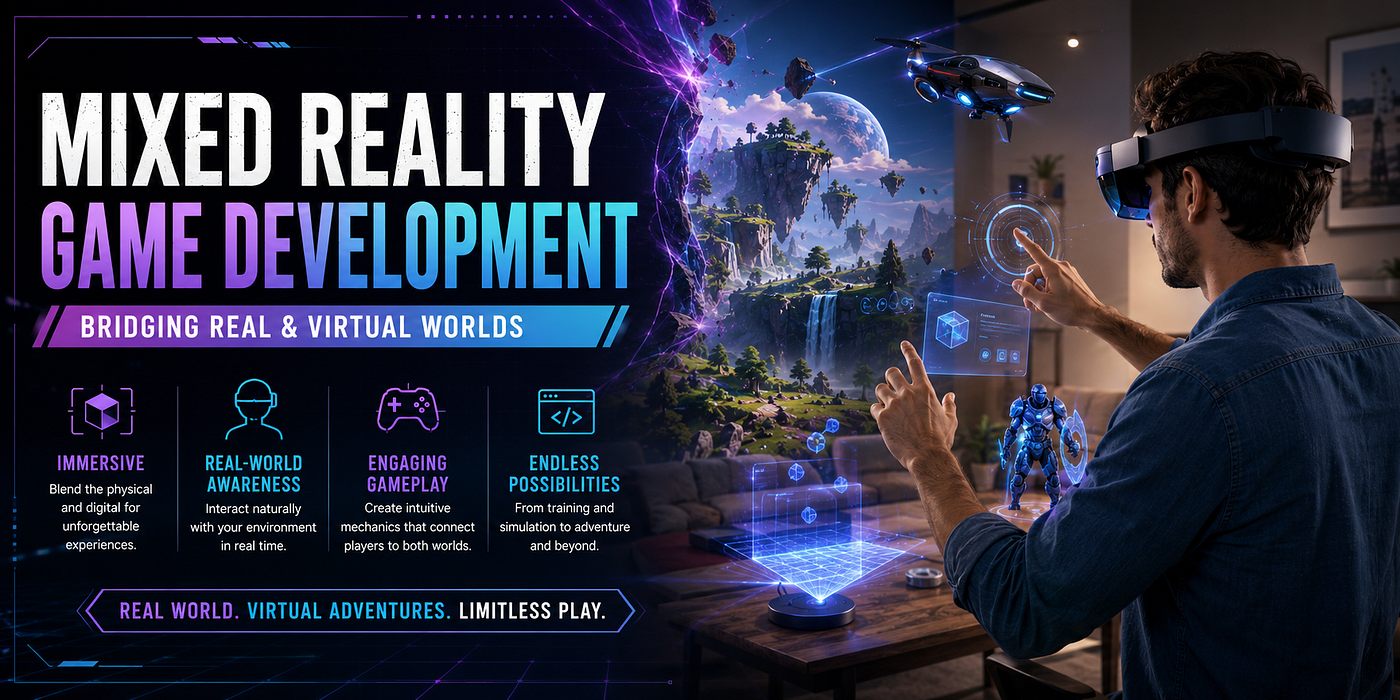
The year 2026 has brought us to a profound turning point in interactive entertainment. For decades, video games have been confined behind screens — windows into other worlds that we could observe and interact with, but never truly inhabit. Virtual Reality (VR) took us a step further by pulling us fully into the digital realm, but it often required us to completely shut out our physical surroundings. Today, we are witnessing the maturation of something far more compelling: Mixed Reality (MR).
By seamlessly blending digital assets with our physical environments, Mixed Reality does not ask us to leave our living rooms; instead, it transforms our living rooms into the level itself. As the technology behind hardware and spatial computing matures, the industry is seeing unprecedented growth, moving out of the realm of niche enthusiasm and squarely into mainstream commercial viability.
This comprehensive guide explores the data, the underlying technology, the design philosophies, and the market dynamics shaping Mixed Reality game development today.
1. The Explosive Economics of Mixed Reality Gaming in 2026
To understand the trajectory of MR game development, we have to look at the numbers. The industry has shifted from a period of speculative investment to one of measurable, explosive revenue generation.
Market Size and Growth Projections
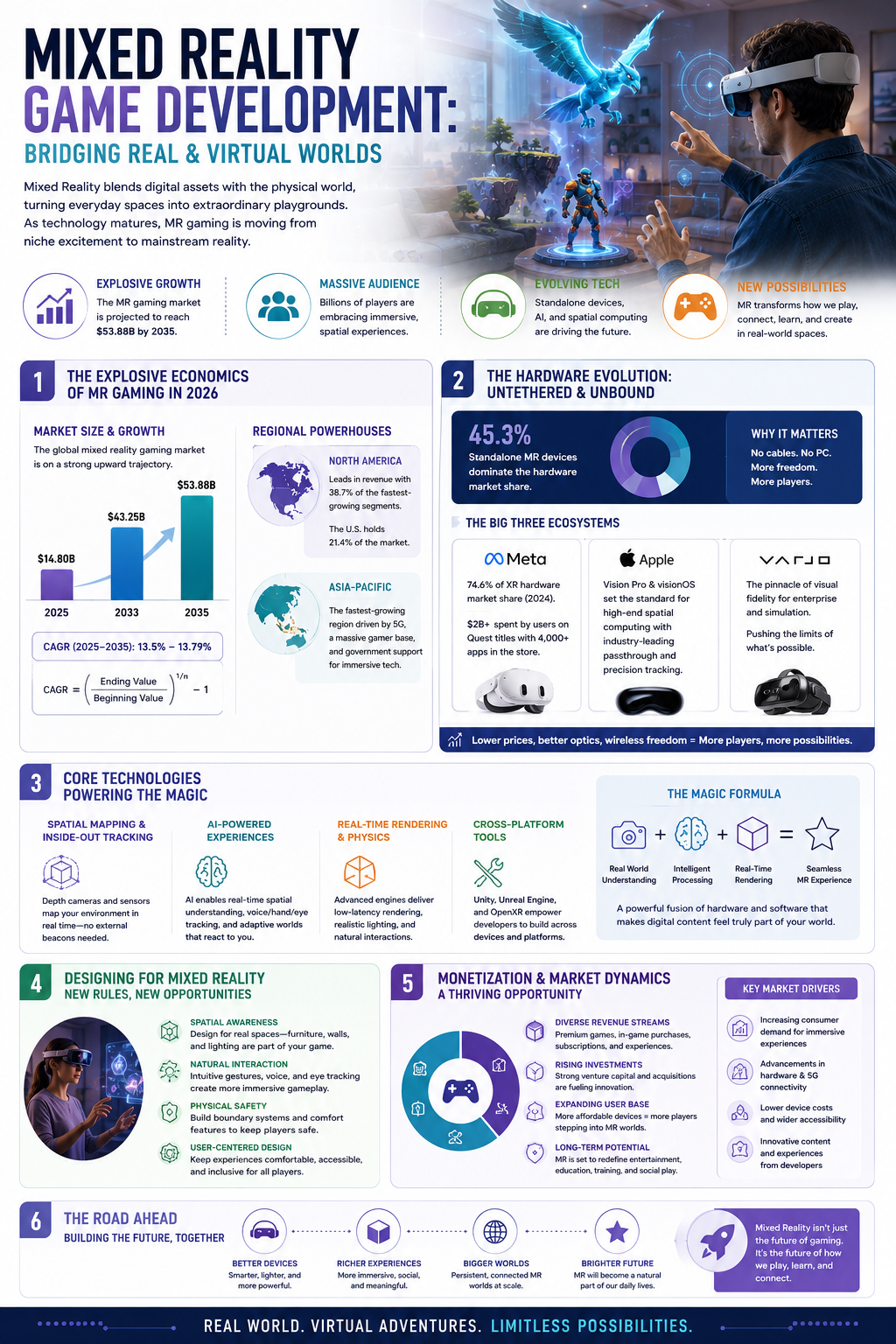
The global mixed reality gaming market size was estimated at USD 14,800.75 million in 2025. Driven by an insatiable consumer demand for immersive experiences and falling hardware costs, the market is on a rapid upward trajectory. Analysts project this sector will reach anywhere from USD 43,250.60 million by 2033 to a staggering USD 53,879.72 million by 2035.
This represents a steady Compound Annual Growth Rate (CAGR) of around 13.5% to 13.79%. For those interested in the underlying math, the CAGR is calculated as:
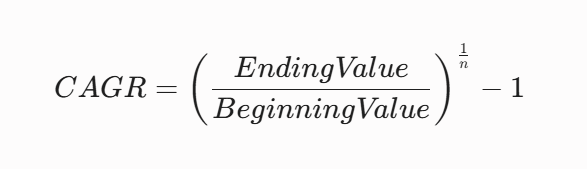
Where n is the number of years. This consistent double-digit growth is a beacon for developers and investors alike.
Regional Powerhouses
When we break down the market geographically, two major regions stand out in 2026:
- North America: This region continues to generate the highest demand and revenue. With a projected 38.7% share of the fastest-growing segments, the United States alone accounts for 21.4% of the market. This dominance is fueled by a robust digital infrastructure, high consumer spending, and the presence of tech behemoths like Meta and Apple.
- Asia-Pacific: While North America leads in current revenue, the Asia-Pacific region is growing at the fastest rate. This acceleration is driven by expanding 5G networks, a massive base of gamers, and heavy government support for digital transformation and immersive technologies in countries like China, Japan, and South Korea.
2. The Hardware Evolution: Untethered and Unbound
The biggest barrier to MR gaming in the past was the hardware itself — heavy, wired, and computationally constrained. In 2026, the landscape looks drastically different. Standalone MR devices now dominate, accounting for a massive 45.3% share of the hardware segment. These devices allow players to experience rich virtual worlds without needing to be tethered to a high-end PC or a console.
The Big Three: Ecosystems Defining MR
The competitive environment in 2026 is defined by a hardware and platform war. Several major players have carved out distinct niches:
- Meta: Meta platforms provide the most widely distributed consumer ecosystem. By 2024, Meta held a dominant 74.6% of the XR hardware market share. With over USD 2 billion spent by users on Quest titles and an app store boasting over 4,000 applications, Meta has successfully scaled MR for the masses.
- Apple: With the Vision Pro and visionOS, Apple has set the benchmark for high-end “spatial computing”. Their hardware emphasizes pristine, high-resolution passthrough capabilities and system-level interactions using precise eye and hand tracking.
- Varjo: While primarily focused on enterprise and simulation, Varjo represents the absolute bleeding edge of visual fidelity. Their headsets offer visual realism that is crucial for advanced simulations, pushing the boundaries of what developers can achieve when processing power is heavily prioritized.
The continuous decline in hardware prices coupled with improvements in form factors — such as lightweight designs, advanced optics for reduced eye strain, and wireless connectivity — has dramatically lowered the barrier to entry for the average gamer.
3. Core Technologies Powering the Magic
Mixed reality game development is uniquely challenging because it requires an intense fusion of software rendering and real-world environmental understanding. The magic of having a digital dragon land on your actual coffee table relies on a deeply integrated stack of technologies.
Spatial Mapping and Inside-Out Tracking
To interact with the real world, an MR headset must first understand it. Modern devices utilize an array of depth cameras and advanced sensors for precise 3D object mapping. Through inside-out tracking, the headset constantly maps the room’s geometry in real time without the need for external lighthouses or beacons.
The Integration of Artificial Intelligence
Artificial Intelligence is no longer just for non-player character (NPC) behavior; it is a foundational pillar of the MR hardware itself. Leading companies are integrating AI to handle complex tasks like real-time spatial computing, contextual awareness, and voice, hand, and eye tracking. Furthermore, developers are utilizing machine learning to create adaptive and personalized gaming environments that react dynamically to the player’s physical space.
5G and Edge Computing: The Death of Latency
For a mixed reality experience to feel convincing, the digital assets must stay anchored to the real world without any perceptible lag. The global rollout of 5G networks and edge computing has been a game-changer. By enabling faster data transmission and significantly reducing latency, 5G allows for the real-time rendering of complex 3D models. This is absolutely critical for multiplayer and cloud-based gaming systems, ensuring continuous, seamless experiences without delay.
4. Designing for Mixed Reality: A New Paradigm
When the real world becomes the game engine’s canvas, traditional game design rules have to be rewritten. Developers can no longer rely on fixed camera angles, strict level boundaries, or predictable lighting.
Contextual Gameplay
In MR, a game must adapt to the player’s environment. If a player is in a small bedroom, a combat game might spawn enemies coming through the actual doorway or crawling out from under the physical bed. This requires procedurally generated event triggers that read the room’s spatial mesh and determine the logical spawn points.
UI and UX in Spatial Computing
Traditional heads-up displays (HUDs) plastered to the corners of the screen feel intrusive and disorienting in MR. Instead, UI must exist within the spatial environment. Health bars might be integrated into a virtual watch worn on the player’s wrist, and inventory systems might require the player to physically reach into a virtual backpack.
Player Safety and Comfort
Because players are moving physically, designing for safety is paramount. Developers must incorporate elegant “guardian” systems that warn players before they trip over a physical couch or walk into a wall. The passthrough quality — how clearly the real world is rendered through the headset’s cameras — is vital here. High luminance and reduced latency ensure players don’t suffer from motion sickness while navigating their physical space.
5. Navigating the Business of MR Game Creation
Building a successful MR title is a resource-intensive endeavor that requires entirely new skill sets. The criteria for success in this space are remarkably high: studios need end-to-end MR engineering capabilities, absolute mastery over engines like Unity and Unreal, and the ability to maintain long-term support for their software.
The Need for Specialized Partners
Because the learning curve for spatial computing, sensor integration, and real-time environment mapping is incredibly steep, many traditional game studios find themselves struggling to pivot. This is where strategic outsourcing becomes invaluable. Partnering with a specialized **Mixed Reality Game Development Company** allows brands and creators to bypass the grueling trial-and-error phase of MR creation. These specialized teams already possess the proprietary workflows and hardware dev-kits necessary to build fluid, optimized experiences.
Similarly, leveraging comprehensive **Game Development Services** for QA testing, 3D asset creation, and cross-platform optimization ensures that an MR title runs smoothly whether it is being played on a high-end Apple Vision Pro or a consumer-friendly Meta Quest. In a market moving this fast, time-to-market is critical, and attempting to build everything entirely in-house is often a recipe for devastating delays.
6. Emerging Trends: What the Future Holds
As we look toward the 2030s, the MR gaming landscape is poised for several massive shifts.
Social and Multiplayer Convergence
Gaming is inherently social, and players increasingly seek shared immersive experiences where they can interact in real time within both physical and virtual spaces. The development of MR games now heavily relies on multiplayer systems and social interaction elements. Imagine sitting in your living room while your friend, located across the country, appears as a life-sized avatar sitting on your actual couch, playing a tabletop game with you.
Blockchain and Digital Ownership
The convergence of MR with blockchain technologies and Non-Fungible Tokens (NFTs) is an emerging trend. As players spend more time in spatial computing environments, the desire to truly own unique digital assets — such as a customized virtual sword or a limited-edition avatar skin — grows. Blockchain integration allows for secure in-game transactions and verifiable ownership across different MR platforms.
Beyond Gaming: The Industrial and Educational Overlap
Interestingly, the advancements forged in MR gaming are bleeding into other sectors. The highly interactive and realistic simulations developed for entertainment are now being adapted for the aerospace and defense sectors, medical training, and enterprise onboarding. For instance, MR tools are fostering professionals to learn intricate tasks safely without physical constraints, heavily lowering the cost of real-world training.
The Road Ahead: 2026 and Beyond
We are living in the foundational years of spatial computing. The global VR and MR markets are not just growing; they are fundamentally redefining human-computer interaction. With user penetration expected to reach 3.728 billion people globally by 2029, the scale of adoption will soon rival that of the smartphone.
The transition from 2D screens to 3D spatial environments is the most significant leap in entertainment technology since the advent of the internet. For developers, the challenge is massive, but the reward — the ability to literally build new realities that overlay our own — is unprecedented.
Mixed reality is no longer a gimmick; it is the new frontier. As hardware costs continue to fall and 5G networks become ubiquitous, the line bridging the real and the virtual will only continue to blur, ushering in a golden age of immersive interactive entertainment.
메타데이터
- post_id
- 1485e411b98d
- slug
- mixed-reality-game-development-bridging-real-virtual-worlds-1485e411b98d
- url
- https://medium.com/@redappletechnologies/mixed-reality-game-development-bridging-real-virtual-worlds-1485e411b98d
- canonical_url
- https://medium.com/@redappletechnologies/mixed-reality-game-development-bridging-real-virtual-worlds-1485e411b98d
- author_url
- https://medium.com/@redappletechnologies
- status
- ok
- fetched_at
- 2026-06-21 23:24:37