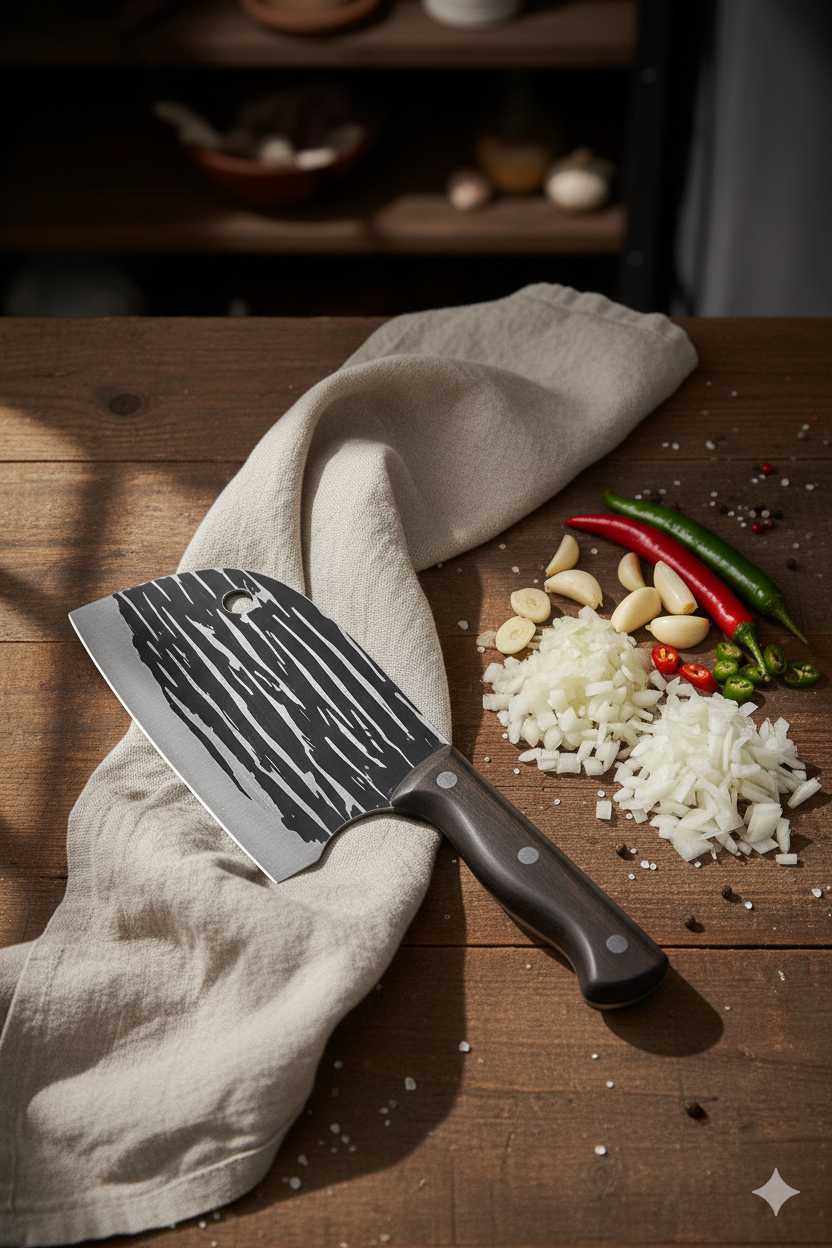
Full Tang Cleaver Knife Razor Sharp Butcher’s Tool
Cleaver knives have been a cornerstone in both professional kitchens and home cooking spaces for centuries. Known for their heavy-duty…
Full Tang Cleaver Knife Razor Sharp Butcher’s Tool
Cleaver knives have been a cornerstone in both professional kitchens and home cooking spaces for centuries. Known for their heavy-duty build and razor-sharp blades, cleavers make food preparation faster, safer, and far more efficient. But not all cleavers are created equal — this is where the full tang cleaver knife stands out as a superior choice.
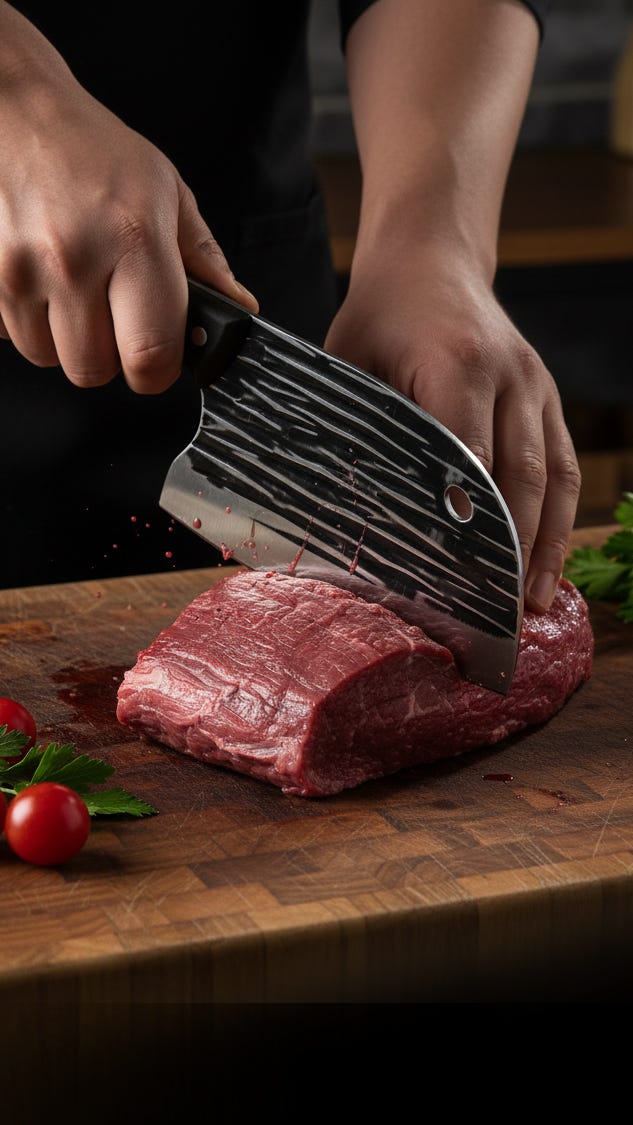
A full tang knife means the blade extends through the entire handle, giving it extra strength, balance, and stability. Imagine swinging a hammer with just the metal tip glued to a stick — it wouldn’t feel secure, right? The same logic applies here. A full tang design ensures the blade won’t snap or wobble, even when tackling dense meat or bones.
Butchers, chefs, and even passionate home cooks love cleavers because of their unmatched cutting power. Whether it’s slicing through a thick beef brisket, chopping chicken, or dicing hard vegetables, a well-crafted cleaver can handle it all. In fact, many professionals see cleavers not just as knives but as indispensable kitchen tools.
If you’re someone who enjoys cooking or wants to bring professional-level precision into your kitchen, investing in a full tang cleaver knife is a game-changer. And when it comes to options, one standout choice is the **Professional Butcher’s Full Tang Cleaver Knife**, which combines sharpness, durability, and style in one package.
Key Features of a Full Tang Cleaver Knife
A knife isn’t just about sharpness; it’s about how well it performs across different kitchen tasks. Let’s break down the main features that make a full tang cleaver knife one of the best investments you can make:
Razor-Sharp Blade for Precision Cutting
One of the most important features is the blade itself. A full tang cleaver typically comes with a razor-sharp edge that glides through meat and vegetables effortlessly. Unlike regular knives that might crush or tear food, a cleaver’s sharpness ensures cleaner cuts, which not only look better but also help in preserving texture and flavor.
Balanced Weight for Comfortable Handling
Another key feature is weight distribution. Since the blade extends through the handle, the balance is perfectly centered. This makes the cleaver feel more natural in your hand, reducing fatigue during long cooking sessions. Whether you’re prepping for a family barbecue or cutting in bulk for professional use, that balance makes all the difference.
Ergonomic Handle for Better Grip
Comfort and control are just as important as sharpness. A full tang cleaver usually comes with a sturdy, ergonomic handle designed for a non-slip grip. This is crucial because a cleaver’s weight can be intimidating if not handled properly. A secure grip prevents accidents and makes chopping more enjoyable.
When combined, these features create a tool that doesn’t just cut — it empowers your cooking. If you’re looking for a reliable option, the **Professional Full Tang Cleaver Knife on Amazon** is an excellent example that embodies all these qualities.

Advantages of Using a Cleaver Knife in the Kitchen
Why choose a cleaver over a chef’s knife or any other kitchen tool? The answer lies in the advantages it offers:
Durability That Lasts a Lifetime
Thanks to its full tang build and robust construction, a cleaver knife is designed to withstand years of heavy use. Unlike fragile kitchen knives that may chip or crack, cleavers are built tough — ideal for butchering, chopping bones, and cutting large portions of meat.
Versatility in Cutting Meat, Bones, and Vegetables
Many people assume cleavers are only for meat, but that’s far from true. They’re equally effective at slicing through root vegetables, herbs, and even crushing garlic. This makes them a multi-purpose tool that eliminates the need for multiple knives during meal prep.
Safer and More Efficient than Regular Knives
Cleavers aren’t just stronger; they’re safer. Because of their sharpness and weight, they cut through food in one clean motion, reducing the need for excessive force. This lowers the risk of slipping and injuring yourself. Plus, the wider blade can even double as a tool to scoop chopped ingredients into the pan.
If you want a knife that combines strength, sharpness, and safety, consider upgrading to a professional-grade option like the **Full Tang Cleaver Knife**, which is trusted by butchers and chefs alike.
How to Choose the Right Full Tang Cleaver Knife
Buying a cleaver isn’t just about grabbing the first one you see — it’s about knowing what to look for. Here’s a breakdown of factors to consider:
Blade Material and Sharpness
High-carbon stainless steel is often the best choice since it holds an edge longer and resists rust. Look for a blade that comes pre-sharpened but can also be easily re-sharpened at home.

Handle Comfort and Build Quality
Since you’ll be holding the cleaver for extended periods, comfort is essential. A full tang design with a well-crafted wooden or composite handle ensures durability and ease of use.
Price vs. Value Comparison
Cleavers come in a wide range of prices, but the key is finding one that balances quality with affordability. Sometimes, investing a little more upfront saves you money in the long run by avoiding frequent replacements.
When you weigh these factors, it’s clear why professional-grade cleavers, such as the one featured in this article, are worth every penny.
Spotlight on a Professional Full Tang Cleaver Knife
When it comes to cleaver knives, not all are created equal. Among the many available options, the Professional Butcher’s Full Tang Cleaver Knife stands out as a top contender.
Why This Razor-Sharp Butcher’s Tool Stands Out
This knife combines precision, balance, and durability in one sleek package. Its Damascus-pattern blade isn’t just functional — it’s visually stunning, making it a proud addition to any kitchen.
Customer Reviews and Real-Life Experience
Users rave about its sharpness, ease of use, and the confidence it brings when handling tough cuts. Many mention that it drastically reduces prep time while making cooking more enjoyable.
Where to Buy the Best Full Tang Cleaver Knife
You don’t have to search far to get your hands on this high-quality tool. The **Professional Butcher Cleaver Knife** is available on Amazon, where you can check out detailed reviews, ratings, and photos from satisfied buyers.
Proper Care and Maintenance of Cleaver Knives
A full tang cleaver knife is a serious investment, and like any good investment, it deserves proper care. Many people buy expensive knives but end up disappointed when they dull or rust too quickly — not because of poor quality, but because of poor maintenance. If you want your cleaver to last for decades, here’s how to take care of it.

Cleaning Techniques to Keep It Sharp
First things first — never put your cleaver knife in the dishwasher. The harsh detergents and high heat can damage both the blade and the handle. Instead, wash it by hand with warm water and mild soap right after use. Avoid letting it soak in water for long periods, as this can weaken the handle and promote rusting. After washing, dry it immediately with a clean towel. Moisture is the enemy of sharp blades, so keeping it dry is essential.
How to Store Safely and Avoid Damage
Storage plays a huge role in maintaining a cleaver. Tossing it in a drawer with other utensils can cause scratches and chips. The best way to store your cleaver is in a knife block, magnetic strip, or a protective sheath. Not only does this protect the blade, but it also prevents accidental injuries when reaching for it.
Sharpening Tips for Longevity
Even the sharpest knife needs regular maintenance. A good rule of thumb is to sharpen your cleaver every few months, depending on usage. For best results, use a whetstone or professional sharpening service. Honing the knife with a steel rod between uses also helps maintain the edge longer.
By following these steps, your cleaver won’t just last — it will perform like new every time you use it. Treat it well, and it will reward you with years of effortless cutting.
Common Mistakes to Avoid When Using a Cleaver Knife
Even the best knife can underperform if used incorrectly. Many beginners make mistakes that not only damage their cleaver but also put them at risk of injury. Let’s look at some of the most common errors and how to avoid them.
Incorrect Cutting Techniques
One big mistake is using the cleaver like a regular chef’s knife. A cleaver isn’t meant for delicate slicing — it’s designed for power. Instead of sawing through food, use a firm downward motion. Let the weight of the blade do the work. Trying to force it sideways can damage the blade edge.
Misuse That Leads to Blade Damage
Cleavers are strong, but they’re not indestructible. Many people misuse them by trying to cut through frozen food or bones that are too thick. This can chip or dull the blade. If you need to handle extremely tough materials, consider using a bone saw instead.

Safety Hazards and How to Prevent Them
Because cleavers are heavy and sharp, accidents can happen if you’re careless. Always keep your non-cutting hand in a safe position, and never chop too quickly until you’re comfortable. A stable cutting board with a damp towel underneath also helps prevent slipping.
By avoiding these mistakes, you’ll keep your cleaver in top condition and protect yourself from unnecessary injuries.
Full Tang Cleaver vs. Other Types of Kitchen Knives
With so many knife options available, you might wonder — why choose a cleaver when you already own a chef’s knife or Santoku? Let’s compare them.
Chef’s Knife vs. Cleaver Knife
A chef’s knife is versatile and great for slicing, dicing, and mincing. However, it struggles with tougher tasks like cutting through bones. A cleaver, on the other hand, handles heavy-duty jobs with ease. Think of the chef’s knife as your everyday car and the cleaver as your off-road truck.
Boning Knife vs. Cleaver Knife
A boning knife is designed for precision when removing meat from bones, but it can’t chop through the bones themselves. A cleaver does both — while it’s not as precise, it has the power to separate joints and split ribs.
Santoku Knife vs. Cleaver Knife
Santoku knives are popular for their lightweight build and precision cutting. They excel at vegetables and fine slicing but fall short when strength is required. A cleaver fills that gap perfectly, making the two knives a great duo in the kitchen.
In short, while other knives excel in precision or speed, the cleaver stands out for raw power and durability.
Professional Chefs’ Opinions on Full Tang Cleavers
If you ask professional chefs or butchers about their must-have kitchen tools, many will list the full tang cleaver knife near the top. Here’s why.
Insights from Butchers
Butchers love cleavers because they make quick work of tasks that would take much longer with standard knives. Splitting ribs, cutting large cuts of beef, or chopping through joints becomes effortless. A cleaver is the tool that helps them keep up with the fast pace of the butcher shop.
Why Home Cooks Should Invest in One
Chefs also recommend cleavers for home cooks who want to elevate their skills. Many home kitchens rely solely on chef’s knives, but once you experience the ease of chopping with a cleaver, it’s hard to go back. Not only does it save time, but it also makes you feel like a professional in your own kitchen.
The consensus is clear: whether you’re a professional or a hobbyist, a full tang cleaver knife is one of the smartest upgrades you can make to your kitchen arsenal.
Final Thoughts on Choosing the Best Cleaver Knife
At the end of the day, choosing the right cleaver comes down to quality, balance, and durability. A full tang design ensures strength and stability, while a razor-sharp blade makes cooking smoother and more enjoyable.
If you’re serious about your kitchen tools, don’t settle for cheap imitations. Invest in a professional-grade option like the Professional Butcher’s Full Tang Cleaver Knife, which blends power, beauty, and practicality in one tool. Once you try it, you’ll wonder how you ever managed without it.
Conclusion
A full tang cleaver knife isn’t just another piece of cutlery — it’s a powerhouse tool that transforms the way you cook. With its durability, sharpness, and versatility, it outperforms regular knives in heavy-duty kitchen tasks. Whether you’re a professional butcher or a passionate home cook, having a cleaver in your toolkit ensures you’re always prepared for the toughest jobs.
So, if you want a knife that truly delivers, look no further than the Professional Full Tang Cleaver Knife — your ultimate razor-sharp butcher’s tool.
FAQs
1. What is the difference between a full tang and half tang knife? A full tang extends through the entire handle, offering better balance and strength, while a half tang only covers part of the handle, making it less durable.
2. Can a cleaver be used for vegetables as well? Yes! Cleavers are excellent for chopping vegetables like carrots, potatoes, and even crushing garlic.
3. How often should I sharpen my cleaver knife? With regular use, sharpening every 2–3 months is recommended. Honing between uses also helps maintain sharpness.
4. Is a cleaver knife safe for beginners? Yes, as long as you practice proper techniques and maintain a secure grip. Its weight actually makes it safer since it requires less force.
5. Where can I buy a professional full tang cleaver knife? You can find high-quality options on Amazon, including the **Professional Butcher’s Full Tang Cleaver Knife** featured in this article.
메타데이터
- post_id
- 149b13fa3cd3
- slug
- full-tang-cleaver-knife-razor-sharp-butchers-tool-149b13fa3cd3
- url
- https://medium.com/@oliviaemma.em/full-tang-cleaver-knife-razor-sharp-butchers-tool-149b13fa3cd3
- canonical_url
- https://medium.com/@oliviaemma.em/full-tang-cleaver-knife-razor-sharp-butchers-tool-149b13fa3cd3
- author_url
- https://medium.com/@oliviaemma.em
- status
- ok
- fetched_at
- 2026-07-22 12:23:33