Agentflow V2 Deep Dive: State, Tools, and Orchestration
State-Machine Orchestration in Agentflow V2
Agentflow V2 Deep Dive: State, Tools, and Orchestration
State-Machine Orchestration in Agentflow V2

Agentflow V2 orchestrates agent workflows through an explicit state-machine architecture. Each step in the agent’s process is a node in a directed graph, and the system enforces the exact sequence of execution defined by the connections (unlike free-form agents that might stray). A built-in node-dependency system and execution queue make sure the workflow follows the designed path in order, while allowing oversight and clear role separation between different agents. This structured approach lets you build sophisticated, reliable automation flows that remain easy to maintain even as they grow in complexity.
Tools as Typed Nodes in the Workflow Graph
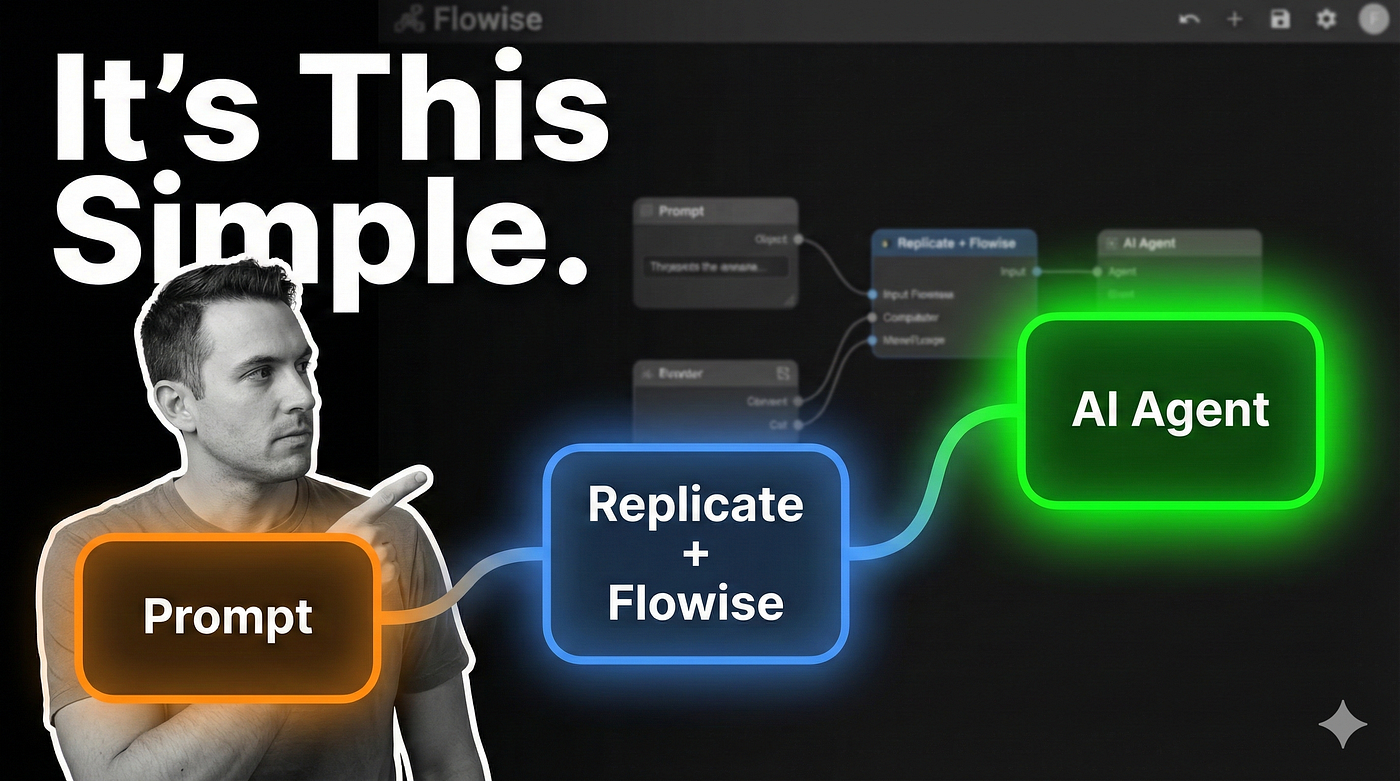
In Agentflow V2, every tool or operation is encapsulated as a typed node on the visual canvas. You drag-and-drop nodes to represent LLM calls, tool invocations, data retrieval, etc., wiring them together without writing code. Each node type has a specific role — for example, an LLM Node runs a prompt on a model, a Tool Node calls a particular external tool or API, and an Agent Node can even let an AI dynamically choose which tool to use next. By treating tools and actions as modular nodes, the system makes the agent’s decision flow transparent and each step’s purpose explicit.
Consistent Memory with Shared State
Agentflow V2 introduces a Flow State mechanism to handle memory consistently across nodes. The Flow State is essentially a runtime key-value store (shared context) that lives for the duration of an agent’s run, allowing nodes to read and write common variables like memory or intermediate results. This design lets non-adjacent nodes exchange information without messy wiring — for instance, an early result can be stored and then referenced much later by name. In complex multi-agent setups, managing the flow’s state is crucial for agents to hand off tasks and collaborate seamlessly, ensuring that each sub-agent works with the latest information and context.
Coordination via Retries, Guards, and Tool Selection
Real-world agent orchestration demands robust coordination and guardrails. Agentflow V2 supports conditional branches and validation checks (e.g. requiring structured JSON outputs or human approval for sensitive actions) as guard mechanisms to keep the AI on track. If a tool action fails or produces an error, the flow can catch it and loop back — using a Flowise loop node or an external orchestrator — to intelligently refine the step and retry, rather than simply giving up. Moreover, the agent’s planner is empowered to select the right tool for each sub-task, which significantly cuts down on errors and redundant tool calls. Together, these features (fallback logic, validation, and dynamic tool choice) act as an effective coordination layer that improves reliability in production scenarios.
Data Flow and State Transitions Through the Graph
Data flows through an Agentflow V2 graph in a controlled, transparent manner. The connections between nodes explicitly define how the output of one step becomes the input of the next, enabling you to trace the path of execution. At runtime, each node executes its operation and then transitions state control to the following node(s) along the directed edges — much like state transitions in a classic state machine. In fact, any output from a previously executed node can be referenced as an input to a later node, and the shared Flow State provides a global context for passing data around as needed. This clear flow of data and state makes it easy to inspect what the agent knew or decided at each step, which is invaluable for debugging and understanding complex agent behavior.
메타데이터
- post_id
- 14c197fdbf3a
- slug
- agentflow-v2-deep-dive-state-tools-and-orchestration-14c197fdbf3a
- url
- https://medium.com/@ShawnBasquiat/agentflow-v2-deep-dive-state-tools-and-orchestration-14c197fdbf3a
- canonical_url
- https://medium.com/@ShawnBasquiat/agentflow-v2-deep-dive-state-tools-and-orchestration-14c197fdbf3a
- author_url
- https://medium.com/@ShawnBasquiat
- status
- ok
- fetched_at
- 2026-06-25 07:00:49