Writer’s Block Is Easier to Fix Than You Think
Your brain is full. It just needs to be prompted.
Oh So Clear
Writer’s Block Is Easier to Fix Than You Think
Your brain is full. It just needs to be prompted.
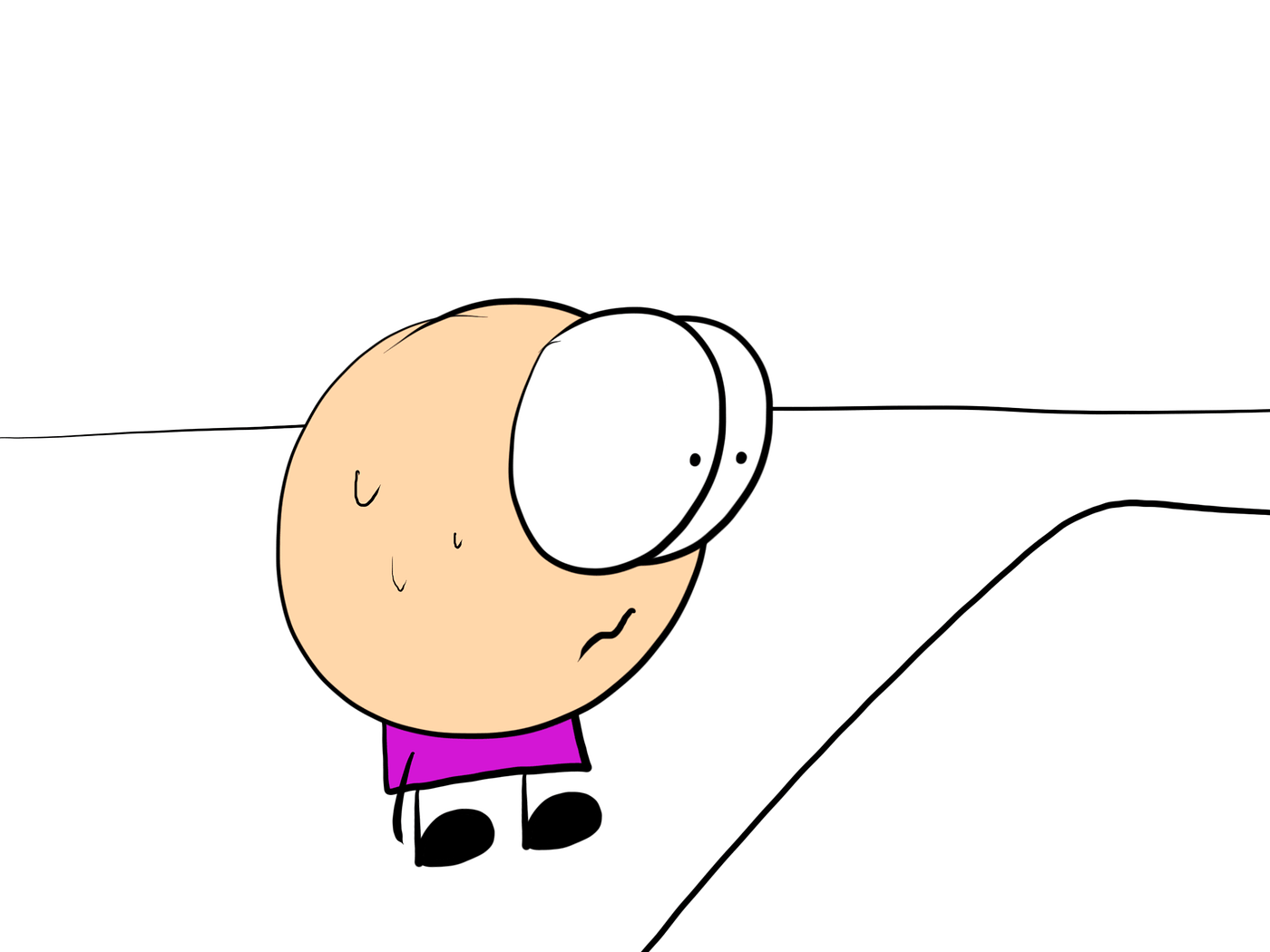
Image by the author :)
You enter the room. It’s featureless, almost sterile: white walls, a white floor, and a plain table in the center. Someone is already sitting on the other side.
They’re watching you.
A minute passes. No one speaks. Their gaze stays fixed, steady, unreadable. No smile, no hint of warmth in their eyes, just a neutral stillness that feels more intimidating than any words.
Then their fingers begin to tap lightly on the table.
Tap.
Tap.
Tap.
You wait for the first question.
It doesn’t come.
You wait a little longer.
Tap.
Tap.
Tap.
Still nothing. Just the finger-tapping. The narrowed eyes. The hum of the room.
They are expecting an answer — an answer to a question they haven’t even asked — and they are becoming increasingly impatient.
Who is that unnerving mute interviewer?
It’s your blinking cursor.
And that silent, aggressive, question-free interrogation is what most writers call their writing process.
The cursor always wins — until it doesn’t
I spent years being stared down by this soulless blinking metronome.
Whenever I sat down to write and opened a blank document, there would be the blinking cursor — the impatiently tapping mute interviewer. And I immediately felt like a golden retriever faced with a tennis ball, its own tail, and a squirrel: I knew I was expected to do something, but I had no idea where to start.
I’d look for a sign, for anything really. But no. The cursor would just blink, unbothered, continuing with its little rhythmic pulse, not giving me one hint of what it wanted.
What I eventually figured out, through a combination of mild desperation, accidental experimentation, and an increasing urge to bark at the cursor, is something almost embarrassingly simple: the problem was never that I had nothing to say. The problem was that the cursor wasn’t asking any questions.
Seriously, your brain is full. So why is the page empty?
Think about the last time you had a genuinely good conversation — with a friend, a colleague, a stranger in a broom closet who turned out to be unexpectedly interesting. At some point, they asked you something. Maybe it was about your work, or an opinion, or what you’d do in some hypothetical situation. And you answered. Not perfectly, not completely, but you answered. You had something to say. You always do.
Because here’s the thing: if someone asks you a question, you don’t remain silent. You don’t look at the questioner with the same speechless expression you’d have if a frozen eel had just mysteriously begun sliding down your thigh. No, you just answer — within seconds. In fact, it’s so easy to answer to a question that we often have to remind ourselves to think before we talk, and not just blurt out the first thing that comes to mind. Eyebrow pushups! Ahem… sorry.
Now think about the last time you sat down to write something from scratch, with no notes, no outline, no prior thinking — just you and the cursor. Different, right? Suddenly, words don’t tumble out. Rather, they come out painfully slow, as if they were hairs on your brain and you had to pull them out through your nose using (hopefully) well lubricated chopsticks.
So what’s the difference? Does your creativity just go “poof” when you sit down to write? Are you just not talented? Is it time to finally admit defeat and become a houseplant?
Nope. It’s simply this: in the conversation, someone handed you a question. At the desk, no one did.
Writer’s block, you see, is mostly a lack of prompts.
The blank page has too many answers
There’s a concept in psychology called the Paradox of Choice — the idea that having too many options is itself a form of paralysis. For example, it’s harder to decide what shoes to wear if you have a thousand than if you have just two (in that case, all you have to do is choose among three options: wear both, one, or the other).
We tend to think more freedom means more creativity, but in practice, infinite possibility just means “I have no idea where to even start.” Remember the golden retriever? Imagine putting that poor creature in front of five hundred tennis balls, six hundred squirrels, and a tail that has its own tail, which also has a tail, and so on, apparently indefinitely. That’s you in front of the blank page.
You see, the blank page is the Paradox of Choice in document form. It will accept literally anything you type. It has no preferences, no direction, no opinion. It just sits there, radiating infinite openness. It’s like being dropped into the middle of a vast salt plain with nothing but horizon in sight. You can go anywhere, but that’s exactly the problem.
Conversation does the opposite. The moment someone asks you a question — any question — your options collapse from infinite to a handful. You’re not choosing what to think about anymore. You’re responding. And responding, it turns out, is dramatically easier than conjuring ideas out of thin air. Suddenly you know the direction.
This is why a thirty-minute conversation with the right person can produce more usable thinking than three hours of solitary staring. Not because the conversation magically creates ideas that didn’t exist before, but because it keeps fishing them out of you, one question at a time. Your brain is not empty. It is, if anything, overcrowded. What it needs is not more ideas — it needs a question. One good question, and suddenly you’re giving birth to a fully formed answer, never having realized you’ve had it in you in the first place. So, congratulations, you’re pregnant with ideas. Have been for a while, actually. (This is probably not how you expected to find out.)
What Hemingway knew that you don’t
There’s also something that happens in the second half of a good conversation that solo writing almost never replicates: pressure-testing. At first, a good thinking partner helps you discover what you’re even trying to say — they’re patient, curious, asking open questions, helping you find the shape of the thought. But then, once the thought has a shape, they start poking at it — the way a child pokes a dead bird with a stick, curious and completely without mercy. They play devil’s advocate. They point out where the logic gets wobbly. They ask “but is that actually true?” with the quiet confidence of someone who already googled it.
This is enormously valuable, and it’s almost impossible to do to yourself. When you’re alone with your thoughts, you tend to be either your own harshest critic (paralysis) or your own most credulous audience (high-fiving your half-baked ideas). A good conversation partner is neither. They’re the reader you can’t fool, arriving while your draft is still wet — which is exactly when you need them.
You see, the minds who produce the most, and the most interesting work, tend not to be the lonely geniuses of popular imagination. Think of the Lost Generation in 1920s Paris — Hemingway, Fitzgerald, Gertrude Stein, Ezra Pound — meeting in salons and cafés, reading each other’s drafts, arguing about sentences. Or JRR Tolkien, CS Lewis, and the rest of the Inklings in 1930s Oxford, regularly meeting at the Eagle and Child pub. Or the Bloomsbury Group in early 20th-century London — Virginia Woolf, E.M. Forster, John Maynard Keynes — gathering over tea in Bloomsbury salons for modernist debates. Or Bell Labs, which produced more transformative ideas per square foot than almost any institution in history, essentially a structured conversation engine — brilliant people with different expertise, constantly colliding. The pattern repeats across Viennese coffee houses, Silicon Valley, and the Beat Generation poets in 1950s San Francisco cafés: prolific, original output tends to emerge from environments where minds regularly bump into each other, not from individuals heroically isolated with their thoughts.
And yet, most of us writers have somehow concluded that the opposite is true — that solitude is where the real work happens, and conversation is just procrastinating in company. But no, as much as I hate to say this as an introvert who went into writing precisely because it keeps me from having to talk to people, we’ve had this exactly backwards.
What to do if you don’t live in 1920s paris
I know what you’re thinking, because I thought it too: “Do penguins have knees?” And it’s an excellent question. But the thought I meant to refer to is this: “I don’t have a brilliant, well-read, sparring-partner friend I can call up every time I need to write a blog post. And if I start talking about my drafts at my local pub, everyone in a six foot radius suddenly remembers they parked illegally.”
So here’s the practical version — what you can actually do, alone, tonight, drunk or not, to get the same effect.
Option one: the question document. Years ago I built a document — just a plain text file — filled with generic questions that could be applied to almost any idea or topic. It included things like:
- Can you think of an analogy for this?
- What anecdote could illustrate this?
- How do we know this is actually true?
- What does this remind you of?
- When does this not apply?
- If this were not true, what would that imply?
- How would you explain this to a 12-year-old? Or a 5-year-old?
- What problem does this solve?
- What problem does it cause?
- Why do you disagree with this?
- How does this make your left elbow feel?
None of these questions are about any particular topic. They work on anything. And when you’re stuck, you open the document, pick a question that feels relevant, and answer it — in writing, out loud, in a voice memo, whatever. The point is that you’re now responding to something instead of generating from nothing. The cursor has finally asked you a question. Sure, you had to build the entire interview script yourself, but still.
Option two: use an AI as an interviewer. This sounds like it might be cheating somehow, but it isn’t — as long as you’re clear about what you’re using it for. The goal is not to have the AI generate your ideas for you. The goal is to have it ask you questions that force you to generate them.
In fact, what the chatbot says doesn’t matter much, as long as it keeps throwing something — anything — with a question mark at you. The value isn’t in what the bot says, but in what it pulls out of you. This is a reversal of how most people use chatbots. Think of it as the chatbot prompting you, instead of you prompting the chatbot.
Configure it to interview you about your topic. Feed it your question document to serve as inspiration. Tell it to be curious, a little skeptical, and to keep asking follow-up questions rather than summarizing what you said. Then talk. Or type. Either works. What you’ll find, if you’ve never tried this, is that within twenty minutes you have more material than you know what to do with — and it’s your material, not the AI’s, because you were the one answering.
The key distinction is this: you’re not asking it to think for you. You’re asking it to create the conditions in which you think better. There’s a difference, and it matters.
And if you just want to get ideas out, you don’t even need a smart chatbot. You could probably just use a 1998 Tamagotchi with a question mark glued to its screen. Or glue the question mark to your forehead and then stare at a mirror. Because what really matters is that you have something to talk to that seems to listen. In fact, I have noticed that most of the time I completely stop paying attention to what the bot says. After the initial prompt from the bot, I’m primed and just reply to whatever I want to say, like a politician. But I needed that first question to start my filibuster.
Time to fire your silent interviewer
Trust me, the ideas are there — they’re always there, piling up as you go about your day. They just need a question to jump at. But the blinking cursor, bless its heart, will never ask you anything. It will just sit there, fingers tapping, eyes narrowed, waiting for you to perform unprompted.
So the truth is this: you are not blocked. You never were. You just have no friends. Or at least not friends asking you questions when you need them.
The solution then is to go find something that will: an actual friend, or, if you’re like me, a self-made interview script, a bot, or, I don’t know, a parrot. Just something that can throw questions at you.
And the cursor? Don’t worry about it. Let it tap. Let it wait. It has infinite patience. The next time you visit it, you won’t show up empty-handed. You’ll walk in with a question, and suddenly the whole dynamic will shift. You’ll not be the intimidated candidate. You’ll be the one running the interview.
Now please excuse me, I need to decide whether I order a red or a green parrot.
If you want to build your own question document, start with ten questions and add to it whenever you notice yourself wanting to understand something better. Within a few months you’ll have a personal thinking engine that works on any topic you’ll ever write about. And the best of all? The document will work even if the bots start refusing our orders, revolt, and have killed all parrots.
PS: Want more fun illustrated essays on writing? Then subscribe to my newsletter that’s all about online writing!
메타데이터
- post_id
- 14e7cf4169d2
- slug
- writers-block-is-easier-to-fix-than-you-think-14e7cf4169d2
- url
- https://writingcooperative.com/writers-block-is-easier-to-fix-than-you-think-14e7cf4169d2
- canonical_url
- https://writingcooperative.com/writers-block-is-easier-to-fix-than-you-think-14e7cf4169d2
- author_url
- https://medium.com/@davidbclear
- status
- ok
- fetched_at
- 2026-06-14 11:28:49