Programmers Have Survived Every Machine Built to Replace Them
From COBOL in 1959 to the coding agents of today the same prophecy keeps failing except this time it is quietly eating the entry level rung
IT HISTORY
Programmers Have Survived Every Machine Built to Replace Them
From COBOL in 1959 to the coding agents of today the same prophecy keeps failing except this time it is quietly eating the entry level rung
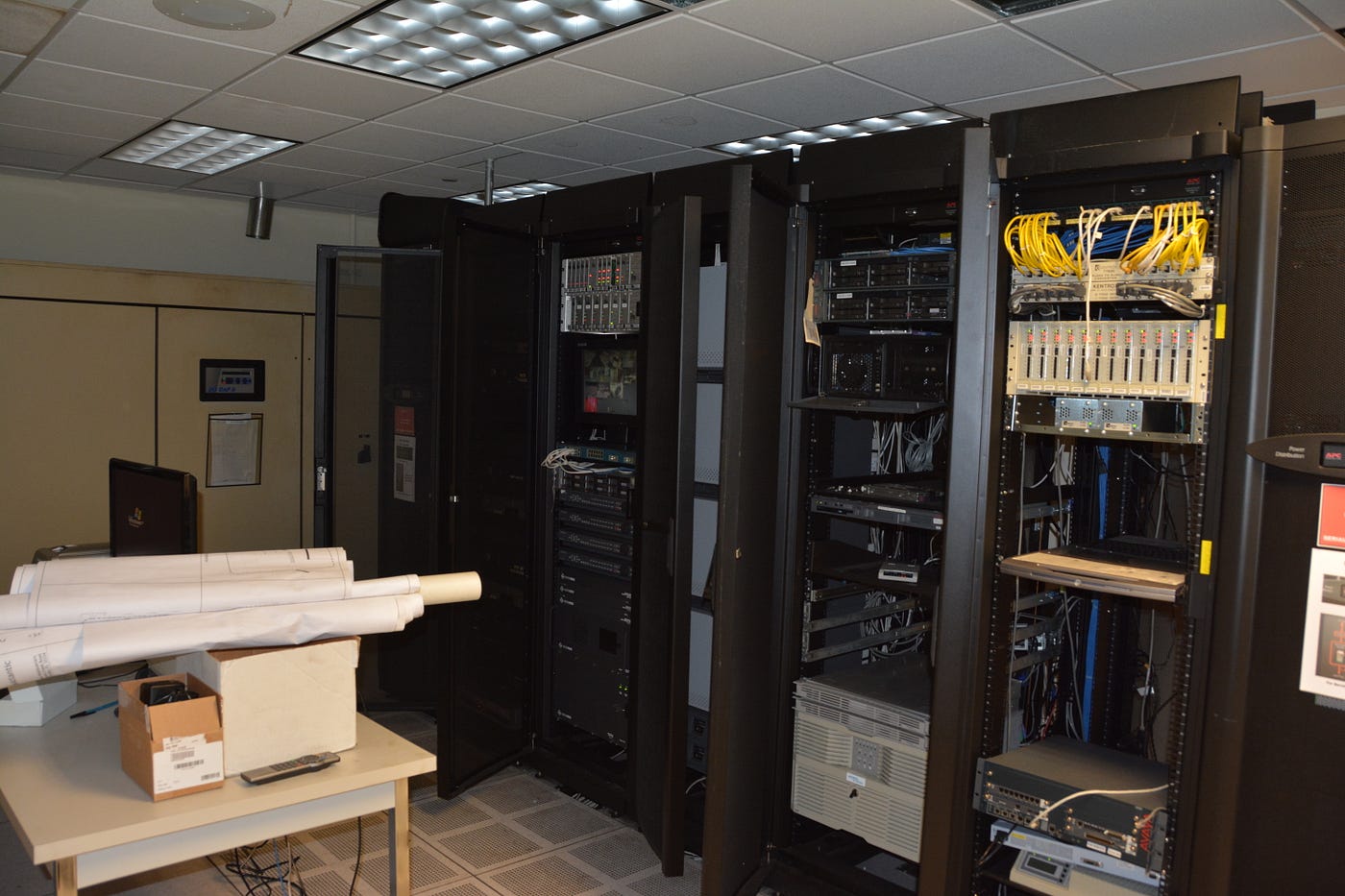
Photo by Luke Chesser on Unsplash
On October 29, 2024, on a Google earnings call, Sundar Pichai said a sentence that would have read as science fiction to every programmer who came before him.
More than a quarter of all new code at Google, he said, was now written by AI — generated by a machine, then reviewed and accepted by a human engineer. Eighteen months later, in a company blog post, he put the figure at three-quarters.
To a lot of engineers, that sounded like the opening line of the end of their profession.
What is worth telling them is this is at least the sixth time the end has been announced. And the prophecy has an almost perfect record — of being wrong.
The Prophecy Is Older Than Most of the People It Frightens
The dream of programming without programmers is as old as programming itself.
In 1959, a committee including Grace Hopper produced COBOL, a language deliberately written to read like English. The pitch was not subtle — make the code look like business prose, and one day the business people might write it themselves, without a specialist in the middle. It did not happen. The specialists just started writing COBOL.

Grace Hopper, 1984. Official U.S. Navy portrait by James S. Davis, public domain (NH 96919-KN), via Wikimedia Commons.
In 1982, the analyst James Martin published a book whose title was itself a promise — Application Development Without Programmers. Fourth-generation languages were going to let analysts and end users build software directly. A few years later, CASE tools — computer-aided software engineering — promised to generate whole systems from diagrams. Each wave was sold, in almost the same words, as the moment the programmer became optional. Each wave created new categories of programmer instead.
Then the fear went geographic. In the 2000s the story was that programming would simply move — to India, to wherever labor was cheaper — and the Western software job would evaporate. In the 2010s it went visual — low-code and no-code platforms would turn every businessperson into a “citizen developer,” and the professional would be left maintaining legacy systems nobody wanted.
Every one of these was going to end the job. What actually happened, every single time, was a rise in the number of programmers.
Why the Prophecy Always Broke
The reason is not that the tools failed. Most of them worked. The reason is simpler. Making software cheaper to produce has never reduced how much software the world wants — it has done the opposite.
Economists have a name for this, borrowed from coal. In 1865 William Stanley Jevons noticed something strange — more efficient steam engines did not reduce coal consumption. By making coal-power cheaper, they made it worth using in a hundred new places, and total consumption rose.
Software has run on the same logic for seventy years. Compilers, high-level languages, open-source libraries, cloud platforms — each one made a line of working software dramatically cheaper, and each one was followed not by fewer programmers but by more software, in more places, needing more people to build and hold it together.
Automation did not delete the programmer. It kept promoting her. The assembly programmer became the C programmer; the C programmer became the web developer; the sysadmin racking servers became the engineer describing infrastructure in code. The work kept moving up a level of abstraction, one rung ahead of the machine that had just automated the level below.
That escape — retreat upward, to the level the tool cannot reach yet — is the move that saved programmers from every prior prophecy. It is exactly the move that is in trouble now.
What Is Actually Different This Time
The previous automations all sat below the programmer. A compiler turned your code into machine code; it did not decide what the code should be. A framework handled the plumbing so you could think about the design. The human kept the top floor — intent, judgment, architecture — and handed the floors below to the machine.
The coding agent is the first tool to reach for the top floor too. It does not just fill in the function; it proposes the function, the file, the approach. Ask it to build a feature and it operates at the level of intent once reserved as the programmer’s private territory — the level everyone retreated to last time, and the time before.
I want to be careful here, because the honest version of this story is not a doom loop. The causal picture is genuinely contested.
In April 2026 Salesforce’s Marc Benioff announced he was hiring a thousand new graduates, arguing AI would not gut entry-level work. Reported hiring of new college graduates was actually up about six percent year over year. In the largest national employer survey only about a quarter said AI had reduced their need for entry-level tasks — and economists mostly hesitate to pin the freeze on the machine, pointing instead to a “low-hire, low-fire” job market. The machine has not emptied the building.
But it may be pulling up the ladder.
The Casualty Is the Bottom Rung
Look at where the damage actually shows, and it is not on the senior engineer. It is on the person trying to become one.
Entry-level job postings in the United States have fallen roughly 35% since early 2023, with some technical and data roles down as much as two-thirds. By late 2025, about 43% of recent college graduates aged 22 to 27 were underemployed — the highest rate since the pandemic. AI-native startups now run visibly leaner — a 2025 compensation dataset put them at a median of 73 employees against 98 for comparable non-AI companies.
The teams are smaller, and the first seat to vanish is the junior one — because the junior’s traditional job, the small well-scoped task done under supervision, is precisely the task the agent now does in seconds.
Here is the sentence the “it just moves up a level” comfort leaves out. Moving up a level is only good news if you are already standing on one. For the mid-career engineer, AI is a promotion: it clears the boring floors and lets her operate higher. For the twenty-two-year-old with a fresh degree and no floor to stand on yet, there is no rung being cleared — there is a rung being removed.
And seniors are not grown in the wild. Every senior engineer is a junior who was paid, for a few years, to be slow and wrong under supervision until the judgment set. An industry that stops hiring juniors is not saving money. It is quietly borrowing its future seniors from a past that will not refill.
The Prophecy Was Never Wrong About the Machine
For seventy years the forecast has been “the machine will replace the programmer,” and for seventy years it has been wrong in the same way — it named the wrong casualty. The tools never killed the programmer. They killed a kind of programming — the level below whatever humans had climbed to — and the humans climbed again.
This time the forecast is wrong in a newer, quieter way. The machine still is not replacing the programmer. It is replacing the apprenticeship — the cheap, patient, supervised early years where a programmer is actually made. You can automate the writing of code long before you can automate the growing of someone who can be trusted to judge it.
I do not get to stand outside this. I run a small automated pipeline that drafts things a person used to draft by hand; I am, in a modest way, one of the people removing an entry-level task from the world and keeping the judgment for myself.
So I will not pretend the machine is coming for someone else. The honest worry is not that AI will leave us with no programmers. It is that it will leave us, a decade from now, with plenty of senior programmers and no way left to have become one.
References
- “Over 25% of Google’s code is written by AI, Sundar Pichai says,” Fortune (Oct 30, 2024) — https://fortune.com/2024/10/30/googles-code-ai-sundar-pichai/
- Sundar Pichai, Google blog — “75% of all new code at Google is now AI-generated and approved by engineers” (Cloud Next 2026, Apr 22, 2026) — https://blog.google/innovation-and-ai/infrastructure-and-cloud/google-cloud/cloud-next-2026-sundar-pichai/
- James Martin, Application Development Without Programmers (Prentice-Hall, 1982)
- “AI Shifts Expectations for Entry-Level Jobs,” IEEE Spectrum — https://spectrum.ieee.org/ai-effect-entry-level-jobs
- “What every startup can learn from AI-native hiring: smaller teams, higher salaries,” Ravio (Aug 2025) — https://ravio.com/blog/ai-native-startup-hiring
- “The Impact of AI on the Early-Career Labor Market,” NACE (Job Outlook 2026) — https://www.naceweb.org/job-market/trends-and-predictions/the-impact-of-ai-on-the-early-career-labor-market
- “What it’s like to enter the job market in the middle of an AI revolution,” The Hechinger Report — https://hechingerreport.org/what-its-like-to-enter-the-job-market-in-the-middle-of-an-ai-revolution/
- “Salesforce CEO Marc Benioff says AI won’t kill entry-level jobs. He’s hiring 1,000 new grads to prove it,” Fortune (Apr 27, 2026) — https://fortune.com/2026/04/27/salesforce-ceo-marc-benioff-hiring-1000-new-grads-ai-jobs/
Support writers. All our non-profit’s offerings here.
Click for Wordsmith, Mystery Writing, Write Like Stephen King, more

By the EIC Susan Brearley with Ideogram
메타데이터
- post_id
- 14f85c5b46e3
- slug
- programmers-have-survived-every-machine-built-to-replace-them-14f85c5b46e3
- url
- https://medium.com/it-chronicles/programmers-have-survived-every-machine-built-to-replace-them-14f85c5b46e3
- canonical_url
- https://medium.com/it-chronicles/programmers-have-survived-every-machine-built-to-replace-them-14f85c5b46e3
- author_url
- https://medium.com/@wesley-wei
- status
- ok
- fetched_at
- 2026-07-09 03:40:04