Inside the Mind of a Hacker Team: How Cyber Attacks Actually Work
Think of it as a bank heist. There is a scout, a lockpicker, a getaway driver, and a leader. The only difference is that the vault they are…
Inside the Mind of a Hacker Team: How Cyber Attacks Actually Work
Think of it as a bank heist. There is a scout, a lockpicker, a getaway driver, and a leader. The only difference is that the vault they are robbing is your network.
Photo by Max Bender on Unsplash
Most people picture a hacker as a lone figure in a dark room, hunched over a laptop, typing furiously while green text scrolls across a black screen.
That image is outdated by about fifteen years.
Photo by Clint Patterson on Unsplash
The reality of modern cyber threats is far more organized, far more methodical and far more terrifying. The most dangerous attacks today are not carried out by lone geniuses. They are carried out by teams. Structured, coordinated, role-based teams that operate with the discipline of a special operations unit and the patience of a chess grandmaster.
Understanding how these teams work, how they think, and how they divide labor is the first step toward defending against them.
The Anatomy of a Threat Actor Team
A Threat Actor Team is an organized group of individuals with specialized skills collaborating to carry out cyber attacks. Each member has a distinct role and the team’s effectiveness comes from combining those roles into a single, coordinated operation.
Here are the five core roles that appear in nearly every sophisticated threat actor group:
The Programmers (The Weapon Builders)
These are the members who write custom malware, build exploit kits and develop the tools that the rest of the team will use. Off-the-shelf hacking tools are easy for antivirus software to detect. Custom-built malware, written specifically for a single target, is exponentially harder to catch.
A skilled programmer on a threat actor team does not just write code that breaks into systems. They write code that breaks into systems quietly, evades detection for months, and self-destructs when the mission is complete.
The Network Specialists (The Navigators)
Once initial access is gained, someone needs to understand the internal landscape. Network specialists map the target’s digital infrastructure, identify trust relationships between systems, locate high-value servers, and find the paths of least resistance through segmented networks.
This role requires deep knowledge of routing protocols, Active Directory structures, firewall rules, and network segmentation. It is the difference between breaking through the front door and knowing exactly which hallway leads to the vault.
The Social Engineers (The Manipulators)
Not every attack starts with code. Many of the most devastating breaches in history started with a phone call, an email, or a LinkedIn message.
Social engineers exploit human psychology rather than software vulnerabilities. They impersonate colleagues, vendors, or IT support staff. They create urgency, build trust, and manipulate targets into revealing passwords, clicking malicious links, or granting access to restricted systems.
The most sophisticated firewall in the world is useless if someone inside the building holds the door open for the attacker.
The Data Analysts (The Intelligence Officers)
After data is exfiltrated, someone needs to process it. Raw database dumps, email archives, and document repositories are worthless without analysis. Data analysts sift through stolen information to extract financial records, trade secrets, personal identifiable information (PII), and anything else that can be monetized or leveraged.
This role is often overlooked in discussions about threat actors, but it is the role that turns a breach into profit.
The Team Leader (The Strategist)
Every operation needs coordination. The team leader sets objectives, defines timelines, allocates roles, and makes real-time decisions when the plan inevitably encounters obstacles. They determine which targets are worth pursuing, which attack vectors to use, and when to abort if the risk of detection becomes too high.
The best threat actor leaders are distinguished not by their technical skills, but by their operational discipline. They know when to push forward and when to disappear.
Photo by Glen Carrie on Unsplash
The Bank Heist Analogy
The easiest way to understand how a threat actor team operates is to think of it as a meticulously planned bank heist.
Photo by Etienne Martin on Unsplash
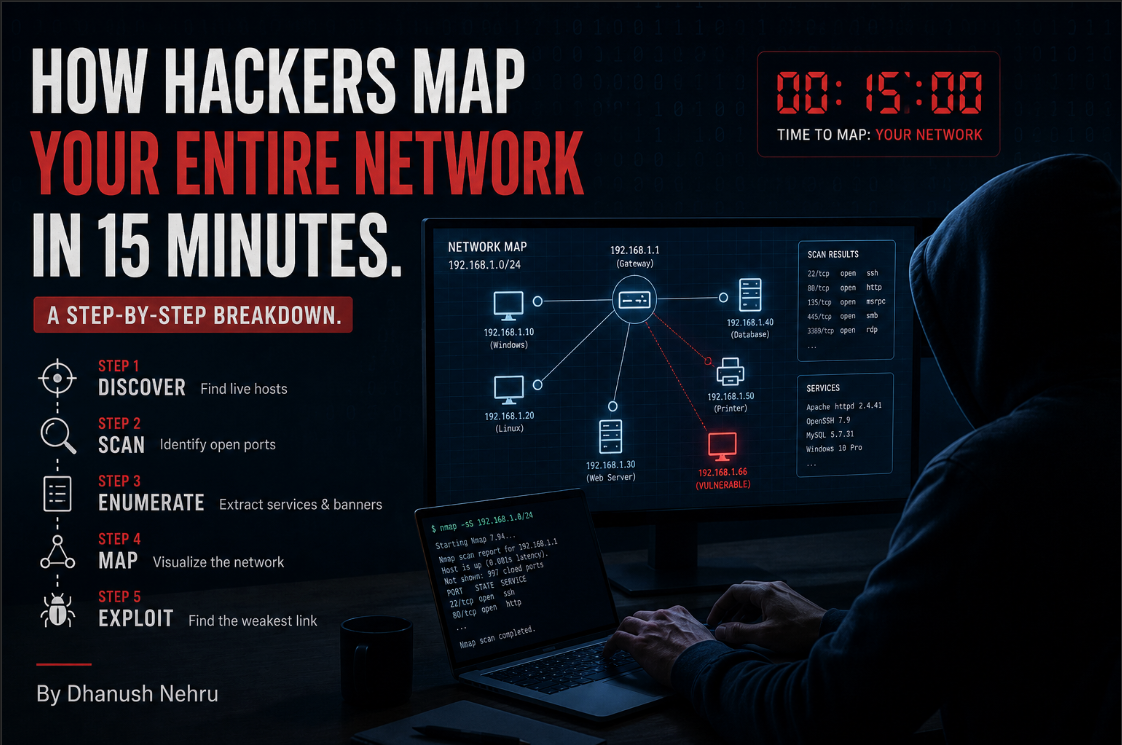
The Scout surveys the bank weeks before the operation. Studying the layout. Counting the security guards. Timing the patrols. Identifying which doors are reinforced and which ones are not. In the cyber world, this is the reconnaissance phase. The team uses network scanners, OSINT (Open Source Intelligence) and social engineering to probe the target’s defenses, map the attack surface, and identify the weakest entry points.
[embed]
The Lockpicker specializes in bypassing physical locks, doors and alarm systems without triggering anything. In a cyber operation, this is the exploitation phase. The team uses custom malware, rootkits, or zero-day exploits to gain unauthorized access without setting off intrusion detection systems.
[embed]
The Getaway Driver plans the escape route. No traces. No pursuit. No evidence left behind. In cyber terms, this is the exfiltration specialist, the person who extracts stolen data through encrypted channels, uses VPNs and proxy chains to obscure the team’s location, and employs data obfuscation techniques to make the stolen information unreadable if intercepted.
[embed]
The Leader coordinates everything. Secure communications. Precise timing. Contingency plans if something goes wrong. Every phase of the operation is planned in detail, and every team member knows their role before the first move is made.
[embed]
The “Low and Slow” Philosophy
Here is something that separates real threat actor teams from amateurs and it is the most important concept in this entire article.
Professional threat actors do not use loud, aggressive tactics.
They do not launch brute-force attacks that trigger account lockout alerts after five failed attempts. They do not deploy well-known malware that every antivirus engine on the planet has a signature for. They do not scan every port on a target network in ten seconds, generating thousands of log entries that any junior SOC analyst would flag immediately.
Instead, they operate “low and slow.”
They take weeks or months to complete what an amateur would attempt in hours. They send one carefully crafted phishing email instead of a thousand generic ones. They move laterally through a network one hop at a time, waiting days between each move to avoid triggering anomaly detection. They exfiltrate data in small, encrypted chunks that blend into normal network traffic.
The most dangerous attackers are not the ones who make noise. They are the ones who never appear in the logs at all.
This is why understanding threat actor methodology matters so much for defense. Security teams that only train for loud, obvious attacks will be completely unprepared for the quiet, patient adversary who has been inside the network for six months.
The Lone Wolf: Equally Dangerous, Harder to Predict
Not every threat actor operates as part of a team. Solo operators, often called lone wolves, possess a diverse enough skill set to execute attacks independently.
Photo by Erik Mclean on Unsplash
What they lack in resources and manpower, they compensate for with unpredictability. A nation-state threat actor group follows patterns. They have preferred tools, known infrastructure, and identifiable techniques that threat intelligence teams can track over time. A lone wolf has no pattern. No established infrastructure. No prior intelligence to analyze.
Lone wolves may be motivated by financial gain, personal ideology, revenge against a former employer or simply the intellectual challenge. Their methods range from simple phishing campaigns to sophisticated custom malware development, depending entirely on their individual expertise.
From a defensive standpoint, lone wolves are often harder to attribute and harder to predict, even if their overall capability is lower than an organized team.
What Drives Them: The Five Motivations
Understanding why threat actors attack is just as important as understanding how they attack. Motivations shape target selection, attack intensity, and post-breach behavior.
Financial Gain
The most common motivation. This includes direct theft through fraudulent transactions, ransomware deployment, and the sale of stolen data (credit card numbers, credentials, PII) on dark web marketplaces. Financially motivated actors tend to be highly pragmatic. They target organizations with weak security and high-value data, and they move on quickly.
Espionage
Nation-state actors and corporate spies gather confidential information from governments, defense contractors and corporations to gain strategic, military, or competitive advantages. Espionage-motivated actors are typically the most patient and the most well-funded. They will maintain persistent access to a target network for years if necessary.
Disruption
Some threat actors aim to cause chaos. Shutting down critical services, deleting data, defacing websites or spreading misinformation. Disruption-motivated attacks are often timed for maximum impact, targeting organizations during peak operational periods or during politically sensitive moments.
Ideology
Hacktivists target organizations that oppose their political, religious, or social beliefs. Their attacks are often public and designed to generate media attention. While hacktivists are sometimes dismissed as unsophisticated, groups like Anonymous have demonstrated the ability to cause significant damage to well-defended targets.
Revenge
Former employees, disgruntled contractors, or individuals who feel wronged by an organization can be some of the most dangerous threat actors. They often have insider knowledge of the target’s systems, credentials that were never revoked, and a deeply personal motivation that makes them persistent.
The Defenders: Red, Blue, and Purple
On the other side of this equation are the teams that exist specifically to stop threat actors.
Blue Teams are the defenders. They monitor networks, detect intrusions, respond to incidents, and build the security controls that protect organizational assets.
Red Teams use the exact same techniques as threat actors, but with authorization and with the explicit goal of finding weaknesses before real attackers do. Red teamers think like criminals, plan like criminals, and execute like criminals. The only difference is that their report goes to the CISO instead of to a dark web marketplace.
Purple Teams bridge the gap. They facilitate collaboration between Red and Blue teams, ensuring that the vulnerabilities Red discovers are translated into actionable defensive improvements by Blue. The goal is continuous improvement, not a one-time assessment.
The best defense is built by people who understand offense. That is why Red Teams exist.
The Takeaway
Cyber threats are not random. They are planned, coordinated, and executed by people with real skills, real motivations, and real patience.
Understanding the structure of a threat actor team, the roles they fill, the philosophy they follow, and the motivations that drive them is not just academic knowledge. It is the foundation of every effective security strategy.
Because defending a network without understanding the adversary is like fortifying a castle without knowing how sieges work. The walls might look impressive, but the enemy already knows where the cracks are.
I’m **Dhanush Nehru** an Engineer, Cybersecurity Enthusiast, Youtuber and Content creator. I document my journey through articles and videos, sharing real-world insights about DevOps, Artificial Intelligence, automation, security, cloud engineering, opensource and more.
You can **support me / sponsor me or follow my work via [X](https://x.com/Dhanush_Nehru), [Instagram](https://www.instagram.com/dhanush_nehru/) ,[Github](https://github.com/DhanushNehru/) or [Youtube](https://www.youtube.com/@dhanushnehru?sub_confirmation=1)**
메타데이터
- post_id
- 15153cfcd7bc
- slug
- inside-the-mind-of-a-hacker-team-how-cyber-attacks-actually-work-15153cfcd7bc
- url
- https://medium.com/@dhanushnehru/inside-the-mind-of-a-hacker-team-how-cyber-attacks-actually-work-15153cfcd7bc
- canonical_url
- https://medium.com/@dhanushnehru/inside-the-mind-of-a-hacker-team-how-cyber-attacks-actually-work-15153cfcd7bc
- author_url
- https://medium.com/@dhanushnehru
- status
- ok
- fetched_at
- 2026-06-11 06:59:45