FastBridge and the Collapse of One-Chain Thinking in DeFi
Multi-chain DeFi was supposed to improve liquidity.
FastBridge and the Collapse of One-Chain Thinking in DeFi
Multi-chain DeFi was supposed to improve liquidity.
Instead, it fractured it.
Users now operate across multiple ecosystems, but still rely on tools designed for a single-chain world.
This mismatch creates inefficiencies that compound over time especially when bridging assets.
FastBridge introduces a new execution model designed specifically for this fragmented reality.

The Problem: Multi-Chain ≠ Multi-Connected
Today’s DeFi user typically has:
- assets on Ethereum.
- positions on L2s.
- stablecoins across multiple ecosystems.
But liquidity is not unified.
Every movement requires:
- manual chain switching.
- repeated transactions.
- multiple gas payments.
- time delays between steps.
This creates friction not just in execution, but in decision-making.
Why Traditional Bridging Fails Active Users
Most bridges operate on a one-to-one model:
- one source chain.
- one destination chain.
- one transaction per transfer.
This model breaks under real-world usage patterns where:
- liquidity is distributed.
- urgency is high.
- opportunities are time-sensitive.
Canonical bridges also introduce withdrawal delays in certain architectures, making them unsuitable for active capital rotation.
FastBridge: A Different Execution Model
FastBridge introduces a multi-source, single-execution system.
Instead of selecting one chain, users can:
- view balances across all supported chains
- combine assets from multiple chains
- execute a single transaction to a destination chain
Behind the scenes, FastBridge:
- aggregates user balances.
- computes optimal sourcing.
- executes unified settlement.
The user only interacts with intent.

Key Innovation: Multi-Source Bridging
This is the most important shift.
Traditional bridges:
“Pick a chain and move funds.”
FastBridge:
“Tell us where you want to be and we’ll assemble it.”
This removes:
- repeated bridging loops.
- gas fragmentation across chains.
- manual coordination between balances.
UX Comparison
Traditional Bridge Flow
- Switch to Chain A.
- Check balance.
- Bridge.
- Wait.
- Switch to Chain B.
- Repeat.
**FastBridge Flow**
- View all balances.
- Choose destination.
- Confirm single transaction.
- Complete.
Why This Matters
DeFi is no longer single-chain.
But most tools still assume it is.
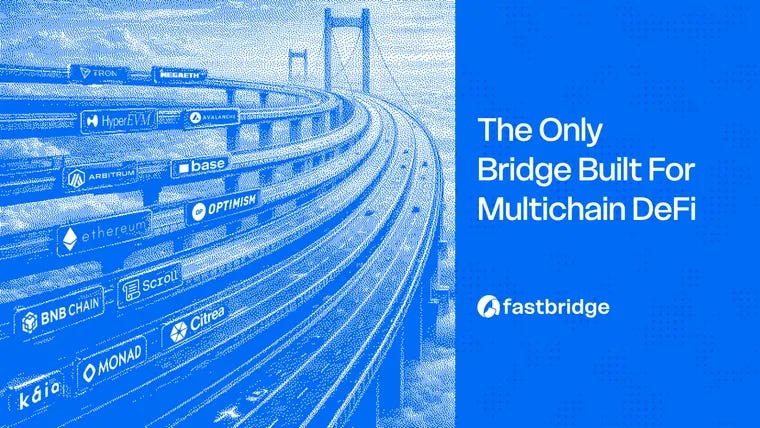
FastBridge aligns infrastructure with user behavior not chain boundaries.
This is not just a UX improvement. It is a structural shift in how liquidity moves across ecosystems.
Conclusion
As DeFi continues expanding into more chains, fragmentation will increase unless execution layers evolve.
Explore:
Avail Fast Bridge | Avail Blog | Website | Discord | X
메타데이터
- post_id
- 151dcac19f5d
- slug
- fastbridge-and-the-collapse-of-one-chain-thinking-in-defi-151dcac19f5d
- url
- https://medium.com/@winniedennis29/fastbridge-and-the-collapse-of-one-chain-thinking-in-defi-151dcac19f5d
- canonical_url
- https://medium.com/@winniedennis29/fastbridge-and-the-collapse-of-one-chain-thinking-in-defi-151dcac19f5d
- author_url
- https://medium.com/@winniedennis29
- status
- ok
- fetched_at
- 2026-06-22 12:55:45




