Why Spirituality Returned After the Death of God
After atheism, science, nihilism, and existential emptiness, humanity began searching again for meaning, transcendence, and spiritual…
One of the most controversial developments in the postmodern world is the emergence of new visions surrounding spirituality. This phenomenon is still closely connected to the legacy of the modern era. During modernity, religion was subjected to intense criticism. By the nineteenth century, many described the period as the peak age of atheism.
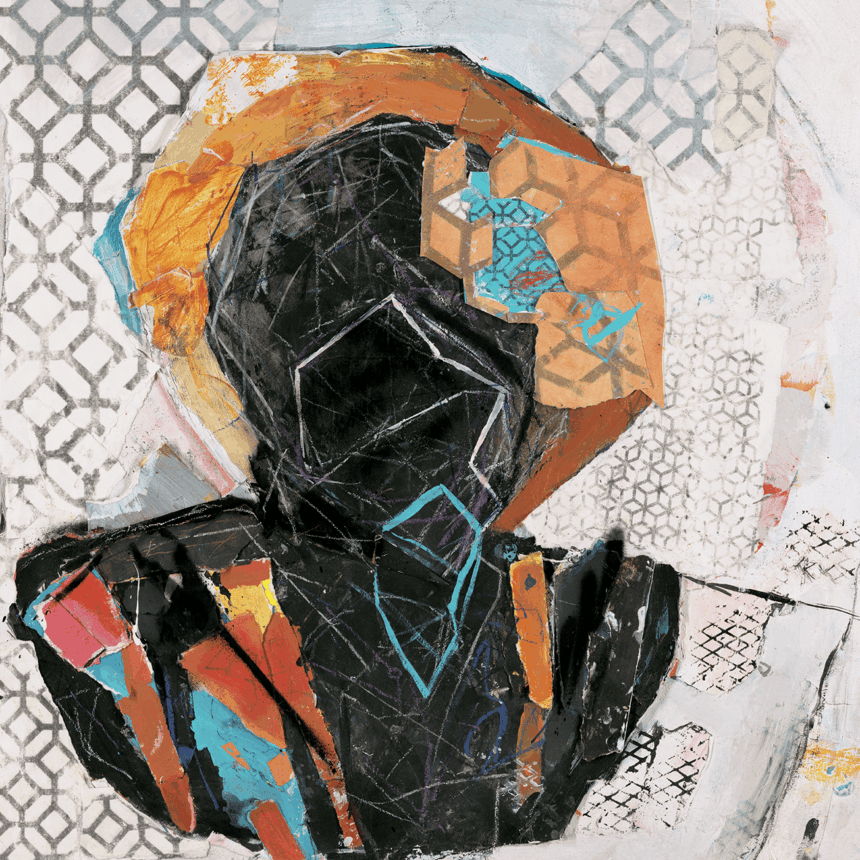
Non Portrait V: Our Beautiful Skins Rags Fell Into Infinity, Askia Bilal, 2021
For example, religion was described by some thinkers as an illusion, childish fantasy, or even a source of psychological illness. Sigmund Freud considered religion a form of wishful thinking — merely an illusion created to comfort humanity, like a childish dependency.
Karl Marx famously described religion as the “opium of the people.” His point was that oppressed and impoverished people, unable to change social structures or fight injustice, comforted themselves with hopes of heaven and the afterlife. Religion, in this sense, functioned like a narcotic: it soothed suffering without transforming material reality. Instead of changing economic structures or making revolution, people escaped into fantasies of another world.
For Georg Wilhelm Friedrich Hegel, religion was only one stage in humanity’s development of consciousness. According to him, ultimate reality or transcendence was first grasped through art, then through religion, and finally through philosophy. Thus religion was not the highest stage; it was transitional.
Auguste Comte similarly argued that human thought evolves through three stages: the theological stage, the metaphysical stage, and finally the positive or scientific stage. Religious thinking therefore belonged to an immature phase of civilization, eventually surpassed by scientific rationality.
Émile Durkheim, meanwhile, argued that religion was socially useful not because it connected people with a real divine being, but because it maintained social cohesion and moral order. Religion preserved collective ideals such as love, unity, and justice. Whether God objectively existed was less important than religion’s role in producing a more orderly society.
Friedrich Nietzsche pushed criticism even further. For him, Christianity legitimized weakness. Christian morality — centered on compassion, humility, solidarity, and pity — was interpreted as a “slave morality,” created by weak people lacking the courage to assert power. Nietzsche contrasted this with “master morality,” which celebrated strength, creativity, and self-assertion. In his view, belief in God prevented humanity from becoming fully autonomous and powerful. Hence his famous proclamation: “God is dead.”
Modernity therefore developed a strong tendency toward atheism. Yet many of those criticisms also exposed real problems within religious practice itself: elements of illusion, escapism, emotional dependency, fanaticism, and social control.
However, religion did not disappear.
Toward the end of the twentieth century and into the twenty-first, many people experienced existential emptiness after the collapse of older certainties. Material success, career achievement, pleasure, consumerism, and hedonism often failed to provide meaning. People experienced anxiety, depression, alienation, broken relationships, and a profound sense of inner void. This existential crisis drove many back toward spiritual questions.
At the same time, science itself began entering territories once avoided: consciousness, near-death experiences, emotions, love, subjective awareness, and the mysteries of the mind. Researchers increasingly realized that human experience could not be reduced entirely to chemistry or hormones. Questions once dismissed as “spiritual” reappeared within scientific discussions.
Globalization also intensified cultural and religious tensions. As cultures encountered each other more directly, religious practices became highly visible and politically charged. Food laws, ritual slaughter, dress codes, symbols, migration, and public religious expression all became contested. Religion could no longer be dismissed merely as private illusion because it shaped deep cultural identities and social habits.
Events such as terrorism, religious conflict, and debates over multiculturalism forced societies to confront religion again as a major public issue.
Because of all this, many thinkers argue that what is happening today is not exactly a “return of religion,” but rather a “return of spirituality.”
Traditional religions themselves are being criticized from within by believers, theologians, mystics, and reformers. Simultaneously, new spiritual movements have emerged: New Age spirituality, energy healing, cosmic consciousness, quantum spirituality, neo-mysticism, pantheism, and holistic philosophies.
In these newer spiritual frameworks, “spirit” is often understood differently. Instead of a personal God outside the universe, spirituality may speak about energy, universal consciousness, cosmic intelligence, interconnectedness, or the living totality of existence.
Some contemporary spiritual perspectives resemble forms of pantheism — the idea that everything is divine. God is no longer imagined as a separate supernatural person, but as the totality of reality itself. The universe becomes a vast living intelligence, and human beings are seen as expressions or fragments of that greater whole.
In this framework, spirit exists both within and beyond individuals. Human consciousness, nature, animals, matter, and the cosmos are interconnected manifestations of a larger universal energy. Scientific language such as “energy,” “quantum consciousness,” or “cosmic intelligence” is sometimes used to reinterpret ancient mystical ideas.
These ideas are not entirely new. Similar concepts appeared in ancient mysticism, Neoplatonism, Sufism, Eastern religions, and various mystical traditions. Thinkers such as Plotinus proposed theories of emanation, where all existence flows outward from a single ultimate source.
Mystics across traditions often described experiences of union with the divine totality. Yet such ideas frequently remained marginal or controversial within institutional religion. Many mystics and Sufis were accused of heresy because their understanding of God differed from official doctrines.
The contemporary spiritual landscape therefore represents less a completely new invention and more a reinterpretation of older mystical intuitions using modern language.
The broader argument presented here is that religions today cannot simply isolate themselves from these changing intellectual and spiritual currents. If religions wish to remain relevant, they must engage critically and honestly with contemporary spiritual questions rather than retreat into fear or rigid purification movements.
The suggestion is not necessarily that religions abandon themselves, but that they enter into dialogue with new forms of spirituality, science, cultural pluralism, and evolving human consciousness.
메타데이터
- post_id
- 153a7b4f8b4f
- slug
- why-spirituality-returned-after-the-death-of-god-153a7b4f8b4f
- url
- https://medium.com/@shrimpmindparadox/why-spirituality-returned-after-the-death-of-god-153a7b4f8b4f
- canonical_url
- https://medium.com/@shrimpmindparadox/why-spirituality-returned-after-the-death-of-god-153a7b4f8b4f
- author_url
- https://medium.com/@shrimpmindparadox
- status
- ok
- fetched_at
- 2026-06-09 15:37:30