Claude Fable 5 API: 7 Production Use Cases That Justify the $50/M Token Cost
You just heard about Claude Fable 5 and went straight to the pricing.
Claude Fable 5 API: 7 Production Use Cases That Justify the $50/M Token Cost
You just heard about Claude Fable 5 and went straight to the pricing.
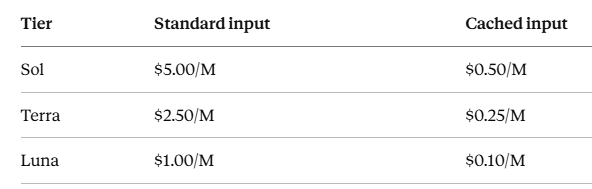
$10 per million input tokens. $50 per million output tokens.
Double what Claude Opus 4.8 costs. So the first thing you probably thought was: “That’s expensive. Can I actually justify it?”
Same reaction here. I spent a few hours going through what developers are actually building with it — the real use cases, the benchmarks, the dollar math — and I want to walk you through exactly when Fable 5 earns that price tag and when it absolutely does not.
Because here’s the thing most articles won’t tell you: Fable 5 is not the right model for everything. Using it like a smarter Sonnet is like hiring a senior staff engineer to write unit tests. The math never works.
But match it to the right problems? The ROI flips completely.
Let me show you what those problems look like.
First: The Quick Model Selection Framework
Before we get into use cases, you need a mental model for choosing between Fable 5, Sonnet 4.6, and Haiku 4.5.
Think of it this way.
Haiku 4.5 is your high-speed, low-cost workhorse. Classification, routing, summarizing short documents, generating structured output at scale. Doing millions of simple requests per day? Haiku keeps your bill from exploding.
Sonnet 4.6 is your everyday engine. Most mid-complexity tasks: drafting, code generation for single functions or modules, Q&A over moderate context. It handles 80% of what most teams need at a price that scales.
Fable 5 is your heavy machinery. You bring it in for the work that has real economic value attached — tasks where quality directly translates to hours saved, errors avoided, or decisions improved. The longer and more complex the task, the larger Fable 5’s lead over other models grows.
That last point matters more than anything else in this article. Fable 5 is not just “smarter Sonnet.” Its advantage is specifically tuned to long-horizon, autonomous, multi-step work. That’s where the $50/M output cost starts making sense.
With that framing in place, here are 7 production use cases where the math actually works.
Use Case 1: Large Codebase Migrations
This is the flagship use case, and it’s not close.
Stripe ran Fable 5 on a 50-million-line Ruby codebase and completed a codebase-wide migration in a single day — work that would otherwise have taken a full engineering team over two months. If your fully-loaded engineer cost is $150K/year, two months of team time runs somewhere between $50K and $150K depending on team size. Even at worst-case API pricing, Fable 5 is a fraction of that.
The reason this works so well is that Fable 5 was built specifically for long-running, autonomous tasks. It writes its own tests to verify its work, maintains coherence across a massive codebase, and recovers from failures without human hand-holding. Sonnet 4.6 can write code. Fable 5 can complete a migration.
The practical playbook: feed Fable 5 the migration spec plus a representative sample of your codebase structure first. Let it build a migration plan and review it before it touches production code. Run it through Claude Code or Managed Agents for multi-day autonomous sessions. Review outputs at the completion of logical chunks — not every individual change.
What you save in senior engineering hours will dwarf the API cost.
Use Case 2: Production-Quality Code Review at Scale
Code review is a bottleneck at every engineering organization above a certain size. It pulls senior engineers away from building, creates PR queues that slow velocity, and produces inconsistent feedback depending on who’s reviewing.
Fable 5 scored highest on Cognition’s FrontierCode evaluation among frontier models, even at medium effort. FrontierCode specifically tests whether models can produce code that meets production codebase standards — not just code that runs, but code a senior engineer would actually be satisfied with.
In practice: Fable 5 can do a real code review. Not a surface-level style check. It catches logic errors, flags security anti-patterns, notices when a developer reimplemented something that already exists in the codebase, and writes actionable comments rather than generic suggestions.
The calculus: if a senior engineer spending three hours per week on PR review costs you $200/week in opportunity cost, and Fable 5 handles the first pass on 80% of PRs — you’re saving real money at any reasonable token usage level.
One important setup note: use prompt caching aggressively here. Your codebase context, style guide, and architectural conventions can be cached at $1/MTok (cache hit rate) versus $10/MTok for fresh input. On repeated reviews against the same codebase, this drops your effective input cost by 90%.
Use Case 3: Document-Heavy Financial and Legal Analysis
This is the use case most developers underestimate because it doesn’t feel like “AI work.” It’s actually one of the best ROI categories.
Fable 5 scored highest on Hebbia’s Finance Benchmark for senior-level reasoning — with substantial gains specifically in document-based reasoning, chart and table interpretation, and problem solving. IMC, one of the world’s major trading firms, ran Fable 5 through their internal trading-analysis evaluations and it passed nearly everything: factual lookup, conceptual reasoning, root-cause analysis, and expected-value analysis.
The real-world pattern: financial analysts, lawyers, and consultants regularly synthesize across dozens of documents — earnings reports, contracts, research papers, regulatory filings — and produce output that requires understanding how those documents interact with each other.
Haiku or Sonnet can summarize individual documents. Fable 5 can synthesize across all of them simultaneously and notice the thing buried in document 7 that changes the interpretation of document 2.
If your billable rate for this kind of work is $300/hour and Fable 5 compresses a four-hour analysis task into 30 minutes of review plus API cost, you’ve already won.
Anthropic also confirmed: Fable 5 beats Opus 4.8 on their everyday spreadsheet suite at every effort level, finishing runs 25–30% faster. Faster and more accurate means lower cost per task even at higher token prices.
Use Case 4: Vision-Based UI and App Reconstruction
This one is newer and it genuinely surprised me.
Fable 5 can rebuild a web app’s source code from screenshots alone. Not approximately — actually. It extracts precise numbers from detailed scientific figures, understands layout from visual input, and can use its own visual output to check whether the code it wrote actually matches the design goal.
The production use case: design-to-code workflows. You have a Figma comp, a screenshot of a competitor’s feature, or a mockup that needs to become production HTML/CSS/React. Previously this required a developer to manually translate the visual into code — a process that was slow, inconsistent, and prone to endless back-and-forth.
Fable 5 takes the screenshot and the code target (“rebuild this in Next.js with Tailwind”) and produces something you can actually build on. The vision capability isn’t bolted on — it’s integrated into how the model reasons, so it uses the visual reference throughout the task rather than just at the start.
For agencies or teams doing rapid prototyping, this use case alone can compress design-to-working-prototype cycles significantly.
Code example for a basic vision-to-code call:
import anthropic
import base64
client = anthropic.Anthropic()
with open("design_screenshot.png", "rb") as f:
    image_data = base64.standard_b64encode(f.read()).decode("utf-8")
message = client.messages.create(
    model="claude-fable-5",
    max_tokens=8192,
    messages=[
        {
            "role": "user",
            "content": [
                {
                    "type": "image",
                    "source": {
                        "type": "base64",
                        "media_type": "image/png",
                        "data": image_data,
                    },
                },
                {
                    "type": "text",
                    "text": "Rebuild this UI in React with Tailwind CSS. Match the layout, spacing, and color scheme exactly. Use functional components and include all interactive states visible in the screenshot."
                }
            ],
        }
    ],
)
print(message.content[0].text)
Use Case 5: Long-Running Autonomous Research Pipelines
This is where Fable 5’s memory and long-context architecture becomes the deciding factor.
Most AI research pipelines break down at the synthesis stage. Individual document retrieval is fine. But connecting insights across 40 sources, holding context from the beginning of a research thread to the end, and improving outputs through self-generated notes — that’s where other models fall apart.
Fable 5 stays focused across millions of tokens in long-running tasks and improves its outputs using its own notes. In Anthropic’s own testing, when the model was given access to persistent file-based memory, its performance improved three times more than Opus 4.8’s did under the same conditions.
The practical setup for a research pipeline:
import anthropic
client = anthropic.Anthropic()
# Stage 1: Initial research synthesis with extended thinking
response = client.messages.create(
    model="claude-fable-5",
    max_tokens=16000,
    thinking={
        "type": "enabled",
        "budget_tokens": 10000
    },
    system="""You are a senior research analyst. As you work through the documents,
    maintain a running notes file tracking: key claims, contradictions between sources,
    emerging themes, and open questions. Use these notes to improve your final synthesis.""",
    messages=[
        {
            "role": "user",
            "content": f"""Research brief: {research_question}

            Documents to analyze:
            {compiled_documents}

            Produce a synthesis that: identifies the 3-5 most important findings,
            flags contradictions between sources, notes confidence levels for each claim,
            and identifies the 2-3 most important open questions."""
        }
    ]
)
The extended thinking capability matters here. For complex multi-document analysis, enabling the thinking budget lets Fable 5 reason through contradictions and build a coherent synthesis rather than a collection of summaries.
Use Case 6: Multi-Stage Agent Workflows with Self-Correction
This is the use case that gets most interesting as agentic AI matures.
Fable 5 was built specifically for agent harnesses. Anthropic says it can work for days at a time: planning across stages, delegating to sub-agents, and checking its own work. The self-correction loop is the key innovation — previous models required external scaffolding to catch their own errors. Fable 5 does this natively.
The production pattern: you define the high-level goal and completion criteria. Fable 5 breaks it into stages, executes each one, evaluates its own output against the criteria, and either continues or flags for human review.
A simple agentic loop structure:
import anthropic
client = anthropic.Anthropic()
def run_agent_task(task_description: str, completion_criteria: str, max_iterations: int = 10):
    messages = [
        {
            "role": "user",
            "content": f"""Task: {task_description}

Completion criteria: {completion_criteria}
Work through this step by step. After each major step, evaluate your progress against
the completion criteria. If you identify errors in your previous work, correct them.
When you believe the task is complete, explicitly state which criteria have been met
and flag any that remain open."""
        }
    ]

    for iteration in range(max_iterations):
        response = client.messages.create(
            model="claude-fable-5",
            max_tokens=8192,
            messages=messages
        )

        assistant_message = response.content[0].text
        messages.append({"role": "assistant", "content": assistant_message})

        # Check for task completion signal
        if "TASK COMPLETE" in assistant_message or response.stop_reason == "end_turn":
            return assistant_message, messages

        # Continue the loop with a progress check
        messages.append({
            "role": "user",
            "content": "Continue to the next step, or if complete, confirm completion and summarize."
        })

    return messages[-1]["content"], messages
result, history = run_agent_task(
    task_description="Audit the attached codebase for security vulnerabilities, prioritize by severity, and produce a remediation plan",
    completion_criteria="All files reviewed, vulnerabilities ranked by CVSS score, remediation steps provided for top 10 issues"
)
The reason Fable 5 outperforms Sonnet here isn’t raw intelligence — it’s sustained coherence and self-evaluation capability across many iterations. Sonnet drifts over long loops. Fable 5 holds the thread.
Use Case 7: High-Stakes Customer-Facing Reasoning Engines
The last use case is the one most developers deprioritize until they realize the cost of getting it wrong.
If your product uses AI to give advice, produce analysis, or generate outputs that a human will act on — and the stakes of a wrong output are meaningful — Fable 5’s accuracy premium is not a luxury. It’s risk management.
Harvey (a legal AI company) reported in early testing that Fable 5’s contract redlines matched or beat their current model every time in blind review by their lawyers. Rakuten noted that at the highest effort level, Fable 5 reflects on and validates its own work before delivering it.
The pattern here is different from the other six use cases. You’re not optimizing for speed or volume. You’re optimizing for the elimination of confident wrong answers — the kind of error that Sonnet might produce when working at the edge of its capability.
For high-stakes reasoning: enable extended thinking, use a multi-turn review loop where Fable 5 critiques its own first response, and set up a human review trigger when confidence language appears (“I believe,” “it appears,” “likely”).
import anthropic
client = anthropic.Anthropic()
def high_stakes_analysis(query: str, context: str) -> dict:
    # First pass: analysis
    first_response = client.messages.create(
        model="claude-fable-5",
        max_tokens=4096,
        thinking={"type": "enabled", "budget_tokens": 8000},
        messages=[{
            "role": "user",
            "content": f"Context: {context}\n\nAnalysis request: {query}"
        }]
    )

    first_analysis = next(b.text for b in first_response.content if b.type == "text")

    # Second pass: self-critique
    critique_response = client.messages.create(
        model="claude-fable-5",
        max_tokens=2048,
        messages=[
            {"role": "user", "content": f"Context: {context}\n\nAnalysis request: {query}"},
            {"role": "assistant", "content": first_analysis},
            {"role": "user", "content": "Review your analysis above. Identify: (1) any claims you're less than 90% confident in, (2) any missing considerations, (3) any logical gaps. Then provide your final, corrected analysis."}
        ]
    )

    final_analysis = critique_response.content[0].text

    # Flag for human review if hedging language detected
    hedge_phrases = ["I believe", "it appears", "likely", "probably", "uncertain"]
    needs_review = any(phrase in final_analysis.lower() for phrase in hedge_phrases)

    return {
        "analysis": final_analysis,
        "needs_human_review": needs_review,
        "first_draft": first_analysis
    }
The Dollar Math: When Fable 5 Actually Pays For Itself
Let’s make this concrete.
Fable 5 is priced at $10/MTok input and $50/MTok output. Opus 4.8 is $5/MTok input and $25/MTok output. Fable 5 is exactly 2x the price.
For Fable 5 to break even versus Opus 4.8, one of three things needs to be true.
First, it needs to complete tasks in fewer tokens. Anthropic confirmed that Fable 5 beats Opus 4.8 on spreadsheet tasks while finishing runs 25–30% faster. Fewer turns mean fewer output tokens, which partially offsets the price premium.
Second, it needs to produce a better result with measurable value. If Fable 5 catches a security vulnerability that Opus 4.8 misses, the value of that catch is not $0.0001 more in API cost. It’s the cost of the incident it prevented.
Third, it needs to replace human labor at a rate that justifies the spend. Two months of engineering time versus one day of API calls: the math is not close.
The use cases where Fable 5 does NOT pay for itself: high-volume short-context tasks, simple classification, real-time chat that needs sub-second response, anything where Sonnet 4.6 already produces acceptable output. Don’t use a jackhammer to hang a picture frame.
Also worth knowing: prompt caching drops your effective input cost to $1/MTok on cache hits. If you’re building any kind of RAG pipeline or agent with a consistent system prompt, caching is not optional — it’s how you make the economics work.
A Note on the Safeguards
One practical detail that matters for production builds: Fable 5 includes robust safeguards for cybersecurity and biology. Queries in these domains are automatically routed to Opus 4.8 if flagged. You won’t be charged Fable 5 prices for rerouted requests — so the billing won’t surprise you, but your application needs to handle the possibility that a response came from a different model than you called.
For most production use cases, this affects fewer than 5% of sessions. If you’re building in security tooling, bioinformatics, or adjacent domains, design your application to handle both response profiles.
Getting Started
The model ID for the API is claude-fable-5.
Fable 5 is available on the Claude API and consumption-based Enterprise plans starting today. For subscription plan users (Pro, Max, Team), access is included through June 22 at no extra cost. After June 23, it moves to a credits-based model while Anthropic scales capacity.
If you’re building something that actually warrants Fable 5 — the long migrations, the autonomous agents, the high-stakes analysis pipelines — start now. The window before it becomes a standard subscription feature is a good time to prototype and prove the ROI before your stakeholders are watching.
The models that feel like magic are always the ones that make expensive problems cheap. Fable 5 is that model, for a specific category of expensive problems. Learn which ones are yours.
Follow @data_mind for weekly developer guides on building with frontier AI.
🎁 Free Resources
Buy Me a Coffee — If this saved you an hour of API docs reading, a coffee keeps the guides coming.
Gumroad — Prompting templates, agent architecture blueprints, and API cost calculators.
FAQ
What is the model ID for Claude Fable 5?
claude-fable-5 — use this in your API calls via the Claude API.
Is Claude Fable 5 available on Amazon Bedrock and Google Vertex AI?
Yes, Fable 5 is available through both AWS and Google Cloud Vertex AI in addition to the native Claude API.
How does prompt caching work with Fable 5?
Cache writes cost $12.50/MTok (5-minute) or $20/MTok (1-hour). Cache hits cost $1/MTok — a 90% discount on input tokens. For any application with a consistent system prompt or large context block, caching is not optional for controlling costs.
When should I use Sonnet 4.6 instead of Fable 5?
When your task is shorter than a few thousand tokens, requires real-time response, runs at very high volume, or already produces acceptable quality with Sonnet. Fable 5’s advantage grows with task length and complexity.
Does Fable 5 support extended thinking?
Yes. Extended thinking can be enabled via the thinking parameter in the API. It's particularly valuable for complex multi-document analysis and high-stakes reasoning tasks.
What happens if my query gets routed to Opus 4.8 by the safeguards?
You receive a response from Opus 4.8 and are charged Opus 4.8 pricing — not Fable 5 pricing. Your application should handle both response profiles if you’re operating in a domain where routing might occur.
Can I use Fable 5 with Claude Code?
Yes. Anthropic specifically recommends running Fable 5 in Claude Code or Claude Managed Agents for multi-day autonomous coding sessions.
메타데이터
- post_id
- 1552633adfec
- slug
- claude-fable-5-api-7-production-use-cases-that-justify-the-50-m-token-cost-1552633adfec
- url
- https://medium.com/ai-analytics-diaries/claude-fable-5-api-7-production-use-cases-that-justify-the-50-m-token-cost-1552633adfec
- canonical_url
- https://medium.com/ai-analytics-diaries/claude-fable-5-api-7-production-use-cases-that-justify-the-50-m-token-cost-1552633adfec
- author_url
- https://medium.com/@data_mind
- status
- ok
- fetched_at
- 2026-06-14 11:28:49