Why I Stopped Paying for UGC and Turned My Amazon Customers Into Affiliates Instead
A founder’s playbook for converting existing buyers into a self-running stream of UGC creators and micro-influencers, at a 25% effective…
Why I Stopped Paying for UGC and Turned My Amazon Customers Into Affiliates Instead
A founder’s playbook for converting existing buyers into a self-running stream of UGC creators and micro-influencers, at a 25% effective ACoS.
Every other post in the Amazon and ecom subreddits these days is some version of the same question:
“Where do I find UGC creators?”
The answers are always the same. UGC platforms. Influencer marketplaces. Cold outreach. Pay $50 per video. Pay $200 per post. Send free product to fifty people and hope a few post.
I tried most of that. It works, but the math is rough and the content is uneven.
Then I realized something obvious that I had been ignoring for almost a year:
The best possible UGC creators for my brand were already buying my product every day. I just wasn’t asking them.
This is the long version of a post I shared on Reddit, restructured as a Q&A so it’s easier to skim, save, and apply to your own brand.
The Insight Most Brands Miss
There are entire platforms whose only purpose is connecting brands with “everyday creators.” People with small audiences. Sometimes no audience at all. Just regular people with a social media account willing to film themselves using a product.
Brands pay them by the post. Or by the video. Or by the deliverable.
But your existing customers are sitting on three things those creators don’t have on day one:
- They already have your product. You don’t need to send a sample.
- They almost certainly like it. Otherwise they wouldn’t have bought it.
- Some of them have an audience of people exactly like them, which is to say, your ideal customer.
When I started thinking about my customer list as a creator pool instead of a transaction record, the entire UGC problem flipped on its head.
The Playbook
Q: How do I actually turn customers into affiliates?
A card insert in the product, and a QR code that takes them to a signup page.
That’s it. The whole mechanism is one piece of cardstock.
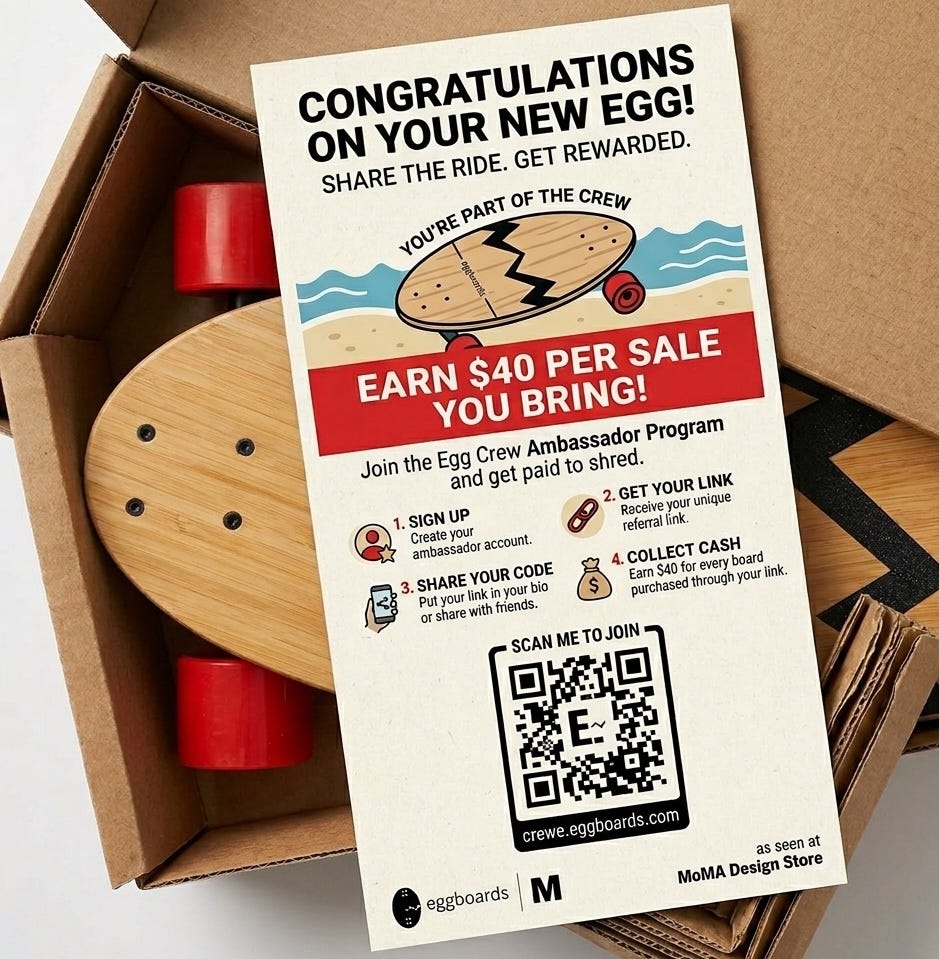
The QR code points to my brand’s affiliate program on Coral.ax. When a customer scans it, they sign up, and the platform automatically generates Amazon Attribution links for them.
From there, they share the link wherever they want. Instagram. TikTok. Their group chat. A Facebook group of fellow hobbyists. I don’t dictate where it goes.
Q: Why does this work better than paying for UGC?
Because the customer has already done the hardest part of the funnel for you.
A paid UGC creator has to:
- Receive your product
- Decide if they like it enough to post about it
- Film something
- Post it
A customer has already done step 1 and step 2 by the time they unbox the product. The card insert just hands them a reason to do step 3 and step 4.
You’re not buying their attention. You’re rewarding behavior they were already inclined to do.

Q: What does the affiliate math actually look like?
Here’s the breakdown for my hero SKU.

A 25% effective ACoS is right in line with what I pay for Amazon PPC.
The difference is that this traffic comes with a real human endorsement, real video, and a customer who is now financially aligned with my brand’s success.
PPC clicks don’t bring any of that.
Q: Why a card insert and not an email?
Both work, but a card insert hits at the highest-conversion moment in the entire customer journey: unboxing.
The customer has the product in their hands. Endorphins are running. They’re already taking out their phone for a photo or a story. Putting a “get paid to share this” prompt in front of them at exactly that moment converts dramatically better than the same offer dropped into an email two weeks later.
For Amazon brands without easy access to customer email addresses anyway, the card insert is often the only practical option.
Q: What kind of customer actually signs up?
Not the demographic you’d guess.
In my experience it skews toward people who are already enthusiastic posters in their niche. Hobbyists. Parents in tight communities. People who already share product recommendations in WhatsApp groups and Facebook communities. They were going to recommend the product anyway. The card insert just turns that recommendation into a tracked sale.

A meaningful number of signups never post on a public social platform at all. They share the link directly with friends and family. That still counts. It still drives sales. And the math still works.
Q: How much of this do I have to manage?
Almost none. That’s the actual selling point.
Once the card insert is in the box and the affiliate program is set up on Coral, the system runs on its own:
- Customers receive the product.
- They scan the QR code.
- They sign up and get attribution links.
- They share. They drive sales. They get paid out.
- I get a steady flow of UGC I can use for ads and other content.
I don’t approve anyone. I don’t negotiate rates. I don’t chase invoices. The platform handles attribution and payouts, and the only ongoing work on my side is occasionally checking who my top creators are and giving them a higher tier.

Q: Is this just for Amazon brands, or does it work elsewhere?
The card insert mechanic works anywhere you have physical product and a customer journey that ends with unboxing. The specific 25% ACoS math in this article is Amazon-specific because of the Brand Referral Bonus, but the underlying playbook (turn customers into affiliates, reward at the unboxing moment, automate the rest) translates to Shopify, Walmart, or any DTC channel.
For Amazon specifically, the Brand Referral Bonus is what makes the unit economics genuinely competitive with PPC. If you’re not enrolled, that’s the first step.
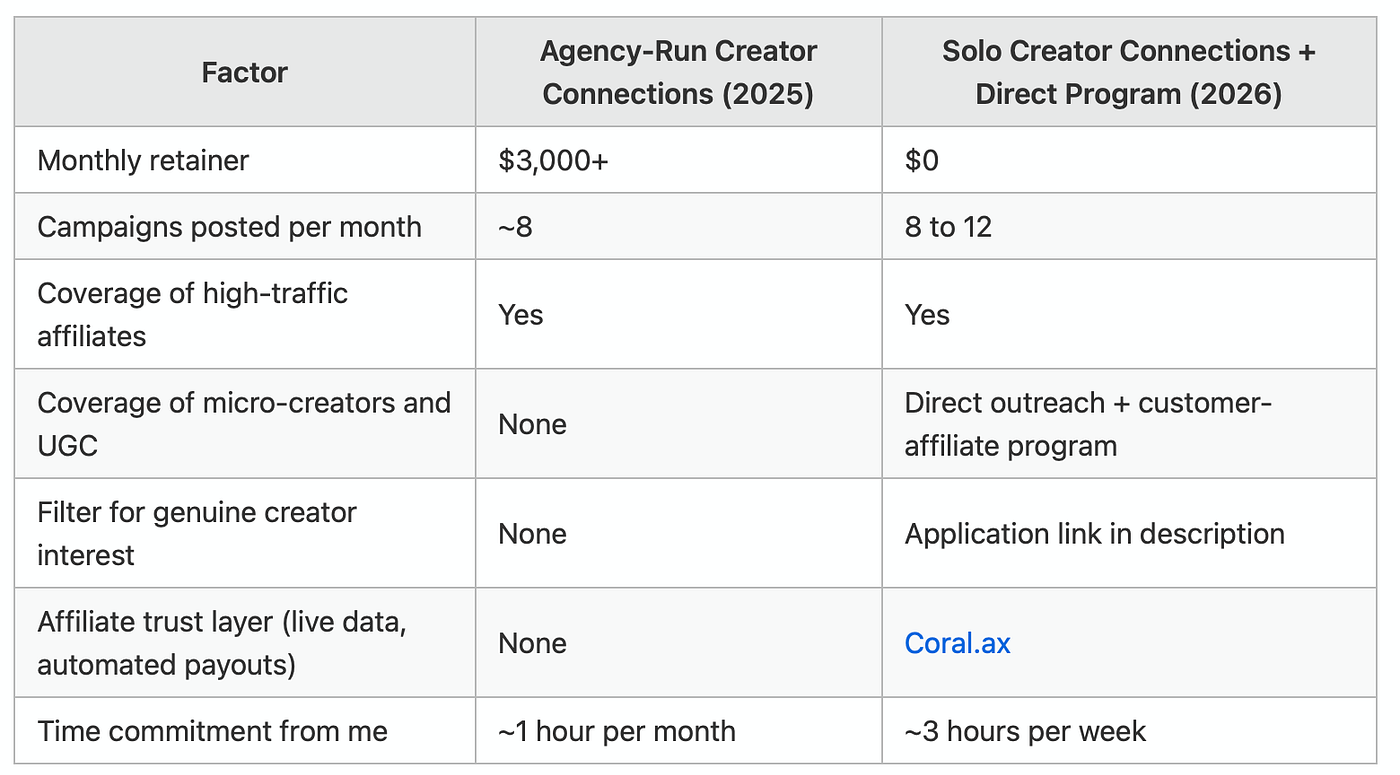
Customer-Affiliate vs. Paid UGC, Side by Side
Here’s a rough comparison from my own brand, holding monthly creator volume roughly constant.

The paid UGC channel still has its place.
If I need a specific kind of video for a specific ad campaign on a specific deadline, paying for it is the right call. But for steady, ambient, always-on content from people who actually love the product, the customer-affiliate model wins on every dimension that matters.
Warning Signs You’re Doing It Wrong
If any of these sound familiar, the program isn’t set up correctly:
- Your card insert leads with a discount code instead of a recurring earning opportunity.
- You’re paying flat per-post fees to people who have never used the product.
- You can’t tell which specific creator drove which specific sale.
- Your commission rate ignores the Brand Referral Bonus.
That last one quietly kills more programs than anything else.
Every approval gate you add cuts signups roughly in half. The whole point of a customer-affiliate program is that it should be effortless to join.
TL;DR
- Add a card insert to every shipment that says “Become an Ambassador, get paid $X per order.”
- Point the QR code to your affiliate program on Coral.ax.
- Use Amazon Attribution links so every sale is tracked back to the specific creator.
- Offer 25 to 35 percent commissions. The Brand Referral Bonus brings effective ACoS to roughly 25 percent.
- Automate payouts. Don’t gatekeep signups.
- Let it run. Top performers will surface on their own.
Frequently Asked Questions
Does this only work if I have a high-priced hero SKU?
It works better at higher price points because the absolute dollar payout per sale is more motivating. At $119, a 35% commission lands at around $41 per order, which is genuinely worth a customer’s time to share. At $19 it lands at $6.65, which is less exciting. If your AOV is below $30, consider tiering commissions.
What stops a customer from gaming the system by ordering through their own link?
Amazon Attribution generally doesn’t credit self-purchases when the same account is used. Beyond that, the customer has to make a public-facing post or share to get any reach, so the abuse case is limited. The honest answer is that a small amount of self-attribution leakage is the cost of running a frictionless program, and it’s far outweighed by the legitimate volume.
Can I run this alongside paid UGC?
Yes, and they reinforce each other. The customer-affiliate program builds the always-on baseline of authentic content. Paid UGC fills specific creative gaps when I need a particular kind of video for an ad. They’re complementary channels, not competing ones.
How do I know if my customers are actually a good creator pool?
Look at your reviews. If your product gets unprompted user-generated photos and videos in reviews, your customers are already content creators. They’re just doing it on Amazon’s review page instead of their own social feeds. The card insert simply moves that energy where it can compound.
What does it cost to set up?
Card inserts are roughly $0.05 each at volume. The affiliate platform on Coral.ax is the only ongoing cost, and it’s a fraction of what a single paid UGC video would run you. The total setup is small enough that I don’t track it as a real line item.
A Final Thought
Most brands spend thousands of dollars per month chasing strangers to post about their product, while ignoring the people who already bought it.
The reframe is simple. Your customers are not the end of the funnel. They’re the start of the next one.
A card insert and an automated affiliate platform turns every shipment into a recruitment moment. The customers who would have posted anyway now drive tracked, attributed revenue. The customers who would never have posted now have a reason to. The unit economics land at PPC parity.
It runs on its own.
If you’re an Amazon seller running a brand with physical product, Coral.ax is the tool I use to operate this program end to end.
If you’ve built something similar and it’s working, I’d want to hear how you set it up.
메타데이터
- post_id
- 15bea01ca8de
- slug
- cotalwhy-i-stopped-paying-for-ugc-and-turned-my-amazon-customers-into-affiliates-instead-15bea01ca8de
- url
- https://medium.com/@dobro_p/cotalwhy-i-stopped-paying-for-ugc-and-turned-my-amazon-customers-into-affiliates-instead-15bea01ca8de
- canonical_url
- https://medium.com/@dobro_p/cotalwhy-i-stopped-paying-for-ugc-and-turned-my-amazon-customers-into-affiliates-instead-15bea01ca8de
- author_url
- https://medium.com/@dobro_p
- status
- ok
- fetched_at
- 2026-06-09 15:37:30