From Flip-Flops to Qubits: Bits Built Our World — Here’s What Comes Next
A look ahead at quantum computing, the security crisis hiding in plain sight, and why preparing now is the only option.
From Flip-Flops to Qubits: Bits Built Our World — Here’s What Comes Next
A look ahead at quantum computing, the security crisis hiding in plain sight, and why preparing now is the only option.
The Sound That Started It All
Early Saturday morning. Flip-flops on. Coffee in hand. No meetings, no agenda — just walking. Flip… flop. Flip… flop. The footwear is named after the noise it makes. simple, elegant, obvious once you know it. :-)
Being an engineer, my mind immediately went to the flip-flops we use in all the computers and electronics. In all the chips we use today.
The Other Flip-Flop
Three years ago, I wrote a piece on Medium about a different kind of flip-flop — not footwear, but the fundamental building block of every digital circuit ever made.
“Get to Know the Flip-Flop: Digital Logic Design in Microcontrollers, Processors, and FPGAs”
If you haven’t read it, here’s the quick version: a flip-flop in digital electronics is a tiny circuit that stores exactly one thing — a bit. A 0 or a 1. Nothing more. It flips between two states, driven by a clock signal, and that’s it.
Doesn’t sound like much, does it?
But here’s the thing. Take billions of those flip-flops. Clock them at hundreds of megahertz to gigahertz. Wire them into logic gates, state machines, memory arrays, instruction pipelines. And suddenly you have a microcontroller, a processor, a GPU, a system-on-chip.
Every smartphone. Every car ECU. Every industrial controller. Every server in every data center.
All of it — at its most fundamental level — built on that humble flip-flop, toggling between 0 and 1.
Bits have been running the show for decades. And they’ve done a remarkable job.
Enter the Qubit
So there I was — flip-flops on my feet, flip-flops on my mind — when the next thought arrived uninvited.
Qubits.
In classical computing, a bit is always one thing: 0 or 1. Binary. Deterministic. Simple.
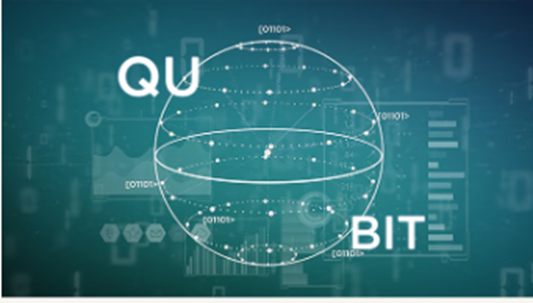
A qubit is different. Fundamentally, profoundly different.
Thanks to the principles of quantum mechanics, a qubit can exist as 0 and 1 simultaneously — a property called superposition. Two qubits can be entangled, meaning the state of one instantly influences the other regardless of physical distance. And through quantum interference, a quantum computer can amplify the paths leading to correct answers while cancelling those that lead to wrong ones.
This isn’t just faster computing. It’s a completely different model of computation.
Classical computers are exceptional at sequential logic — the kind of step-by-step processing that flip-flops were designed for. Quantum computers are exceptional at a very specific class of problems: optimization, simulation, pattern matching at massive scale — and, critically, breaking certain mathematical problems that underpin modern cryptography.
That last part is where the morning walk got serious.
The Security Crisis Hiding in Plain Sight
Modern encryption — the kind protecting your bank account, your car’s over-the-air updates, your factory’s industrial control system, your government communications — is built on mathematical problems that are hard for classical computers to solve.
RSA encryption, for instance, relies on the fact that factoring a very large number into its prime components takes a classical computer an impractical amount of time — potentially millions of years at the required key sizes.
A sufficiently powerful quantum computer, running an algorithm called Shor’s algorithm, could solve that same problem in hours. Or minutes.
The encryption protecting our world was engineered for a world of bits. Qubits change the rules entirely.
But Wait — Quantum Computers That Powerful Don’t Exist Yet
True. Today’s quantum computers are noisy, error-prone, and limited in qubit count. A cryptographically relevant quantum computer — one capable of breaking RSA-2048 — would require millions of stable, error-corrected qubits. We’re not there yet.
So why act now?
Because the threat has already started.
Nation-state actors and sophisticated adversaries are running a strategy called “harvest now, decrypt later.” They are collecting and storing encrypted data today — financial records, health data, national security communications, intellectual property — with the explicit plan to decrypt it once quantum computing matures.
For most data, this might not matter. But consider:
- A connected car manufactured today has an expected road life of 10–15 years
- Industrial control systems are deployed for 20–30 years
- Medical devices, infrastructure, defence systems — all designed for long operational lifespans
The encryption protecting those systems needs to survive not just today’s threats, but tomorrow’s quantum-powered ones. The math is simple and uncomfortable: if you’re designing a system today that will still be in the field in 2035, you need quantum-safe security baked in now.
The Regulatory Clock Is Already Running
This isn’t just a theoretical risk assessment. Governments have already moved.
NIST — the U.S. National Institute of Standards and Technology — completed its post-quantum cryptography (PQC) standardization process in 2024, selecting a set of algorithms designed to resist quantum attacks. Among them: CRYSTALS-Kyber, a lattice-based key encapsulation mechanism co-authored by cryptographers at NXP Semiconductors and IBM.
CNSA 2.0 (the U.S. government’s Commercial National Security Algorithm Suite) now mandates PQC in new products used in government-adjacent applications from 2025 onward.
Europe is following suit. The German BSI and France’s ANSSI have issued PQC migration guidance. The broad industry consensus: migration should be underway now, with a target completion window of 2030–2033. After that, RSA and ECC are expected to be prohibited in regulated systems.
The transition window is open. But it won’t stay open forever.
What Post-Quantum Cryptography Actually Means
Here’s the misconception that slows organizations down: people hear “post-quantum cryptography” and assume it requires quantum hardware.
It doesn’t.
PQC algorithms are designed to run on classical computers — the same microcontrollers, processors, and embedded systems your engineers are already designing with today. The “post-quantum” refers to the security guarantee, not the implementation platform. These algorithms are mathematically resistant to attacks from both classical and quantum computers.
Think of it this way: you don’t need a nuclear weapon to build a nuclear-proof bunker. You just need to build differently. :-)
The engineering challenge is real — PQC algorithms tend to have larger key sizes and different performance profiles than RSA or ECC, which creates constraints on resource-limited embedded devices. But it’s a solvable engineering problem, and the industry has been working on it for years.
At NXP, we’ve been ahead of this curve — not reacting to the shift, but helping to
Building the Future-Ready Silicon
Our cryptography team co-authored CRYSTALS-Kyber, the algorithm NIST selected as the foundation of the global post-quantum standard. That’s not a marketing claim — it’s a reflection of years of deep research investment, academic publishing, and collaboration with standards bodies worldwide.
And we’re now embedding that expertise directly into silicon like i.MX 94, i.MX 95, S32K5, and many other devices.
Beyond products, we’ve also collaborated with Keysight to validate side-channel countermeasures for ML-DSA — one of the NIST-selected PQC signature schemes. Because implementing a quantum-resistant algorithm isn’t enough if that implementation leaks secrets through power analysis. Security has to be deep.
The Transition From Flip-Flop to Qubit
When I wrote about the flip-flop three years ago, I was thinking about fundamentals. The elegance of a simple circuit that stores one bit. The way complexity emerges from simplicity — how a state machine in an ATM, a counter in an access control system, a CPU in a supercomputer all trace back to that same basic element.
Bits built everything we have.
But we’re standing at the edge of a transition as significant as the move from vacuum tubes to transistors, from analog to digital. The qubit doesn’t replace the bit — classical computing isn’t going anywhere. But quantum computing introduces a new class of capability that changes the security assumptions our entire digital world rests on.
The flip-flop taught us that the most powerful things in engineering are often the most fundamental. The qubit is teaching us that the most dangerous disruptions often come from below — from rewriting the rules at the physics layer before the application layer has had time to adapt.
We built our world on bits. Now we need to make sure it survives qubits.
Is Your Architecture Ready?
The good news: you don’t need a quantum computer to deploy quantum-safe security. The algorithms exist. The standards are set. The hardware is shipping.
The question isn’t whether the quantum transition will happen. The physics is settled. The question is whether your product roadmap, your security architecture, and your supply chain will be ready when it does.
A Saturday morning walk in flip-flops probably wasn’t supposed to end here. But that’s the thing about fundamentals — pull on one thread long enough, and eventually you’re looking at the whole fabric.
Start your post-quantum journey: nxp.com/PQC
메타데이터
- post_id
- 15e451bcdfae
- slug
- from-flip-flops-to-qubits-bits-built-our-world-heres-what-comes-next-15e451bcdfae
- url
- https://medium.com/@srikgurrapu/from-flip-flops-to-qubits-bits-built-our-world-heres-what-comes-next-15e451bcdfae
- canonical_url
- https://medium.com/@srikgurrapu/from-flip-flops-to-qubits-bits-built-our-world-heres-what-comes-next-15e451bcdfae
- author_url
- https://medium.com/@srikgurrapu
- status
- ok
- fetched_at
- 2026-06-24 11:06:28



