The Strange Link Between Family Secrets and Public Lies
How trauma, gaslighting, and cover up culture shape our relationship with truth long after childhood ends
The Strange Link Between Family Secrets and Public Lies
How trauma, gaslighting, and cover up culture shape our relationship with truth long after childhood ends

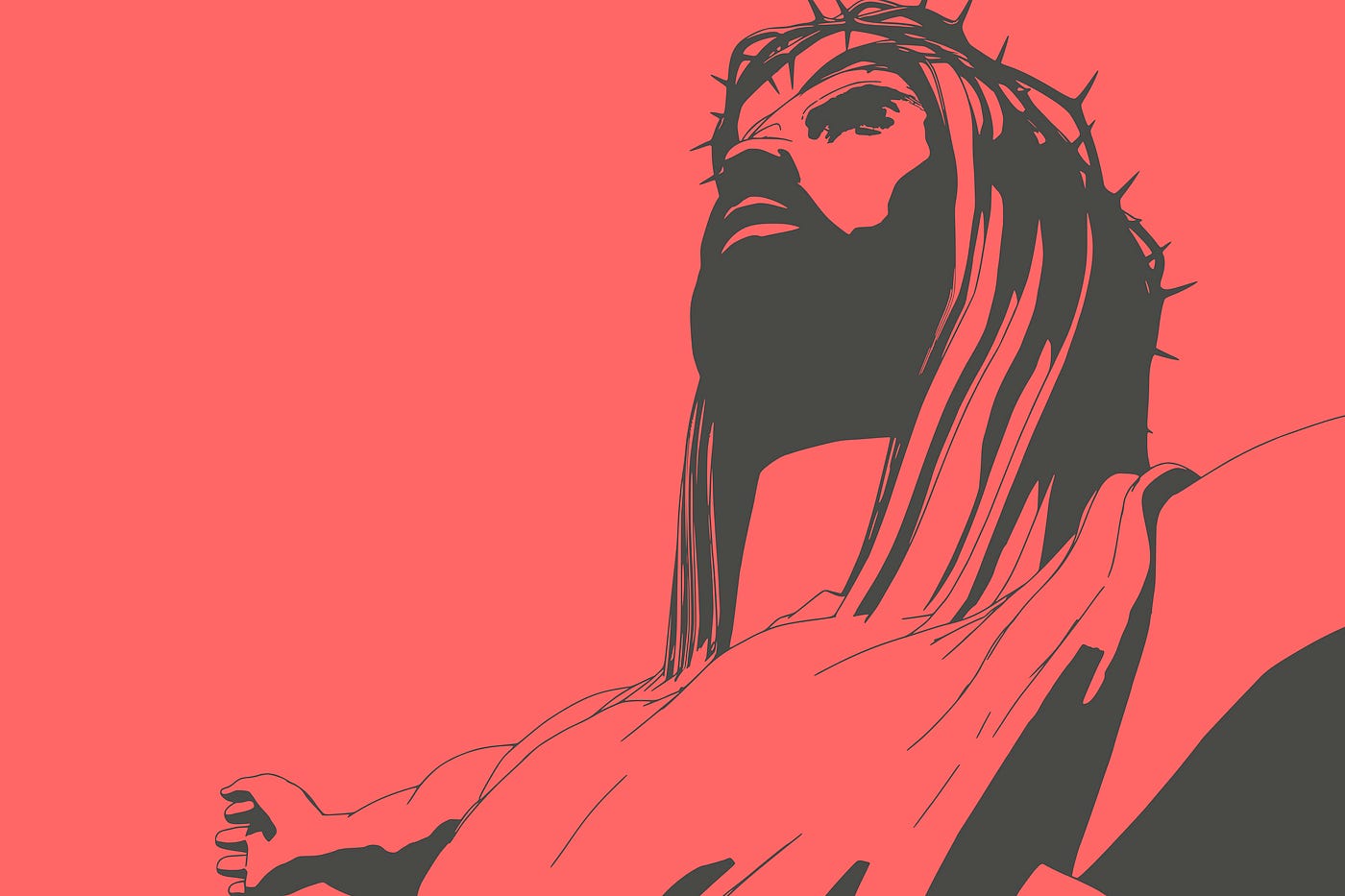
Image created using Canva Pro
I didn’t tell Mom or Dad what Mr. Spires had done to me.
I can’t say for sure why I didn’t. I guess the thought of putting it into words was too embarrassing. Besides, my parents and Mr. and Mrs. Spires were friends. Playing cards together, church stuff … and Mrs. Spires was a teacher at the same school as my parents. Adults seemed aligned, in sync with one another, closing ranks.
Also—what he’d done to me wasn’t as bad as what my friend, Jan, told me that Mr. Spires had done to her.
That was the 1960s.
I’m a little more savvy these days, but honestly, it’s taken a while for me to wise up.
Could It Really Be This Widespread?
In the late ’90s my husband and I became friends with a couple who had a heart for victims of abuse. Kurt and I enjoyed getting to know Steve and Celestia, sitting with them at our sons’ sporting events, carpooling, and visiting in each others’ homes.
I remember one night, Celestia told me how studies had shown that eight out of ten women had suffered abuse at some point. I remember thinking, “That just can’t be true,” and wondering what qualified as abuse. Celestia could probably could read the disbelief in my expression.
A few years later this couple founded Mending the Soul, a ministry formed to educate others on the nature and effects of abuse.
Cover-Up Culture And Its Casualties
Thanks to forward progress over the past few decades, there is greater awareness of the pervasive presence of abuse. But I’m wondering if the cover-up culture that pairs so perfectly with abuse has cast a spell over our country. As victims are forced to comply with the gaslighting of predators and their accomplices — especially when reliant on them as caretakers — these kids grow up with damaged discernment faculties. For survival’s sake, they must exist in that fog, that blur between what actually happened and the spun narrative that family honor demands they adhere to.
Could this reality, occurring more frequently than many of us realise, help explain why so many people struggle to recognise deception when it appears in public life? What happens when entire generations are taught to distrust their own perceptions?
The Place We Find Ourselves: Robyn’s Story
Robyn and her story were featured on Adam Young’s The Place We Find Ourselves podcast. In Episodes 8 and 28, Adam and Robyn together explore the harm she had suffered from her step-father, and how her family reframed the abuse, expecting (demanding?) Robyn to comply.
Here’s how it went down: Robyn told her mother what the step-father had done to her. Robyn’s mother responded with disgust and unintelligible blather, then called a family meeting. Gathered in the living room with her sister and step-dad, Robyn’s mom rendered a new version of what had happened. That’s the one that carried the day.
13-year-old Robyn was deemed a liar, and grounded for a month.
And the abuse continued.
As I listened to Robyn’s story, I couldn’t stop thinking about what happens when people are taught from childhood to distrust their own perceptions. What are the long term consequences of living inside a false narrative? What happens when survival depends on accepting a version of reality that everyone knows isn’t true?
Listen to how Robyn described the message conveyed by that family meeting:
“Everyone knew it happened yet it was not to be talked about. I was supposed to go on in life like nothing ever happened, to create new stories of what life would look like if it hadn’t happened. I was told, ‘Things aren’t what you believe they are.’ I was not allowed to question any of it.”
“Ten minutes after the family meeting, everyone behaved like nothing happened.” Robyn knew in her body and soul that something awful had indeed happened. But the prevailing narrative insisted, “No, it didn’t.”
No wonder Robyn felt trapped.
The Church Made It Worse
Who was there to reassure Robyn as she tried to sort through all of these conflicting messages. Not her church, sad to say. In church, she was taught “bad things happen to girls who don’t obey.” She was told to “forgive and forget.”
Robyn points out the crazy-making nature of this message: How are you supposed to forgive something you are told didn’t happen. Why insist you forget something while also insisting that it never happened? And what do you do with the memories of the awful thing that actually did happen —and happened repeatedly?
If eight out of ten women have been force fed this mechanism of pretense, of adopting the lie in order to survive, of deceiving even yourself as to what actually occurred, well then, no wonder we have a nation that can swallow the unceasing stream of lies erupting from this current administration. It has become commonplace, acceptable … how we do things.
Thou Shalt Not Be Aware
Considering all this, I recalled an eye-opening book I’d read a few years ago, *Thou Shalt Not Be Aware. *Speaking from her studies in psychoanalysis, Alice Miller posits that Freud’s original theory was the correct one; that the root of neuroses was actual trauma, often sexual, inflicted during childhood. Miller objects to Freud’s revision, attributing it to pressure put upon him by the Viennese upper classes, who were squirming in the spotlight of Freud’s analysis.
Later in the book, Miller explores how this “poisonous pedagogy” this belief that children must be broken to ensure obedience, gave rise to the authoritarian regime of the Nazis.
How Did Robyn Escape Her Trap?
Somehow, someway, when she was in her early 30s, Robyn met a group of women who freely shared about their childhood abuse. Not only had these women broken free from the false narrative that had been drilled into them, they also had rejected the “forgive and forget” mantra.
Photo by Age Cymru on Unsplash
Robyn was astounded by these women. After years of no one acknowledging what had happened to her, she felt a sort of release as her story was accepted, affirmed, corroborated. Immediately, her body began to manifest physical symptoms corresponding to a sense of freedom.
She listened intently as these women spoke out loud the harm done to them, as they named different parts of it. She joined in as they treated one another’s wounds with the seriousness they deserved.
In a 180° turnaround from that long ago living room with her family, Robyn was immersed in truth that day. She learned how to sit in that truth, and feel the depths of long pent-up emotions: rage, sorrow, fear, heartache.
Through remembering, the women in that room had begun to heal. In time, these women may even be able to forgive — because they didn’t forget.
Righting the Church’s Wrong Message
In the podcast, Adam pointed out that Jesus is intent on bringing things into light, not burying them in the darkness. Adam quoted from Jeremiah 6, “Prophets and priests all practice deceit, dressing the wound of my people as though it were not serious, saying ‘Peace, peace,’ when there is no peace.”
Part of a victim’s rage is rightly directed at God, Adam goes on to say. Our soul cries out, “How could You have let this happen?” God repeatedly calls Israel to remember the past, to live in the truth. Remembering is about naming what is true. “We sit and linger and welcome the truth of our story in all its complexity, glory, and tragedy.”
Thinking Back On My Own Story
I can’t remember if I ever told my mom about Mr. Spires, what he had done to me. I may have alluded to it, something like, “They were a really messed-up family.”
But I can still feel the violation of my body, my person, as his hands reached up underneath my shirt. As I froze, not knowing what to do.
I don’t know if Jan ever told her mom what he had done to her. At the time, it seemed like a fanciful tale to me. And yet I didn’t doubt her.
I have a crisp memory of being in a car with Mr. Spires and his kids. He was condemning their “bathroom talk” banter as “not very nice,” and I remember thinking, “Well, you’re a lot worse than that.”
As strange as it may sound, I can’t help wondering whether the same cover-up dynamic is at work in America right now.
When people spend years learning to ignore what they know to be true, to accept revised versions of events, or to prioritize loyalty over reality, the effects don’t stay confined to individual families. They ripple outward into communities, institutions, and public life.
Our national stories are constantly being contested, revised, and repackaged. Some versions illuminate the truth. Others obscure it. Some demand accountability. Others ask us to look away.
What struck me most about Robyn’s story was not simply the abuse she endured, but the insistence that she deny her own experience. The healing began when she found people willing to tell the truth with her.
Perhaps that is what we need more of today: the courage and camaraderie Robyn found in that room full of women.
After all, “forgive and forget” is often the opposite of accountability. Accountability requires remembering. It requires naming what happened and refusing to participate in the cover-up.
Dispensing with consequences allows harm to flourish. Creating safe spaces helps the vulnerable tell their stories. Learning to tell the truth about our stories, both personal and collective, may be one of the most important acts of courage we have.
And I didn’t even get to the Epstein Files …
For more articles on life, faith, politics, and spirituality, Sign-up for my newsletter.
메타데이터
- post_id
- 1606e4b1e8fe
- slug
- the-strange-link-between-family-secrets-and-public-lies-1606e4b1e8fe
- url
- https://medium.com/backyard-theology/the-strange-link-between-family-secrets-and-public-lies-1606e4b1e8fe
- canonical_url
- https://medium.com/backyard-theology/the-strange-link-between-family-secrets-and-public-lies-1606e4b1e8fe
- author_url
- https://medium.com/@2ndhalfoflife
- status
- ok
- fetched_at
- 2026-06-13 16:00:06