Nihonshu Fudoki: Hokkaido
Cold Wind, Fish Roe, and the Sake I Remember from Rishiri
Nihonshu Fudoki: 47 Tales of Terroir
Cold Wind, Fish Roe, and Hokkaido Sake from Rishiri to Niseko
Before explaining the word Fudoki, I want to begin where this series begins for me: Rishiri Island, off the northern edge of Hokkaido.
This is the first chapter of Nihonshu Fudoki, a field note series tracing Japan through sake, shochu, local food, and brewery visits.
In Hokkaido, the story begins with cold wind, fish roe, and the sake I drank on Rishiri.
The bottles were not from Rishiri itself. They came from different parts of Hokkaido: Kunimare from Mashike, Kita no Katsu from Nemuro, and Kokushi Muso from Takasago Shuzo in Asahikawa.
Drinking them on Rishiri gave me my first rough map of Hokkaido through sake.
Even at the end of August, when much of mainland Japan is still trapped in heat, Rishiri can feel like another country. The wind comes straight from the sea. It does not simply blow. It cuts. There are days when you put on a heavy coat, turn on the heater, and look out at the gray water while the rest of Japan is still thinking about evening beer.
On clear days, the main island of Hokkaido appears across the Soya Strait. If you turn your eyes north, Russia feels close enough to imagine. Living there, I learned something simple. The north does not explain itself gently.

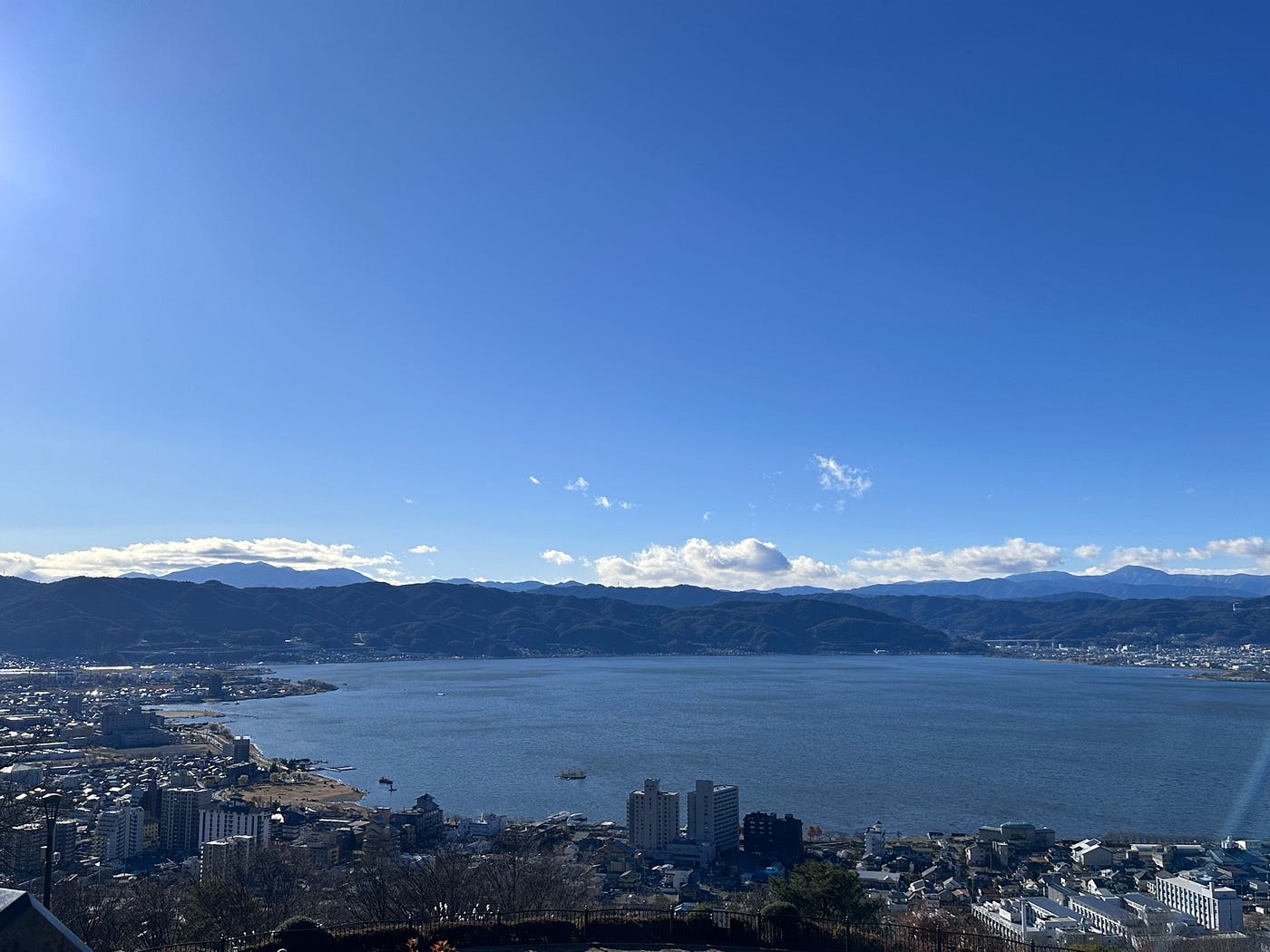
The journey to Rishiri, where my memory of Hokkaido sake begins.

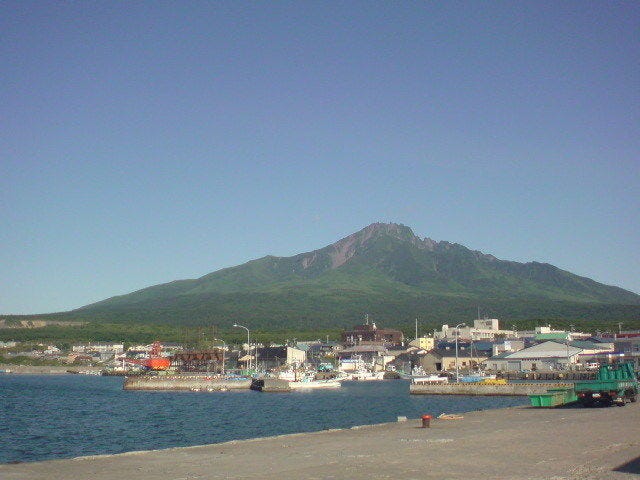
Rishiri Fuji
The word Fudoki comes from old Japanese records of land, local names, products, climate, customs, and stories. They were not travel guides. They were attempts to understand a place by recording what grew there, what people called it, what they ate, what they believed, and how the land shaped their lives.
I use the word in a personal way.
Nihonshu Fudoki is not a catalog of famous sake brands. It is my field note series on sake, shochu, food, and place across Japan. I have visited breweries and distilleries in almost every prefecture, and I want to trace Japan not through tourist spots, but through the drinks, meals, and local memories that stayed in my body.
The question behind each chapter is simple.
Why was this drink born here?
The View from Rishiri
When I was younger, I climbed Mount Rishiri.
The mountain stands alone, rising from the sea in a clean cone. People call it Rishiri Fuji because of its shape, but the feeling is different from Mount Fuji. Fuji is surrounded by stories, images, crowds, and national memory. Rishiri feels more exposed. It has less ceremony and more wind.
Even in summer, patches of snow can remain near the higher parts of the mountain. The air changes as you climb. It becomes sharper, drier, and less forgiving. After descending, I remember soaking my tired body in a bath where blades of Rishiri kombu floated in the water.
Kombu in the bath. Sake after the climb. Sea urchin and salmon roe on the table.
That combination may sound strange if you read it from far away. On the island, it felt completely natural.
There was the dense orange sweetness of bafun uni, sea urchin from the cold water around Rishiri. There was ikura, salmon roe, each bead bursting with salt and the smell of the sea. Before those flavors, I did not want wine. I did not want whisky. I did not even want beer.
My hand reached for sake.
This is not because sake is always the correct answer for every Japanese meal. That would be too easy. But in front of Hokkaido fish roe, sake felt less like a pairing and more like a return to common sense.

The view from Rishiri Fuji
The Drink That Understands Fish Roe
I have a personal conviction.
Sake understands fish roe better than any other drink I know.
I have tried white wine with ikura. I have tried Champagne. I have tried dry Sherry. None of them were terrible. But something often remained slightly wrong. A metallic edge. A small clash at the end. A feeling that the wine was trying to stand beside the roe without really knowing how to speak to it.
Sake behaves differently.
It does not fight the salt. It does not compete with the umami. It does not try to cover the roe with fruit or acidity. It settles into it.
With bafun uni, sake softens the richness without erasing it. With ikura, it receives the salt and gives it back in a rounder form. With sujiko, the salted salmon roe that can be even more intense, sake does not panic.
I remember drinking Kunimare in front of fresh bafun uni at a small place on Rishiri. It was not a refined tasting scene. There was no polished language, no pairing chart, no expert explanation. There was simply a plate from the sea and a glass from the north.
That was enough.
The word pairing sometimes feels too elegant for what happened there. Pairing sounds like a decision made after analysis. On Rishiri, it felt older than that. Rice, salt, sea, cold, and fatigue from the mountain. The body understood before the mind needed to explain.
That may be why the sake I drank there stayed with me so clearly.
Three Names from the North
The sake I remember from Rishiri was not one bottle. It was a small northern triangle in my memory.
Kunimare from Mashike.
Kita no Katsu from Nemuro.
Kokushi Muso from Takasago Shuzo in Asahikawa.
Each name belonged to a different part of Hokkaido. Together, they formed my first rough map of the island through sake.
Kunimare comes from Mashike, a port town on the Sea of Japan side of Hokkaido. The brewery was founded in 1882, during the Meiji era, and is known as one of the northernmost sake breweries in Japan. The name carries the feeling of an old port town, of herring, merchants, workers, and winter water.
What I remember about Kunimare is not a dramatic aroma. It is steadiness. It has the kind of flavor that does not need to raise its voice. In front of sea urchin, salmon roe, grilled fish, or salted dishes, that kind of sake becomes important. It lets the food remain itself.
Kita no Katsu comes from Nemuro, far to the east. Nemuro is a town of cold seas, fishing boats, and early sunrise. This sake has a sharper feeling in my memory. Dry, clean, direct. It does not decorate the table. It clears it.
For seafood, that kind of sake can be perfect. Hokkaido seafood often has power. Crab, salmon, saury, roe, shellfish. A sake that is too fragrant can become tiring. A sake that is too soft can disappear. Kita no Katsu has a quiet firmness that makes sense in that landscape.

Sakhalin(Russia) is 108 km away, Wakkanai(Hokkaido) is 50 km away, and Tokyo is 1,045 km away.
Kokushi Muso from Takasago Shuzo belongs to Asahikawa, inland Hokkaido, where winter has a different severity from the coast. The name means something close to a peerless figure, and the sake is known for a crisp, dry style.
I drank these not as objects of study, but as local sake in the most direct sense. They were not fashionable bottles selected for a Tokyo tasting event. They were part of the northern table.
That matters.
Local sake is not only about ingredients. It is also about where people actually drink it, what food appears beside it, and what kind of weather waits outside the door.
Hokkaido Is Not an Old Sake Region in the Usual Sense
When people talk about sake history, they often think of places like Nada, Fushimi, or old temple towns in western Japan. Hokkaido is different.
Modern sake brewing in Hokkaido grew later, especially after the Meiji era, when the island was developed as a frontier of modern Japan. For a long time, the cold climate was not simply an advantage. It helped fermentation in some ways, but it also made rice cultivation difficult. Hokkaido was not naturally seen as a great land for sake rice.
That is why Hokkaido sake has a different kind of story.
It does not carry the same weight of ancient prestige as some older regions. Instead, it carries struggle, movement, experiment, and adaptation. People came north. They cleared land. They built ports, towns, farms, breweries, railways, and mines. They needed alcohol not as luxury alone, but as warmth, relief, and part of daily life.
In that sense, Hokkaido sake feels less like a museum and more like a frontier.
The word frontier can become romantic if used too easily. But in Hokkaido, it still has a physical weight. Cold, distance, labor, isolation, and the sea are not abstract ideas. They are part of the taste.
Niseko Shuzo and the Land Beneath the Resort Image
There is another reason Hokkaido belongs at the beginning of this series.
I visited Niseko Shuzo (Niseko Sake Brewery)
Not simply as a tourist stopping by a brewery, but as someone trying to understand how sake belongs to a place. I met the president of the brewery, listened to the story of the land, and began to see Niseko not only as an international ski resort, but as a town shaped by water, snow, agriculture, and local people.
Niseko is now known around the world for powder snow, ski resorts, and international wealth. But beyond that image, there is an older rhythm to the land. Water comes down from the mountains. Snow covers the town. Spring arrives slowly. The air can feel so clean that your lungs notice it before your mind does.
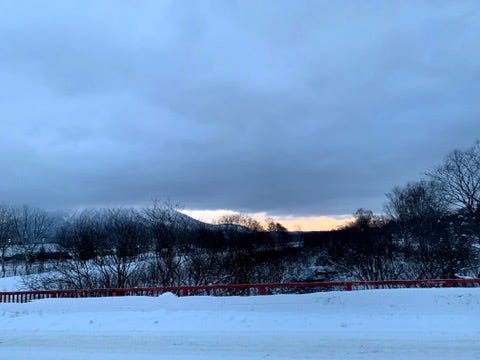
I visited Niseko Shuzo outside the loudest winter season, when the sky was clear enough to see Mount Yotei. The mountain is also called Ezo Fuji because of its shape. It rises with a calm presence, and when you drink sake near it, the idea of water stops being abstract.
The brewery was founded in 1916 in Kutchan. It uses local water and Hokkaido rice, and the sake has a softness that makes sense in that place. But what stayed with me was not only the taste. It was the way the brewery seemed tied to the town itself.
Meeting the president helped me understand that local sake is not only made from local ingredients. It is also made from local decisions. Where to grow rice. What kind of water to trust. How to continue in a town changing under the pressure of tourism and global attention. How to keep sake connected to the people who actually live there.
That is why Niseko Shuzo matters in this chapter.
A sake can taste good in a city. But when you visit the brewery, meet the people behind it, and stand in the place where the water, snow, and local food all belong to the same landscape, the sake becomes easier to understand. It stops being a product and becomes part of a place.
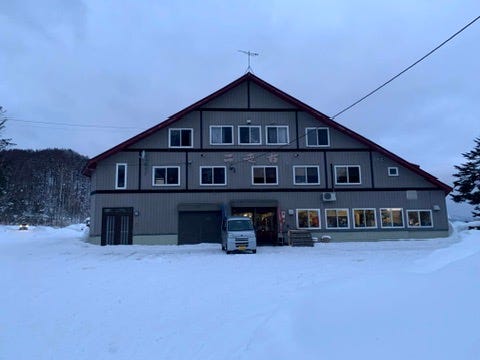
Niseko Shuzo
What Hokkaido Sake Teaches
Hokkaido sake is often described through coldness, snow, clean water, and seafood. All of that is true, but it is not enough.
What Hokkaido teaches is that terroir is not only tradition. Terroir can also be difficulty.
A place does not need a thousand years of brewing history to have a powerful sake culture. Sometimes the story comes from resistance. From a climate that was not easy. From rice that had to be adapted. From breweries that had to serve fishing towns, mining towns, inland cities, resort towns, and isolated islands. From tables where the food was too strong for delicate alcohol and too local for imported language.
That is why I cannot separate Hokkaido sake from fish roe.
Ikura and bafun uni are not side notes. They are part of the argument. They explain why certain dry, clean, steady sakes make sense here. They explain why the sake does not need to be loud. The food is already speaking with the force of the sea.
When I think of Hokkaido, I do not first think of a tasting note.
I think of a cold wind on Rishiri.
I think of my body after climbing the mountain.
I think of kombu in hot water.
I think of orange sea urchin, salmon roe, and a glass of sake that did not need to prove anything.
That is where this series begins.
Not from a textbook.
Not from a ranking.
From a table in the north.
Closing Note
This is the first chapter of Nihonshu Fudoki, my personal field note series on sake, shochu, food, and place across Japan.
I have visited breweries and distilleries in almost every prefecture, and this series follows the drinks, meals, landscapes, and local memories that stayed with me.
In the next Hokkaido chapter, I will go deeper into the new frontier of northern sake: Hokkaido sake rice, snow aging, climate change, and the brewers who are still trying to make something that can only be born in the north.
If you are interested in sake, regional Japan, and the stories that connect food, drink, and place, follow me here. I write about the places I have visited, the drinks I have studied, and the local cultures that rarely fit into ordinary travel guides.
메타데이터
- post_id
- 16387c009cbf
- slug
- nihonshu-fudoki-hokkaido-16387c009cbf
- url
- https://medium.com/@n80827/nihonshu-fudoki-hokkaido-16387c009cbf
- canonical_url
- https://medium.com/@n80827/nihonshu-fudoki-hokkaido-16387c009cbf
- author_url
- https://medium.com/@n80827
- status
- ok
- fetched_at
- 2026-07-11 20:50:18